
 Silver Bullet Pest Control
Are Termites Active in the Winter?
It's cold out, so the termites must be asleep, right? Not really. In New Jersey, subterranean termites slow down in winter but they don't die off or hibernate, and a colony under a heated house can keep feeding all season. Here's what termites do from November to March, what signs still show up, and why winter is a perfectly good time for an inspection.
4.9 stars on Google • NJ License 90568B • 15+ years • Based in Garfield • Hablamos español
Found mud tubes or soft wood while doing winter projects? Text a photo to 973-510-2585.
- ✓ Same-day appointments often available
- ✓ Licensed & insured in NJ
- ✓ Homes & businesses
- ✓ English & Español
Are termites active in the winter?
Yes. Termites are active in the winter in New Jersey: eastern subterranean termites don't hibernate, they move deeper into the soil below the frost line and keep feeding more slowly, and colonies under or inside heated homes can stay fully active all winter. That means damage can continue while you're not looking, and winter is a good time to inspect and treat. Silver Bullet Pest Control does termite inspections and treatment all year. NJ License 90568B. Call or text 973-510-2585.
What termites do in the winter
The termites that cause nearly all the damage in North Jersey are eastern subterranean termites. They live in large underground colonies and travel to wood through soil and mud tubes. Unlike some insects, they don't have a dormant stage for the cold months.
When the ground cools down, the colony responds in a few ways:
- They go deeper. Workers move down below the frost line, where the soil stays above freezing, and the colony keeps going there.
- They slow down. In cold soil, termites eat less and the colony grows more slowly. Feeding on outdoor wood like stumps, fence posts and firewood drops off.
- They stay where it's warm. Any part of the colony that's already feeding on wood next to a heated foundation, slab or basement can keep working at close to its normal pace.
So the honest answer is: termites are less active outside in January, but "less active" isn't "inactive," and the colony is still there in spring.
Why termites in heated homes can stay active all winter
A heated house changes everything for a termite colony. Warmth radiates from the basement, the slab and the foundation walls into the soil around it, so the ground right next to your home stays warmer than your yard. If termites have already reached the wood in your house, they may not notice winter at all.
The places where we most often find termites working through the cold months:
- Sill plates and rim joists right above the foundation in heated basements.
- Finished basements where paneling, carpet tack strips and framing touch the slab or concrete walls.
- Slab additions, porches and garages where cracks or expansion joints let termites reach wood without being seen.
- Around boilers, water heaters and warm pipes, where heat and a little moisture come together.
- Wet areas under bathrooms and kitchens, where a slow leak gives termites moisture on top of warmth.
Many North Jersey homes are older houses with basements and wood framing sitting on the foundation, which is exactly the setup termites like. Learn the basics on our termites inside my home page.
Termite activity season by season in New Jersey
| Season | Outdoors | Inside a heated home |
|---|---|---|
| Winter (Dec to Feb) | Deep in the soil, feeding slowly | Can keep feeding at a steady pace; occasional indoor swarms |
| Early spring (March to April) | Colonies move back up as soil warms | Activity picks up; swarm season starts on warm days |
| Late spring (May to June) | Peak swarming and foraging | Swarms from inside the house; new mud tubes |
| Summer | Full foraging, colonies growing | Steady feeding; damage keeps adding up |
| Fall (Sept to Nov) | Slowing as the soil cools | Colonies near heated areas stay busy |
Timing shifts a little every year with the weather. The point is that there's no month when you can count on termites stopping on their own.
Signs of termites you can still find in winter
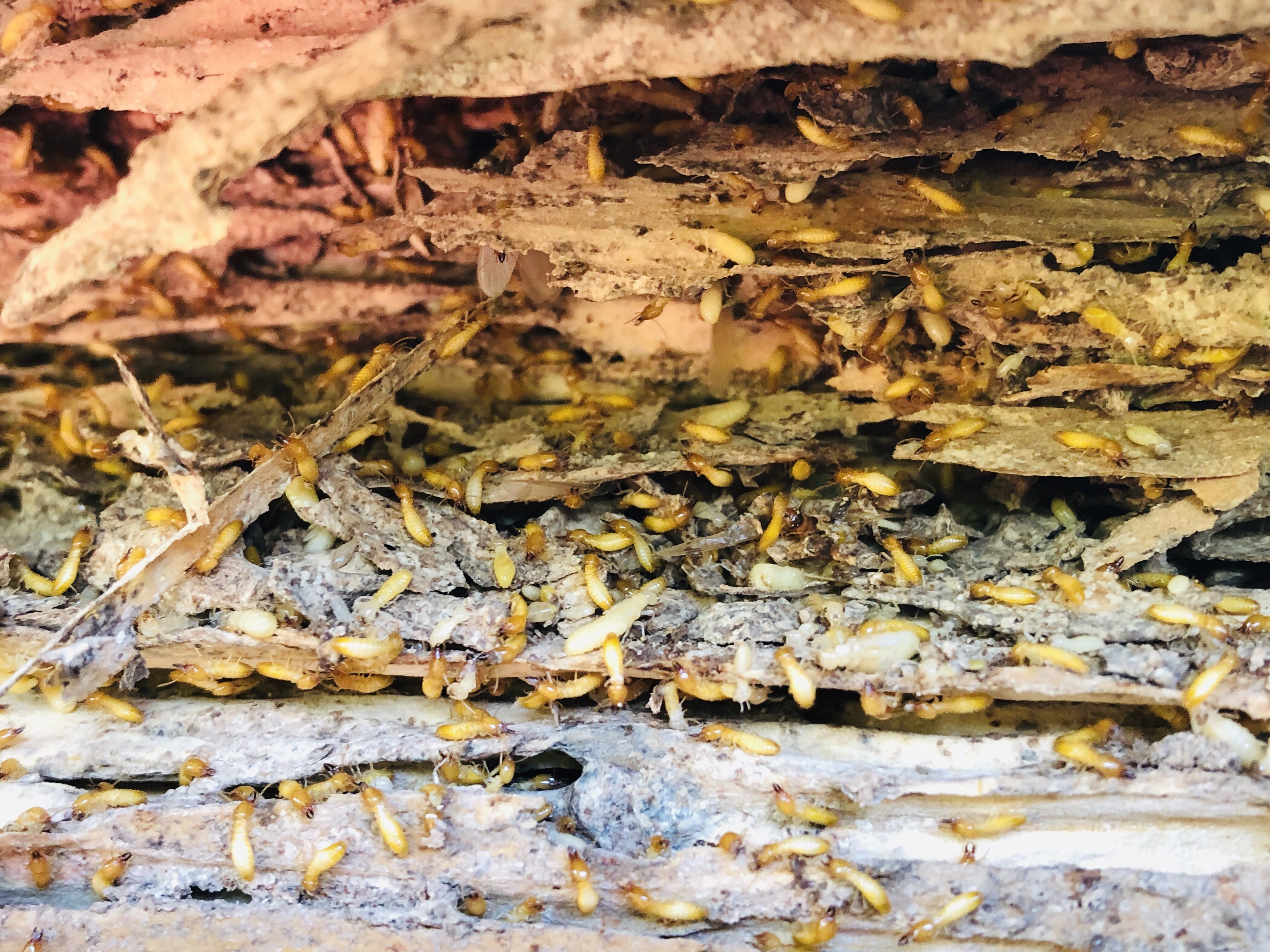
Mud tubes
- Pencil-width tunnels of dirt
- On foundation walls, piers and sill plates
- Look in the basement, crawl space and garage
Mud tubes don't disappear in the cold. Winter, when you're in the basement more, is a good time to walk the foundation with a flashlight. Break a small piece of tube: fresh, moist soil or live termites means an active colony.

Damaged or hollow wood
- Wood that sounds hollow when tapped
- Baseboards or trim that dent or crumble
- Rippled paint or bubbling on wood surfaces
Termites eat wood from the inside and leave a thin outer shell. Tap trim and framing near the floor in the basement and around doors. Soft spots are worth a closer look.
Wings and swarmers
- Small dark insects with four equal wings
- Piles of shed wings near windows and lights
- Can happen indoors even in late winter
A swarm indoors during cold months means the colony is living in or under the heated structure. Save a few in a bag and get an inspection.
Can termites swarm in the winter?
Outdoors, no. Termite swarms in New Jersey happen mostly in spring on warm days, often after rain. But indoors, a colony that's inside a heated house can swarm in late winter, sometimes as early as February, because the colony is warm enough to think it's spring.
If you see small dark winged insects in the house in winter, or find little piles of wings on window sills or near a basement light, treat it as a serious sign. A winter swarm almost always means the colony has been in your structure for a while.
Winged ants can swarm indoors in winter too, and they're easy to confuse with termites. Compare them on flying ants vs. termite swarmers, or read flying ants coming out of the vents.
Winged insects or wings inside the house this winter? Save a few in a zip bag and call or text 973-510-2585.
Winter termite myths
"The cold kills them."
It doesn't. The colony moves below the frost line. Freezing weather doesn't wipe out subterranean termites in New Jersey.
"They hibernate."
Termites don't hibernate. They slow down in cold soil and keep feeding where it's warm.
"Wait until spring to check."
Damage keeps adding up in heated homes. Winter inspections are just as useful, and often easier to schedule.
"No swarm means no termites."
Many colonies are active for years before they swarm. Mud tubes and damaged wood are better signs.
Can termites be treated in the winter?
In most cases, yes. Termite inspections can be done any time of year, and in our experience winter is a good time to get one: it's easier to schedule, and you're not waiting until the spring rush when swarms are everywhere.
Whether treatment happens right away depends on the house and the weather. A licensed technician looks at where the termites are, the type of foundation, and whether the soil around the house can be worked. Some treatment work, like treating soil along the foundation, depends on the ground not being frozen. Other work can be done inside. We'll tell you honestly what makes sense now and what's better done when the ground thaws.
Here's how a visit from Silver Bullet Pest Control works:
- Inspection of the foundation, basement or crawl space, sill plates, slab joints and any wood in contact with soil.
- A treatment plan that fits your house, with the method explained in plain language. Comparing options? See Sentricon vs. liquid treatment.
- Repair. After treatment, we repair termite-damaged sill plates, joists, beams and framing ourselves. Details on our termite damage repair page.
We're based in Garfield and serve Bergen, Passaic, Essex and Hudson counties. Quotes are free. Start with a termite inspection.
Get a Free Termite Quote This Winter
Tell us what you found, like mud tubes, soft wood or wings, and send a photo if you can. We'll set up an inspection and give you a free quote.
Why homeowners call us in winter
- Mud tubes found in the basement
- Winged insects inside in late winter
- Soft or hollow wood near the foundation
- Buying or selling a home
- Termite damage repaired by our own crew
Request Service
🔒 Your info stays private · Hablamos español.
Termites in Winter: Common Questions
Do termites die in the winter?
No. Eastern subterranean termites in New Jersey survive winter by moving deeper into the soil, below the frost line, where temperatures stay above freezing. The colony slows down but stays alive and becomes more active again as the ground warms.
Do termites hibernate?
No. Termites don't hibernate. They reduce feeding in cold soil, but colonies near or under a heated home can keep eating wood at close to their normal pace all winter.
Can termites damage my house in the winter?
Yes. If termites are already feeding on wood near your heated basement, slab or foundation, damage can continue through the cold months. That's why finding mud tubes in December is just as urgent as finding them in May.
Is it normal to see termites swarming in winter?
Not outdoors, but it can happen indoors. A colony inside a heated house may swarm in late winter. Indoor swarmers or shed wings in cold months usually mean the colony is in the structure and should be inspected.
Is winter a good time for a termite inspection?
Yes. Inspections can be done any time of year, and winter often means easier scheduling. Mud tubes, damaged wood and other signs are still visible in the basement, crawl space and garage.
Can you treat for termites when the ground is frozen?
Often, yes, depending on the house. Some work can be done inside, while soil treatment outside may need the ground to be workable. A technician will tell you what can be done now and what's better done when it thaws.
Where do termites go in the winter?
Most of the colony moves down into deeper, warmer soil. Workers that are already feeding inside a heated structure, such as on sill plates or basement framing, often stay right where they are.
Does snow or cold make termites go away from my house?
No. The cold pushes termites deeper outdoors, but the soil next to a heated foundation stays warmer, which can actually make the area around your home more attractive to them in winter.
Will you repair termite damage you find?
Yes. After treatment, we repair termite damage ourselves, including sill plates, joists, beams and framing, so you don't need a separate contractor for those repairs.
¿Las termitas están activas en el invierno?
Sí. En Nueva Jersey las termitas no hibernan; bajan más profundo en la tierra y siguen comiendo, sobre todo cerca de casas con calefacción. Hablamos español: 973-510-2585.
Year-round termite service in North Jersey
Based in Garfield, we serve Bergen, Passaic, Essex and Hudson counties, including:
Our service area
Bergen County
973-510-2585- Allendale
- Bergenfield
- Bogota
- Carlstadt
- Cliffside Park
- Closter
- Cresskill
- Demarest
- Dumont
- East Rutherford
- Edgewater
- Elmwood Park
- Emerson
- Englewood
- Englewood Cliffs
- Fair Lawn
- Fairview
- Fort Lee
- Franklin Lakes
- Garfield
- Glen Rock
- Hackensack
- Harrington Park
- Hasbrouck Heights
- Haworth
- Hillsdale
- Ho-Ho-Kus
- Leonia
- Little Ferry
- Lodi
- Lyndhurst
- Mahwah
- Maywood
- Midland Park
- Montvale
- Moonachie
- New Milford
- North Arlington
- Northvale
- Norwood
- Oakland
- Old Tappan
- Oradell
- Palisades Park
- Paramus
- Park Ridge
- Ramsey
- Ridgefield
- Ridgefield Park
- Ridgewood
- River Edge
- River Vale
- Rochelle Park
- Rutherford
- Saddle Brook
- Saddle River
- South Hackensack
- Teaneck
- Tenafly
- Teterboro
- Upper Saddle River
- Waldwick
- Wallington
- Washington Township
- Westwood
- Woodcliff Lake
- Wood-Ridge
- Wyckoff
Passaic County
973-510-2585- Bloomingdale
- Clifton
- Haledon
- Hawthorne
- Little Falls
- North Haledon
- Passaic
- Paterson
- Pompton Lakes
- Prospect Park
- Ringwood
- Totowa
- Wanaque
- Wayne
- West Milford
- Woodland Park
Essex County
973-510-2585- Belleville
- Bloomfield
- Caldwell
- Cedar Grove
- East Orange
- Essex Fells
- Fairfield
- Glen Ridge
- Irvington
- Livingston
- Maplewood
- Millburn
- Montclair
- Newark
- North Caldwell
- Nutley
- Orange
- Roseland
- Short Hills
- South Orange
- Verona
- West Caldwell
- West Orange
Hudson County
973-510-2585Union County
973-510-2585- Berkeley Heights
- Clark
- Cranford
- Elizabeth
- Fanwood
- Garwood
- Hillside
- Kenilworth
- Linden
- Mountainside
- New Providence
- Plainfield
- Rahway
- Roselle
- Roselle Park
- Scotch Plains
- Springfield
- Summit
- Union
- Westfield
Morris County
973-510-2585- Boonton
- Butler
- Cedar Knolls
- Chatham
- Denville
- Dover
- East Hanover
- Florham Park
- Hanover
- Kinnelon
- Lincoln Park
- Madison
- Mendham
- Montville
- Morris Plains
- Morristown
- Mountain Lakes
- Parsippany
- Pequannock
- Randolph
- Riverdale
- Rockaway
- Roxbury
- Whippany
Updated November 2026 by the Silver Bullet Pest Control team, Garfield, NJ • NJ License 90568B