Silver Bullet Pest Control logoSilver Bullet Pest Control
Flying Ants vs. Termite Swarmers Β· Identification Guide Β· New Jersey

Flying Ants vs. Termite Swarmers: How to Tell Them Apart in NJ

A cloud of winged insects by a basement window, or a pile of tiny wings on the sill? In New Jersey that is either flying ants or termite swarmers, and the difference matters: one is usually a nuisance, the other is a sign termites are living in or under your home. Here is a quick way to tell them apart, what each one means, and what to do today.

4.9 stars on Google β€’ NJ License 90568B β€’ 15+ years β€’ Based in Garfield β€’ Text us a photo to ID β€’ Hablamos espaΓ±ol

Catch one (tape works), take a close-up photo and text it to 973-510-2585. We'll tell you what it is.

How do you tell flying ants from termite swarmers?

To tell flying ants from termite swarmers, look at three things: termite swarmers have a thick, straight waist, straight antennae and four wings of equal length that break off easily, while flying ants have a pinched waist, bent (elbowed) antennae and front wings longer than the back wings. In New Jersey, termite swarmers indoors usually mean an active termite colony in or under the house, so they call for an inspection. Flying ants can mean a nest nearby, and carpenter ants deserve a closer look. Text a photo to 973-510-2585 and we'll identify it.

Flying ants vs. termite swarmers: ID table

Use this table with a magnifying glass or a zoomed-in phone photo. Two or three matches in one column is usually enough:

FeatureTermite swarmerFlying ant
WaistThick and straight, no pinch β€” body looks like one tubeNarrow, pinched waist between thorax and abdomen
AntennaeStraight, like a string of tiny beadsBent at an angle (elbowed)
WingsFour wings, all about the same length, about twice as long as the bodyFour wings, front pair clearly longer than the back pair
Wing lookMilky or smoky, with a fine net of veinsClearer, with fewer, stronger veins
Shed wingsDrop off very easily β€” piles of loose wings on sills and floorsStay on longer; you'll see fewer loose wings
Color (NJ)Eastern subterranean swarmers are dark brown to blackBlack, brown or reddish, depending on the species
SizeSmall, roughly 3/8 inch including wingsRanges from tiny to over half an inch (carpenter ant swarmers are large)
Where you find themNear windows, doors and light, often in the basement or a sunny roomNear windows and lights, or outdoors around a nest

Found only wings? Termite wings are all the same size and look like tiny, cloudy fish scales. See termite wings in the house.

The three quick body checks

If you only remember one thing from this page, remember these:

⏳

1. The waist

Ants are built like an hourglass with a tiny waist. Termite swarmers are straight from head to tail, almost like a grain of rice with wings.

πŸ“‘

2. The antennae

Ant antennae bend like an elbow. Termite antennae are straight and soft-looking, curving gently but never bending sharply.

πŸͺ½

3. The wings

Lay the insect flat. If all four wings are the same length, it's a termite. If the front wings are longer, it's an ant.

πŸ”

Bonus: wing piles

Termites shed their wings right after swarming. Lots of loose, identical wings with few bodies is a strong termite sign.

Keep a sample. A few insects on a piece of clear tape, or in a sealed bag in the freezer, help the inspector confirm what you saw.

The winged insects we see most in North Jersey homes

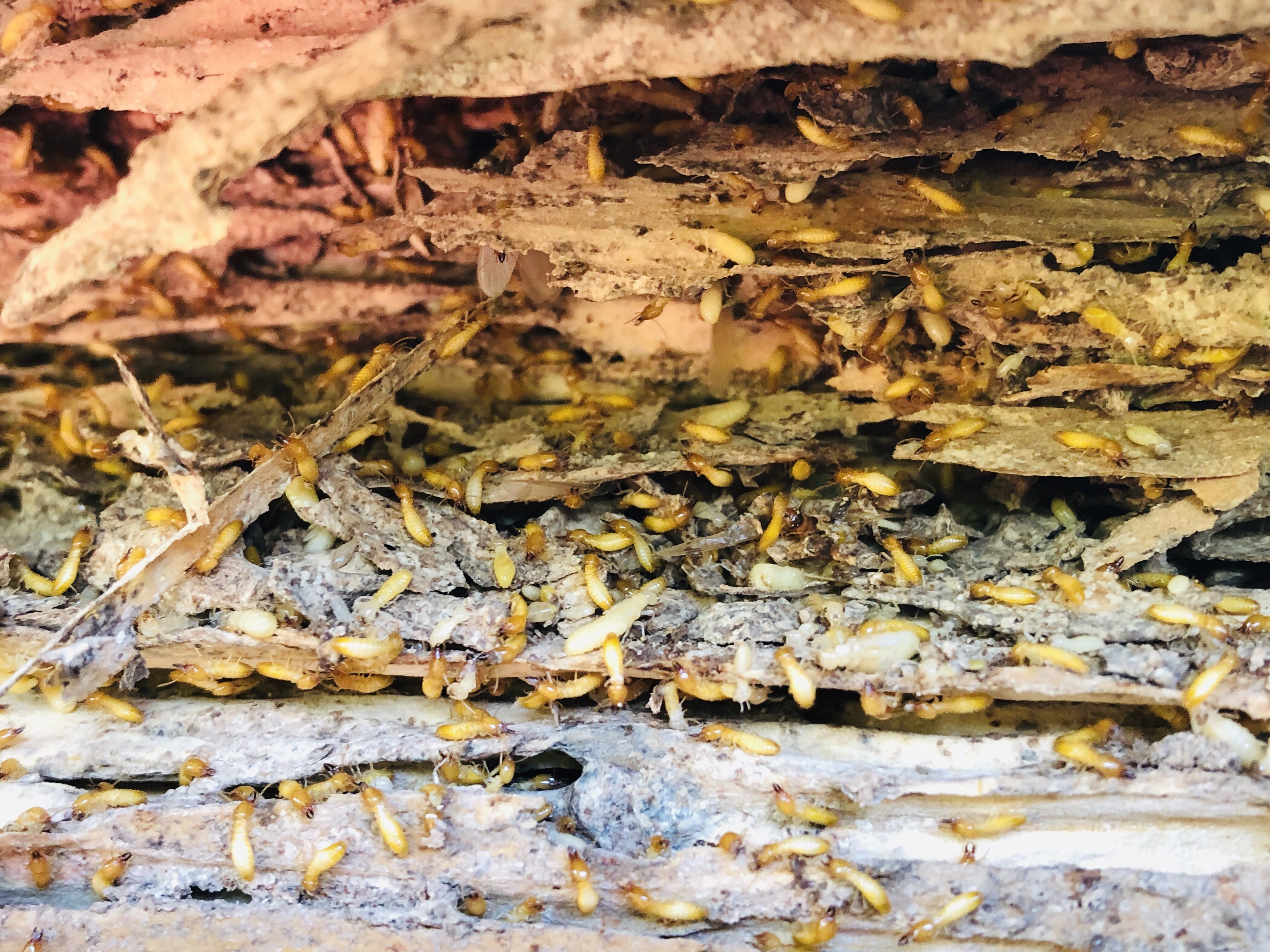
Eastern subterranean termites in wood
Termites

Eastern subterranean termite swarmers

  • Dark, straight-bodied, equal wings
  • Swarm indoors in daylight, often after a warm rain
  • Leave piles of wings by windows and doors

These are the reproductive termites leaving a mature colony to start new ones. When they swarm inside, the colony is usually in the soil under the house or already in the wood. Swarmers themselves don't eat wood or bite; the workers you don't see do the damage.

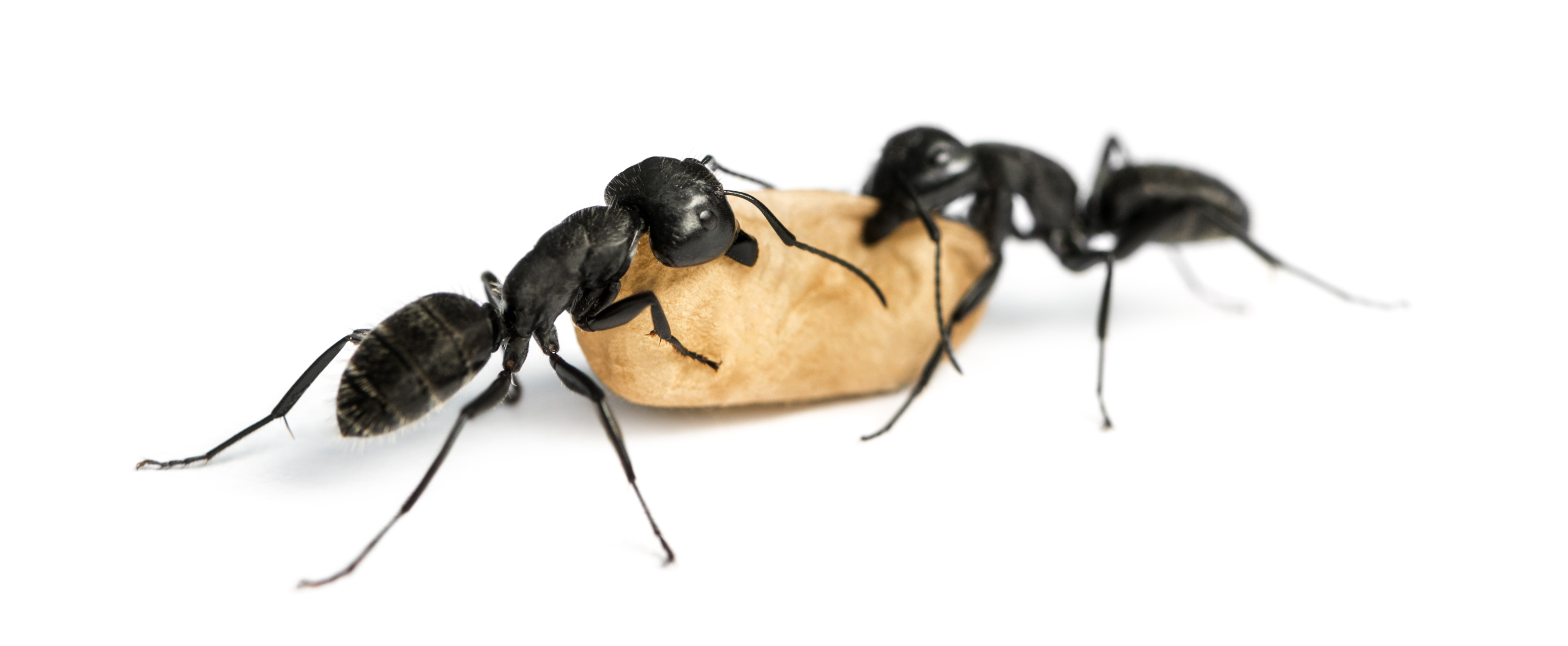
Two black carpenter ants
Carpenter ants

Carpenter ant swarmers

  • Large, black or black-and-red
  • Pinched waist, elbowed antennae
  • Coarse sawdust-like shavings nearby

Carpenter ants don't eat wood, but they hollow out damp or damaged wood for nests. Swarmers inside, especially in late winter or early spring, can mean a nest inside the house. We can treat the nest and repair damaged wood.

Small ants gathering on a surface
Other ants

Pavement, odorous and other small ants

  • Small, brown or black
  • Swarm from cracks in pavement, slabs or soil
  • Usually a nuisance, not structural

Small ant species send out swarmers from outdoor nests, under slabs and along foundations. A swarm by a sidewalk crack or patio is common and rarely a threat to the house, but repeated indoor swarms can mean a nest under the floor.

When termites and flying ants swarm in New Jersey

Timing is a clue, but not proof. Both can show up in spring:

Time of yearTermite swarmersFlying ants
Late winterPossible indoors in heated basements and boiler roomsCarpenter ant swarmers indoors can mean a nest inside
Spring (roughly March to May)Peak season, often on a warm, sunny day after rain, usually late morning to middayCarpenter ants and several small species begin swarming
SummerLess commonMany ant species swarm, often in the afternoon or evening
FallUncommonSome species swarm; often seen around foundations after rain

Swarms usually last less than an hour. The insects may be gone by the time you get back with a camera, but the wings stay behind.

What each one means for your home

Termite swarmers inside the house

This is the one to take seriously. Termite swarmers come from a colony that is several years old and large enough to send out reproductives. If they emerged inside β€” from a baseboard, a slab crack, a door frame or a window sill β€” the colony is usually in the soil under the home with a route into the wood, or already in the framing. The swarmers themselves die quickly indoors, but the workers keep feeding.

It is not an emergency in the sense of minutes or hours, but it is a call-this-week problem. Termite damage builds quietly, and the sill plates and joists along the foundation are usually the first to go. Look for mud tubes on the foundation while you wait.

Termite swarmers outside only

A swarm in the yard, from a stump, an old fence post or a woodpile, means termites are on the property, not necessarily in the house. It's still worth an inspection, especially if you've never had one or the house was treated many years ago.

Flying ants inside

Small ants swarming indoors often have a nest under a slab, in a wall void or just outside. They are a nuisance. Carpenter ant swarmers are different: they can mean a nest inside the structure, often near a roof leak, a damp window frame or a bathroom. Read signs of carpenter ants in the house.

Flying ants outside

Ants swarming from a lawn, patio or sidewalk is normal and usually nothing to treat unless they are getting in the house.

What to do right now

1

Save a few samples

Press a few insects onto clear tape or put them in a sealed bag. Also save some loose wings.

2

Note where they came from

A window, a baseboard, a crack in the floor, the fireplace? The exact spot helps us find the colony's way in.

3

Vacuum the rest

Swarmers are harmless to people and pets. Vacuum them up; spraying them doesn't solve anything because the colony isn't in the room.

4

Text us a photo

Send a close-up to 973-510-2585. If it's termites, we'll set up an inspection; if it's ants, we'll tell you whether it needs treatment.

Don't tear open walls or flooring looking for the source. An inspector can usually find it with less damage.

How a professional visit helps

Identification is the first step, not the last. When we come out after a swarm, a licensed technician:

  • Confirms the insect from your samples and anything we find on site.
  • Finds the source β€” mud tubes, damaged wood, moisture problems, wood touching soil, or an ant nest in a wall or window frame.
  • Explains the treatment that fits: termite treatment for termites, or nest treatment for carpenter ants and other ants.
  • Repairs damaged wood after termite treatment with our own crew β€” sill plates, joists, beams and framing. We can also repair carpenter ant damage to wood.

Selling or buying a home? We also provide VA / NPMA-33 termite inspection reports. Quotes are free.

Not Sure What You Found? Get a Free Quote

Text a photo of the insect or the wings and tell us where you saw them. If it's termites, we'll set up an inspection.

Why people call us after a swarm

  • Winged insects coming out of a baseboard or floor
  • Piles of wings on a window sill
  • Swarmers in the basement in early spring
  • Large black ants with wings indoors
  • Need a termite report for a home sale
πŸ“ž Call 973-510-2585

Request Service

πŸ”’ Your info stays private Β· Hablamos espaΓ±ol.

What's bugging you? - Step 1 of 3

Flying Ants and Termite Swarmer Questions

Does a termite swarm mean my house is infested?

If the swarm came from inside the house, it usually means an active colony is in or under the home. A swarm outdoors, from a stump or woodpile, means termites are on the property. Both are good reasons for an inspection.

Do termite swarmers eat wood?

No. Swarmers are winged reproductives looking to start a new colony, and they die quickly indoors. The damage comes from worker termites that stay hidden in the soil and wood.

Will termite swarmers go away on their own?

The swarmers die off within hours to a day or so indoors, but the colony that produced them stays. That's why a swarm that 'went away' still needs an inspection.

Can flying ants damage my house?

Most flying ants are harmless to the structure. Carpenter ants are the exception: they hollow out damp wood for nests, so carpenter ant swarmers indoors should be checked.

Why do I only see wings and no bugs?

Termite swarmers drop their wings right after they land, then crawl off or die. Piles of identical wings by windows and doors are a classic termite sign.

Do flying ants or termites bite?

Termite swarmers don't bite people. Flying ants rarely bite and are not dangerous. Neither one spreads disease.

What time of year do termites swarm in New Jersey?

Mostly in spring, roughly March through May, often on a warm day after rain. In heated homes, swarms can happen as early as late winter.

Should I spray the swarmers?

Spraying swarmers doesn't help, because the colony isn't in the room. Vacuum them up, save a few samples and call for an inspection.

Do you treat both termites and carpenter ants?

Yes. We treat termites and carpenter ants, and our own crew repairs termite-damaged wood after treatment. We can also repair wood damaged by carpenter ants.

Where are you located?

We're based in Garfield and serve Bergen, Passaic, Essex and Hudson counties, plus Morris and Union counties with visits scheduled ahead.

ΒΏCΓ³mo sΓ© si son termitas u hormigas voladoras?

Las termitas tienen la cintura recta y cuatro alas del mismo tamaΓ±o; las hormigas tienen la cintura delgada y las alas delanteras mΓ‘s largas. MΓ‘ndenos una foto al 973-510-2585 y le decimos quΓ© es.

Termite and ant help near you

Based in Garfield, we identify and treat termites and ants across North Jersey.

Our service area

Union County

973-510-2585
  • Berkeley Heights
  • Clark
  • Cranford
  • Elizabeth
  • Fanwood
  • Garwood
  • Hillside
  • Kenilworth
  • Linden
  • Mountainside
  • New Providence
  • Plainfield
  • Rahway
  • Roselle
  • Roselle Park
  • Scotch Plains
  • Springfield
  • Summit
  • Union
  • Westfield

Morris County

973-510-2585
  • Boonton
  • Butler
  • Cedar Knolls
  • Chatham
  • Denville
  • Dover
  • East Hanover
  • Florham Park
  • Hanover
  • Kinnelon
  • Lincoln Park
  • Madison
  • Mendham
  • Montville
  • Morris Plains
  • Morristown
  • Mountain Lakes
  • Parsippany
  • Pequannock
  • Randolph
  • Riverdale
  • Rockaway
  • Roxbury
  • Whippany

Updated November 2026 by the Silver Bullet Pest Control team, Garfield, NJ β€’ NJ License 90568B

Scroll to Top