
 Silver Bullet Pest Control
Cave Crickets in NJ: How to Get Rid of Camel Crickets and Spider Crickets
Humpbacked, long-legged bugs that jump at you when you go down to the basement? Those are camel crickets, also called cave crickets or spider crickets. They are one of the most common basement pests in North Jersey. This guide explains what they are, why your house has them, what you can do yourself, and when a professional visit makes sense.
4.9 stars on Google • NJ License 90568B • 15+ years • Based in Garfield • Hablamos español
Not sure what it is? Text a photo of the bug to 973-510-2585 and we'll tell you.
- ✓ Same-day appointments often available
- ✓ Licensed & insured in NJ
- ✓ Homes & businesses
- ✓ English & Español
How do you get rid of cave crickets in NJ?
To get rid of cave crickets in NJ, dry out the basement or crawl space with a dehumidifier, seal the gaps where they walk in, and clear damp mulch, leaves and wood away from the foundation. Sticky traps along the walls catch the ones already inside and show you where they're coming from. If you still see dozens after a few weeks, a licensed exterminator can treat the outside of the house and the hidden voids where they hide. Silver Bullet Pest Control, NJ License 90568B, call or text 973-510-2585.
What are camel crickets, cave crickets and spider crickets?
They are all the same kind of insect. Camel cricket comes from the humped back, cave cricket from where they live in the wild (caves, rock piles, hollow logs), and spider cricket from the long, bent legs and long antennae that make people think of a spider when one lands near them.
Here is what you are looking at:
- Light tan to brown, often with darker bands, and about the size of a nickel to a quarter without the legs.
- A curved, humped back and no wings.
- Very long back legs built for jumping, and antennae often longer than the body.
- No chirping. Unlike field crickets, camel crickets are silent.
One species, the greenhouse camel cricket, came from Asia and is now common in houses across the eastern United States. It is very likely the one in your basement. They are scavengers: they eat mold, dead insects, plant matter, cardboard and fabric that sits in damp places.
Cave cricket, field cricket or spider? How to tell
People mix these up all the time. The difference changes what you should do:
| Look at | Cave / camel cricket | Field or house cricket | Wolf spider |
|---|---|---|---|
| Body | Humped, tan or brown, banded | Flat-backed, dark brown to black | Hairy, brown or gray, two body parts |
| Wings | None | Yes, folded on the back | None |
| Legs | Six, very long back legs | Six, strong back legs | Eight, no jumping legs |
| Sound | Silent | Loud chirping at night | Silent |
| How it moves | Jumps suddenly, often toward you | Hops and hides | Runs fast along the floor |
| Where in the house | Basement, crawl space, garage, laundry room | Ground floor, near doors, comes in from the yard | Basement, garage, along walls |
Count the legs on a dead one. Six legs and a humped back means camel cricket. Eight legs means a spider, and that's a different conversation. Text us a photo if you can't tell.
Are camel crickets harmful? Myths and facts
| You heard | The truth |
|---|---|
| They bite | No. Camel crickets don't bite or sting people or pets. |
| They attack you | No. They jump to escape. In a tight basement that often means jumping in your direction. |
| They spread disease | They aren't known to spread disease to people. They do leave droppings and dead bodies that should be cleaned up. |
| They damage the house | Not the structure. In large numbers they can chew stored cardboard, paper, clothing and fabric in damp basements. |
| They mean the house is dirty | No. They mean the basement or crawl space is damp. Very clean homes get them too. |
| They'll go away on their own | Rarely, while the dampness and the gaps are still there. |
The bigger issue is what they tell you: there's moisture down there, and there are openings that other pests can use too.
Where cave crickets hide in North Jersey homes
Find their spots and you'll know where to focus. These are the three places we check first:
Basements and crawl spaces
- Along the bottom of block and stone walls
- Behind boxes, water heaters and furnaces
- In sump pit areas and under laundry sinks
Older North Jersey homes often have block or stone foundations with small cracks and gaps at the sill. Those cracks let crickets in and keep the air damp, which is exactly what they want.
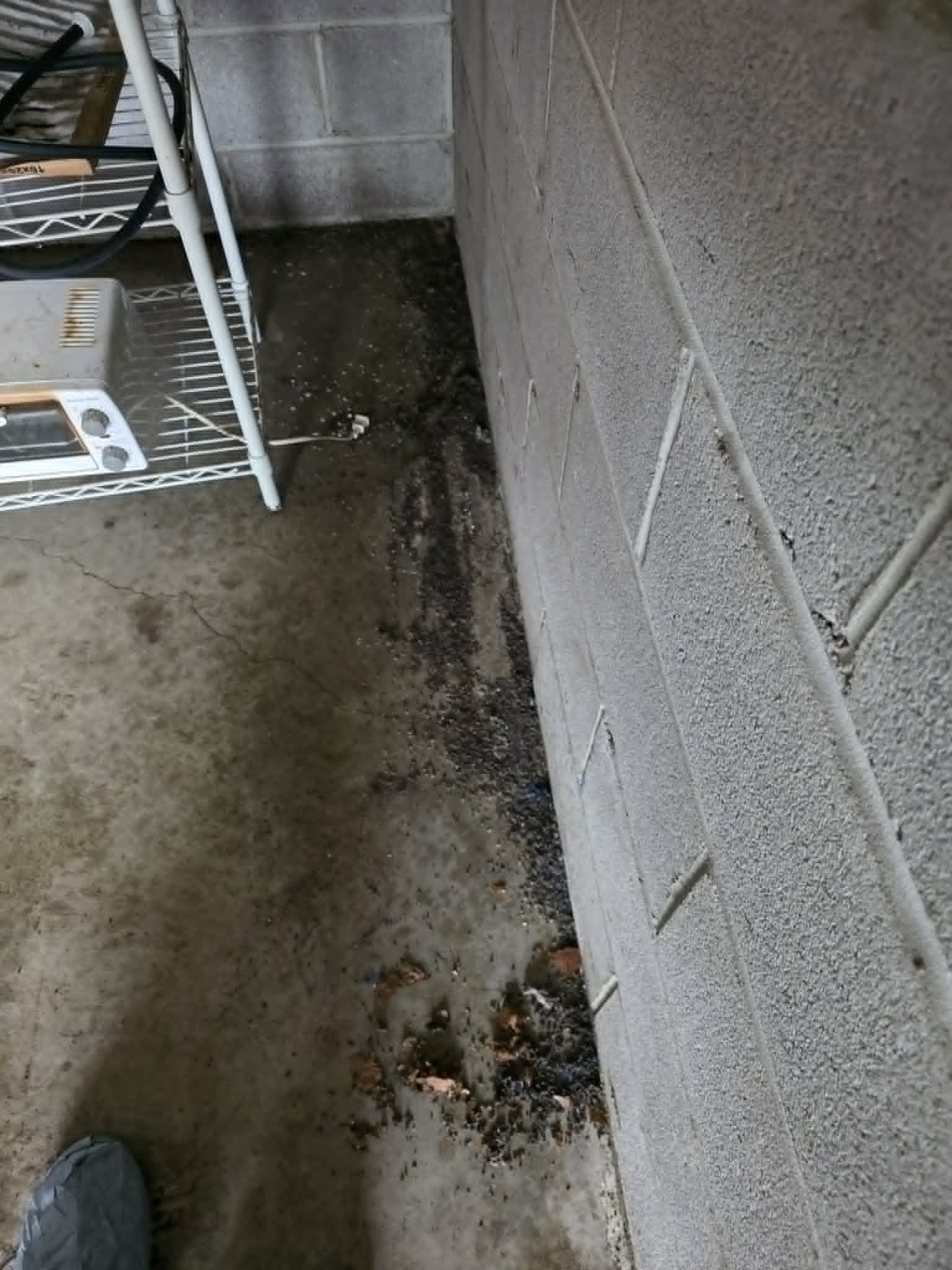
Garages and sheds
- Under worn garage door seals
- Behind stored lawn gear and firewood
- Corners where leaves blow in
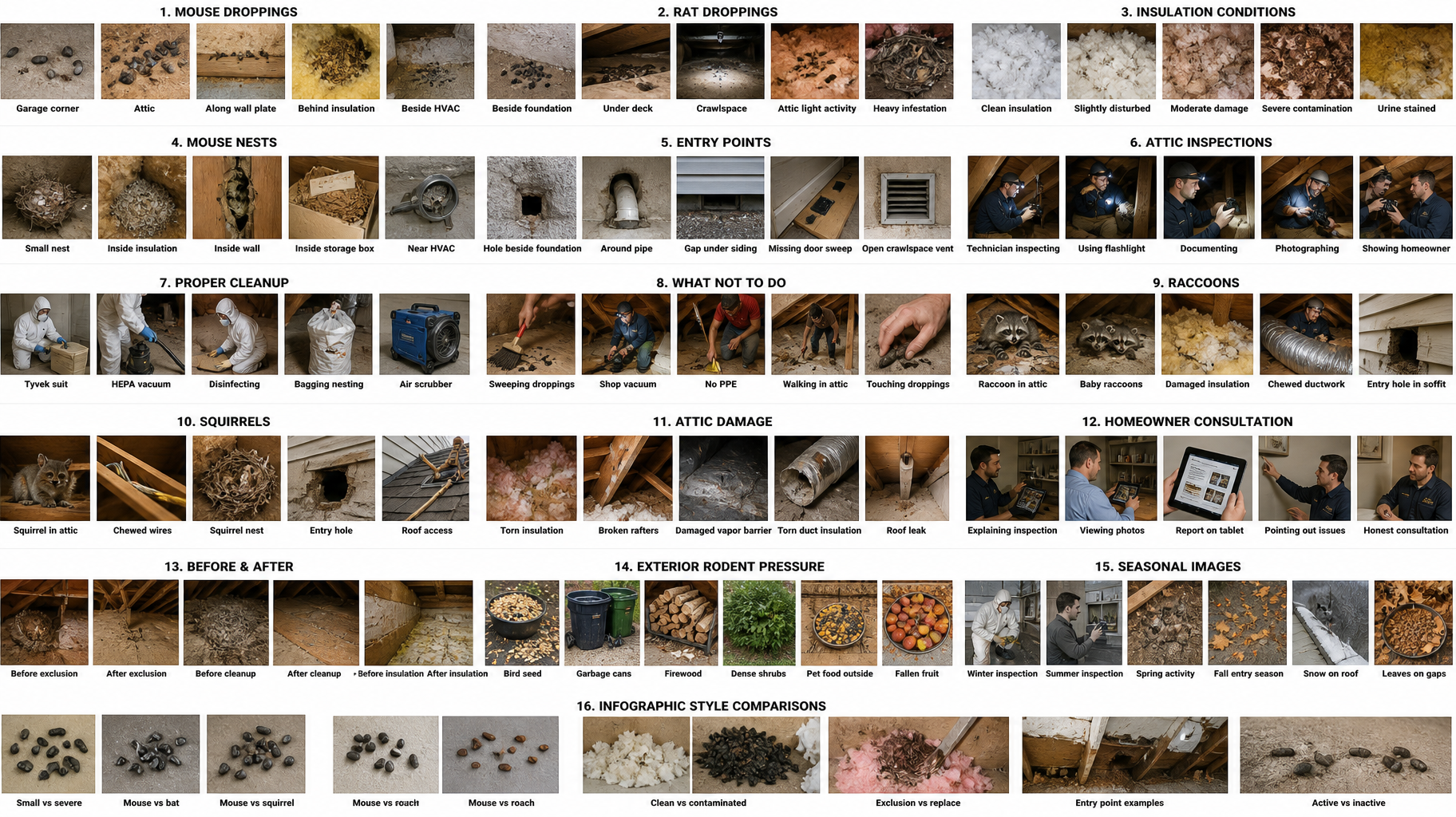
A garage door that doesn't seal at the floor is an open door for crickets, and for mice too. If you're also finding droppings like these, the same gaps are letting rodents in.
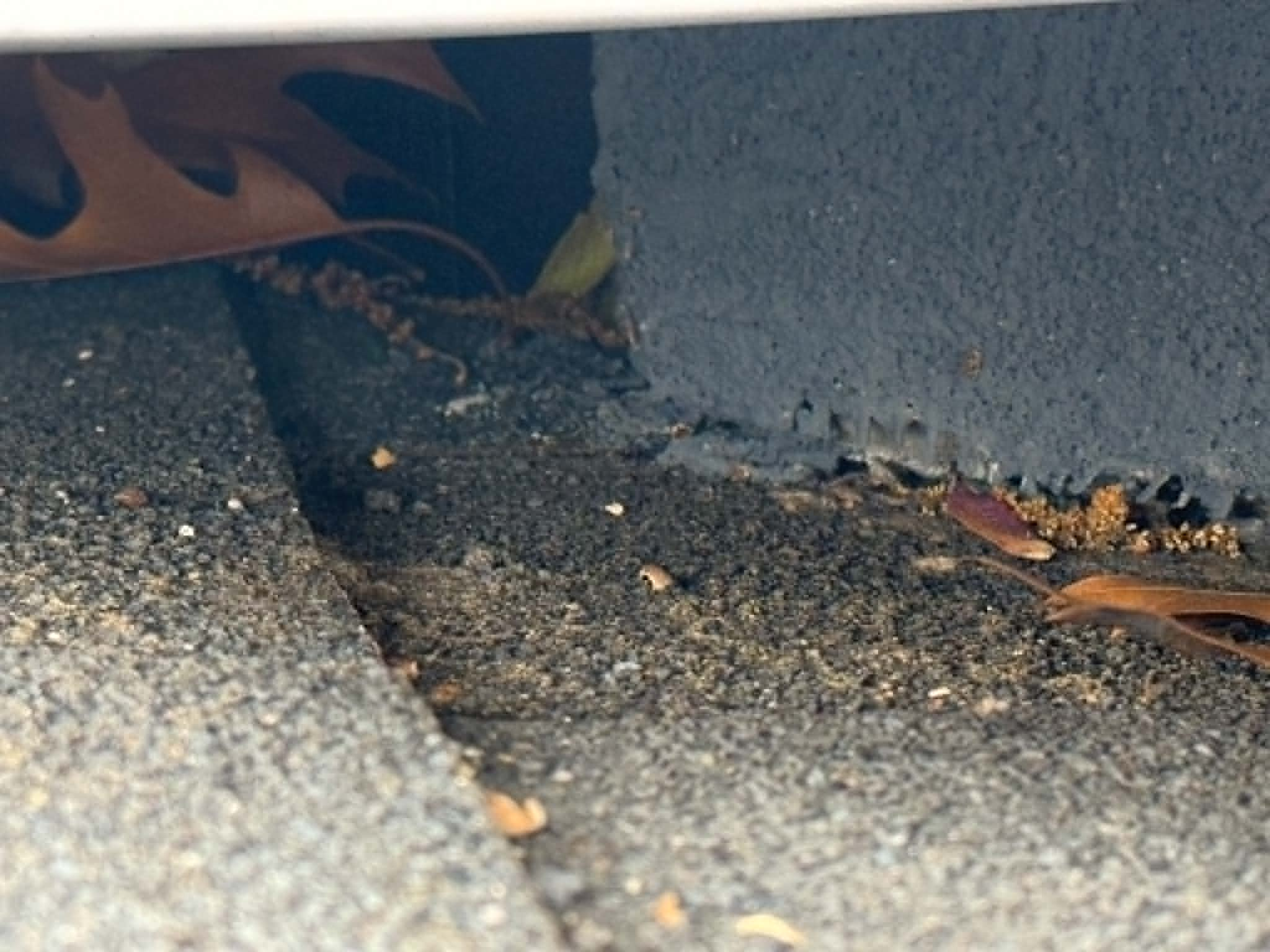
Window wells and the foundation line
- Leaf-filled window wells
- Damp mulch beds against the house
- Stone walls, wood piles and under decks
Outside, they live under anything damp and dark next to the house. On warm nights they walk in through basement windows, dryer vents, pipe gaps and the sill.
Why your house has so many cave crickets
Camel crickets don't come in because of food. They come in for moisture and shelter. A few things make North Jersey houses a good fit:
- Damp basements. Many homes in Bergen, Passaic, Essex and Hudson counties were built decades ago with block or stone foundations that wick water, and many sit on low ground near rivers and brooks.
- Hot, dry spells. When the yard dries out in July and August, the cool basement is the dampest spot around, so crickets move in.
- Finished basements and split-levels. Drop ceilings, paneling and carpet over concrete create hidden, humid spaces.
- Clutter on the floor. Cardboard boxes and piles of laundry give them food and places to hide.
- Gaps. Worn door sweeps, open window wells, and gaps around pipes and the sill plate.
The fix is to change those conditions. Spraying the crickets you can see without fixing the dampness gives you a quiet week and then more crickets.
How to get rid of camel crickets yourself
Most homeowners can cut the numbers a lot with these steps, in this order:
Dry out the space
Run a dehumidifier in the basement or crawl space and empty it often. Aim for about 50% humidity or lower. Fix drips, sweating pipes and gutters that dump water at the foundation.
Set sticky traps
Place glue boards along walls, behind the water heater and near the sump. They catch crickets every night and show you where they come in. Keep them away from pets and kids.
Seal the way in
Replace worn door sweeps and garage seals, caulk gaps around pipes and wires, and screen or cover window wells and vents.
Clean up outside
Pull mulch, leaves, stones and firewood back from the foundation and clear out window wells. Store boxes in plastic bins up off the floor.
Give it two to four weeks. If you're still catching a lot every night, the dampness or the entry points haven't been found yet, and that's when a professional visit pays off.
Cave cricket control in NJ: what a professional visit includes
When DIY isn't enough, here's how a licensed technician from Silver Bullet Pest Control approaches it:
Inspect inside and out
We look at the basement, crawl space and garage, find where crickets are gathering, and trace the moisture and the gaps. We also check for signs of mice or other pests using the same openings.
Treat where they live
A targeted treatment around the outside foundation, window wells and entry points, plus the cracks and voids inside where they hide, applied by a licensed applicator.
Close the openings
We point out, and can seal, the gaps at doors, pipes, vents and the foundation so new crickets have a harder time getting in.
Keep them away
For homes that get crickets every year, a recurring plan keeps the outside treated through the warm months. Regular service comes with a 100% satisfaction guarantee.
See our monthly and quarterly pest control plans, or all-season pest protection if crickets are one of several bugs you're dealing with.
When cave crickets are worst in New Jersey
Spring
Young crickets that spent the winter in sheltered spots become active. You see a few small ones in the basement.
Summer
Numbers climb. Hot, dry weather pushes them into cool basements and garages. This is when most people call.
Fall
Adults are at their biggest and most noticeable, and cooling nights send more of them indoors.
Winter
Fewer outside, but crickets already in a heated basement can stay active all winter if it's damp.
The best time to seal and dry the basement is late spring, before the summer jump in numbers.
Get a Free Quote for Cave Cricket Control
Tell us where you're seeing them and how many, and send a photo if you can. We'll give you a free quote and an honest opinion on whether you need us or just a dehumidifier.
Why people call us about camel crickets
- Dozens on the basement floor every morning
- Crickets jumping out from behind the laundry
- A finished basement the kids won't go into
- Crickets plus signs of mice in the same spots
- They come back every summer no matter what
Request Service
🔒 Your info stays private · Hablamos español.
Cave Cricket and Camel Cricket Questions
Do cave crickets bite?
No, cave crickets do not bite or sting people or pets. They have chewing mouthparts for scavenging, not for biting. They can be startling because they jump suddenly and sometimes toward you, but that is an escape reflex in a tight space. They are a nuisance pest, not a dangerous one, though large numbers in a basement are worth dealing with.
Why do I have so many camel crickets in my basement?
You have a lot of camel crickets because your basement is damp and has openings they can walk through. They come indoors for moisture and shelter, not food. Older block or stone foundations, sump pits, leaky pipes and cardboard clutter on the floor all help them. Drying the space and sealing gaps usually brings the numbers down fast.
What kills cave crickets instantly?
Store insecticide sprays and even soapy water will kill a cave cricket on contact, but killing the ones you see won't stop new ones coming in. Sticky traps placed along walls are the simplest way to catch large numbers. For lasting results, lower the humidity, seal entry points, and have the outside foundation treated if the problem is heavy.
Are spider crickets the same as camel crickets?
Yes, spider crickets and camel crickets are the same insect, and cave cricket is a third name for it. People call them spider crickets because their long, bent legs and antennae look spider-like when they jump. They are true insects with six legs and no wings. A real spider has eight legs and doesn't jump the same way.
Will a dehumidifier get rid of camel crickets?
A dehumidifier is the single most helpful step, but it usually isn't enough by itself. Keeping the basement around 50% humidity or lower makes it far less inviting, and many crickets die or leave. Combine it with sticky traps, sealed gaps at doors and pipes, and clearing damp mulch and leaves from the foundation for the best results.
Do camel crickets damage anything?
Camel crickets do not damage the structure of your house. In large numbers they can chew holes in stored cardboard, paper, clothes, curtains and other fabric kept in damp basements, and they leave droppings and dead bodies. Store things in sealed plastic bins off the floor, and keep laundry out of the basement until the numbers are down.
How long does it take to get rid of cave crickets?
Most homes see a clear drop within two to four weeks once the basement is drier, gaps are sealed and traps are out. After a professional exterior treatment, activity usually falls off quickly, but some crickets hidden in wall voids may keep showing up for a short time. Homes with ongoing moisture problems do best on a recurring seasonal plan.
Are cave cricket treatments safe for kids and pets?
Yes, when applied by a licensed applicator following the label. Most of the work happens outside around the foundation and in cracks and voids inside, not on open floors where kids and pets play. We'll tell you how long to keep pets and children away from treated areas. Sticky traps should also be placed where pets can't reach them.
Should I call an exterminator for camel crickets?
Call an exterminator if you've tried a dehumidifier, traps and sealing for a few weeks and still find many crickets every day, if they're spreading to living areas, or if you also see signs of mice or other pests. A professional can find hidden moisture and entry points and treat the outside where the crickets actually live.
Do you treat camel crickets near me in North Jersey?
Yes. Silver Bullet Pest Control is based in Garfield, NJ and serves homes and businesses in Bergen, Passaic, Essex and Hudson counties. Same-day appointments are often available. Call or text 973-510-2585 with a photo of the bug and where you're seeing it, and we'll give you a free quote. Hablamos español.
Cave cricket control in North Jersey
From our base in Garfield we cover Bergen, Passaic, Essex and Hudson counties.
Our service area
Bergen County
973-510-2585- Allendale
- Bergenfield
- Bogota
- Carlstadt
- Cliffside Park
- Closter
- Cresskill
- Demarest
- Dumont
- East Rutherford
- Edgewater
- Elmwood Park
- Emerson
- Englewood
- Englewood Cliffs
- Fair Lawn
- Fairview
- Fort Lee
- Franklin Lakes
- Garfield
- Glen Rock
- Hackensack
- Harrington Park
- Hasbrouck Heights
- Haworth
- Hillsdale
- Ho-Ho-Kus
- Leonia
- Little Ferry
- Lodi
- Lyndhurst
- Mahwah
- Maywood
- Midland Park
- Montvale
- Moonachie
- New Milford
- North Arlington
- Northvale
- Norwood
- Oakland
- Old Tappan
- Oradell
- Palisades Park
- Paramus
- Park Ridge
- Ramsey
- Ridgefield
- Ridgefield Park
- Ridgewood
- River Edge
- River Vale
- Rochelle Park
- Rutherford
- Saddle Brook
- Saddle River
- South Hackensack
- Teaneck
- Tenafly
- Teterboro
- Upper Saddle River
- Waldwick
- Wallington
- Washington Township
- Westwood
- Woodcliff Lake
- Wood-Ridge
- Wyckoff
Passaic County
973-510-2585- Bloomingdale
- Clifton
- Haledon
- Hawthorne
- Little Falls
- North Haledon
- Passaic
- Paterson
- Pompton Lakes
- Prospect Park
- Ringwood
- Totowa
- Wanaque
- Wayne
- West Milford
- Woodland Park
Essex County
973-510-2585- Belleville
- Bloomfield
- Caldwell
- Cedar Grove
- East Orange
- Essex Fells
- Fairfield
- Glen Ridge
- Irvington
- Livingston
- Maplewood
- Millburn
- Montclair
- Newark
- North Caldwell
- Nutley
- Orange
- Roseland
- Short Hills
- South Orange
- Verona
- West Caldwell
- West Orange
Hudson County
973-510-2585Union County
973-510-2585- Berkeley Heights
- Clark
- Cranford
- Elizabeth
- Fanwood
- Garwood
- Hillside
- Kenilworth
- Linden
- Mountainside
- New Providence
- Plainfield
- Rahway
- Roselle
- Roselle Park
- Scotch Plains
- Springfield
- Summit
- Union
- Westfield
Morris County
973-510-2585- Boonton
- Butler
- Cedar Knolls
- Chatham
- Denville
- Dover
- East Hanover
- Florham Park
- Hanover
- Kinnelon
- Lincoln Park
- Madison
- Mendham
- Montville
- Morris Plains
- Morristown
- Mountain Lakes
- Parsippany
- Pequannock
- Randolph
- Riverdale
- Rockaway
- Roxbury
- Whippany
Updated November 2026 by the Silver Bullet Pest Control team, Garfield, NJ • NJ License 90568B