Silver Bullet Pest Control logoSilver Bullet Pest Control
Termites Β· Weehawken 07086 Β· Hudson County

Termite Exterminator in Weehawken, NJ β€” Inspection, Treatment & Urgent Help

Winged bugs pouring out of a basement wall, dirt tubes behind the boiler, or soft wood under the front stoop? Silver Bullet Pest Control inspects Weehawken rowhouses, two-families and buildings for termites, tells you plainly how urgent it is, and treats the way the colony gets in.

4.9 stars on Google β€’ NJ License 90568B β€’ 15+ years β€’ Serving Hudson County β€’ Hablamos espaΓ±ol

Seeing swarmers right now? Catch a few in a zip bag and text a photo to 973-510-2585.

  • βœ“ Same-day appointments often available
  • βœ“ Licensed & insured in NJ
  • βœ“ Homes & businesses
  • βœ“ English & EspaΓ±ol

How do you get rid of termites in a Weehawken home?

You get rid of termites in a Weehawken home by treating the soil and entry points the colony uses to come up into the building β€” store sprays only kill the termites you can see. Silver Bullet Pest Control inspects the foundation, basement, sills, stoops and porches, shows you the activity, and treats along the foundation plus the active areas inside. NJ License 90568B, 4.9 stars on Google, free quotes. Call or text 973-510-2585.

Do termites really get into Weehawken homes?

Yes. People are often surprised that a dense Hudson County town on the Palisades has termites, but the eastern subterranean termite lives in the soil all over North Jersey. It doesn't need a big yard β€” a strip of dirt along the foundation, a backyard garden or the ground under a stoop is enough.

Much of Weehawken's housing is older: rowhouses, attached and semi-attached homes, two- and three-family houses, and smaller apartment buildings along and behind Boulevard East and in the neighborhoods uptown. These buildings have things termites like:

  • Wood stoops, porches and back decks built close to or touching the soil.
  • Basements with wood sill plates resting on old stone, brick or block foundations, with cracks and mortar gaps termites can follow.
  • Damp spots from old gutters, downspouts emptying at the wall and leaks around basement windows.
  • Finished basement walls and paneling that hide mud tubes for years.

Newer concrete-and-steel buildings on the waterfront see far less of this, though wood trim and planters at ground level can still attract them. Termites work slowly, so the earlier they're found, the less wood they ruin.

Is a termite problem an emergency?

Termites rarely cause sudden collapse, but some situations shouldn't wait. Here's how we'd rank them:

What's happeningHow urgentWhat to do now
Swarmers coming out inside the houseAct this weekVacuum the swarmers, save a few for a photo, don't spray the wall, and call for an inspection
Mud tubes on the foundation or a pipeAct soonLeave the tubes alone, photograph them, and book an inspection
Soft, sagging or hollow wood (floor, stair, sill)Act nowKeep weight off it and call β€” we treat the termites, then repair the damaged wood
Termites found during a renovationAct nowPause the work on that wall and have it inspected before it's closed up
A closing date with a termite inspection neededDepends on the dateCall as early as possible with the closing date and lender
Old damage, no live termites seenPlan aheadAn inspection tells you whether it's active or old

Same-day visits are often available when it really can't wait. Call or text 973-510-2585 and tell us what you're seeing.

What did you find?

Most Weehawken termite calls start with one of these three discoveries:

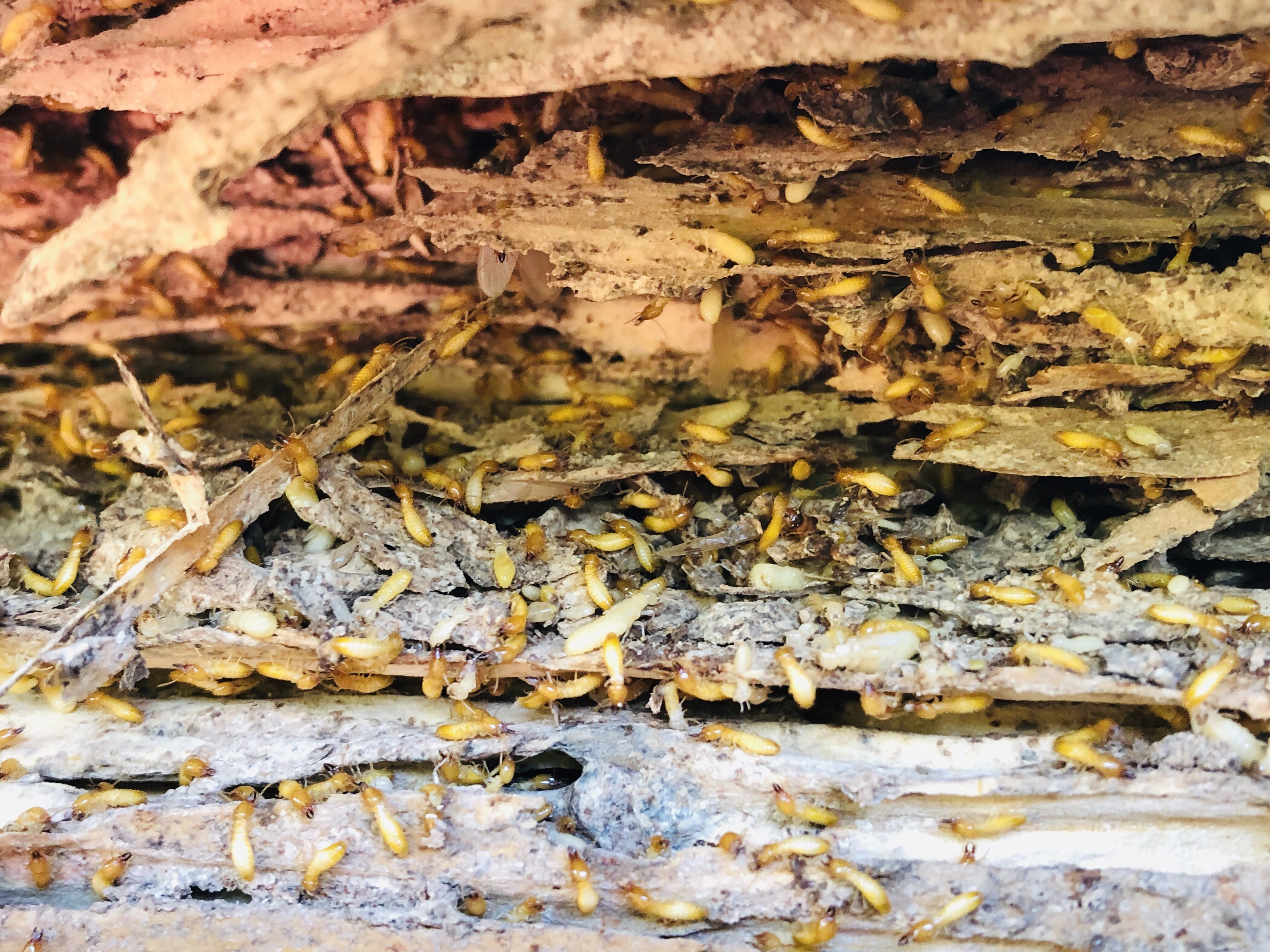
Subterranean termite workers in damaged wood
Spring

Swarmers or piles of wings

  • Dark winged insects with straight antennae
  • Four wings of equal length that drop off
  • Little piles of wings by a window or door

Termite colonies send out winged swarmers in spring, usually on a warm day after rain. Swarmers inside the house mean a colony is feeding very close by β€” often in the basement walls or under a stoop.

Cracks in a foundation wall
Any time of year

Mud tubes

  • Pencil-wide tubes of dried dirt
  • On foundation walls, piers, pipes or the sill
  • May look like dried mud splashed on the wall

Termites build these tunnels to travel between the soil and the wood while staying protected from dry air. A tube that's rebuilt after you break a small piece of it is active.

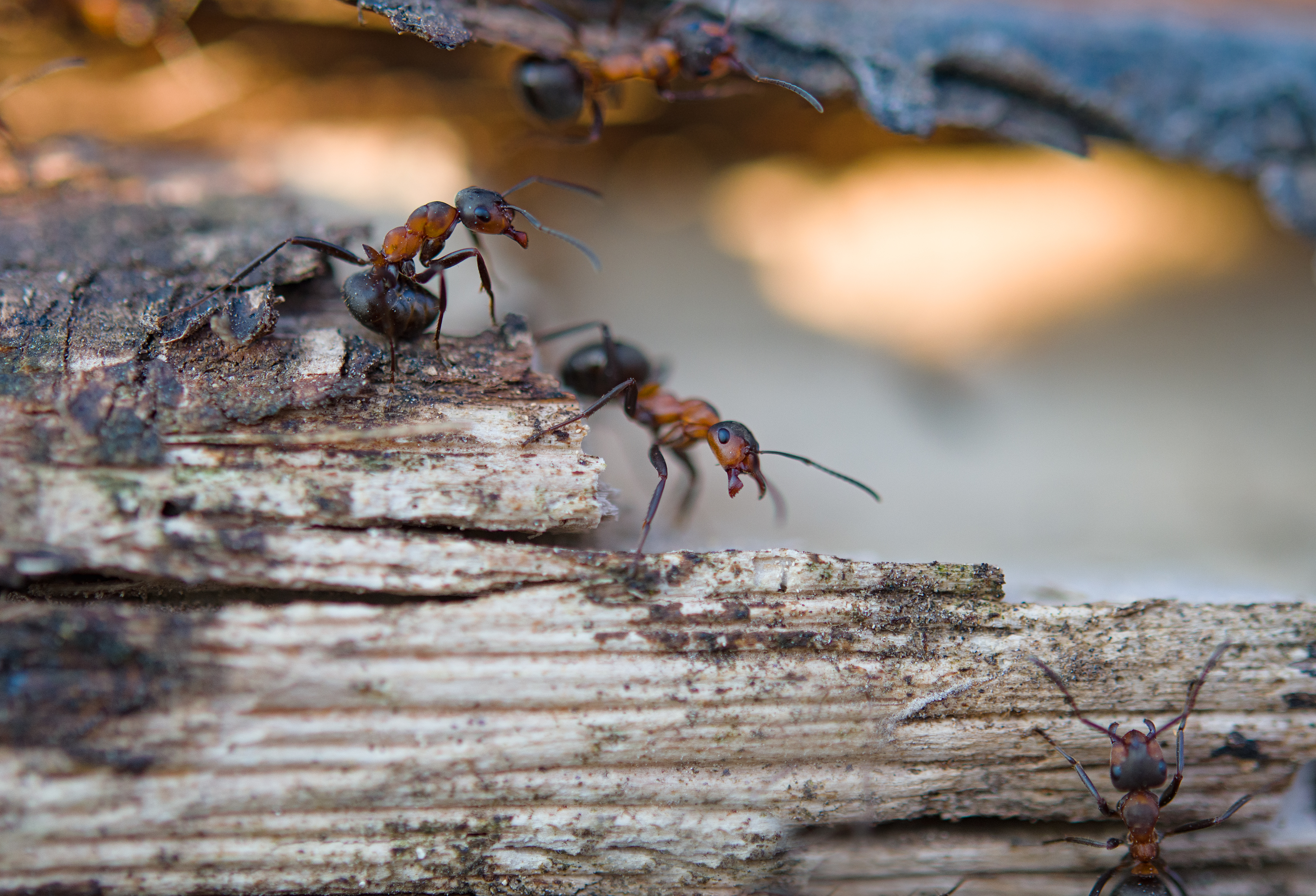
A group of small dark ants
Not always termites

Damaged wood or flying ants

  • Wood that sounds hollow or crumbles
  • Layered tunnels packed with dirt = termites
  • Clean galleries with sawdust = carpenter ants

Soft wood can be termites, carpenter ants or simple rot, and swarming ants are easily mistaken for termite swarmers. We tell you which it is so you treat the right problem.

Can you get rid of termites yourself?

Here's an honest look at the common do-it-yourself approaches and where they fall short:

ApproachWhat it doesThe catch
Spraying the swarmers or tubesKills the termites you can seeThe colony lives in the soil and keeps feeding
Replacing the damaged woodFixes what you can seeTermites move to the next piece of wood if they aren't treated
Store-bought stakes or granulesPuts some product in a few spotsHard to get continuous coverage along the whole foundation
Fixing moisture and wood-to-soil contactMakes the house less invitingPrevents β€” but doesn't eliminate β€” an active colony
Professional soil treatmentTreats the zone termites must cross to get in, plus active areasNeeds a licensed applicator and the right equipment

The do-it-yourself steps that really help are the prevention ones further down this page. For an active infestation, a licensed treatment is the reliable fix.

From your call to a treated house

1

Tell us what you see

Call or text 973-510-2585. Photos of the swarmers, wings, tubes or wood help us know what to look for before we arrive.

2

Inspection

A licensed technician checks the outside walls, stoop, porch and decks, then the basement: foundation, sill plates, joists, posts and where pipes come through the floor.

3

Clear explanation and free quote

We show you live activity, old damage and the conditions that invite termites, then recommend a treatment and give you a free quote.

4

Treatment

Most often a treatment in the soil along the foundation, so termites coming up from the ground pass through the treated zone, plus the active areas inside. We explain what we use and any precautions before we start.

If the wood needs repair, our crew handles that too: after the termites are treated, we repair damaged sill plates, joists, beams and framing, so new wood isn't attacked. See termite damage repair for what that involves.

Rowhouses, two-families and shared walls

Termites don't stop at a property line. In attached and semi-attached homes, a colony feeding under one house can reach the next through a shared foundation, a common stoop or a party wall. That doesn't mean your neighbor has to treat too β€” but it helps to know:

  • Treat your whole foundation line, including where your house meets the neighbor's, so there's no gap on your side.
  • Mention it to the neighbor if you find activity near the shared wall. A quick look on their side can save both houses trouble.
  • In two- and three-family houses, the owner usually arranges the treatment, since it involves the foundation and basement. Tenants who see swarmers should tell the owner in writing with photos.
  • Condo buildings usually handle the foundation as common property through the association or manager.

For general information on who handles what in rentals, see our landlord and tenant guide. Rules differ by building and lease, so check with your town's code enforcement or the NJ Department of Community Affairs for your situation.

Keeping termites out of a Weehawken house

πŸ’§

Send water away

Clear gutters and extend downspouts so they don't empty against the foundation. Fix leaks near basement windows and under sinks.

πŸͺ΅

Lift wood off the soil

Keep firewood, lumber and planters off the dirt and away from the wall. Stoop and deck posts should sit on concrete, not soil.

🌱

Keep a clear strip

Hold mulch and plantings back from the foundation so the wall stays dry and you can see it.

πŸ”¦

Look every spring

Walk the basement walls with a flashlight before swarm season. Older homes benefit from a professional inspection every year or two.

Buying or selling in Weehawken

Many home sales in New Jersey include a wood-destroying insect inspection, and VA loans require one. With attached homes and older basements, these inspections turn up termite evidence more often than buyers expect.

  • Call as early as you can and tell us the closing date, the lender and who should receive the report.
  • If termites are found, we explain the treatment and the paperwork you'll need to keep the sale on track.
  • Old damage without live termites is common in older buildings. The report tells you which is which.

More: VA termite inspections in New Jersey.

Get a Free Termite Quote in Weehawken

Tell us what you found β€” swarmers, wings, mud tubes or soft wood β€” and where. If you're buying or selling, include the closing date.

Why Weehawken calls us for termites

  • Swarmers inside the house in spring
  • Mud tubes on the basement wall
  • Soft wood under a stoop or porch
  • Termites found during a renovation
  • An inspection for a sale or VA loan
πŸ“ž Call 973-510-2585

Request Service

πŸ”’ Your info stays private Β· Hablamos espaΓ±ol.

What's bugging you? - Step 1 of 3

Termite Questions from Weehawken

Do termites live in Hudson County cities like Weehawken?

Yes. Eastern subterranean termites live in the soil throughout North Jersey, and they reach city homes through foundations, stoops and porches.

Is finding termites an emergency?

It's urgent but rarely a same-hour crisis β€” termites work slowly. Soft or sagging wood, termites found mid-renovation or a near closing date are the cases to act on right away.

Can I get rid of termites myself?

You can make the house less inviting, but store sprays only kill the termites you see. An active colony needs a licensed treatment along the foundation and in the active areas.

What should I do if termites are swarming inside right now?

Vacuum the swarmers, save a few in a bag for a photo, don't spray the wall, and call for an inspection. The swarm itself will stop on its own.

How do I tell termite swarmers from flying ants?

Termites have a thick waist, straight antennae and four equal wings. Flying ants have a pinched waist, bent antennae and longer front wings.

My neighbor has termites. Will I get them?

In attached homes it's possible, since colonies can follow a shared foundation. An inspection of your side tells you whether they've reached your house.

Do you repair termite damage too?

Yes. We treat the termites first, then our crew repairs the damaged wood ourselves β€” sill plates, joists, beams and framing. One company handles both.

How long does termite treatment take?

Most houses are treated in one visit. Larger buildings or finished basements can take longer, and we tell you before we start.

Do you do termite inspections for home sales?

Yes, including VA loans. Call early with the closing date and lender.

Are you licensed, and do you come to Weehawken?

Yes. We hold NJ License 90568B, have over 15 years of experience, and serve Weehawken and the rest of Hudson County from our base in Garfield.

ΒΏHablan espaΓ±ol?

SΓ­. Hablamos espaΓ±ol. Llame o mande un texto al 973-510-2585.

Termite control near Weehawken

We serve Weehawken and nearby towns in Hudson and Bergen counties.

Updated November 2026 by the Silver Bullet Pest Control team, Garfield, NJ β€’ NJ License 90568B

Scroll to Top