
 Silver Bullet Pest Control
Bee, Wasp & Hornet Removal in New Jersey
Yellow jackets disappearing into a gap in the siding, wasps building under the same eave every year, or bees going in and out of a vent? Silver Bullet Pest Control removes the nest first, then seals the openings so bees, wasps and hornets don't move back in next season.
4.9 stars on Google • NJ License 90568B • 15+ years • Honey bees relocated with a local beekeeper • Hablamos español
Text a photo of the gap or nest (from a safe distance) to 973-510-2585.
- ✓ Same-day appointments often available
- ✓ Licensed & insured in NJ
- ✓ Homes & businesses
- ✓ English & Español
What is bee and wasp exclusion sealing?
Bee and wasp exclusion sealing means treating or removing the nest first, then closing the gaps in siding, soffits, vents and trim that bees, wasps and hornets use to build inside your walls, so a new colony can't move in. The order matters: sealing an active nest traps the insects inside, and they can chew through drywall into your home. Silver Bullet Pest Control handles both steps and relocates honey bees with a local beekeeper. Call or text 973-510-2585 for a free quote.
The #1 rule of wasp exclusion: never seal an active nest
The most common mistake we see is a homeowner spotting yellow jackets flying in and out of a gap in the siding and stuffing it with caulk, foam or steel wool. It feels like the obvious fix. It isn't.
A yellow jacket nest inside a wall can hold thousands of insects by late summer. Block the only door and they don't leave — they look for another way out. That's often through the drywall and into a bedroom, closet or attic, or out through a light fixture or outlet. We get these calls every August and September.
If you see wasps or bees going in and out of a hole in your house, leave it open. Keep people and pets away, and call or text 973-510-2585. Same-day visits are often available.
The right order is always: identify, treat or remove, confirm the nest is dead or gone, then seal. That's what exclusion means.
Where bees and wasps get into North Jersey homes
| Entry point | What we usually find | How it's sealed |
|---|---|---|
| Gaps in vinyl or aluminum siding | Yellow jackets nesting in the wall cavity | Gap closed after the nest is dead; loose pieces refastened |
| Soffits and fascia | Wasps or honey bees in the soffit; gaps where boards meet | Openings closed; damaged soffit pointed out for repair |
| Gable, roof and attic vents | Missing or torn screens; nests in the attic | Vent screened so air still flows but insects can't pass |
| Dryer and bathroom exhaust vents | Wasps in a stuck-open flap | Flap fixed or a guard added |
| Gaps around pipes, wires, AC lines | Small openings at the siding or brick | Sealed with a durable exterior sealant |
| Weep holes and brick gaps | Wasps and bees in masonry voids | Insect-proof covers that still let water drain |
| Under decks, porches and stairs | Ground-nesting yellow jackets and paper wasps | Nest treated; voids and rodent holes filled after |
Many of these are the same openings mice, squirrels and bats use. See animal entry point sealing for whole-house exclusion.
Which insect is it? Why it changes the plan
The kind of insect decides how the nest is removed and when we can seal:
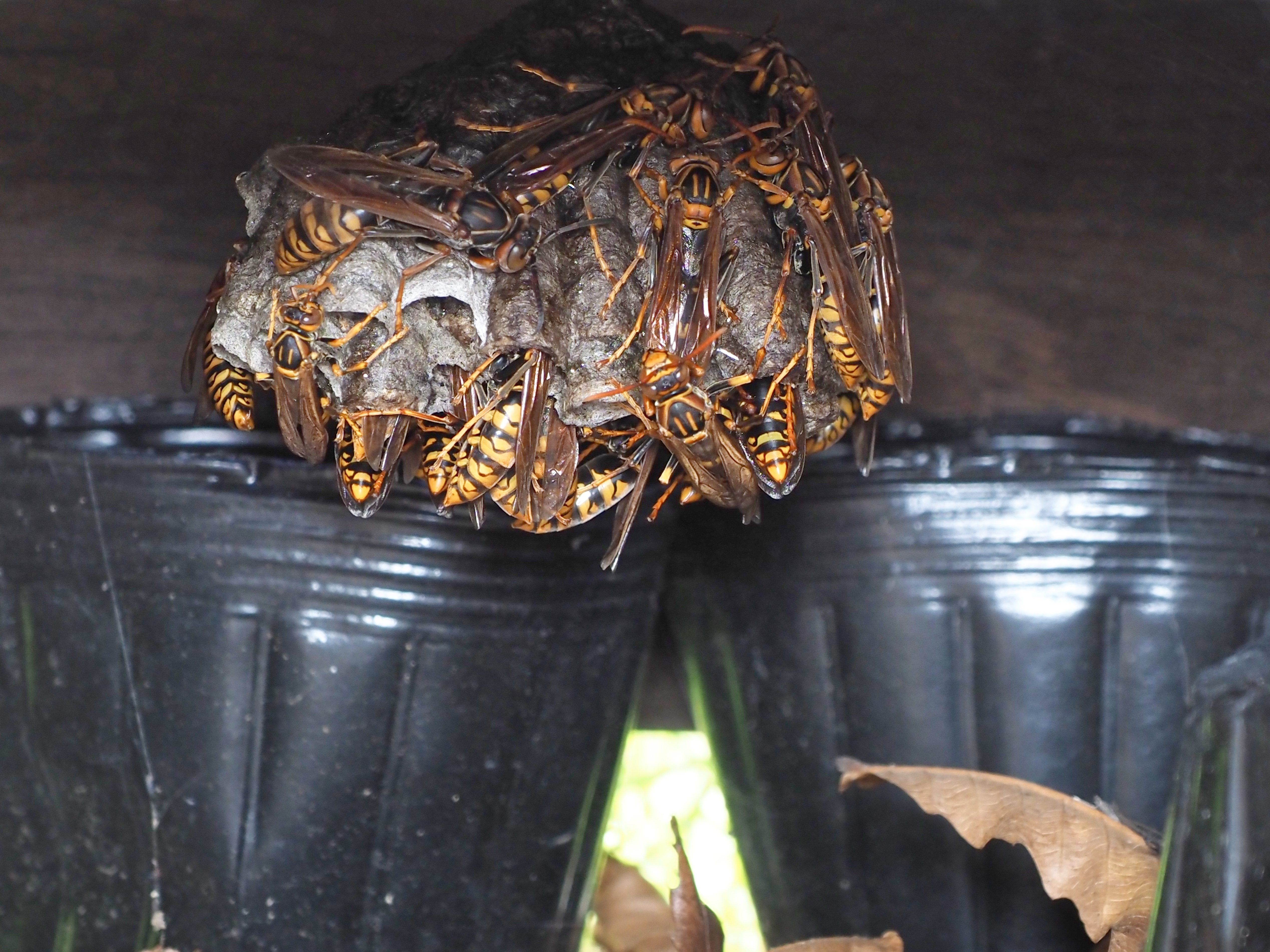
Paper wasps
- Open, umbrella-shaped comb you can see
- Under eaves, porch roofs, railings, grills
- Long legs dangling in flight
Exposed nests are treated and taken down. They keep coming back to the same sheltered spots, so sealing gaps in the eaves and trim helps.
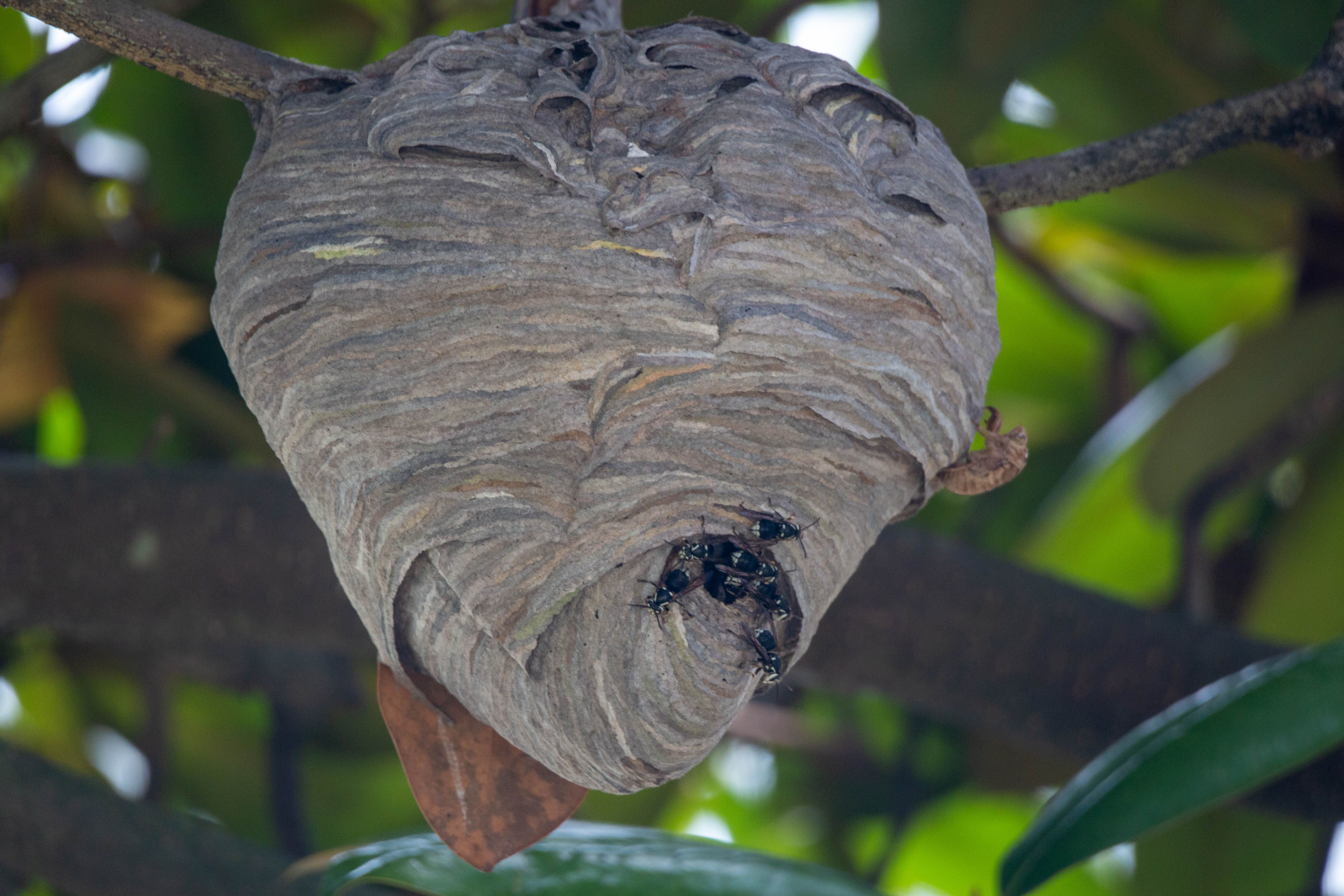
Yellow jackets & hornets
- Yellow jackets: hidden nests in walls or the ground
- Bald-faced hornets: gray paper ball in trees or under eaves
- Very defensive near the nest
Wall nests are treated through the entry hole, then left open until activity stops before we seal. Hornet nests in shrubs and trees are treated and removed.
Honey bees
- Fuzzy, golden-brown, calmer than wasps
- Steady stream in and out of one spot
- Wax comb inside walls or soffits
Honey bees are not exterminated. We work with a local beekeeper so the colony is relocated, and the comb is dealt with before the opening is sealed.
Our bee and wasp exclusion process
Inspect & identify
We confirm the insect, find the main entry and look for other nests and gaps around the house — there's often more than one.
Treat or relocate
Wasp and hornet nests are treated by a licensed technician in protective gear. Honey bees are relocated with a local beekeeper.
Wait for activity to stop
Wall nests are left open long enough for returning insects to contact the treatment. We check that the nest is dead before sealing.
Seal & screen
Gaps, vents and openings are sealed or screened with exterior-grade materials, and we tell you about any siding or wood that needs a carpenter.
Exactly what sealing is included depends on the house — your free quote spells it out. Ask us if you want the whole house checked, not just the nest area.
Honey bees in the wall: why they're handled differently
Honey bees matter for gardens and crops, and a colony that has moved into a wall or soffit can be relocated instead of killed. Silver Bullet works with a local beekeeper for honey bee swarms and colonies.
Honey bee colonies are also different from wasps in one important way: they build wax comb and store honey. If a colony dies inside a wall and the comb is left behind, the honey and wax can melt in summer heat, stain walls and ceilings, and attract other insects and rodents. That's why sealing comes after the colony and comb have been dealt with, not before.
A swarm hanging on a tree branch or fence is usually just resting while scouts look for a new home. Keep your distance and call — it may move on, or the beekeeper may be able to collect it. More on that on our New Jersey beekeepers page.
Carpenter bees — the big shiny ones drilling round holes in decks and fascia — are a different problem again. Ask us about the holes you're seeing.
Hornet exterminator for Saddle Brook, Garfield and nearby towns
Our base is in Garfield, and Saddle Brook, Lodi, Elmwood Park, Clifton and Hackensack are right around us, so hornet and yellow jacket calls in these towns are often handled the same day. The housing here — lots of capes, split-levels, two-families and homes with vinyl siding and decks — gives yellow jackets plenty of wall gaps and under-deck voids, and bald-faced hornets build in the trees and hedges in the yards.
Whether it's one hornet nest in a shrub or yellow jackets in the wall of a Saddle Brook ranch, the plan is the same: treat it safely, confirm it's dead, then seal the opening so the next queen doesn't pick the same spot in spring. We also serve the rest of Bergen, Passaic, Essex and Hudson counties.
Nearby pages: same-day wasp control in Garfield, pest control in Saddle Brook and emergency wasp removal in Clifton.
DIY mistakes that make wasp problems worse
Plugging the hole
Traps the colony inside; they chew out through drywall, light fixtures or outlets.
Spraying up close
Most stings happen on ladders or when spraying a nest from a few feet away.
Fire or gasoline
Extremely dangerous, and it can set the house, deck or yard on fire.
Flooding a ground nest
Usually doesn't reach the nest and makes the yellow jackets very aggressive.
Allergic to stings? Don't go near the nest at all. Swelling of the face or throat or trouble breathing after a sting is an emergency — call 911.
What affects the cost of bee and wasp exclusion
Quotes are free. These change the size of the job:
| Factor | Smaller job | Bigger job |
|---|---|---|
| Insect | Paper wasps under an eave | Yellow jackets in a wall, or a honey bee colony |
| Nest location | Low and easy to reach | Second or third floor, inside a wall or soffit |
| Number of openings | One gap at the nest | Many gaps, vents and damaged screens around the house |
| Season | Spring, small nest | Late summer, large active nest |
| Extra work | Treatment and seal | Comb removal, follow-up visits or repairs by a carpenter |
Call or text 973-510-2585 with a photo of the nest or gap and we'll tell you what we'd recommend.
Related bee and wasp pages
Get a Free Bee & Wasp Exclusion Quote
Tell us what insect you think it is, where it's going in and which floor. A photo from a safe distance helps a lot.
Why people call us for sealing
- Yellow jackets going in and out of the siding
- Wasps building under the same eave every year
- Honey bees in a soffit or wall
- Buzzing inside a wall or ceiling
- They want the nest gone and the gap closed
Request Service
🔒 Your info stays private · Hablamos español.
Bee & Wasp Exclusion Questions
Should I seal a hole wasps are going into?
No — not while the nest is active. Sealing the entrance traps the wasps inside and they often chew through drywall into the house. The nest should be treated first, activity confirmed stopped, and then the hole sealed. Keep people and pets away and call a professional in the meantime.
How long after treating a wasp nest can I seal the hole?
Usually after activity has clearly stopped, which is often within a day or a few days depending on the nest size and insect. Returning wasps need time to contact the treatment. We check the entry before sealing so nothing is trapped inside.
Can wasps chew through drywall?
Yes. Yellow jackets nesting in a wall can chew through drywall and ceilings, especially if their outside entrance gets blocked. If you hear buzzing or crackling in a wall or see wasps coming from a light fixture or outlet, call right away and don't cover the spot with tape.
Do you kill honey bees?
No. We work with a local beekeeper so honey bee swarms and colonies are relocated, not exterminated. The comb also needs attention before the opening is sealed, because leftover honey and wax can attract other pests.
How do I stop wasps from nesting on my house every year?
Seal the gaps they use after the season's nests are gone — siding seams, soffit gaps, vent screens and pipe openings. Knocking down small nests early in spring also helps, since a single queen starts each nest. A late-fall or winter sealing visit is a good time.
Is it safe to remove a wasp nest myself?
A tiny, early-spring paper wasp nest low on a porch can be manageable, but wall nests, ground nests, hornet nests and anything high up are not DIY jobs. Most stings happen up close or on ladders. Anyone allergic should stay away completely.
Do you offer hornet removal in Saddle Brook?
Yes. Saddle Brook is right next to our Garfield base, so hornet, wasp and yellow jacket calls there are often handled the same day. We treat the nest, remove it where it can be reached and seal openings so they don't come back.
What time of year is best for bee and wasp exclusion?
Late fall and winter, after nests have died off, is the easiest time to seal a house because nothing is active. If a nest is active now, it gets treated first, and sealing follows once it's dead.
How much does bee and wasp exclusion cost?
It depends on the insect, how high and hidden the nest is, and how many openings need sealing. We give a free quote after seeing photos or the house. Honey bee colonies in walls usually take more work than a paper wasp nest under an eave.
¿Pueden sellar los huecos donde entran avispas?
Sí. Primero tratamos o retiramos el nido y después sellamos las entradas. Hablamos español — llame o mande texto al 973-510-2585.
Bee & wasp exclusion near you
Based in Garfield, we handle bees, wasps and hornets across Bergen, Passaic, Essex and Hudson counties.
Our service area
Bergen County
973-510-2585- Allendale
- Bergenfield
- Bogota
- Carlstadt
- Cliffside Park
- Closter
- Cresskill
- Demarest
- Dumont
- East Rutherford
- Edgewater
- Elmwood Park
- Emerson
- Englewood
- Englewood Cliffs
- Fair Lawn
- Fairview
- Fort Lee
- Franklin Lakes
- Garfield
- Glen Rock
- Hackensack
- Harrington Park
- Hasbrouck Heights
- Haworth
- Hillsdale
- Ho-Ho-Kus
- Leonia
- Little Ferry
- Lodi
- Lyndhurst
- Mahwah
- Maywood
- Midland Park
- Montvale
- Moonachie
- New Milford
- North Arlington
- Northvale
- Norwood
- Oakland
- Old Tappan
- Oradell
- Palisades Park
- Paramus
- Park Ridge
- Ramsey
- Ridgefield
- Ridgefield Park
- Ridgewood
- River Edge
- River Vale
- Rochelle Park
- Rutherford
- Saddle Brook
- Saddle River
- South Hackensack
- Teaneck
- Tenafly
- Teterboro
- Upper Saddle River
- Waldwick
- Wallington
- Washington Township
- Westwood
- Woodcliff Lake
- Wood-Ridge
- Wyckoff
Passaic County
973-510-2585- Bloomingdale
- Clifton
- Haledon
- Hawthorne
- Little Falls
- North Haledon
- Passaic
- Paterson
- Pompton Lakes
- Prospect Park
- Ringwood
- Totowa
- Wanaque
- Wayne
- West Milford
- Woodland Park
Essex County
973-510-2585- Belleville
- Bloomfield
- Caldwell
- Cedar Grove
- East Orange
- Essex Fells
- Fairfield
- Glen Ridge
- Irvington
- Livingston
- Maplewood
- Millburn
- Montclair
- Newark
- North Caldwell
- Nutley
- Orange
- Roseland
- Short Hills
- South Orange
- Verona
- West Caldwell
- West Orange
Hudson County
973-510-2585Union County
973-510-2585- Berkeley Heights
- Clark
- Cranford
- Elizabeth
- Fanwood
- Garwood
- Hillside
- Kenilworth
- Linden
- Mountainside
- New Providence
- Plainfield
- Rahway
- Roselle
- Roselle Park
- Scotch Plains
- Springfield
- Summit
- Union
- Westfield
Morris County
973-510-2585- Boonton
- Butler
- Cedar Knolls
- Chatham
- Denville
- Dover
- East Hanover
- Florham Park
- Hanover
- Kinnelon
- Lincoln Park
- Madison
- Mendham
- Montville
- Morris Plains
- Morristown
- Mountain Lakes
- Parsippany
- Pequannock
- Randolph
- Riverdale
- Rockaway
- Roxbury
- Whippany
Updated November 2026 by the Silver Bullet Pest Control team, Garfield, NJ • NJ License 90568B