
 Silver Bullet Pest Control
Emergency Wasp, Hornet & Yellow Jacket Removal in North Jersey
Wasps pouring out of a hole by the front door? Yellow jackets chewing through a bedroom wall? Someone just got stung? Silver Bullet Pest Control removes wasp, hornet and yellow jacket nests for homes and businesses across Bergen, Passaic, Essex and Hudson counties. Same-day service is often available depending on your location and our schedule — call 973-510-2585.
Featured on Telemundo 47 • EPA Pesticide Safety Certified • 5-Star Google Rated • NJ License 90568B
From a safe distance, a zoomed-in photo of the nest or the hole they're using tells us a lot. Text it to us — don't get close to take it.
- ✓ Same-day appointments often available
- ✓ Licensed & insured in NJ
- ✓ Homes & businesses
- ✓ English & Español
What should I do about a wasp or hornet nest by my door right now?
Keep everyone away from that door, use another entrance, and call a professional — don't spray, knock down, burn, flood or plug the nest yourself. Disturbing a nest is how most bad multi-sting incidents happen, and yellow jackets and hornets defend their nests hard. If anyone has trouble breathing, swelling of the face or throat, or feels faint after a sting, call 911 right away. Silver Bullet Pest Control removes wasp, hornet and yellow jacket nests across North Jersey, and same-day service is often available depending on your location and our schedule; call 973-510-2585.
If someone was just stung
Call 911 right away if, after a sting, a person has trouble breathing or swallowing, wheezing, swelling of the lips, tongue, face or throat, hives spreading beyond the sting, dizziness or fainting, a racing heartbeat, or vomiting. These can be signs of anaphylaxis, a severe allergic reaction. If they carry an epinephrine auto-injector, help them use it as prescribed and still call 911.
For a normal sting with no signs of allergy, most people can take care of it at home:
- Walk away from the nest first. Calmly but quickly get indoors or well away from the area. Swatting draws more stingers.
- Check for a stinger. Honey bees usually leave one behind; wasps, hornets and yellow jackets usually don't. If you see one, scrape it out sideways with a fingernail or card.
- Wash the area with soap and water.
- Use a cold pack wrapped in a cloth to ease swelling and pain, and raise the arm or leg if that's where the sting is.
- Watch for changes over the next few hours. Call a doctor if the swelling keeps spreading or if someone was stung many times, or in the mouth or throat.
Once everyone is safe, call us at 973-510-2585 about the nest so it doesn't happen again.
Where's the nest? What to do right now
Where the nest is matters more than how big it looks. Use this to figure out your next move:
| Nest location | Risk | What to do until we arrive |
|---|---|---|
| Door frame, porch ceiling or eaves over an entrance | High — every trip in or out passes it | Use a different door, tell family and guests, keep the porch light off at night |
| Hole in the lawn or garden bed (ground nest) | High — mowers and feet set them off | Rope off the area, don't mow or weed-whack nearby, keep kids and dogs out of the yard |
| Gap in siding, a wall or a ceiling | High — they can chew inward | Don't seal the hole; close off the room if you hear chewing or see insects inside |
| Grill, mailbox, play set or patio furniture | Medium to high — close to hands and faces | Stop using it, and don't try to cover or move it |
| Shrub, hedge or low tree branch | Medium — easy to bump into | Don't trim or prune near it; mark it so no one walks into it |
| High in a tree or roof peak, away from doors | Lower — often can wait for a regular visit | Keep an eye on traffic around it and call for a quote |
Can't tell where they're coming from? Watch from a window or a safe distance for a few minutes — the insects fly in and out of the same opening. Then call us and describe it.
Yellow jackets in the wall: don't seal the hole
Yellow jackets often build inside wall cavities, attics, soffits and the space between floors, going in and out through a small gap in the siding or trim. When homeowners find the hole, the natural reaction is to caulk it, foam it or tape it shut. Please don't.
Sealing the outside hole traps a whole colony inside the wall with only one way to go: in. Yellow jackets can chew through drywall and ceiling material, and they'll come out wherever there's light — through outlets, light fixtures, vents or a fresh hole in the drywall of a bedroom. The same goes for sealing a hole on the inside of the wall: it doesn't kill the nest, it just changes where they look for a way out.
What to do instead:
- Leave the outside opening alone and stay clear of it.
- If you hear chewing or crackling inside a wall, or see a soft or damp spot on the drywall, close that room and keep everyone out.
- If yellow jackets are already inside, shut the door, put a towel under it, and turn off the lights in that room — they're drawn toward light.
- Call us at 973-510-2585. Treating a nest inside a structure is a job for a professional with the right gear.
For more on nests inside buildings, see bee control and wasp removal.
Four things never to do to a nest
Don't spray it at close range
A can of store-bought spray rarely reaches the whole colony, especially in a wall or the ground. What it does do is bring the defenders out — straight at you.
Don't burn it
Setting fire to a nest is how porches, siding, sheds and hedges catch fire. Gasoline poured in a ground nest is dangerous and can contaminate the soil.
Don't flood it
Pouring water down a ground nest or hosing a nest on the house usually doesn't drown the colony. It makes them angry and can push them into the house.
Don't knock it down
Hitting a hornet nest with a broom or a stick, or throwing something at it, is the fastest way to get stung many times at once.
Who's stinging you? A quick ID
Knowing which insect you have tells us how to treat it and which warranty applies. Here are the ones behind most emergency calls in North Jersey:
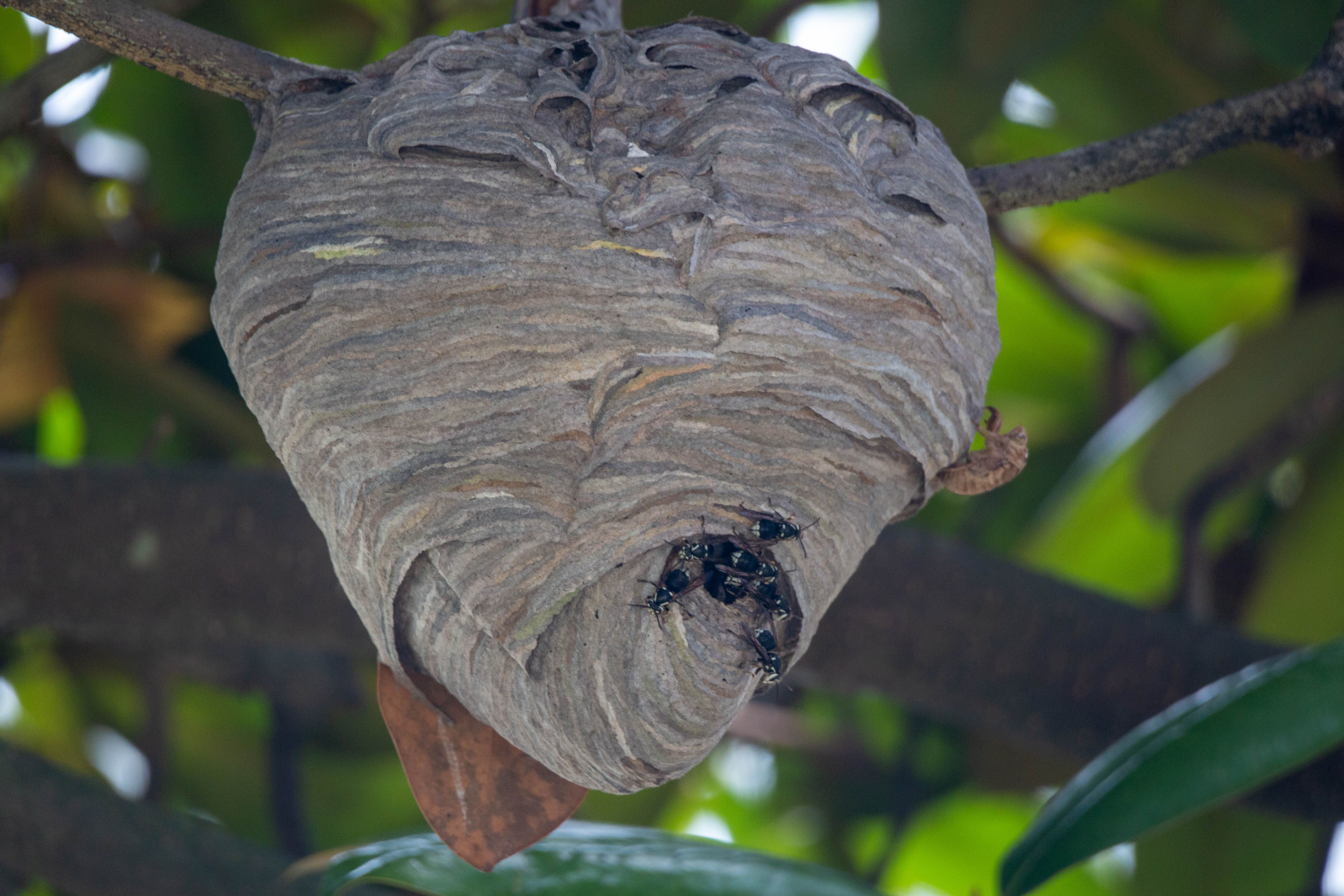
Bald-Faced Hornets
- Large gray, papery nest shaped like a football or teardrop
- Hangs in trees, shrubs or under eaves
- Black-and-white insects that defend the nest aggressively
Bald-faced hornets are actually a kind of yellow jacket. Their nests can get very large by late summer, and they will chase people who get too close.
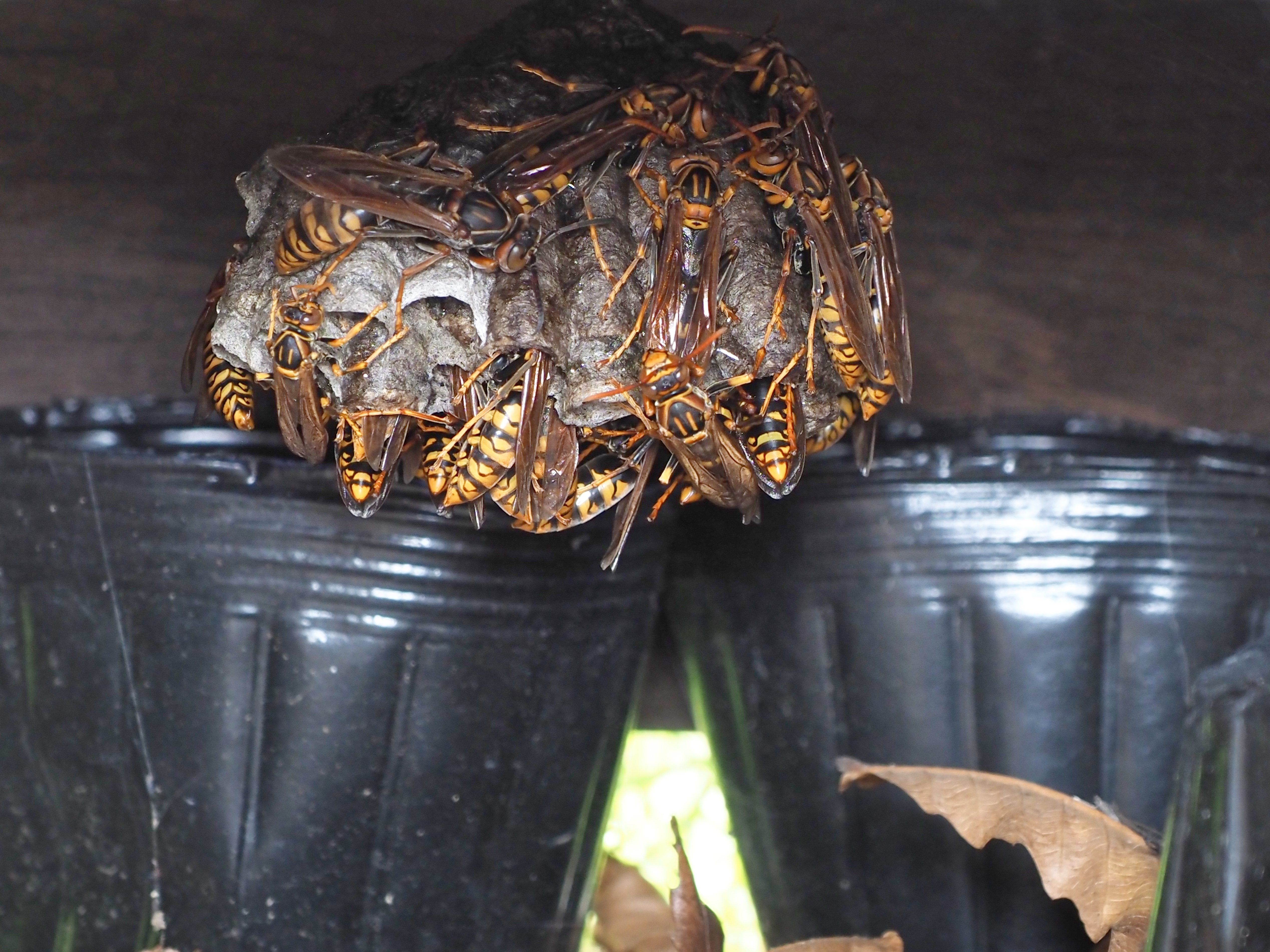
Paper Wasps
- Open, umbrella-shaped nest with visible cells
- Under railings, eaves, grills and porch ceilings
- Long dangling legs in flight
Paper wasps are usually less aggressive than yellow jackets, but their nests are often right where hands go — under a railing or a grill lid.

Yellow Jackets in the Ground or Walls
- Steady stream of yellow-and-black insects into one hole
- Nests in lawns, under steps or inside walls
- Bother people at picnics and trash cans
Yellow jackets cause many of the worst sting incidents because their nests are hidden and big. Ground and wall nests need professional treatment.
How emergency nest removal works
You call
Tell us where the nest is, how close it is to doors or play areas, and whether anyone has been stung or is allergic. That helps us decide how urgent it is.
We schedule
Same-day service is often available depending on your location and our schedule. We'll tell you what to do to stay safe until we get there.
We treat the nest
The tech identifies the insect, suits up, and treats the nest — including nests inside walls or in the ground.
You're covered
Depending on the species, service comes as a one-time treatment or with a 30, 60 or 90-day warranty. If activity comes back within the warranty, we re-treat.
Why late summer and fall bring the most emergency calls
In New Jersey, wasp and yellow jacket colonies start small in spring when a single queen builds a nest. Through the summer the colony grows, and by August and September a yellow jacket or hornet nest can hold a very large number of workers. That's also when food gets scarcer, so yellow jackets show up at cookouts, trash cans and soda cans, and they're quicker to defend the nest.
That's why so many people find a nest for the first time in late summer: the lawn mower runs over a ground nest, someone opens a shed door, or kids start playing near a bush that's been quietly growing a hornet nest all season. Most colonies die off after hard frosts, and the queens leave to spend the winter elsewhere. Old nests usually aren't reused, but a protected spot can attract a new queen next year.
A nest you spot early in the season is smaller and easier to deal with. If you see one in May or June near a door, call before it grows.
Related stinging insect help
Get a Stinging Nest Removed
For a nest near a door or someone who's allergic, calling 973-510-2585 is the fastest. Otherwise, tell us where the nest is and we'll get back to you quickly.
Nests that shouldn't wait
- Wasps or hornets over a front or back door
- Yellow jackets in the lawn where kids play
- Insects chewing through a wall or ceiling
- A nest under a deck, railing or grill
- Someone in the house with a sting allergy
Request Service
🔒 Your info stays private · Hablamos español.
Emergency Wasp & Hornet Removal FAQ
Can you remove a wasp nest today?
Same-day service is often available depending on your location and our schedule. Call 973-510-2585 to find out.
What are the signs of a serious allergic reaction to a sting?
Trouble breathing, swelling of the face, lips or throat, spreading hives, dizziness or fainting. Call 911 right away if you see any of these.
I have yellow jackets in my wall. Should I seal the hole?
No. Sealing the hole can force them to chew into the house. Leave it open, keep clear of it and call us.
Can I spray a hornet nest myself?
We don't recommend it. Spraying at close range rarely kills the whole colony and often sets off a mass attack.
Does pouring water or gasoline into a ground nest work?
No. Flooding usually doesn't reach the colony, and gasoline is a fire and safety hazard. Rope off the area and call a professional.
How do I know if it's a wasp, hornet or yellow jacket?
Paper wasps build open umbrella-shaped nests, bald-faced hornets build closed gray paper nests in trees and eaves, and yellow jackets usually nest in the ground or inside walls. Our ID guide has more detail.
Do you give a warranty on wasp and hornet removal?
Yes, depending on the species: service is offered as a one-time treatment or with a 30, 60 or 90-day warranty. If activity returns within the warranty, we re-treat.
What do I do if wasps are already inside my house?
Close the room, put a towel under the door, turn off the lights in that room and call us. Don't swat at them.
Will the nest come back next year?
Most colonies don't reuse an old nest, but a sheltered spot can attract a new queen. We point out spots that are likely to be used again.
Are you licensed in New Jersey?
Yes. Silver Bullet Pest Control holds NJ Pesticide License 90568B.
¿Pueden quitar un nido de avispas hoy?
A menudo hay servicio el mismo día, según su zona y nuestro horario. Hablamos español — llame al 973-510-2585.
Emergency wasp and hornet removal near you
Based in Garfield, we remove stinging nests in these towns and across Bergen, Passaic, Essex and Hudson counties.
Updated October 2026 by the Silver Bullet Pest Control team, Garfield, NJ • NJ License 90568B