
 Silver Bullet Pest Control
Solar Panel Critter Guard in NJ: Get Pigeons and Squirrels Out From Under Your Panels
Cooing on the roof at sunrise, sticks poking out from under the array, droppings on the patio? The gap under rooftop solar panels is a dry, hidden shelter, and pigeons and squirrels move in fast. Silver Bullet Pest Control removes the animals and nests the legal way, cleans out the mess, and installs mesh critter guard skirting around the whole array so they can't get back under.
4.9 stars on Google • NJ License 90568B • Licensed by NJ Fish & Wildlife for wildlife work • 15+ years • Based in Garfield • Hablamos español
Text a photo of your roof or the gap under the panels to 973-510-2585 and we'll tell you what we see.
- ✓ Same-day appointments often available
- ✓ Licensed & insured in NJ
- ✓ Homes & businesses
- ✓ English & Español
What is a solar panel critter guard, and do I need one in NJ?
A solar panel critter guard in NJ is a mesh skirting fastened around the outside edge of a rooftop solar array that closes the gap under the panels, so pigeons and squirrels can't nest there. If you see birds landing on the edge of the panels, nesting material sticking out, or droppings under the array, you need one — but the animals and nests have to come out first. Silver Bullet Pest Control does all three steps: removal, cleanout and the guard. Call or text 973-510-2585.
Why pigeons and squirrels love the space under solar panels
Most rooftop arrays sit on racking a few inches above the shingles. From a bird's or squirrel's point of view, that creates the perfect hiding spot:
- A roof over their heads. The panels block rain, snow and wind.
- Protection from hawks. Nothing can swoop in from above, and people rarely look under there.
- Warmth. Dark panels and shingles hold heat from the sun, which matters a lot in a North Jersey winter.
- A flat, sheltered floor. Perfect for a pile of nesting sticks or a squirrel's leaf nest.
Once one pair of pigeons nests under an array, more tend to follow. Pigeons can raise several broods a year, and the young often come back to the roof where they hatched. Squirrels are similar: a nest under the panels is also a short walk to the roof edge, the gutters and any soft spot that leads into the attic.
That's why the problem rarely fixes itself. Scaring the birds off for a day doesn't help when they have years of nesting habit tied to your roof.
Who moves in under rooftop solar arrays
Pigeons are the most common, but squirrels cause the most chewing damage. Here's what we look for during the inspection:
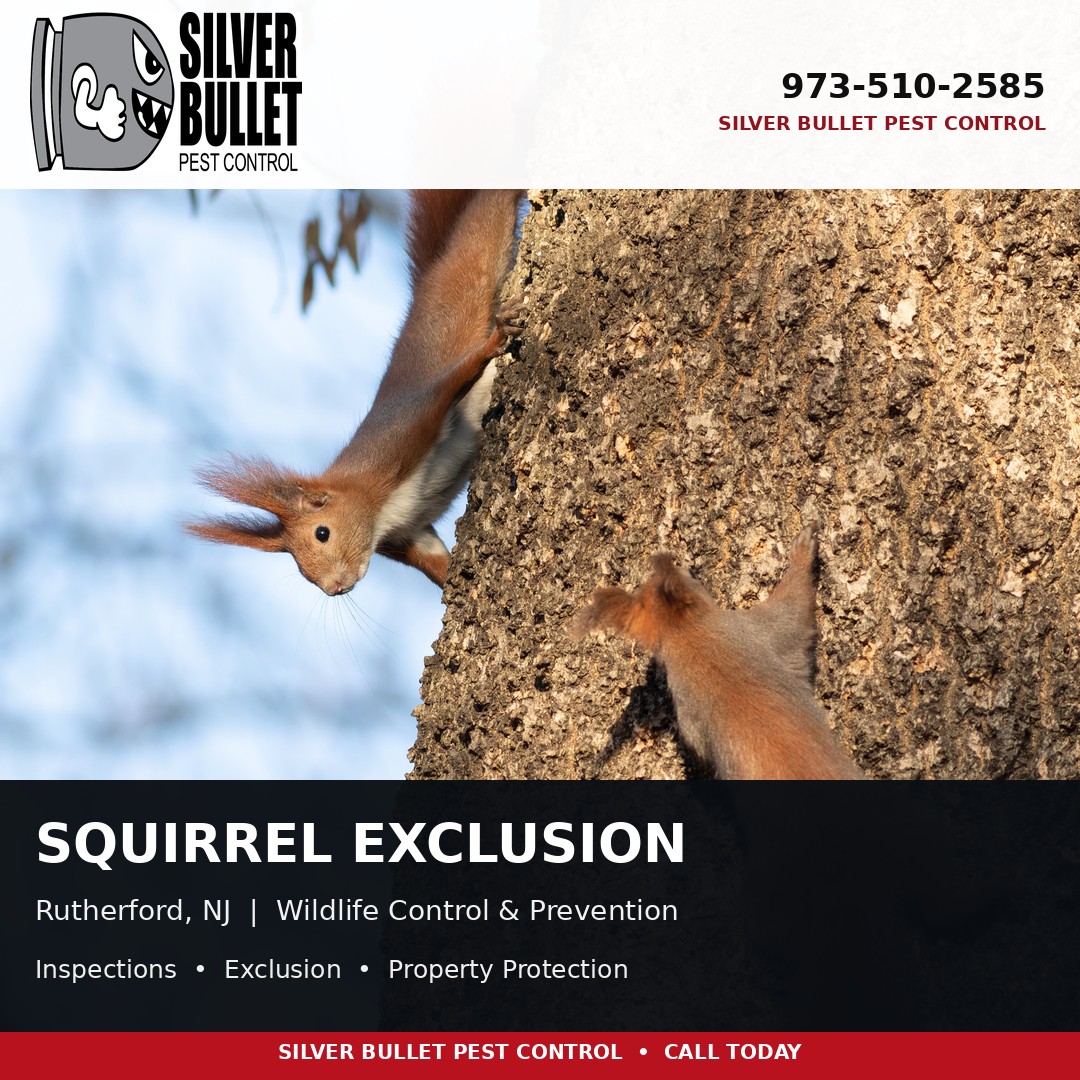
Gray squirrels
- Leaf and twig nests under the panels
- Chewed wire covers and conduit
- Trails across the shingles to the roof edge
Squirrels chew constantly to keep their teeth in check, and solar wiring under an array is right there. They also use the panels as a base to reach soffits, vents and roof gaps.
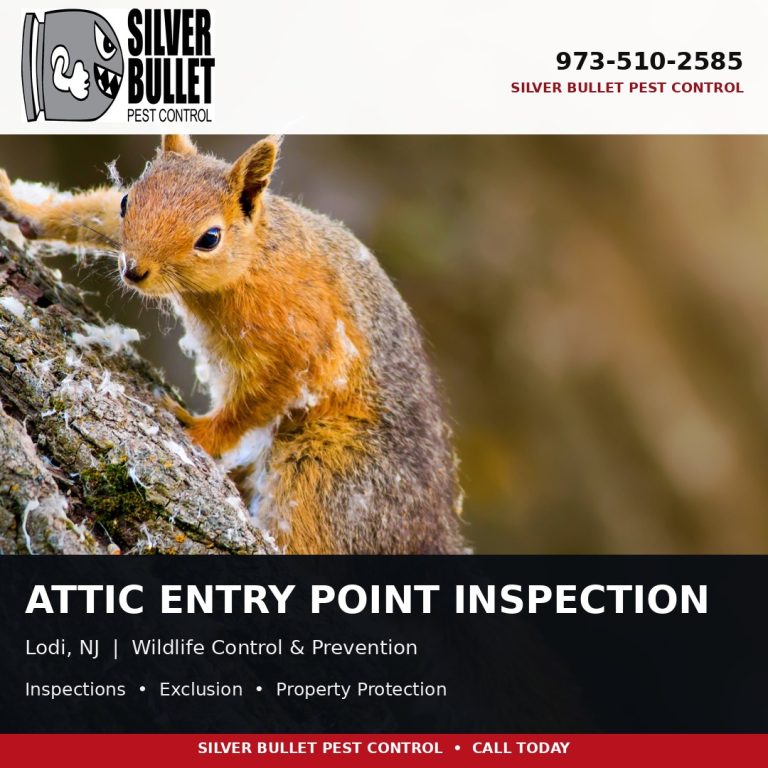
When they move inside
- Scratching in the attic in the morning
- A chewed hole at the soffit or fascia
- Gnaw marks on a roof vent
A squirrel living under the panels often finds its way into the house too. If it has, the guard alone isn't enough — the attic entry has to be handled with one-way exclusion and sealed.
Pigeons and other birds
- Cooing and wing flapping at dawn
- Droppings on panels, gutters and the patio
- Sticks and feathers at the array edge
Pigeons are the classic solar pest. House sparrows and starlings also nest under panels. We identify the bird first, because that decides what's allowed and when.
Signs of pigeons or squirrels under your solar panels
| What you notice | What it usually means | Likely animal |
|---|---|---|
| Cooing, shuffling or flapping on the roof, mostly early morning | Birds roosting or nesting under the array | Pigeons |
| White droppings streaking the panels, gutters, deck or driveway | Birds landing and living on the roof | Pigeons, starlings, sparrows |
| Sticks, feathers or leaves poking out from the panel edge | A nest under the panels | Pigeons or squirrels |
| Squirrels running onto the roof and disappearing at the array | A nest or shelter under the panels | Squirrels |
| Lower solar output or a system error with no clear cause | Possible chewed wiring or debris — have your installer check | Squirrels |
| Scratching in the attic near the panels | Animals have found a way into the house | Squirrels (sometimes birds) |
Not sure what you're looking at? Stand back in the yard, take a zoomed photo of the panel edge and text it to 973-510-2585.
Why nesting under solar panels is more than a nuisance
Chewed wiring
Squirrels can gnaw wire coverings and connectors under the array. That's a repair for your solar installer or an electrician, and it's the main reason to keep squirrels out.
Nests trap debris
Sticks, leaves and droppings pile up under the panels, hold moisture against the roof and block water from draining the way it should.
Droppings everywhere
Pigeon droppings stain panels, clog gutters and land on patios, cars and walkways. Built-up droppings are unpleasant to breathe in when they dry, so they shouldn't be swept dry.
A doorway to the attic
Animals living on the roof test every vent, soffit gap and roof edge nearby. A solar nest is often step one before a squirrel ends up in the attic.
If you already hear animals inside, read our guide to attic noises to narrow down who's up there.
How we install a solar panel critter guard the right way
The order matters. A guard installed over live nests traps animals under the panels, so we always work in this sequence:
Inspect the roof and array
We check every side of the array, the gap height, the wiring paths, nearby vents, soffits and roof edges, and look for nests, eggs or young. We also check whether anything has already moved into the attic.
Remove animals and nests legally
Squirrels and birds come out first, using methods and timing allowed for each animal. We're licensed by the NJ Division of Fish and Wildlife for wildlife work, and we never seal in young animals.
Clean out under the panels
Nesting material, droppings and debris are cleared from under the array as far as can be safely reached, so the roof can drain and there's nothing left to attract the next pair.
Install mesh critter guard skirting
Sturdy mesh is fastened around the full outside edge of the array, closing the gap between the panels and the roof. It's cut to follow corners and wire paths, so there's no weak spot left to squeeze through.
Seal and repair the rest of the roofline
If squirrels chewed soffits, fascia or trim, we repair it ourselves after the animals are out. Open vents or roof gaps nearby get sealed so the animals don't simply move to the next opening.
Want the bigger picture? See our animal proofing and exclusion services.
Critter guard mesh vs. spikes vs. repellents: what actually works
| Option | How it works | Good for | Weak spot |
|---|---|---|---|
| Mesh critter guard skirting | Physically closes the gap under the whole array | Long-term fix for pigeons and squirrels | Must go on after animals and nests are out |
| Bird spikes on the array edge | Makes it hard for birds to land on the edge | Some roosting birds | Doesn't close the gap; squirrels ignore them |
| Plastic owls, reflective tape, noise makers | Tries to scare animals off | Short-term | Pigeons and squirrels get used to them fast |
| Spray or granular repellents | Smell or taste meant to keep animals away | Very little on a roof | Washes off in rain; not a barrier |
| Netting over the whole roof area | Blocks birds from a larger space | Large flat roofs, commercial buildings | Usually more than a home array needs |
For most homes with rooftop solar, the guard is the only option that physically closes the space. For flat roofs and businesses, see bird netting in NJ.
Your solar installer, your warranty and who does what
A solar array is an electrical system on your roof, so it helps to be clear about who handles what:
- We handle the animals: removing pigeons and squirrels, clearing nests and droppings, installing the critter guard, sealing nearby roof gaps and repairing chewed soffit, fascia and trim.
- Your solar installer or an electrician handles the electrical side: if wiring has been chewed or your monitoring app shows a problem, have them check and repair the system. We'll point out any damaged wiring we see so you can tell them exactly where it is.
Before any guard goes on, it's worth reading your solar warranty or asking your installer if they have rules about attaching anything to the panels. Ask us how the guard will be fastened on your specific system — we'll explain it before we start.
Don't climb on the array yourself. Panels can be slippery, fragile and electrically live. Pulling nests out by hand from a ladder is how people get hurt.
What affects the cost of a solar panel critter guard
We give a free quote after looking at the roof. These are the things that change the price:
| Factor | Simpler job | Bigger job |
|---|---|---|
| Array size | A small array on one roof face | Several arrays on different roof faces |
| Roof access | Low, gentle roof | Steep, high or hard-to-reach roof |
| Animals present | No active nest, prevention only | Active pigeon colony or squirrels nesting |
| Cleanout | A little debris | Heavy droppings and old nests |
| Other entry points | Roofline is tight | Chewed soffits, open vents or animals in the attic |
If pigeons need to be removed first, pigeon removal runs $400 to $1,000 depending on the building and how many birds there are. Everything else is a free quote — call or text 973-510-2585.
Related wildlife pages
Get a Free Solar Panel Critter Guard Quote
Send a photo of your roof or tell us what you're seeing. We'll explain whether animals need to come out first and what the guard will cover.
Why homeowners call us about their solar panels
- Pigeons nesting under the array
- Droppings on the patio, car or gutters
- Squirrels running on and off the panels
- A brand-new system they want protected
- Scratching in the attic near the panels
Request Service
🔒 Your info stays private · Hablamos español.
Solar Panel Critter Guard Questions
How do I get pigeons out from under my solar panels?
The pigeons and their nests have to be removed first, then the gap under the array is closed with mesh critter guard skirting. Scare devices and spikes rarely work on their own because the birds keep coming back to the roof they nest on. A licensed company can remove the birds and install the guard in the right order.
Do solar panel critter guards work for squirrels?
Yes, when they're installed around the full edge of the array with no gaps at corners or wire paths. Squirrels test for weak spots, so the guard has to be fastened securely and checked all the way around. If a squirrel is already in the attic, that entry needs its own one-way exclusion and sealing.
Can you put a critter guard on with birds still under the panels?
No. Closing the gap with live birds, eggs or young underneath traps them, and dead animals under the panels cause smells and more problems. We remove the animals and nests first, clean out the debris, and only then install the guard.
Will a critter guard void my solar warranty?
It depends on your installer and your warranty terms, so check with them first. Many critter guard systems attach to the panel frame instead of drilling into the panels, and we'll explain how the guard is fastened on your system before we start.
Can squirrels damage solar panel wiring?
Yes. Squirrels chew to keep their teeth worn down, and wire coverings under an array are an easy target. If you suspect chewed wiring or your system output drops, have your solar installer or an electrician inspect it, and keep the squirrels out so it doesn't happen again.
When is the best time to install a solar panel critter guard?
The best time is before animals move in — right after a new system goes up, or in late winter before spring nesting starts. If birds or squirrels are already there, it can still be done any time of year once they're safely removed.
Are pigeons a health risk on my roof?
Large amounts of pigeon droppings can carry fungi and bacteria that are a concern when the dried droppings are disturbed and breathed in. Don't dry-sweep or power-wash piles yourself without protection; have the buildup cleaned out properly.
How much does pigeon removal cost?
Pigeon removal runs $400 to $1,000, depending on the building, roof access and how many birds there are. Critter guard installation and cleanout are quoted separately after we see the roof, and the quote is free.
Do you install critter guards on businesses and multi-family buildings?
Yes. We handle solar arrays on homes, multi-family buildings and commercial roofs in North Jersey. Flat commercial roofs sometimes need netting or other options as well, and we'll explain what fits after the inspection.
What areas do you serve?
We're based in Garfield and serve Bergen, Passaic, Essex and Hudson counties. We also serve towns in Morris and Union counties; those visits are scheduled ahead.
¿Hablan español?
Sí. Hablamos español. Llame o mande un texto al 973-510-2585 con una foto de sus paneles solares.
Solar panel critter guards across North Jersey
Based in Garfield, we install critter guards and remove pigeons and squirrels throughout Bergen, Passaic, Essex and Hudson counties.
Our service area
Bergen County
973-510-2585- Allendale
- Bergenfield
- Bogota
- Carlstadt
- Cliffside Park
- Closter
- Cresskill
- Demarest
- Dumont
- East Rutherford
- Edgewater
- Elmwood Park
- Emerson
- Englewood
- Englewood Cliffs
- Fair Lawn
- Fairview
- Fort Lee
- Franklin Lakes
- Garfield
- Glen Rock
- Hackensack
- Harrington Park
- Hasbrouck Heights
- Haworth
- Hillsdale
- Ho-Ho-Kus
- Leonia
- Little Ferry
- Lodi
- Lyndhurst
- Mahwah
- Maywood
- Midland Park
- Montvale
- Moonachie
- New Milford
- North Arlington
- Northvale
- Norwood
- Oakland
- Old Tappan
- Oradell
- Palisades Park
- Paramus
- Park Ridge
- Ramsey
- Ridgefield
- Ridgefield Park
- Ridgewood
- River Edge
- River Vale
- Rochelle Park
- Rutherford
- Saddle Brook
- Saddle River
- South Hackensack
- Teaneck
- Tenafly
- Teterboro
- Upper Saddle River
- Waldwick
- Wallington
- Washington Township
- Westwood
- Woodcliff Lake
- Wood-Ridge
- Wyckoff
Passaic County
973-510-2585- Bloomingdale
- Clifton
- Haledon
- Hawthorne
- Little Falls
- North Haledon
- Passaic
- Paterson
- Pompton Lakes
- Prospect Park
- Ringwood
- Totowa
- Wanaque
- Wayne
- West Milford
- Woodland Park
Essex County
973-510-2585- Belleville
- Bloomfield
- Caldwell
- Cedar Grove
- East Orange
- Essex Fells
- Fairfield
- Glen Ridge
- Irvington
- Livingston
- Maplewood
- Millburn
- Montclair
- Newark
- North Caldwell
- Nutley
- Orange
- Roseland
- Short Hills
- South Orange
- Verona
- West Caldwell
- West Orange
Hudson County
973-510-2585Union County
973-510-2585- Berkeley Heights
- Clark
- Cranford
- Elizabeth
- Fanwood
- Garwood
- Hillside
- Kenilworth
- Linden
- Mountainside
- New Providence
- Plainfield
- Rahway
- Roselle
- Roselle Park
- Scotch Plains
- Springfield
- Summit
- Union
- Westfield
Morris County
973-510-2585- Boonton
- Butler
- Cedar Knolls
- Chatham
- Denville
- Dover
- East Hanover
- Florham Park
- Hanover
- Kinnelon
- Lincoln Park
- Madison
- Mendham
- Montville
- Morris Plains
- Morristown
- Mountain Lakes
- Parsippany
- Pequannock
- Randolph
- Riverdale
- Rockaway
- Roxbury
- Whippany
Updated November 2026 by the Silver Bullet Pest Control team, Garfield, NJ • NJ License 90568B