
 Silver Bullet Pest Control
Flying Squirrel Removal in NJ: Exclusion, Cleanup and Repair
Hearing scurrying, rolling or chirping in the ceiling after the lights go out? That's often flying squirrels, not mice. They're small, they live in groups, and they slip through gaps most people never notice. Silver Bullet Pest Control gets every one of them out with one-way exclusion, seals the house, cleans the attic and repairs the damage — one company, start to finish.
4.9 stars on Google • NJ License 90568B • Licensed by NJ Fish & Wildlife for wildlife work • 15+ years • Based in Garfield • Hablamos español
Tell us what time you hear the noise. Night-only activity is the biggest clue. Call or text 973-510-2585.
- ✓ Same-day appointments often available
- ✓ Licensed & insured in NJ
- ✓ Homes & businesses
- ✓ English & Español
How does flying squirrel removal work in NJ?
Flying squirrel removal in NJ is done by exclusion: every small gap on the house is sealed except the main openings, one-way doors are placed there so the squirrels can leave at night but not get back in, and the last openings are sealed once they're all out. Because flying squirrels live in groups and fit through very small gaps, the whole roofline has to be sealed, not just one hole. Silver Bullet Pest Control also cleans the attic, replaces soiled insulation and repairs chewed soffits and fascia. Call or text 973-510-2585.
Flying squirrels vs. gray squirrels: how to tell who's in the attic
Southern flying squirrels are native to New Jersey and common in wooded neighborhoods, but most people never see one. The clues are different from gray squirrels:
| Clue | Flying squirrels | Gray squirrels |
|---|---|---|
| When you hear them | After dark and through the night | Early morning and late afternoon |
| Size | Small — much smaller than a gray squirrel | Large, bushy-tailed, easy to spot |
| How many | Often a group sharing one attic | Usually one female and her young |
| Sounds | Light scurrying, rolling, soft chirps | Heavier running, scratching, gnawing |
| Entry hole | Small, neat gaps at roof edges and vents | Bigger chewed holes, often at soffits and fascia |
| Droppings | Small piles in latrine spots, often near the entry | Scattered, less concentrated |
| How they reach the roof | Glide from nearby trees | Climb trees, wires and gutters |
Noise that starts after sunset and goes all night is the strongest sign of flying squirrels. Mice can sound similar, so see mice in the attic if you're not sure.
Signs of flying squirrels in your attic
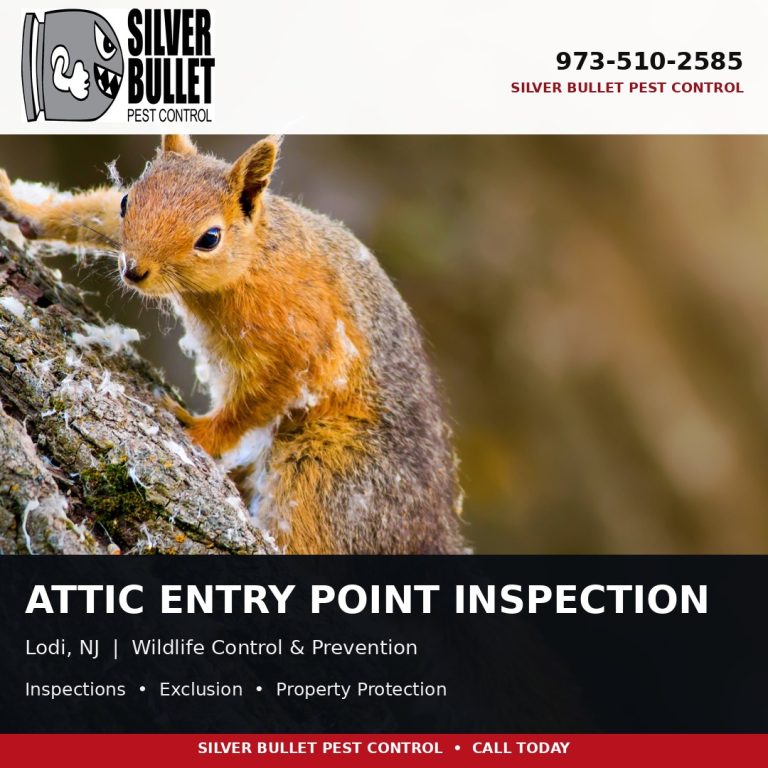
Small gaps at the roofline
- Gaps where the roof meets the trim
- Loose gable or ridge vent screens
- Openings at soffit corners and returns
Flying squirrels don't need a big hole. A gap at a roof corner, a bent vent screen or a space behind a gutter is enough, and there are often several on one house.
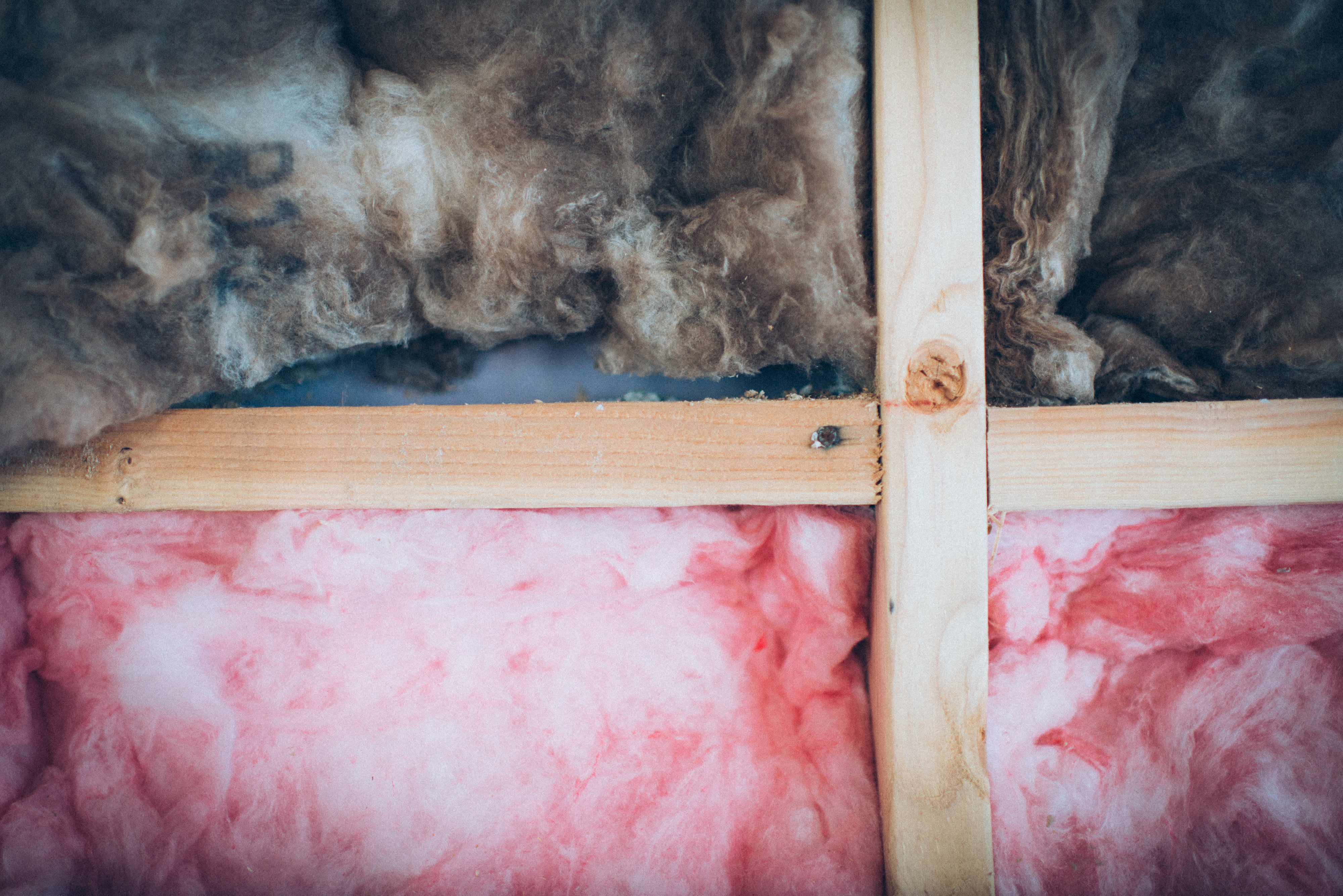
Latrines in the insulation
- Piles of small droppings in one spot
- Stained, flattened insulation
- An ammonia smell in the attic or upstairs
Flying squirrels pick bathroom spots and use them over and over. Those latrines soak into insulation and the ceiling drywall below, which is where odor and stains come from.
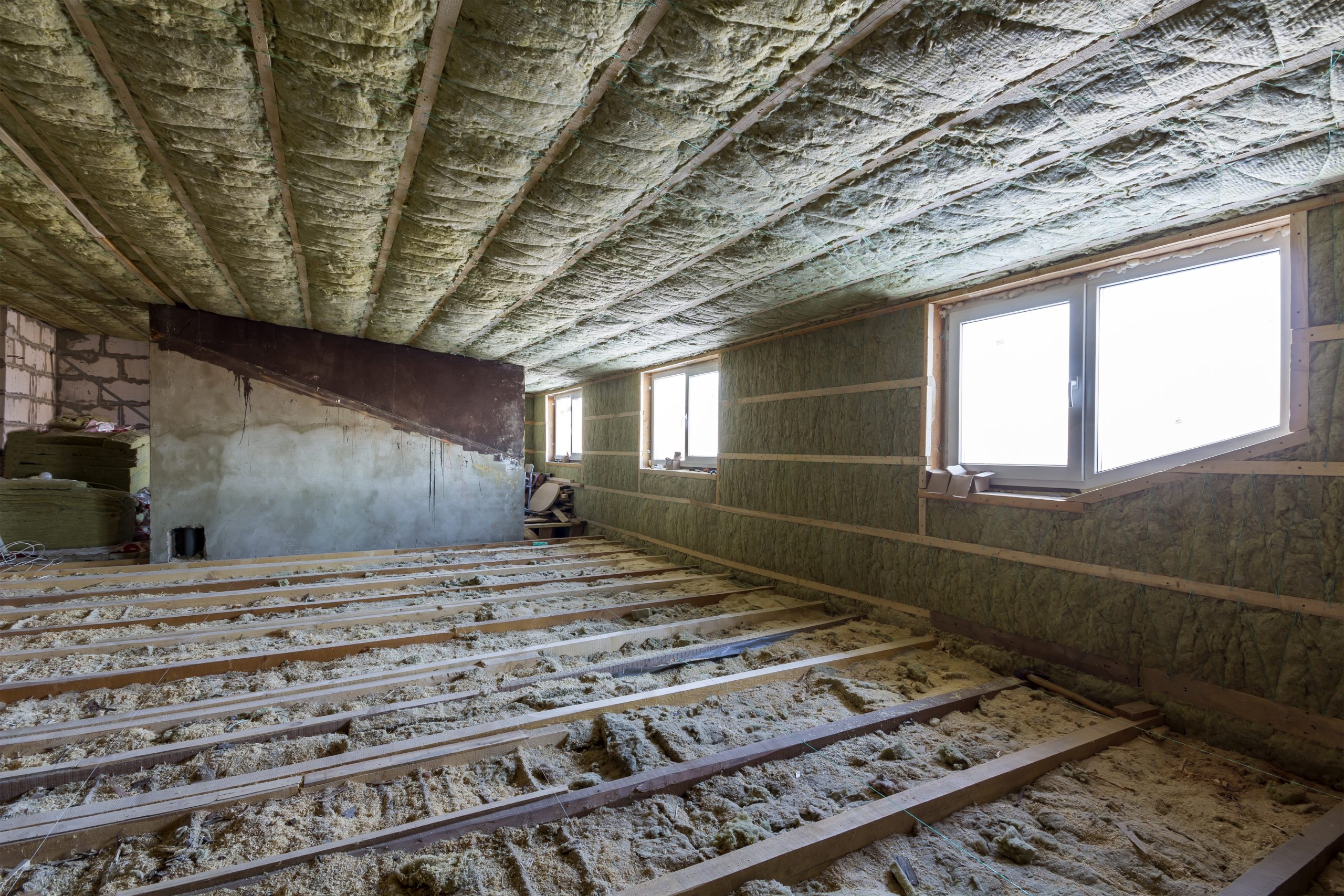
Noise moving through the house
- Scurrying in the ceiling at night
- Rolling sounds, like nuts or marbles
- Sounds inside walls near the roof
Because they're small and travel in groups, flying squirrels can move along wall cavities and ceiling joists, so the noise seems to come from several rooms.
Why flying squirrels are harder to get out than gray squirrels
Flying squirrel jobs fail when they're treated like a single gray squirrel. Three things make them different:
- There's usually a group. Flying squirrels share nests, especially in cold weather, so removing one or two animals almost never solves the problem.
- They use tiny gaps. Openings a homeowner wouldn't think twice about are enough. If one gap is missed, the group simply keeps using it.
- They come from the trees. They glide from tree to roof, so trimming branches helps but doesn't stop them. Wooded parts of North Jersey — near the Watchung ridges, the Ramapo foothills, and older tree-lined streets throughout Bergen, Passaic and Essex counties — see a lot of them.
That's why a real fix means inspecting the whole roofline, every vent, the soffits, the gable ends and where additions meet the main roof. Sealing one obvious hole and hoping for the best usually means calling again in a few weeks.
Our flying squirrel removal and exclusion process
Full roofline inspection
We check the roof edges, soffits, fascia, gable and ridge vents, plumbing vents, chimney area and the attic itself to find every gap, the main entry and the latrine areas.
Seal the secondary gaps
All the smaller openings are sealed with durable materials first, so the squirrels are funneled toward the main openings.
One-way doors on the main openings
One-way exclusion doors let the squirrels leave at night to feed but stop them from getting back in. No animals are trapped inside the walls.
Confirm and close
Once activity stops, the one-way doors come off and those last openings are sealed for good.
Clean, restore and repair
We remove droppings and soiled insulation with HEPA cleanup and odor control, replace the insulation, and repair chewed soffits, fascia and trim ourselves.
Learn more about how one-way door squirrel exclusion works.
Timing: babies, winter colonies and when to call
Flying squirrels can have young in spring and again in late summer. During those times, a mother may leave babies in the attic that are too young to follow her out a one-way door. Sealing the house then would trap the babies inside, which is cruel and leads to odor problems later.
During the inspection we look for signs of young and plan the timing around them. In winter, flying squirrels often group up in attics for warmth, which is why so many calls come in from late fall through winter.
Don't seal the hole you found tonight. If animals or babies are still inside, you'll trap them in your walls or attic. Call first so the exclusion is done in the right order.
More on the seasonal side: baby squirrel and raccoon season in NJ.
Attic cleanup, insulation replacement and roofline repair
Getting the squirrels out is only half the job. Flying squirrel latrines leave droppings and urine soaked into the insulation, and that keeps smelling and can attract other animals. Here's what we do ourselves after the exclusion:
- HEPA cleanup and odor control: droppings, nesting material and debris are removed, and the area is treated for odor.
- Insulation removal and replacement: soiled insulation is taken out and new insulation goes in, so the attic does its job again.
- Soffit, fascia and trim repair: chewed or loose roofline wood is repaired after the animals are out, so one company handles removal, sealing and repair.
See our attic insulation removal and replacement and wildlife damage repair pages for more detail.
DIY mistakes that make flying squirrel problems worse
Trapping one or two
There's almost always a group. Catching a few leaves the rest, and relocating wildlife has legal rules in NJ.
Sealing the first hole you see
The group uses other gaps — or you trap animals inside the house.
Lights, radios and repellents
Flying squirrels may move around for a night or two, then settle back in.
Poison
Not a solution for squirrels. Animals can die in walls and ceilings, causing strong odors.
If you'd like to understand the bigger picture first, read who gets rid of squirrels.
What affects the cost of flying squirrel removal
We give a free quote after the inspection. These are the main factors:
| Factor | Smaller job | Bigger job |
|---|---|---|
| Entry points | A few gaps on a simple roof | Many gaps, multiple roof levels, dormers |
| Roof access | One-story or easy ladder access | Steep or tall roofs |
| Attic condition | Little or no contamination | Large latrines, soiled insulation |
| Repairs | None needed | Chewed soffits, fascia or trim |
| Timing | No babies present | Young in the attic, which affects scheduling |
Call or text 973-510-2585 to set up an inspection and get your free quote.
Related squirrel and wildlife pages
Get a Free Flying Squirrel Removal Quote
Tell us when you hear the noise and where in the house. We'll inspect the roofline and attic and explain exactly what needs to be sealed and cleaned.
Why homeowners call us about flying squirrels
- Scurrying in the ceiling all night
- Rolling or chirping sounds in the walls
- An ammonia smell upstairs
- Small gaps or loose vents at the roof edge
- Squirrels came back after another company left
Request Service
🔒 Your info stays private · Hablamos español.
Flying Squirrel Removal Questions
How do I know if I have flying squirrels or regular squirrels?
Timing is the biggest clue. Flying squirrels are active at night, so noise after dark points to them, while gray squirrels are noisy in the early morning and late afternoon. Flying squirrels also tend to live in groups and leave piles of small droppings in latrine spots.
How do flying squirrels get into a house?
They glide from nearby trees to the roof and slip through small gaps at roof edges, soffit corners, gable and ridge vents and where additions meet the main roof. They don't need to chew a big hole, which is why their entry points are easy to miss.
How many flying squirrels are usually in an attic?
Often several, and sometimes many more. Flying squirrels share nests, especially in cold weather, so it's rare to have just one. That's why exclusion with one-way doors works better than trapping individual animals.
How long does flying squirrel removal take?
The sealing work is usually done in one visit, and then the one-way doors stay up until activity stops, often within days to a couple of weeks. Cleanup, insulation replacement and repairs follow once the squirrels are out.
Are flying squirrels dangerous?
They're not aggressive, but they shouldn't live in your home. Their droppings and urine soak into insulation and drywall, causing odors and contamination, and they can chew wiring and wood. Don't handle them; wild animals can bite when cornered.
Can I just trap the flying squirrels myself?
Usually not with good results. There's often a group, so a few traps rarely catch them all, and NJ has rules about trapping and relocating wildlife. Sealing the house with one-way exclusion is the approach that keeps them out.
Do you clean up after flying squirrels?
Yes. We remove droppings and nesting material with HEPA cleanup, treat the area for odor, and remove and replace soiled attic insulation ourselves.
Will you repair the damage they caused?
Yes. We repair chewed soffits, fascia and trim ourselves after the animals are out, so you don't need to hire a separate contractor for the roofline.
What time of year are flying squirrels in attics?
They can be in attics any time, but calls rise from late fall through winter, when they group together for warmth. They can also have young in spring and late summer, which affects when the final sealing can be done.
What areas do you serve for flying squirrel removal?
We're based in Garfield and serve Bergen, Passaic, Essex and Hudson counties. We also serve towns in Morris and Union counties; those visits are scheduled ahead.
¿Hablan español?
Sí. Hablamos español. Llame o mande un texto al 973-510-2585 si escucha ruidos en el ático de noche.
Flying squirrel removal across North Jersey
From our base in Garfield we handle flying squirrel removal and exclusion throughout Bergen, Passaic, Essex and Hudson counties.
Our service area
Bergen County
973-510-2585- Allendale
- Bergenfield
- Bogota
- Carlstadt
- Cliffside Park
- Closter
- Cresskill
- Demarest
- Dumont
- East Rutherford
- Edgewater
- Elmwood Park
- Emerson
- Englewood
- Englewood Cliffs
- Fair Lawn
- Fairview
- Fort Lee
- Franklin Lakes
- Garfield
- Glen Rock
- Hackensack
- Harrington Park
- Hasbrouck Heights
- Haworth
- Hillsdale
- Ho-Ho-Kus
- Leonia
- Little Ferry
- Lodi
- Lyndhurst
- Mahwah
- Maywood
- Midland Park
- Montvale
- Moonachie
- New Milford
- North Arlington
- Northvale
- Norwood
- Oakland
- Old Tappan
- Oradell
- Palisades Park
- Paramus
- Park Ridge
- Ramsey
- Ridgefield
- Ridgefield Park
- Ridgewood
- River Edge
- River Vale
- Rochelle Park
- Rutherford
- Saddle Brook
- Saddle River
- South Hackensack
- Teaneck
- Tenafly
- Teterboro
- Upper Saddle River
- Waldwick
- Wallington
- Washington Township
- Westwood
- Woodcliff Lake
- Wood-Ridge
- Wyckoff
Passaic County
973-510-2585- Bloomingdale
- Clifton
- Haledon
- Hawthorne
- Little Falls
- North Haledon
- Passaic
- Paterson
- Pompton Lakes
- Prospect Park
- Ringwood
- Totowa
- Wanaque
- Wayne
- West Milford
- Woodland Park
Essex County
973-510-2585- Belleville
- Bloomfield
- Caldwell
- Cedar Grove
- East Orange
- Essex Fells
- Fairfield
- Glen Ridge
- Irvington
- Livingston
- Maplewood
- Millburn
- Montclair
- Newark
- North Caldwell
- Nutley
- Orange
- Roseland
- Short Hills
- South Orange
- Verona
- West Caldwell
- West Orange
Hudson County
973-510-2585Union County
973-510-2585- Berkeley Heights
- Clark
- Cranford
- Elizabeth
- Fanwood
- Garwood
- Hillside
- Kenilworth
- Linden
- Mountainside
- New Providence
- Plainfield
- Rahway
- Roselle
- Roselle Park
- Scotch Plains
- Springfield
- Summit
- Union
- Westfield
Morris County
973-510-2585- Boonton
- Butler
- Cedar Knolls
- Chatham
- Denville
- Dover
- East Hanover
- Florham Park
- Hanover
- Kinnelon
- Lincoln Park
- Madison
- Mendham
- Montville
- Morris Plains
- Morristown
- Mountain Lakes
- Parsippany
- Pequannock
- Randolph
- Riverdale
- Rockaway
- Roxbury
- Whippany
Updated November 2026 by the Silver Bullet Pest Control team, Garfield, NJ • NJ License 90568B