
 Silver Bullet Pest Control
Wasp Nest Removal in New Jersey: Wasp, Hornet & Yellow Jacket Questions Answered
A paper nest under the porch roof, yellow jackets pouring out of a hole in the lawn, or a gray football-sized nest in the hedge? This is our guide to stinging insects in New Jersey: which one you have, how dangerous it is, when nests are worst, why store sprays backfire, and how professional wasp nest removal works.
4.9 stars on Google • NJ License 90568B • 15+ years • Same-day visits often available • Hablamos español
Text a photo of the nest, taken from a safe distance, to 973-510-2585 — we'll tell you what it is.
- ✓ Same-day appointments often available
- ✓ Licensed & insured in NJ
- ✓ Homes & businesses
- ✓ English & Español
Should I remove a wasp nest myself or call a professional in New Jersey?
For wasp nest removal in New Jersey, call a professional when the nest is high, hidden in a wall or the ground, belongs to yellow jackets or hornets, or is near a door where people walk — those are the nests that cause the most stings. A small, early paper wasp nest low on a shed may be manageable, but most stings happen during DIY attempts. Silver Bullet Pest Control removes wasp, hornet and yellow jacket nests, and same-day visits are often available. Call or text 973-510-2585.
Wasp, hornet or yellow jacket? What's on your house
These are the stinging insects that cause most calls in North Jersey. The type and the nest location decide how it's handled:
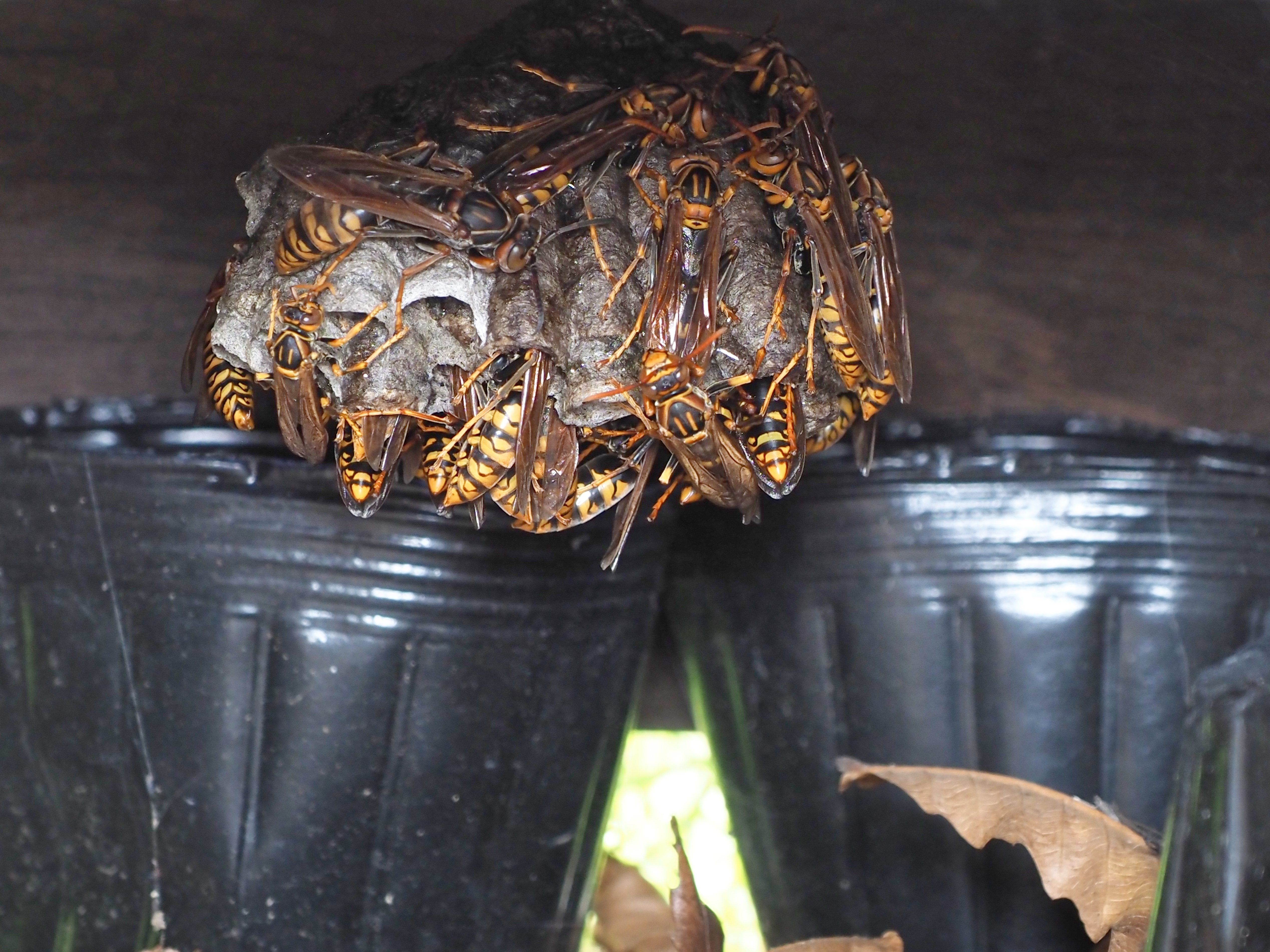
Paper wasps
- Slim body, long legs hanging down in flight
- Open, umbrella-shaped comb — you can see the cells
- Under eaves, porch roofs, railings, grills, mailboxes
Usually calm unless the nest is bumped, but nests by doors and decks lead to stings. These are the nests most people try to knock down themselves. See paper wasp nest removal.
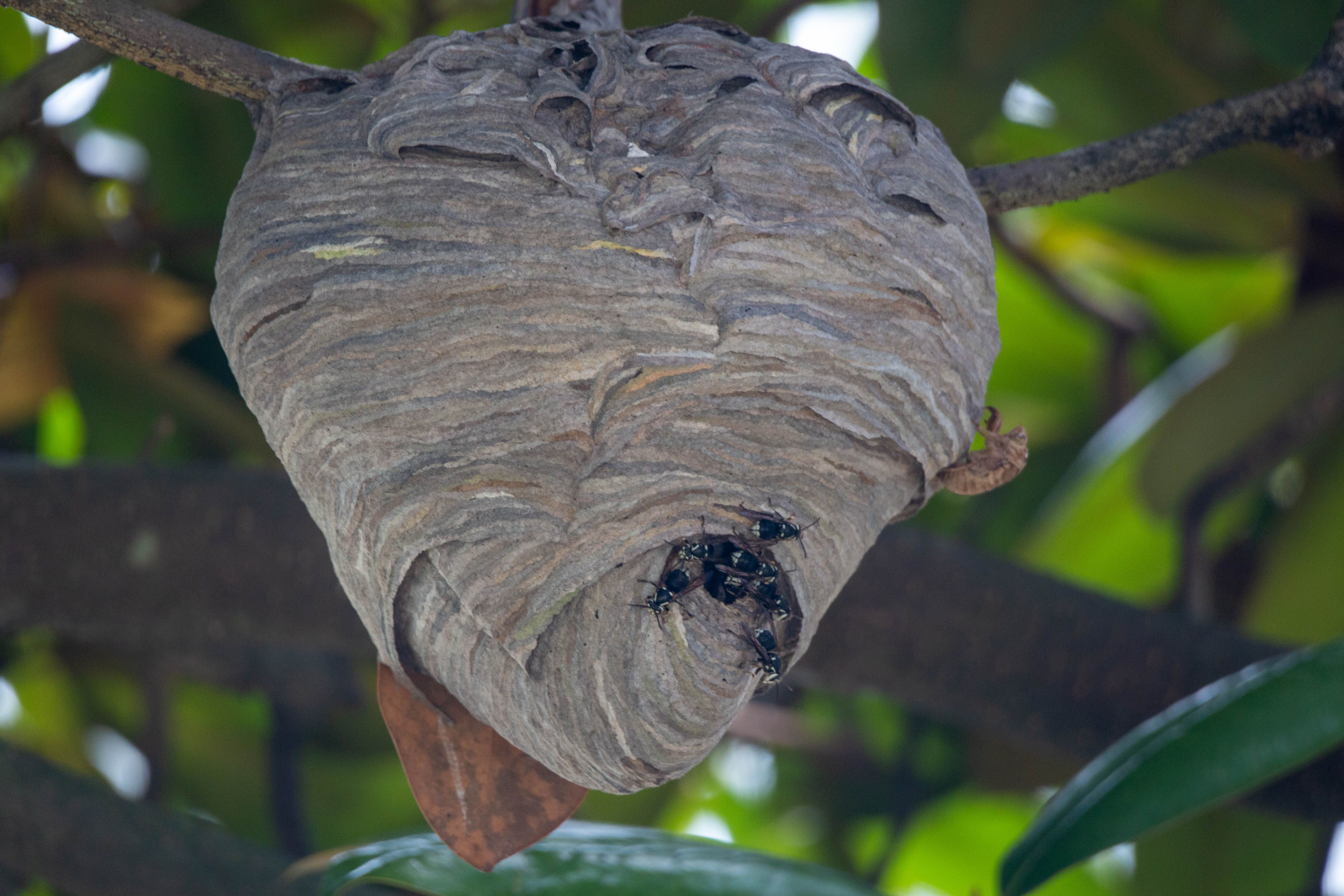
Bald-faced hornets & European hornets
- Bald-faced: black and white, gray paper ball in trees, shrubs or eaves
- European: large, brown and yellow, nests in hollow trees and walls
- European hornets fly at night and are drawn to porch lights
Bald-faced hornets defend their nest hard and will chase. A big gray nest in a hedge you trim every summer is a real risk. More on bald-faced hornet removal.

Yellow jackets
- Short, stocky, bright yellow and black
- Nests in the ground, wall voids, under siding and steps
- Swarm trash cans, soda and picnic food in late summer
The most stings in New Jersey come from yellow jackets, because their nests are hidden until someone steps on or mows over them. They sting repeatedly. See yellow jacket control.
Is it honey bees? Then it's a different job
Honey bees are fuzzy, golden-brown and much calmer than wasps. They're also valuable pollinators, so we don't treat them like a wasp nest. When we find a honey bee swarm or colony, we work with a local beekeeper so the bees are relocated, not exterminated.
- A swarm — a big cluster of bees hanging on a branch, fence or wall — is bees looking for a new home. It often moves on within a day or two. Don't spray it.
- A colony in a wall or roof has honeycomb inside. Killing the bees without removing the comb can lead to melting wax, honey stains and other pests, so it needs a plan.
Read more on our New Jersey beekeepers page. Carpenter bees boring round holes in deck rails and fascia boards are another story — ask us what we can do for your house. Ground-nesting insects are covered in ground bee removal.
Stung, or just found a nest? What to do right now
Walk away calmly
Don't swat or run past the nest. Go inside or move well away, and keep kids and pets back.
Watch for an allergic reaction
Swelling of the face, lips or throat, hives spreading on the body, trouble breathing or dizziness after a sting is an emergency. Call 911.
Treat an ordinary sting
Wash it, use a cold pack for swelling, and scrape out a bee stinger if one is left. Wasps and hornets don't leave stingers.
Don't block, spray or burn the nest
Plugging a hole can push yellow jackets into the house. Sprays from close range and fire cause stings and property damage.
Text us a photo
From a safe distance, photograph the nest or the insects coming and going, and text it to 973-510-2585. Same-day visits are often available.
When are wasps and yellow jackets worst in New Jersey?
Each nest starts with one queen in spring and dies out by winter. Here's the typical year in North Jersey:
| Time of year | What's happening | What it means for you |
|---|---|---|
| April – May | Queens wake up and build a small starter nest | Easiest, cheapest time to remove a nest — check eaves and porches |
| June – July | Workers hatch and nests grow quickly | Paper wasp nests appear by doors and decks; yellow jackets fill ground and wall voids |
| August – September | Nests reach full size; yellow jackets get aggressive and hunt for sugar | Peak sting season — mowing, yard work and outdoor meals stir them up |
| October | First hard frosts; workers die off | Activity drops, but large nests can stay active on warm days |
| November – March | Only new queens survive, sheltering in protected spots | Old nests aren't reused — a good time to seal gaps before spring |
The weather each year shifts this a few weeks earlier or later. A nest the size of a golf ball in May can be the size of a basketball by September.
How professional wasp nest removal works
Identify the insect
We confirm whether it's paper wasps, yellow jackets, hornets or honey bees. Honey bees go to a beekeeper.
Find every nest
Properties often have more than one — under the deck, in a shrub, in the siding. We check the whole outside.
Treat the nest
A licensed technician in protective gear treats the nest at its entrance, including nests inside walls and in the ground.
Remove what can be reached
Exposed nests under eaves, porches and railings are taken down once activity stops.
Help prevent the next one
We point out the gaps and sheltered spots wasps keep using. See bee and wasp exclusion and sealing.
Yellow jackets or hornets inside a wall or ceiling
If you see insects flying in and out of one spot in the siding, a gap at the roofline, a vent or around a window frame, there's probably a nest in the wall. Don't caulk or tape the hole. With the entrance blocked, the insects look for another way out — and sometimes find it through a light fixture, an outlet or chewed drywall inside the house.
Signs a nest is inside: buzzing or crackling in a wall, a damp or soft spot on a ceiling, or wasps showing up in a room with the windows closed. Keep that room closed off and call 973-510-2585. Wall nests are treated through the outside entrance, and once the nest is dead we can talk about sealing the gap.
Apartment buildings, stores and restaurants with nests by entrances, fire escapes or outdoor seating can also call our commercial pest control team. For urgent problems, see emergency bee and wasp removal.
How much does wasp nest removal cost?
Quotes are free. Instead of a made-up flat price, here's what changes the size of the job:
| Factor | Smaller job | Bigger job |
|---|---|---|
| Number of nests | One nest | Several nests around the property |
| Location | Low and easy to reach | High eaves, upper floors, roof peaks, inside a wall |
| Insect | Paper wasps | Yellow jackets in a wall or a large hornet nest |
| Time of year | Spring, small nest | Late summer, large active nest |
| Extra work | None | Sealing entry gaps or a return visit |
Call or text 973-510-2585 with a photo and where the nest is. Honey bee relocation is handled separately with our beekeeper.
Why DIY wasp removal goes wrong
Ladders and stings
Getting stung while on a ladder is how small nests turn into falls and ER visits.
Store sprays
Spraying from too close, or missing the nest entrance, sends angry insects straight at you.
Fire, gasoline, water
Dangerous to you and the house, and they rarely kill a ground or wall nest.
Plugging the hole
Blocks the exit and can drive yellow jackets inside the walls and into the house.
If you're allergic to stings, don't try any of these. Call us instead.
Wasp, hornet and bee pages by town
Get a Free Wasp Nest Removal Quote
Tell us where the nest is, how high, and what the insects look like. Send a photo from a safe distance if you can. We'll give you a free quote, and same-day visits are often available.
Why New Jersey homes call us for stinging insects
- A nest by the front door or deck
- Yellow jackets coming out of the lawn or a wall
- A hornet nest in a tree or hedge
- Someone in the house is allergic to stings
- Honey bees that need relocating, not killing
Request Service
🔒 Your info stays private · Hablamos español.
Wasp, Hornet & Yellow Jacket Questions in New Jersey
What's the difference between a wasp, a hornet and a yellow jacket?
Yellow jackets and hornets are both types of wasps. In New Jersey, paper wasps are slim with dangling legs and build open combs under eaves; yellow jackets are short, bright yellow and nest in the ground or walls; bald-faced hornets are black and white with gray paper ball nests in trees and shrubs. Yellow jackets and hornets are the most defensive.
How much does it cost to remove a wasp nest?
It depends on how many nests there are, how high or hidden they are, the type of insect and the time of year. A small paper wasp nest low on a porch is a smaller job than yellow jackets inside a wall. Quotes are free; text a photo of the nest to 973-510-2585 and tell us where it is.
Can I remove a wasp nest myself?
A small, early paper wasp nest low on a shed is something some homeowners handle at dusk with protective clothing. Yellow jacket nests in the ground or walls, hornet nests, high nests and any nest near someone allergic should be handled by a professional, because that's when most serious stings happen.
When is the best time to get rid of a wasp nest?
Early, in spring or early summer, when the nest is small and only a queen or a few workers are there. Nests grow all summer and are largest and most aggressive in August and September. If you see a nest starting under the eaves in May, deal with it then.
Will a wasp nest go away on its own?
Yes, eventually. In New Jersey most of the colony dies off after hard frosts in the fall, and old nests aren't reused. But a nest by a door, deck or play area can cause a lot of stings before then, and new queens may build nearby next spring if the spot stays sheltered.
Why are yellow jackets so aggressive in late summer?
By late summer yellow jacket colonies are at their biggest, their food needs change toward sugars, and the nest is defended hard. That's why they show up at trash cans, soda cans and outdoor meals in August and September, and why mowing over a ground nest leads to multiple stings.
Do you kill honey bees?
No. When we find a honey bee swarm or colony, we work with a local beekeeper so the bees are relocated instead of killed. Honey bees are important pollinators. If you see a cluster of fuzzy bees on a branch or fence, don't spray it; text us a photo.
There are wasps coming out of my wall. Should I seal the hole?
No. Sealing the entrance can force yellow jackets or hornets to chew or find their way into the house through light fixtures, outlets or drywall. Leave the hole open, keep people away from that spot, and call us. We treat the nest through the entrance first, then the gap can be sealed.
Is the treatment safe for my kids and pets?
Yes, when it's done properly. Treatment goes into the nest and its entrance, not across the whole yard, and we'll tell you how long to keep kids and pets away from the treated area. The bigger safety risk is usually leaving an active nest by a door or play area.
Do you offer same-day wasp removal?
Same-day visits are often available, especially in Bergen, Passaic, Essex and Hudson counties close to our base in Garfield. Call or text 973-510-2585 early in the day with a photo and the nest location. Towns farther out in Morris and Union counties are usually scheduled ahead.
¿Quitan nidos de avispas?
Sí. Quitamos nidos de avispas, avispones y chaquetas amarillas en casas y negocios del norte de Nueva Jersey. Mande una foto del nido al 973-510-2585. Hablamos español.
Wasp and hornet removal across North Jersey
From our base in Garfield we remove nests in Bergen, Passaic, Essex and Hudson counties, and serve parts of Morris and Union counties too.
Updated November 2026 by the Silver Bullet Pest Control team, Garfield, NJ • NJ License 90568B