Silver Bullet Pest Control logoSilver Bullet Pest Control
Wasps & Hornets Β· West Orange 07052 Β· Essex County

Wasp & Hornet Removal in West Orange, NJ

A gray paper ball the size of a football in the maple by the driveway, yellow jackets streaming out of a gap in the siding, or wasps building under the deck railing? Silver Bullet Pest Control removes wasp, hornet and yellow jacket nests around West Orange homes and businesses β€” safely, and without you getting stung.

4.9 stars on Google β€’ NJ License 90568B β€’ 15+ years β€’ Same-day visits often available β€’ Hablamos espaΓ±ol

Not sure what's buzzing? Text a photo of the nest (from a safe distance) to 973-510-2585.

  • βœ“ Same-day appointments often available
  • βœ“ Licensed & insured in NJ
  • βœ“ Homes & businesses
  • βœ“ English & EspaΓ±ol

Who removes wasp and hornet nests in West Orange, NJ?

Silver Bullet Pest Control removes wasp, hornet and yellow jacket nests in West Orange, NJ, with same-day visits often available when a nest is near a door, a play area or someone who is allergic. A licensed technician identifies the insect, treats the nest β€” including nests hidden in walls or the ground β€” and removes it when it can be reached. NJ License 90568B, 4.9 stars on Google, free quotes. Call or text 973-510-2585.

Wasp, hornet or yellow jacket?

The insect and where it nests decide how the nest is handled. These are the three we remove most around West Orange:

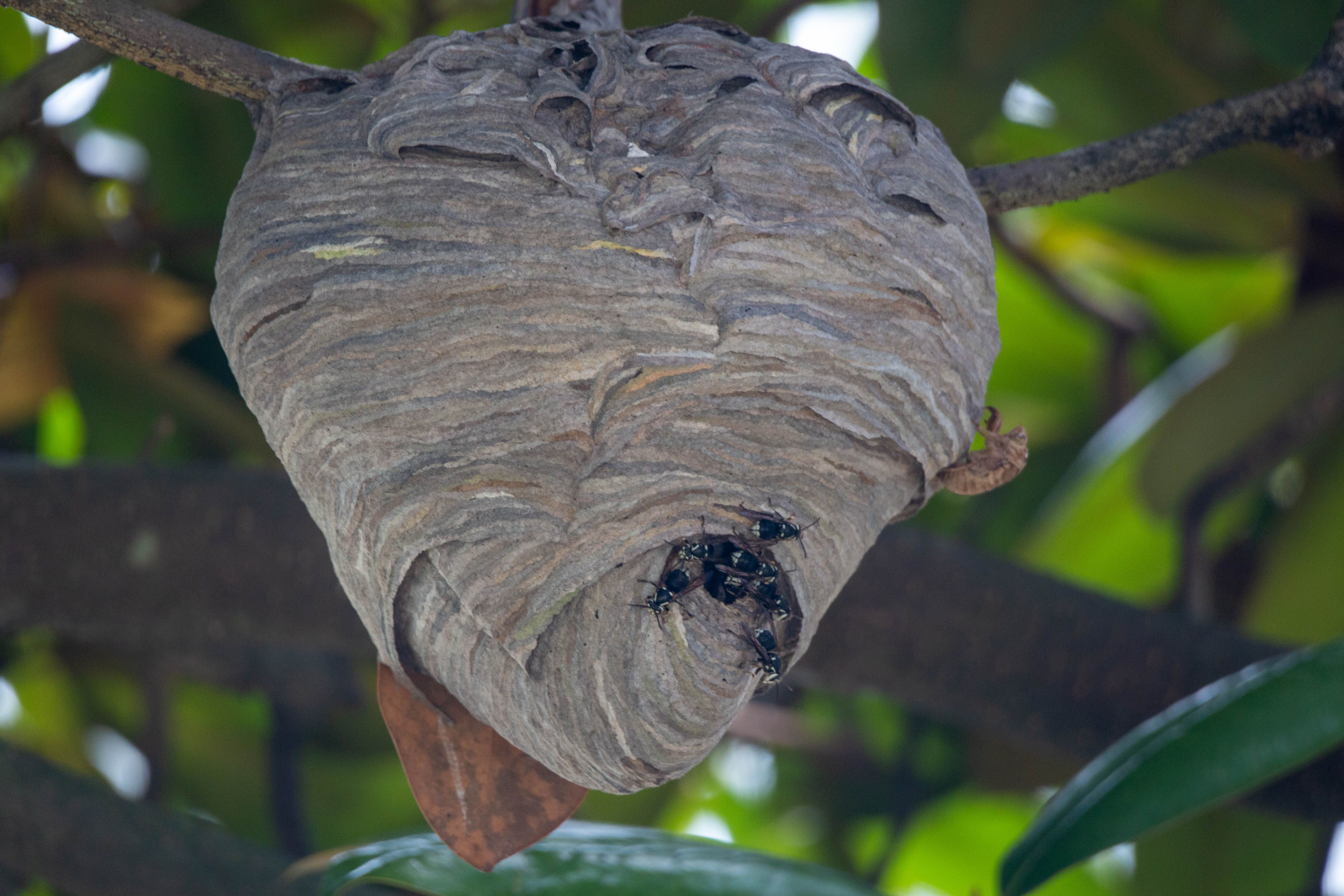
A large gray papery hornet nest on a tree branch
Aerial nests

Bald-faced hornets

  • Black and white, larger than a yellow jacket
  • Gray, football-shaped paper nest
  • High in trees, shrubs, or under eaves

Despite the name, these are a type of yellow jacket, and they defend their nest hard. A nest in a tree over the driveway or by the back door is worth handling before someone bumps it with a ladder or hedge trimmer.

Cracks and gaps in a masonry wall
Hidden nests

Yellow jackets

  • Bright yellow and black, quick fliers
  • Steady stream of insects in and out of one hole
  • Ground holes, wall voids, siding gaps, under steps

Yellow jackets build in the ground and inside walls, so you often see only the entrance. They are the ones that sting when a lawn mower passes over the nest, and late in summer they crowd around food and trash outdoors.

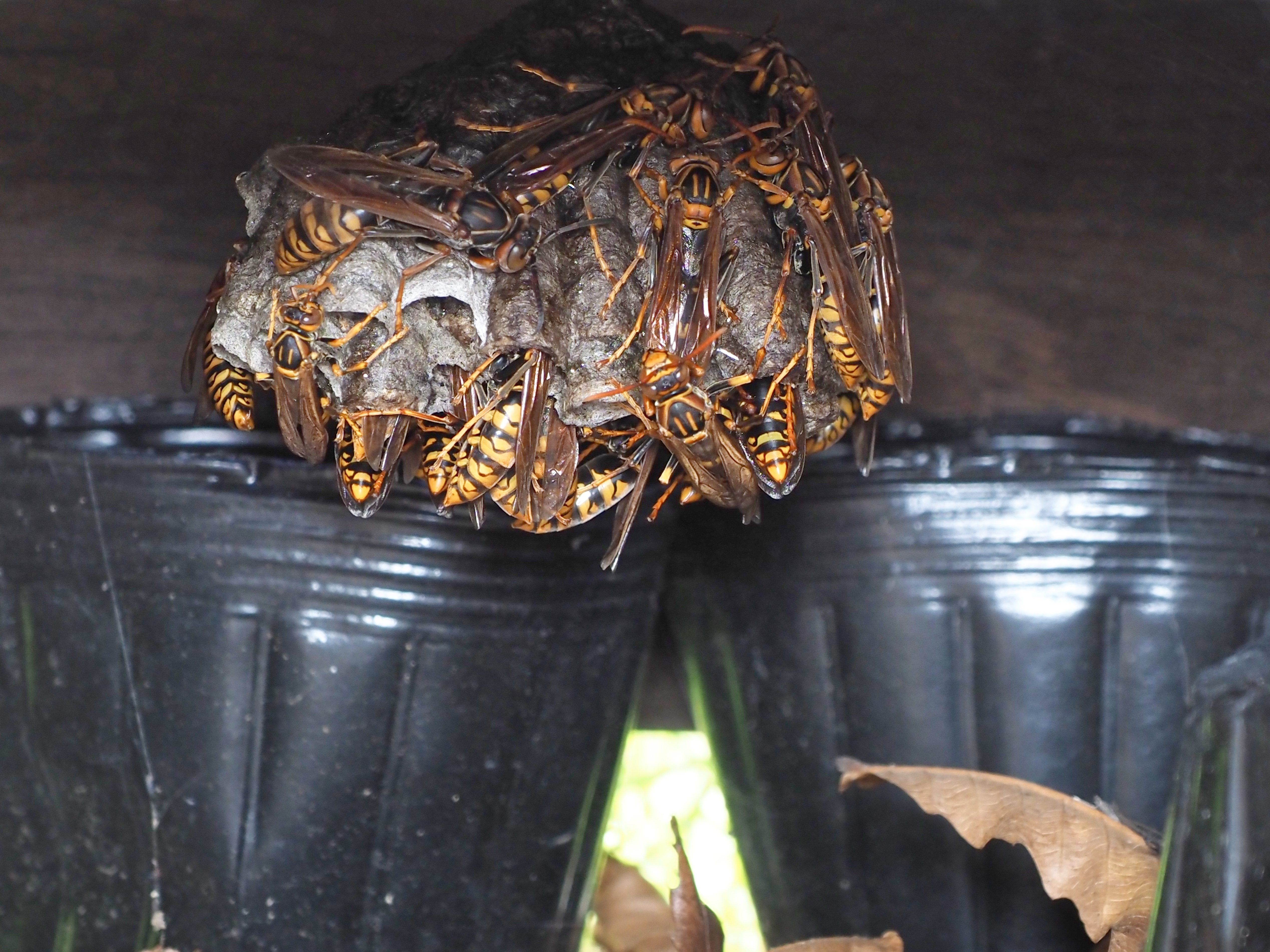
An open paper wasp nest with visible cells
Umbrella nests

Paper wasps

  • Slender body, long dangling legs
  • Open, umbrella-shaped comb you can see the cells in
  • Under deck railings, eaves, grill covers, shutters

Paper wasps are less aggressive than yellow jackets, but their nests sit right where people reach β€” the underside of a railing, a mailbox, the back of a shutter. Stings usually happen when someone grabs the spot without looking.

When is a wasp or hornet nest an emergency?

Some nests can wait a day or two. Others shouldn't:

SituationHow urgentWhy
Someone in the home is allergic to stingsCall nowA single sting can be a medical emergency. Keep them away from the area
Hornet or yellow jacket nest by a door, walkway or play setSame day if possiblePeople pass it constantly; one bump can set off the whole nest
Yellow jackets inside a wall, or chewing through a ceilingSame day if possibleThey can break through into the living space
Ground nest in the lawnBefore you mowMower vibration sets them off; mark the spot and keep people away
Small paper wasp nest out of reachWithin a few daysLower risk, but it grows through the summer
Old gray nest in late fall, no activityNot urgentMost of these nests are empty by then and aren't reused

If someone has been stung many times or shows signs of an allergic reaction β€” swelling of the face or throat, trouble breathing β€” call 911 first. Then call us about the nest. For other urgent pest problems, see emergency pest control.

Why West Orange yards get so many nests

West Orange climbs the slopes of the Watchung ridges, and a lot of homes back up to woods β€” South Mountain Reservation, Eagle Rock Reservation and the wooded lots in between. That's good habitat for stinging insects:

  • Tall trees near the house give bald-faced hornets high, sheltered spots for their nests, often noticed only when the leaves fall.
  • Rock walls, terraced yards and steps built into the hillside have gaps where yellow jackets nest underground.
  • Decks, porches and patios on sloped lots create sheltered undersides that paper wasps love.
  • Older houses with wood siding, shutters and eaves have gaps where yellow jackets get into wall voids and attics.
  • Mulch beds and woodland edges hide ground nests until someone steps near them.

We also handle nests at businesses, schools and multi-family buildings, where a nest near an entrance affects a lot of people. More on commercial pest control.

Wasps and hornets through the year

Time of yearWhat's happeningWhat it means for you
SpringQueens that survived the winter start small new nestsSmall nests are the easiest to deal with β€” watch eaves and railings
Early summerWorkers hatch and nests grow quicklyNests by doors and decks start to cause trouble
Late summerNests reach full size; yellow jackets get more aggressive around foodPeak season for stings and calls
FallColonies decline as the weather cools; new queens look for winter shelterBig nests become visible as leaves fall; most die off after hard frosts
WinterOld nests sit emptyAn empty nest isn't reused, but it can be cleared away

A nest you first notice in August has usually been growing since spring. Spotting them early in the season saves a lot of trouble.

How we remove a wasp or hornet nest

1

Identify it

We confirm whether it's hornets, yellow jackets, paper wasps or bees, and find every nest on the property β€” there is often more than one.

2

Treat the nest

The technician wears protective gear and treats the nest directly, including hidden nests in walls and the ground, by treating through the entrance the insects use.

3

Remove what we can reach

Exposed nests in shrubs, eaves and railings are taken down once treated. Nests inside walls are treated where they are.

4

Advice for afterward

We tell you how long returning insects may be seen near the spot and which gaps to seal once the nest is dead.

Quotes are free. Call or text 973-510-2585 with a photo and where the nest is.

What not to do with a wasp or hornet nest

🚫

Don't plug the hole

Sealing a yellow jacket entrance in a wall can make them chew inward and come out inside the house.

πŸͺœ

Don't knock it down

Hitting a hornet nest with a pole or hose can release the whole colony at once β€” often while you're on a ladder.

πŸ”₯

Never use fire or gasoline

Pouring or lighting fuel on a nest is dangerous and a common cause of burns and house fires.

🌿

Don't mow or trim near it

Mowers and hedge trimmers set off ground and shrub nests. Mark the spot and keep kids and pets away.

If you already sprayed it and it's still active, tell us what you used when you call.

Honey bees and bumble bees

Not every buzzing nest is wasps. Honey bees are fuzzy, golden-brown and calmer, and they sometimes move into a hollow tree or the wall of a house. In spring you may see a swarm β€” a big cluster of bees hanging on a branch β€” that is resting while it looks for a new home. Bumble bees are large, round and fuzzy, and often nest in the ground or under a deck or shed.

Honey bees are important pollinators, so we don't treat them like a wasp nest β€” we work with a local beekeeper to relocate them. If you think you have bees, text us a photo and we'll tell you what it is.

Carpenter bees β€” the ones that bore round holes in fascia and deck rails β€” are another story. Ask us about them when you call.

Fewer nests next year

  • Check in spring. Look under eaves, deck railings, grill covers and play sets in April and May, when nests are small.
  • Seal gaps in siding, around utility lines and at soffits once any nests are dead.
  • Keep food covered outside. Close trash and recycling bins tightly, and don't leave sweet drinks or pet food out in late summer.
  • Fill ground holes in the lawn and along walls after the season.
  • Trim branches that touch the house β€” they make easy nesting spots near windows and doors.

For year-round protection against stinging insects and other pests, ask about our home pest control. Recurring service comes with a 100% satisfaction guarantee.

Get a Free Wasp Removal Quote in West Orange

Send a photo of the nest if you can do it safely, and tell us where it is and whether anyone in the house is allergic.

Why West Orange calls us for wasps

  • A hornet nest in a tree by the driveway
  • Yellow jackets coming out of the siding
  • Wasps under the deck or porch railing
  • Someone in the home is allergic
  • Same-day visits are often available
πŸ“ž Call 973-510-2585

Request Service

πŸ”’ Your info stays private Β· Hablamos espaΓ±ol.

What's bugging you? - Step 1 of 3

Wasp & Hornet Questions from West Orange

Can you remove a hornet nest the same day?

Often, yes. Same-day visits are often available, especially when a nest is by a door, a play area or someone who is allergic.

How do I tell a hornet nest from a wasp nest?

A bald-faced hornet nest is a closed gray paper ball, usually in a tree or under an eave. A paper wasp nest is an open, umbrella-shaped comb where you can see the cells.

What should I do about yellow jackets in my wall?

Don't seal the hole β€” they can chew inward into the house. Keep people away from the entrance and call to have the nest treated.

Is it safe to remove a wasp nest myself?

Small, exposed paper wasp nests are sometimes handled by homeowners, but hornet and yellow jacket nests can send out hundreds of defenders. Hidden nests in walls or the ground should be treated by a professional.

Will the wasps come back to the same nest?

No. Wasps and hornets don't reuse old nests, though new queens may build nearby next year if the spot is sheltered.

Why do I still see wasps after treatment?

Workers that were out foraging return to the nest for a short time afterward. Activity should drop off quickly; call us if it doesn't.

Do you remove honey bees?

Honey bees are handled differently from wasps β€” we work with a local beekeeper to relocate them. Text us a photo and we'll tell you what it is.

When is wasp season in New Jersey?

Nests start in spring, grow through summer and are biggest in late summer. Activity drops after hard frosts in fall.

Do you serve West Orange businesses and schools?

Yes. We treat nests at entrances, playgrounds, dumpsters and rooflines for businesses and buildings.

Are you licensed?

Yes. Silver Bullet Pest Control holds NJ License 90568B, has over 15 years of experience and serves West Orange and the rest of Essex County.

ΒΏHablan espaΓ±ol?

SΓ­. Hablamos espaΓ±ol. Mande una foto del nido por texto al 973-510-2585.

Wasp removal near West Orange

We serve West Orange and nearby towns in Essex, Passaic, Bergen and Hudson counties.

Updated November 2026 by the Silver Bullet Pest Control team, Garfield, NJ β€’ NJ License 90568B

Scroll to Top