Silver Bullet Pest Control logoSilver Bullet Pest Control
Ground Bees, Yellow Jackets & Wasps Β· Boonton Β· Morris County

Ground Bee Removal & Wasp Removal in Boonton, NJ

Bees flying in and out of holes in the lawn, a swarm of yellow jackets that came up under the mower, or wasps going into a crack in the stone wall? Silver Bullet Pest Control identifies what's nesting in the ground around your Boonton home, tells you honestly whether it needs treatment, and removes the ones that do.

4.9 stars on Google β€’ NJ License 90568B β€’ 15+ years β€’ Serving Morris County β€’ Hablamos espaΓ±ol

Text a short video or photo of the holes and the insects to 973-510-2585 β€” from a safe distance.

  • βœ“ Same-day appointments often available
  • βœ“ Licensed & insured in NJ
  • βœ“ Homes & businesses
  • βœ“ English & EspaΓ±ol

Who removes ground bees in Boonton, NJ?

Silver Bullet Pest Control removes ground-nesting yellow jackets and other stinging insects in Boonton, NJ β€” and tells you when a ground bee doesn't need removal at all. Many 'ground bees' are gentle solitary bees that leave on their own in a few weeks; yellow jackets in the ground are aggressive and should be treated by a professional. A licensed technician identifies the insect, treats the nest entrance, and checks the yard for other nests. NJ License 90568B, 4.9 stars on Google. Call or text 973-510-2585.

"Ground bees" can mean four different insects

When someone in Boonton calls about ground bees, they could be looking at gentle solitary bees, bumble bees using an old burrow, large wasps that hunt cicadas, or a yellow jacket colony with thousands of workers. From across the yard they all look like bees going into holes in the dirt. The difference matters, because two of the four rarely need treatment and one of them is the most common stinging emergency we see in late summer.

Boonton is a hilly town above the Rockaway River, with older houses on sloped lots, stone and block retaining walls, terraced gardens and patches of lawn that stay thin on a slope or under trees. Bare, dry, well-drained soil is exactly what many ground-nesting insects look for, and the gaps in old stone walls and under steps give yellow jackets protected spots to build.

Which ground nester do you have?

Watch from a safe distance and compare:

Solitary ground beesYellow jacketsBumble beesCicada killer wasps
Looks likeSmall to medium, often dark and fuzzyShiny, bright yellow and black, stockyLarge, fuzzy, black and yellowVery large wasp, black with yellow bands
The holesMany small holes, each with a little dirt moundUsually one entrance with heavy trafficOne hole, often an old rodent burrowHoles with a fan of loose soil, often sandy spots
WhenSpring, for a few weeksGrows all summer, worst in late summer and fallSpring through summerMid to late summer
TemperGentle; rarely stingAggressive; sting repeatedlyDefend the nest if disturbedLook scary; rarely sting people
UsuallyLeave alone; they move onProfessional treatmentLeave alone if out of the way, or treat if near peopleLeave alone or adjust the soil

Honey bees almost never nest in the ground. If you have a honey bee swarm or a colony in a wall, we work with a local beekeeper so the bees are relocated, not exterminated.

How to check ground bees safely

1

Stay back

Watch from at least 10 to 15 feet away, in daylight. Don't stand in the flight path in front of the hole.

2

Count the holes

Dozens of small holes with tiny dirt piles spread over a bare patch usually means solitary bees. One busy hole usually means a colony.

3

Watch the traffic

A steady stream of insects going in and out of one hole, fast and direct, is the yellow jacket pattern.

4

Note the season

Bees in a bare patch in April or May are probably solitary. Busy holes in August or September are probably yellow jackets.

5

Send us a video

A short phone video from a distance tells us more than a photo. Text it to 973-510-2585.

When it's okay to leave ground bees alone

Solitary ground bees β€” often called mining bees β€” are one of the first pollinators out in spring. Each female digs her own small tunnel, so a lawn can look like it's full of bees even though there's no colony to defend. They rarely sting, and after a few weeks of activity they disappear until next spring.

If they're in a part of the yard you can avoid for a few weeks, the simplest answer is to let them finish. If they come back every year and you'd rather they didn't, change the soil they like:

  • Thicken the lawn with overseeding in fall β€” these bees prefer bare, thin patches.
  • Mulch or plant ground cover on bare slopes and under trees.
  • Water the area during the nesting weeks; they favor dry soil.

We'll tell you honestly if what you have doesn't need treatment. If the holes are right next to a door, a play area or a walkway someone with a sting allergy uses, ask us and we'll talk through the options.

Yellow jackets in the ground: the one not to ignore

Ground-nesting yellow jackets are a different story. A colony starts with one queen in spring, often in an old rodent burrow, a gap under a step or the space behind a stone wall, and grows all summer. By late summer it can hold thousands of workers, and the nest underground can be much larger than the small entrance suggests.

Most yellow jacket stings in a yard happen the same way: someone mows, weed-whacks, rakes or steps right over the entrance, and the colony pours out. Yellow jackets sting repeatedly and chase farther than most people expect. In late summer and fall they also get aggressive around food, trash and sweet drinks, which makes picnics and outdoor dinners miserable.

  • Mark the hole from a distance β€” a flag or stake on the far side β€” so nobody mows over it.
  • Keep kids and pets away from that part of the yard until it's treated.
  • Call early. A nest found in June is smaller and easier than the same nest in September.

Four things not to do to a ground nest

β›½

Pour gasoline in the hole

It's dangerous, contaminates your soil, and often doesn't reach the whole nest. Never do this.

🚿

Flood it with a hose

The nest chamber is usually off to the side and above the tunnel. You'll stir up the colony without drowning it.

πŸͺ¨

Block the entrance

Yellow jackets dig a new way out β€” sometimes into a basement, crawl space or wall.

πŸŒ™

Try it at night without gear

Even at night a disturbed colony comes out, and you can't see where they're going.

If you've already tried something and the insects are agitated, stay away from the area and give us a call.

Other wasps around Boonton homes

Cracks and gaps in a masonry wall
Hidden nests

Wasps in walls and steps

  • Wasps going into a crack in stone, brick or block
  • Buzzing behind siding or steps
  • Activity around a vent or utility gap

Yellow jackets build in the gaps of old retaining walls, stone steps and siding as readily as in the ground. Don't seal the opening while they're active β€” we treat first, then the gap can be closed.

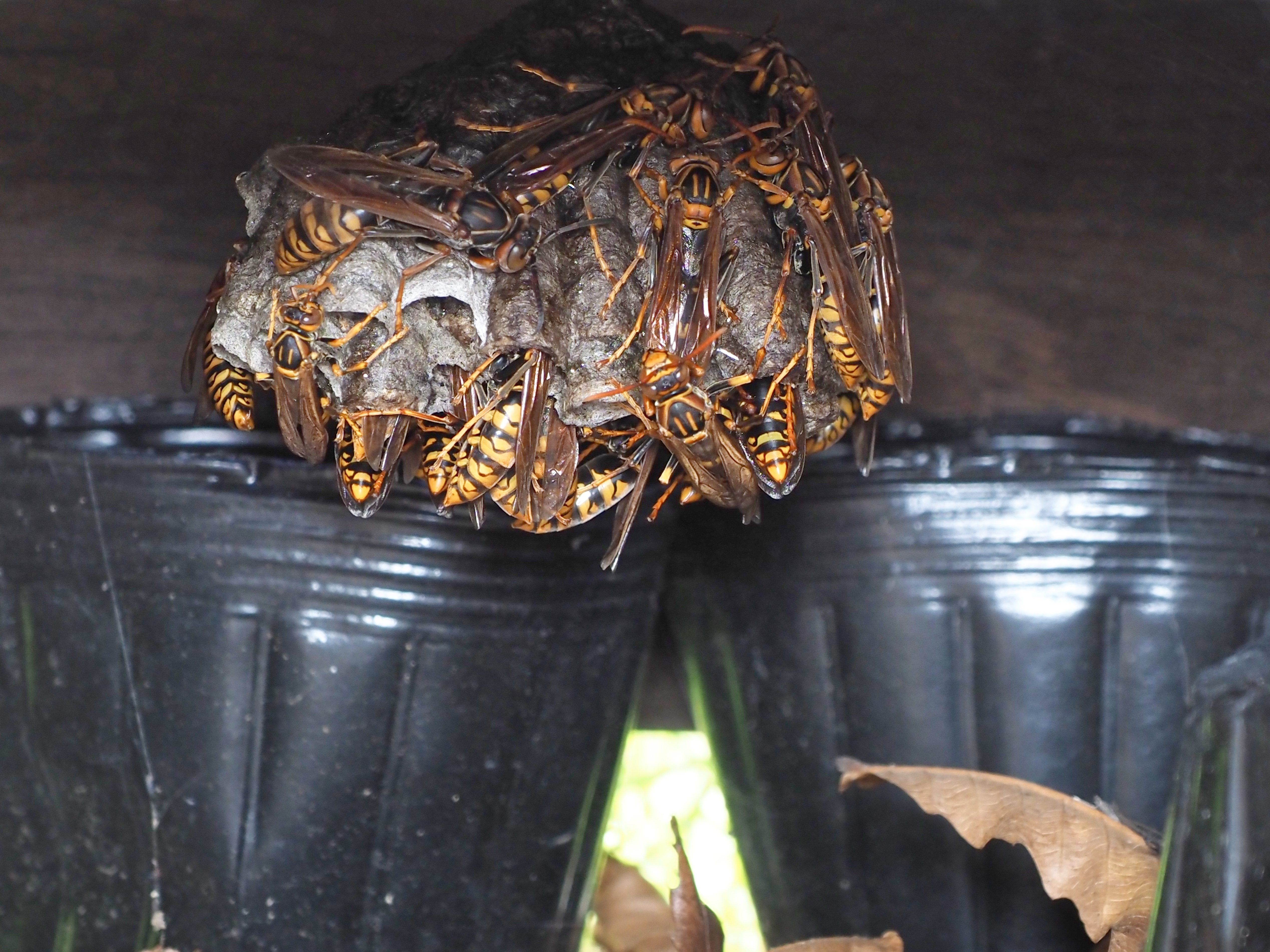
Paper wasps on an open comb nest
Porches & eaves

Paper wasps

  • Open, umbrella-shaped comb
  • Under porch roofs, eaves and railings
  • Long legs dangling in flight

The open nests under porch ceilings and eaves. Calmer than yellow jackets but quick to sting when the nest is bumped. Easy to remove once it's treated.

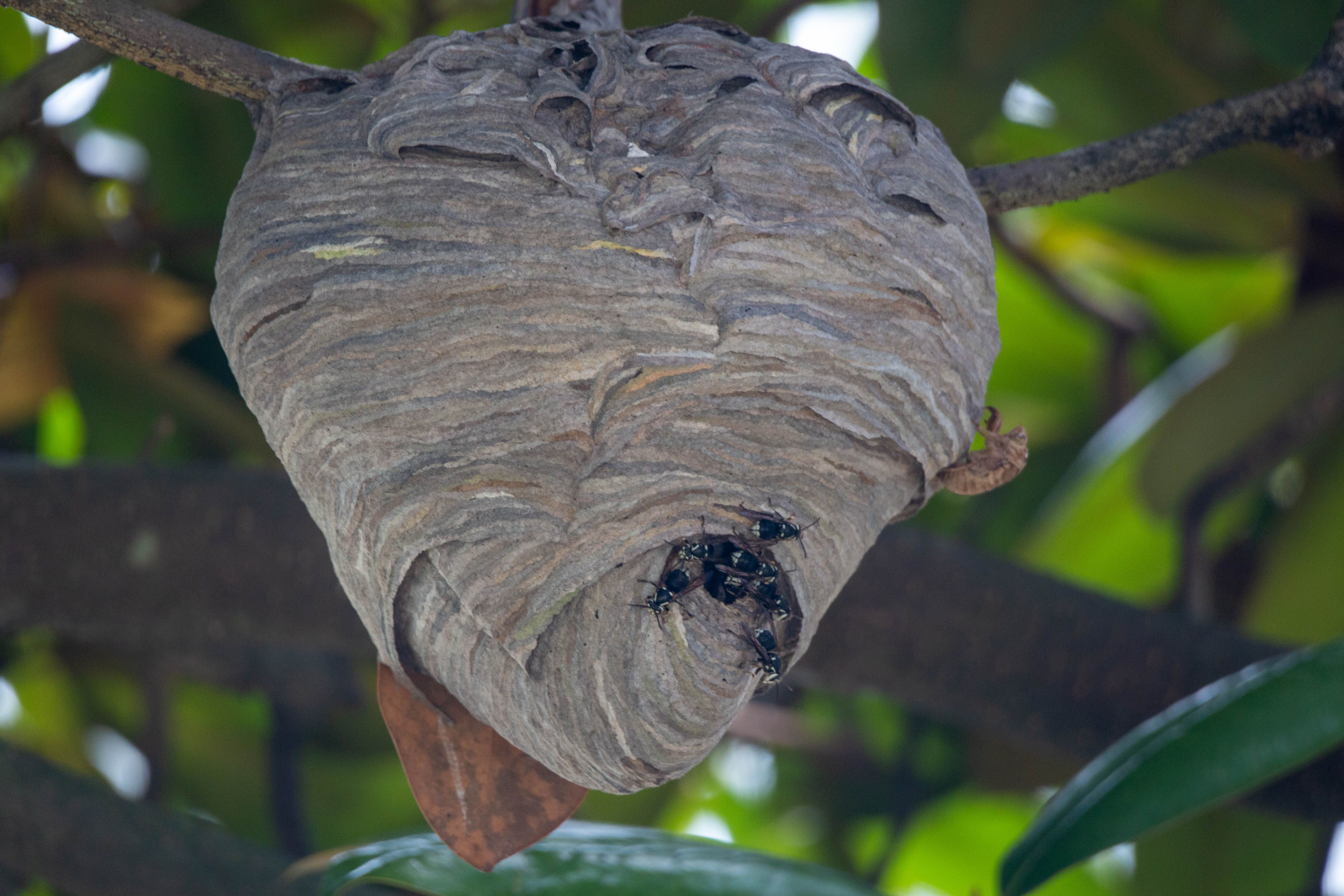
Gray paper hornet nest on a tree branch
Trees & shrubs

Bald-faced hornets

  • Gray, football-shaped paper nest
  • In trees, hedges and high eaves
  • Black and white, very defensive

Hornet nests often go unnoticed in a tree until the leaves drop or someone trims the hedge. Give them a wide berth and call us.

How we remove ground nests and wasp nests

1

Identify the insect

We confirm what's nesting. If it's solitary bees, we'll say so and explain your options instead of treating by default.

2

Find every nest

We walk the yard, walls, steps and house. Where there's one yellow jacket nest, there's sometimes a second.

3

Treat the nest

A licensed technician treats the nest entrance in protective gear, so the treatment reaches the colony underground or inside the wall.

4

Wrap up

We tell you when it's safe to use that part of the yard and when it's okay to fill the hole or seal the gap, and point out spots that tend to attract new nests.

What affects the price of ground bee and wasp removal

Quotes are free. These change the size of the job:

FactorSmaller jobBigger job
InsectSolitary bees (often no treatment needed)Yellow jacket colony in late summer
LocationOpen lawnInside a stone wall, under steps or in the house
Number of nestsOneSeveral around the yard and house
AccessEasy to reachSteep slope, high eaves, or tight spaces
Follow-upNoneReturn visit or sealing gaps afterward

We're based in Garfield and serve Boonton and other Morris County towns, with visits scheduled ahead. Same-day is sometimes possible for a nest that's putting people at risk, but not promised. Call or text 973-510-2585 with a video of the nest.

Get a Free Quote for Ground Bees or Wasps in Boonton

Send a short video of the holes or nest, tell us where it is and whether anyone in the house is allergic. We'll tell you what it is and give you a free quote.

Why Boonton calls us

  • Bees going in and out of the lawn
  • Yellow jackets that came up under the mower
  • Wasps in a stone wall or under the steps
  • A hornet nest in a tree by the house
  • An honest answer when treatment isn't needed
πŸ“ž Call 973-510-2585

Request Service

πŸ”’ Your info stays private Β· Hablamos espaΓ±ol.

What's bugging you? - Step 1 of 3

Ground Bee Questions from Boonton

Do ground bees sting?

Solitary ground bees rarely sting and aren't aggressive. Yellow jackets nesting in the ground sting readily and repeatedly, so it's important to know which one you have.

How long do ground bees stay?

Solitary ground bees are usually active for a few weeks in spring, then disappear until the next year. Yellow jacket colonies grow until the cold weather in fall.

Should I kill ground bees?

Often there's no need. Solitary bees are helpful pollinators and leave on their own. Yellow jackets near where people walk, mow or play should be treated.

Can I pour water or gasoline into the hole?

No. Gasoline is dangerous and pollutes the soil, and water rarely reaches the nest. Both mostly stir up the colony.

Should I cover the hole?

Not while the nest is active. Yellow jackets will dig a new exit, sometimes into the house.

Why do the bees come back to the same spot every year?

Solitary bees like bare, dry soil. Thickening the lawn, mulching bare slopes and watering during nesting season makes the spot less attractive.

What are the huge wasps digging in my yard in summer?

Probably cicada killers. They look alarming but rarely sting people, and they're gone by late summer.

Do you remove honey bees?

We don't exterminate honey bees. We work with a local beekeeper so swarms and colonies are relocated.

Do you come to Boonton?

Yes. We serve Boonton and other Morris County towns with visits scheduled ahead; same-day is sometimes possible but not guaranteed.

Are you licensed?

Yes. Silver Bullet Pest Control holds NJ License 90568B and has over 15 years of experience.

ΒΏAtienden abejas y avispas en Boonton?

SΓ­. Hablamos espaΓ±ol. Mande un video del nido al 973-510-2585.

Bee and wasp removal in Morris County

We serve Boonton and these nearby towns, with visits scheduled ahead.

Updated November 2026 by the Silver Bullet Pest Control team, Garfield, NJ β€’ NJ License 90568B

Scroll to Top