Silver Bullet Pest Control logoSilver Bullet Pest Control
Wasps, Hornets & Yellow Jackets Β· Englewood 07631 Β· Bergen County

Emergency Wasp & Hornet Nest Removal in Englewood, NJ

A gray paper nest hanging in the maple out front, yellow jackets popping out of the lawn, or wasps circling the gutter line three stories up? Silver Bullet Pest Control removes wasp, hornet and yellow jacket nests from Englewood houses, apartment buildings, shops and restaurants. Same-day visits are often available when a nest is next to a door or someone has been stung.

4.9 stars on Google β€’ NJ License 90568B β€’ 15+ years β€’ Same-day visits often available β€’ Hablamos espaΓ±ol

Send a photo of the nest from a safe distance to 973-510-2585 and tell us how high it is.

  • βœ“ Same-day appointments often available
  • βœ“ Licensed & insured in NJ
  • βœ“ Homes & businesses
  • βœ“ English & EspaΓ±ol

How do I get a wasp or hornet nest removed in Englewood, NJ?

Call or text Silver Bullet Pest Control at 973-510-2585 and a licensed technician will come out, identify the insect, treat the nest β€” high, hidden or in the ground β€” and take it down where it can be reached. Same-day visits are often available. We also check the rest of the property for other nests, because there is often more than one. NJ License 90568B, 4.9 stars on Google, free quote.

Paper wasps, hornets or yellow jackets?

Three stinging insects cause nearly every nest call we get from Englewood. Each one builds in a different place and needs a different approach:

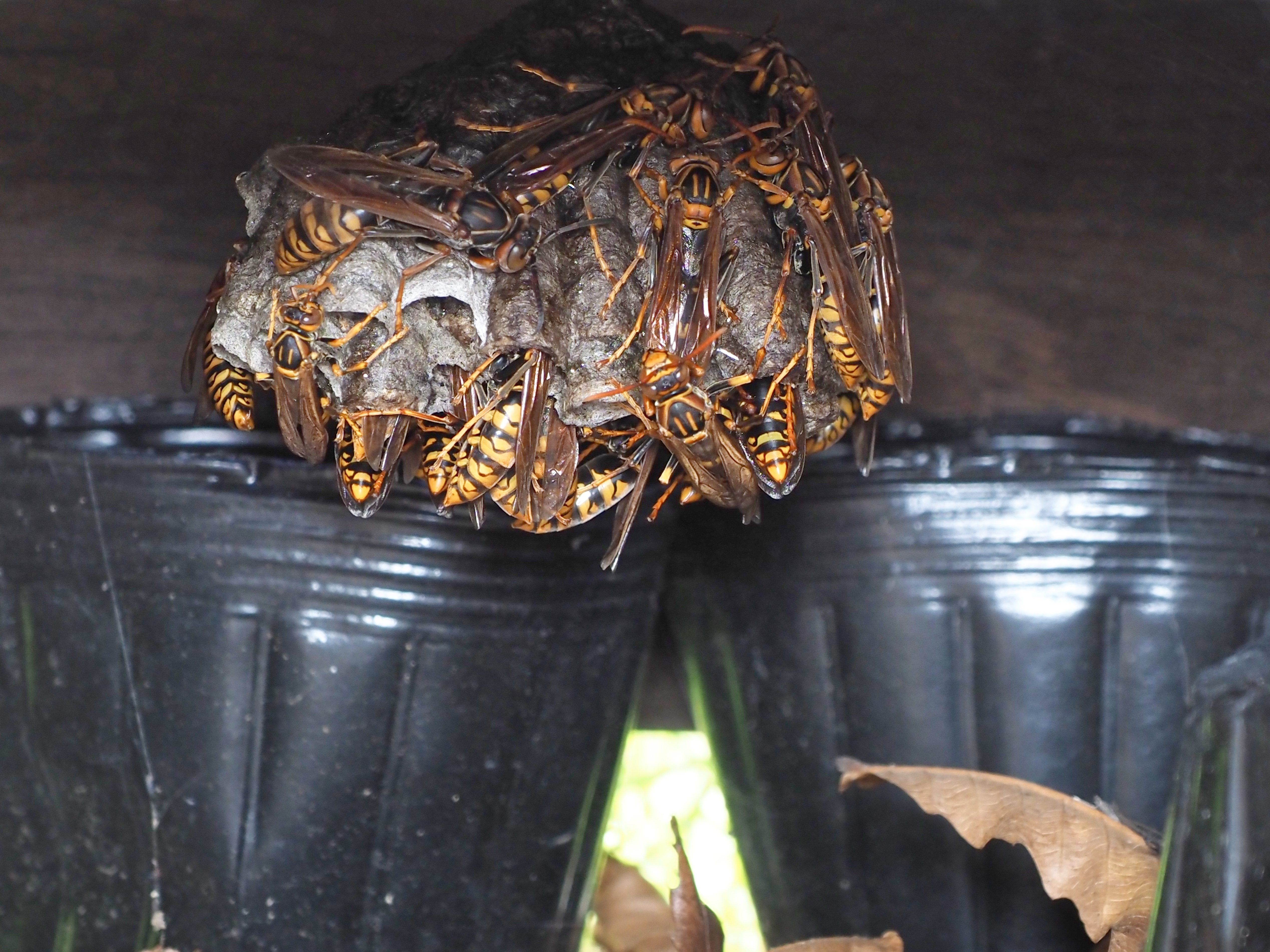
Paper wasp nest with open cells
Late spring to fall

Paper wasps

  • Open, umbrella-shaped comb with the cells showing
  • Hangs from one thin stalk
  • Long legs that dangle when they fly

Paper wasps like shelter and warmth. On Englewood houses that means porch ceilings, the underside of railings, window trim, shutters and the eaves of garages. They're usually calm until the nest is bumped, which is why most paper wasp stings happen while someone is painting, cleaning gutters or opening a shutter.

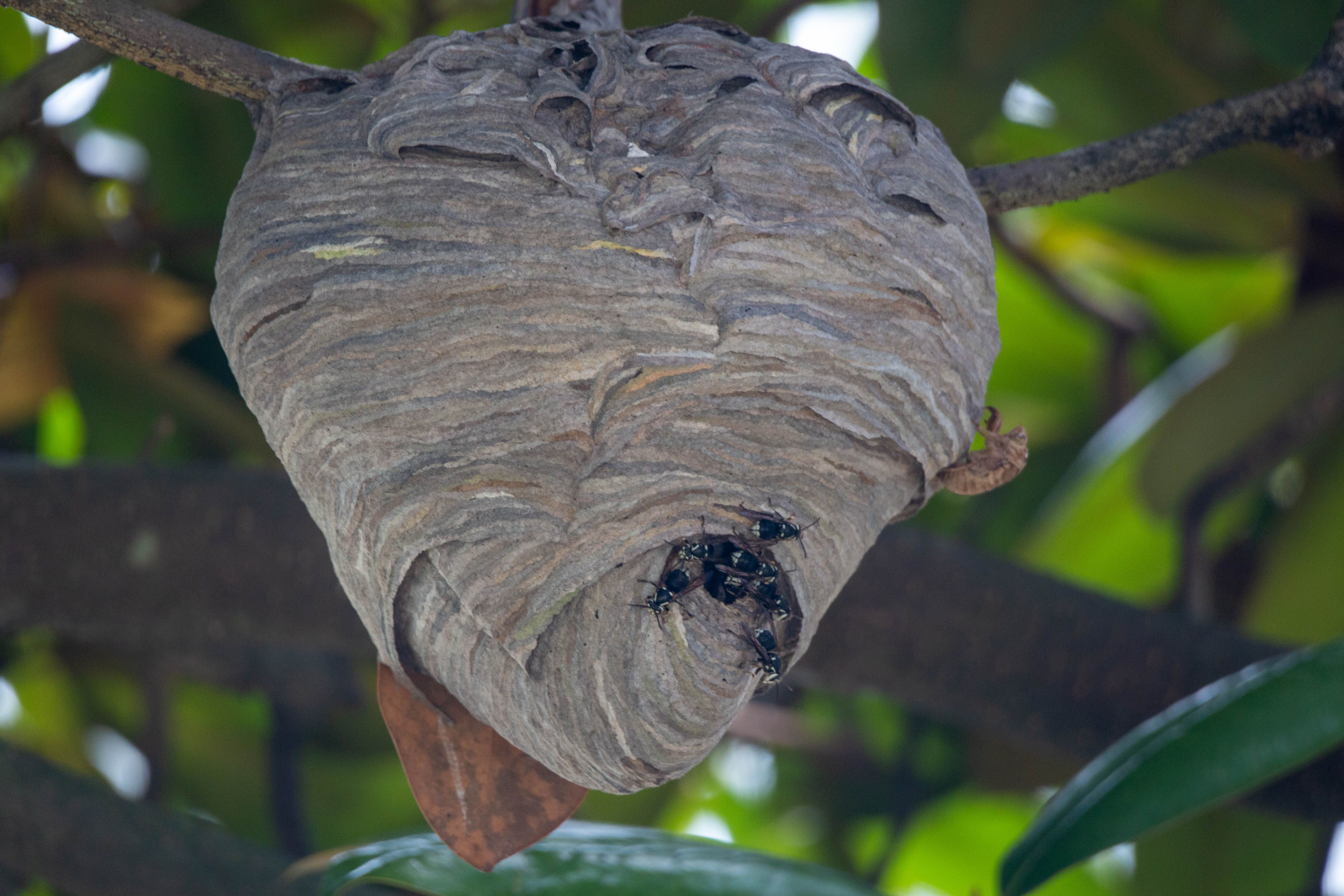
Large gray paper hornet nest on a tree branch
Summer into early fall

Bald-faced hornets

  • Gray, papery ball, often the size of a football or bigger
  • High in trees, hedges or under a roof overhang
  • Black and white, larger than a yellow jacket

Bald-faced hornets are the ones behind the big gray nests in street trees and backyard shade trees. They guard the nest hard and will chase a person who gets too close with a mower, trimmer or ladder. A nest in a tree over a driveway or play set is one we don't recommend waiting on.

Cracks and gaps in an exterior wall
Peak in late summer

Yellow jackets

  • Steady traffic in and out of one small hole
  • In the lawn, a garden bed, a stone wall or a gap in siding
  • Short, bright yellow and black, very fast

Yellow jackets hide their nests. They use old rodent burrows in the lawn, gaps in stone walls and openings in siding or trim β€” and the nest inside can be much bigger than the hole suggests. By late summer they get aggressive around trash and food, which is when we hear from Englewood restaurants and homeowners alike.

What Englewood properties have in common

Englewood packs a lot into a small city: a busy downtown full of restaurants and shops, large older homes on the east hill, and plenty of apartment buildings and multi-family houses. Almost everywhere, there are big, mature trees. Each of those gives wasps something to work with.

  • Large older homes have tall rooflines, deep eaves, dormers, porches and detached garages β€” lots of sheltered spots, many of them two or three stories up.
  • Mature trees and thick hedges are prime spots for bald-faced hornet nests, often hidden by leaves until you walk right under them.
  • Apartment buildings and multi-family houses have shared entrances, balconies, courtyards and trash areas where tenants run into nests every day.
  • Downtown storefronts and outdoor dining attract yellow jackets in late summer, when they go after sugary drinks, fruit and open trash.

None of this is unique to Englewood, but the mix of tall houses and tall trees means many of the nests we see here are hard to reach safely without the right equipment. That's where a ladder and a can of store spray goes wrong.

Where the nest is decides how we reach it

Tell us where you see the insects and we can usually tell you what you're dealing with before we arrive:

Where you see itUsuallyHow we handle it
High eaves, gables or dormersPaper wasps or a hornet nest under the overhangTreated from a safe position with extension equipment, then removed once activity stops
Up in a tree or hedgeBald-faced hornetsTreated with protective gear; the nest is taken down when it can be reached safely
A hole in the lawn or garden bedYellow jackets in an underground nestThe entrance is treated directly β€” never just covered over
A gap in siding, trim or a stone wallYellow jackets nesting inside the wallTreated inside the void; the gap is sealed only after the nest is dead
Porch ceiling, railing or shutterPaper waspsTreated and scraped off, and the spot checked for new starts
Shed, garage or play setPaper wasps, sometimes yellow jacketsTreated, removed and the rest of the yard checked

Not sure if it's wasps or honey bees? Honey bees are fuzzy and golden and are handled differently. Text us a photo first.

The calls we get most from Englewood

🌳

"There's a gray ball in my tree"

That's almost always a bald-faced hornet nest. Keep people and pets out from under it, don't mow or trim nearby, and call.

🌱

"They're coming out of the lawn"

An underground yellow jacket nest. Mark the spot from a distance so no one steps on or mows over it.

🏠

"Wasps at the top of the house"

Usually paper wasps under a high eave or in a gap at the roofline. Not a ladder job for a homeowner.

πŸ”Š

"I hear buzzing in the ceiling"

Yellow jackets may be nesting in a wall or ceiling void. Don't seal the outside hole β€” it can push them indoors.

What happens when we come out

1

Find every nest

We walk the property β€” roofline, trees, porches, yard, garage and fences β€” because one nest often means another nearby.

2

Identify the insect

Paper wasps, yellow jackets, hornets and honey bees each need a different plan. If it's honey bees, we tell you, and we work with a local beekeeper to relocate them.

3

Treat the nest

A licensed technician in protective gear treats the nest, including nests inside walls or underground.

4

Remove and advise

Reachable nests come down once they're dead. We point out gaps and spots that keep attracting new nests and can seal them.

Before we arrive, keep kids and pets inside and let us know if anyone in the household is allergic to stings.

Big trees, and why some nests show up in the fall

Every wasp nest in New Jersey starts in spring with a single queen and a nest smaller than a golf ball. Through the summer the colony grows, and by August and September it's at its largest. Yellow jackets in particular get more aggressive late in the season, when their colonies are big and they start looking for sugar.

In a town with as many mature trees as Englewood, a lot of hornet nests go unnoticed all summer because the leaves hide them. Then the leaves drop in the fall and a homeowner suddenly sees a basketball-sized nest over the driveway. If it's late in the fall and the weather has turned cold, the colony may already be dying off β€” but on a warm fall day there can still be active hornets inside. If you're not sure, send us a photo and we'll tell you whether it needs treatment.

Old nests aren't reused the next year, but the same sheltered spots attract new queens every spring. Checking eaves, porches and sheds in May β€” while nests are still tiny β€” is the easiest way to stay ahead of them.

Restaurants, shops and apartment buildings

A nest by a front door, a fire exit, a courtyard or an outdoor dining area is a real safety problem for customers and tenants. For Englewood businesses and building owners we:

  • Schedule around opening hours or tenant routines when we can.
  • Check the whole property β€” entrances, roofline, signage, awnings, courtyards, trash and recycling areas.
  • Look for yellow jackets nesting in walls or planters near seating areas.
  • Explain what we did so you can tell staff and tenants.

Yellow jackets around outdoor tables late in the summer are often feeding, not nesting right there. Lids on trash cans, quick cleanup of spilled drinks and moving recycling away from seating all help while we deal with the nest itself.

For ongoing service see commercial pest control, restaurant pest control and apartment building programs.

What changes the price of nest removal

Quotes are free. These are the things that make a job bigger or smaller:

FactorSimplerMore involved
HeightWithin easy reachThird-floor eave or high in a tree
Nest typeOne small paper wasp nestLarge hornet nest or yellow jackets in a wall
How manyOne nestSeveral nests around the property
Time of yearEarly season, small nestLate summer, full-size colony
Extra workNoneSealing gaps or a follow-up visit

The fastest way to a quote: text a photo of the nest and tell us roughly how high it is to 973-510-2585.

Get a Free Wasp & Hornet Quote in Englewood

Tell us where the nest is, how high it is and whether anyone has been stung. A photo helps. Same-day visits are often available.

Why Englewood calls us

  • A hornet nest in a tree over the yard or driveway
  • Yellow jackets coming out of the lawn
  • Wasps under a high eave or dormer
  • A nest by a store entrance or outdoor seating
  • Someone in the house is allergic
πŸ“ž Call 973-510-2585

Request Service

πŸ”’ Your info stays private Β· Hablamos espaΓ±ol.

What's bugging you? - Step 1 of 3

Wasp & Hornet Questions from Englewood

Can you come today to remove a wasp nest in Englewood?

Same-day visits are often available, especially when a nest is by a door or someone is allergic. Call or text 973-510-2585 and we'll give you the soonest time.

What is the big gray nest in my tree?

It's most likely a bald-faced hornet nest. Keep people and pets away from the tree and don't mow or trim under it until it's been treated.

Can you reach a nest that's high up in a tree or on the third floor?

In most cases, yes. We use extension equipment and protective gear, and we'll tell you honestly if a nest can be treated but not physically taken down.

I found a hornet nest after the leaves fell. Is it still dangerous?

It may be. On warm fall days there can still be hornets inside; once hard cold sets in, colonies die off and the nest isn't reused. Send us a photo and we'll tell you.

Should I pour something into a yellow jacket hole in the lawn?

No. Gasoline, boiling water and store sprays are dangerous and often miss most of the nest. Mark the spot, keep people away and let us treat it.

Will you remove honey bees?

Honey bees are valuable and aren't treated like wasps β€” we work with a local beekeeper to relocate them. Tell us what you see.

How many nests can one property have?

Several. It's common to find a second paper wasp nest or a yellow jacket nest nearby, so we check the whole property.

Do you handle nests at apartment buildings and restaurants?

Yes. We work around business hours and tenant schedules and check entrances, courtyards and trash areas.

Are you licensed?

Yes. Silver Bullet Pest Control holds NJ License 90568B, has over 15 years of experience and 4.9 stars on Google.

ΒΏPueden quitar un nido de avispas hoy?

Muchas veces sΓ­ podemos ir el mismo dΓ­a. Hablamos espaΓ±ol β€” llame o mande una foto por texto al 973-510-2585.

Wasp and hornet removal near Englewood

We cover Englewood and nearby towns in Bergen, Passaic and Hudson counties.

Updated November 2026 by the Silver Bullet Pest Control team, Garfield, NJ β€’ NJ License 90568B

Scroll to Top