Silver Bullet Pest Control logoSilver Bullet Pest Control
Termite Guide Β· Swarmers & Wings Β· North Jersey

Termite Wings in the House: What They Mean and What to Do Next

A pile of tiny, see-through wings on the windowsill, or under a door, or in the basement? Discarded termite wings are one of the clearest signs of termites there is. Here's how to tell termite wings from flying ant wings, what it means when you find them indoors, and what to do in the next 24 hours.

4.9 stars on Google β€’ NJ License 90568B β€’ 15+ years β€’ Based in Garfield β€’ Hablamos espaΓ±ol

Collect a few wings on clear tape and text a photo to 973-510-2585. We'll tell you if they're termite wings.

What do termite wings in the house mean?

Termite wings in the house usually mean a termite colony swarmed inside or right next to your home, and the swarmers shed their wings after landing. In North Jersey that's almost always eastern subterranean termites, which swarm on warm spring days, often after rain. Wings found indoors are a strong sign of an active infestation, so save a few, don't spray, and schedule a professional termite inspection.

Why termites leave wings in your house

A mature termite colony sends out winged reproductives, called swarmers or alates, to start new colonies. They fly for a short time, pair up, and then break off their wings on purpose before looking for soil and wood to start a new nest. The wings are the part left behind.

What makes wings important is where they are. Swarmers are weak fliers and live only a short time out of the colony. If you find piles of wings inside, the termites most likely came from:

  • Inside the structure, in a wall, floor, door frame, sill plate or basement wood, or
  • The soil right against the house, getting in through a crack in the slab, a gap at the foundation or around plumbing.

Either way, a colony mature enough to swarm is close. Colonies usually take a few years to reach swarming size, so termites may have been feeding quietly for some time. That doesn't mean your house is about to fall down. Subterranean termite damage builds slowly. But it does mean it's time for a proper termite inspection, not a wait-and-see.

Termite wings vs. flying ant wings

Flying ants swarm in spring too, and people mix them up all the time. Look at the wings and, if you have them, the bodies:

Termite swarmerFlying ant
Wing lengthWings are about twice as long as the bodyWings only a little longer than the body
Wing pairsFront and back wings are the same sizeFront wings clearly bigger than back wings
Wing lookPale, milky or clear, many fine veinsClear or tinted, fewer, more visible veins
Shed wings?Yes, wings fall off easily β€” piles of loose wingsAnts keep wings longer; fewer loose wings
WaistThick, straight waist, body looks like one tubePinched, narrow waist between segments
AntennaeStraight, like a string of beadsBent at an elbow
Body colorDark brown to blackBlack, brown or reddish

The quickest giveaway is lots of identical loose wings and few bodies: that points to termites. Our full guide to flying ants vs. termite swarmers has more detail, and if they turn out to be big black ants, see carpenter ants vs. termites.

Found termite wings? What to do in the next 24 hours

1

Save some evidence

Pick up a few wings and any bodies with clear tape and stick them to paper, or put them in a sealed bag or a small jar with rubbing alcohol. Take photos of where they were.

2

Note where and when

Write down the room, the spot (sill, door, outlet, basement) and the time. This helps find where they came out.

3

Don't spray

Bug spray kills the swarmers you see but does nothing to the colony, and it can make it harder to find the exit point.

4

Don't tear into the wall

Leave wood and drywall alone. Breaking into it disturbs termites and can make the inspection less accurate.

5

Vacuum after documenting

Once you have photos and samples, vacuum the wings and swarmers. Swarmers that landed indoors won't start a colony inside your living space.

6

Schedule an inspection

Call or text 973-510-2585. If you're in the middle of a swarm, see termite swarm emergency help.

Where you found termite wings, and what it tells us

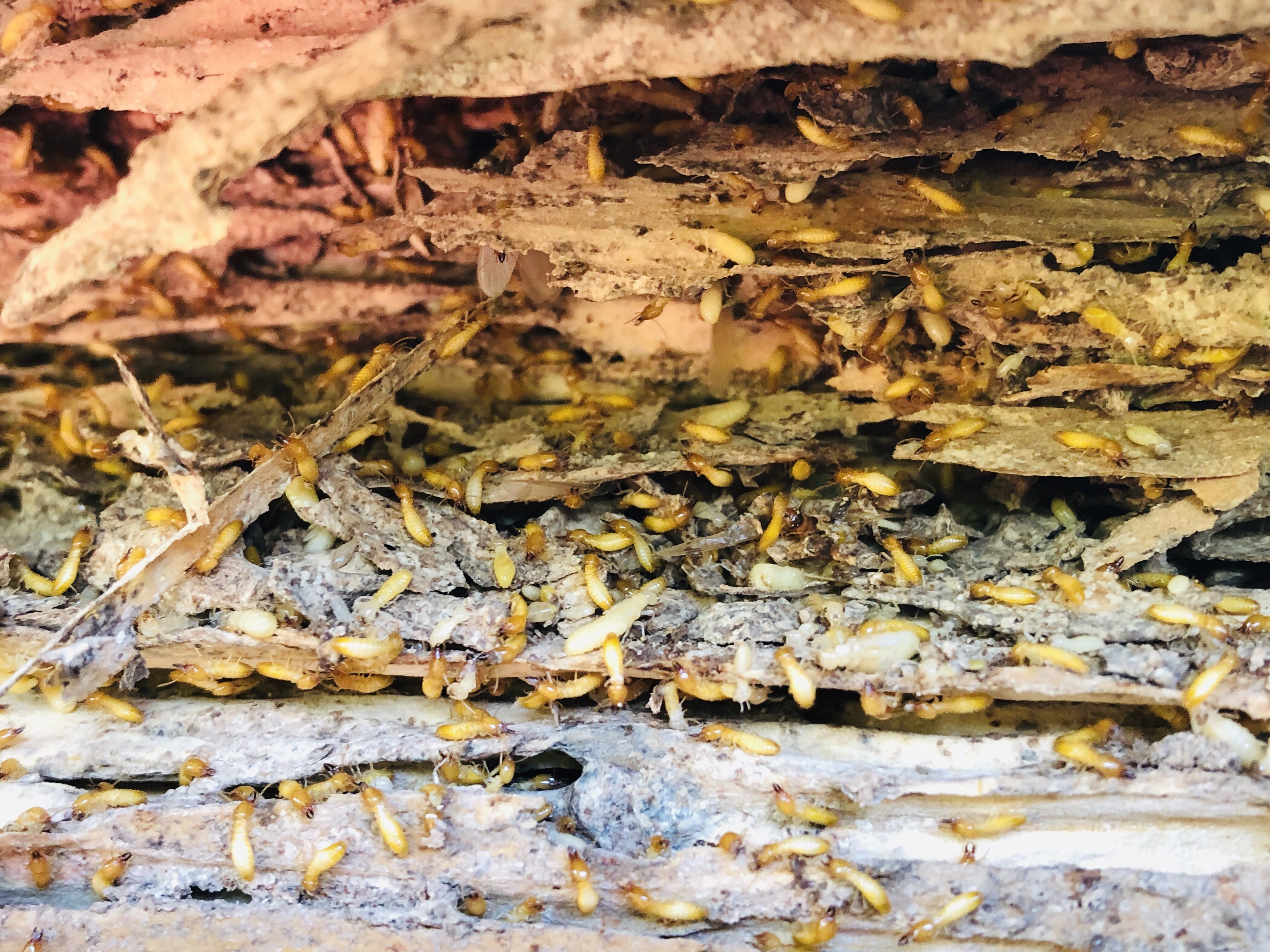
Termite swarmers and shed wings
Windows and doors

Windowsills, glass doors and light fixtures

  • Wings collected on sills and in window tracks
  • Near sliding doors or bright lamps
  • Often in a sunny room

Swarmers fly toward light, so they pile up at windows even if they came out somewhere else in the room. The inspection looks for the actual exit point nearby: baseboards, door frames, cracks in the floor.

Crack in a concrete floor
Basement and slab

Basement floors, slab cracks and around pipes

  • Wings near a floor crack or expansion joint
  • Around a sump pit, drain or pipe
  • Along the bottom of basement walls

This often means termites are coming up from the soil through the foundation. Look nearby for mud tubes on the walls and on the wood above.

Wood framing inside a house
Inside walls

Outlets, baseboards and wall cracks

  • Wings coming out of a small slit or hole
  • Near outlets or under baseboard trim
  • Bubbling paint or soft spots nearby

Swarmers coming straight out of a wall mean the colony is working inside the structure. Termite wood damage there should be checked and repaired after treatment.

When do termites swarm in New Jersey?

Eastern subterranean termites, the common termite in North Jersey, usually swarm in spring, roughly March through May. Swarms tend to happen on a warm day, often after rain, and usually during daylight. A swarm inside the house may last less than an hour, which is why many homeowners only find the wings afterward.

Heated basements can trick a colony living under or inside the house into swarming early, so it's not unusual to find wings indoors in late winter, especially near a boiler or furnace. Wings found in summer or fall are less likely to be termites, but they're still worth identifying.

Finding old wings while cleaning out a basement or window track in another season still matters: it means termites swarmed there at some point. Termites stay active year-round inside heated homes. Read are termites active in the winter?

Common myths about termite wings

❌

"They're gone once the swarm ends"

The swarm is only the colony sending out reproductives. The rest of the colony keeps feeding.

❌

"The swarmers will start a nest in my living room"

Indoor swarmers usually die without reaching soil. The concern is the colony they came from, not the swarmers.

❌

"A few wings outside is nothing"

Wings on a porch or patio near the foundation can mean a colony in the soil next to the house. Worth checking.

❌

"Spraying the swarm fixes it"

Spray only kills what it touches. Termites have to be treated in the soil or at the colony to stop them.

Termite inspection, treatment and damage repair

When we come out after a homeowner finds termite wings, a licensed technician:

  1. Confirms the ID from your samples and photos.
  2. Finds the exit point and activity by checking the area where wings were found, the foundation, basement walls, sill plates, joists, door frames, porches and any wood touching soil, plus moisture problems that attract termites.
  3. Explains the treatment options that fit your home. The main approaches are liquid soil treatment and baiting systems; our guides on Sentricon vs. liquid treatment and bait stations vs. liquid treatment compare them fairly. Ask us which fits your house.
  4. Repairs the damage. After treatment, we repair termite-damaged wood ourselves: sill plates, joists, beams and framing. You don't need a separate contractor for the structural wood. See termite damage repair.

Want to know about budget? What affects termite treatment cost in NJ explains the main factors. Buying or selling a home and just found wings? See termite inspections for buyers and sellers.

Don't panic, but don't wait months. Termite damage builds slowly, so you have time to get a proper inspection and a free quote. Waiting a full season lets the colony keep feeding.

Found Termite Wings? Get a Free Quote

Text a photo of the wings and tell us where you found them. We'll confirm what they are and set up an inspection with a free quote.

Why homeowners call us after finding wings

  • Licensed termite inspection, NJ License 90568B
  • We find where the swarmers came out
  • Honest comparison of treatment options
  • We repair termite-damaged sill plates, joists and framing ourselves
  • Same-day appointments often available
πŸ“ž Call 973-510-2585

Request Service

πŸ”’ Your info stays private Β· Hablamos espaΓ±ol.

What's bugging you? - Step 1 of 3

Termite Wings in the House: Questions

Do termite wings in the house mean I have termites?

Usually, yes. Piles of shed termite wings indoors are a strong sign that a colony swarmed inside the house or from the soil right next to it. Swarmers are weak fliers that don't travel far, so the colony is close. A professional inspection confirms whether termites are active in the structure and where.

How can I tell termite wings from flying ant wings?

Termite wings are all the same size, about twice as long as the body, pale or milky, and fall off easily, leaving piles of loose wings. Flying ant front wings are bigger than the back wings and stay attached longer. Termites also have a thick waist and straight antennae, while ants have a pinched waist and elbowed antennae.

What should I do if I find termite wings on my windowsill?

Save a few wings on clear tape or in a sealed bag, photograph where they were, and don't spray. Swarmers fly toward light, so they gather at windows even if they came out elsewhere in the room. Then schedule a termite inspection so the actual exit point and colony can be found and treated.

Are termite swarmers dangerous?

Termite swarmers don't bite, sting or carry disease, and the ones that land inside your living space usually die without starting a colony. They're not dangerous to people or pets. The concern is the colony they came from, which can keep damaging wood in your home if it isn't treated.

What time of year do termites swarm in New Jersey?

Eastern subterranean termites in New Jersey usually swarm in spring, roughly March through May, on warm days, often after rain. Colonies under heated homes sometimes swarm earlier, in late winter. Wings found during cleaning in other seasons may be from an earlier swarm and are still worth having identified.

Will the termites go away after the swarm?

No. The swarmers die off within a day or so, but the colony that produced them keeps feeding. A swarm is a sign the colony is mature, not that it's leaving. The colony has to be treated in the soil or at the source to stop the damage.

Should I spray the termite swarm?

Spraying only kills the swarmers it touches and doesn't affect the colony. It can also make it harder to find where the swarmers came out. It's better to collect a few for identification, vacuum the rest, and have the area inspected. Swarmers dying indoors are not the problem; the colony is.

How much damage do termites do after swarming?

It depends on how long the colony has been feeding and where. Subterranean termite damage builds slowly, so many homes with a first swarm have limited damage, while others have damaged sill plates or joists. An inspection shows the extent. We repair termite-damaged wood ourselves after treatment.

Can I get rid of termites myself after finding wings?

Store products can kill termites you see, but they rarely reach the colony in the soil. Professional treatment, either liquid soil treatment or a baiting system, is designed to stop the colony. Getting the wings identified first is the most important step, since many swarms turn out to be ants.

How much does termite treatment cost after finding wings?

We give a free quote after seeing the home. The cost of treatment depends on the size of the home, the foundation type, how many areas are affected and the method chosen. Text photos to 973-510-2585 to start, and we'll explain the options before any work is scheduled.

EncontrΓ© alas de termitas en mi casa. ΒΏQuΓ© hago?

Guarde algunas alas en cinta transparente, tome fotos del lugar y no use spray. Las alas dentro de la casa casi siempre indican una colonia cercana. Hacemos la inspecciΓ³n, el tratamiento y reparamos la madera daΓ±ada. Hablamos espaΓ±ol. Llame o mande texto al 973-510-2585.

Termite help across North Jersey

Based in Garfield, we inspect and treat termites in Bergen, Passaic, Essex and Hudson counties.

Our service area

Union County

973-510-2585
  • Berkeley Heights
  • Clark
  • Cranford
  • Elizabeth
  • Fanwood
  • Garwood
  • Hillside
  • Kenilworth
  • Linden
  • Mountainside
  • New Providence
  • Plainfield
  • Rahway
  • Roselle
  • Roselle Park
  • Scotch Plains
  • Springfield
  • Summit
  • Union
  • Westfield

Morris County

973-510-2585
  • Boonton
  • Butler
  • Cedar Knolls
  • Chatham
  • Denville
  • Dover
  • East Hanover
  • Florham Park
  • Hanover
  • Kinnelon
  • Lincoln Park
  • Madison
  • Mendham
  • Montville
  • Morris Plains
  • Morristown
  • Mountain Lakes
  • Parsippany
  • Pequannock
  • Randolph
  • Riverdale
  • Rockaway
  • Roxbury
  • Whippany

Updated November 2026 by the Silver Bullet Pest Control team, Garfield, NJ β€’ NJ License 90568B

Scroll to Top