Speed vs. elimination: the real trade-off
People often frame it as "liquid kills, bait eliminates." That's partly true, but it's more useful to think about what each one gives you.
Liquid: immediate protection
Once the soil is treated, termites coming up from the ground have to pass through it. With non-repellent products, termites that pass through also carry the product to nestmates, so the nearby colony takes a hit too. If termites are actively feeding in your sill plate right now, a liquid treatment plus treating the active areas is usually the quickest way to cut them off. The catch: the job is only as good as its coverage. A skipped section, a new patio poured later, or heavy digging in a flower bed can leave a gap.
Bait: patient colony control
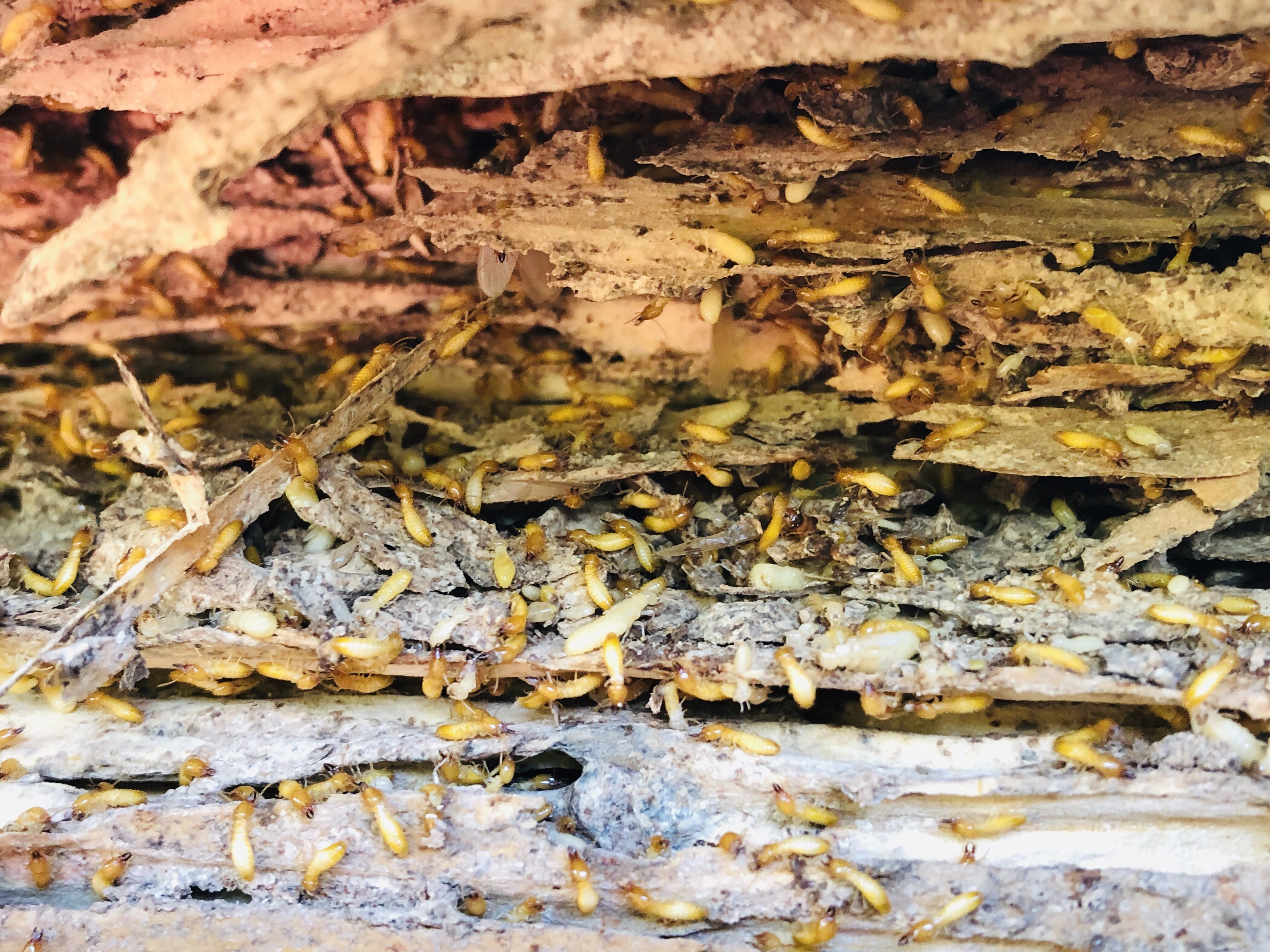
Bait systems don't create a barrier at all. They depend on foraging termites finding a station, feeding, and sharing the bait until the colony dies off. When it works, it removes the colony feeding on your house. But it takes time, and in New Jersey termites slow down in the cold months, so a station installed in late fall may not see much feeding until spring. Bait systems are also a commitment: stations have to be checked and serviced, or protection fades.
Our honest take: if termites are damaging the house right now or a closing date is coming, speed usually matters most. If there's no active infestation and you want ongoing monitoring with minimal drilling, baiting can make sense.