
 Silver Bullet Pest Control
Termites Inside My House: What to Do Next
A swarm of winged bugs by the basement window, mud tubes on the foundation, or wood that crumbles when you press it? Don't panic and don't grab a can of spray. Here's what termites inside your home really mean, what to do first, and how Silver Bullet Pest Control treats them and repairs the damage.
4.9 stars on Google • NJ License 90568B • 15+ years • Based in Garfield • Hablamos español
Save a few of the bugs or wings in a zip bag and text a photo to 973-510-2585. We'll confirm whether they're termites.
- ✓ Same-day appointments often available
- ✓ Licensed & insured in NJ
- ✓ Homes & businesses
- ✓ English & Español
What should I do if I find termites inside my house?
If you find termites inside your house, save a few samples, don't spray or tear into the wood, and schedule a professional termite inspection within the next few days. Termites work slowly, so the house isn't going to collapse overnight — but the colony is in the soil, not just in the spot you found, and only a treatment that reaches the colony stops it. Silver Bullet Pest Control inspects, treats and repairs termite damage across North Jersey. Call or text 973-510-2585 for a free quote.
Found termites inside your home? Do this first
Don't spray them
Bug spray kills the swarmers or workers you see, but the colony underground is untouched — and you lose the evidence an inspector needs.
Save a sample
Scoop a few bugs or wings into a zip bag or onto clear tape. Take photos of mud tubes or damaged wood before you touch anything.
Leave the wood alone
Breaking open mud tubes or damaged trim makes termites move, and it makes it harder to see how far the activity goes.
Call for an inspection
Text the photos to 973-510-2585 or call. A licensed inspector checks the whole structure, not just the spot you found.
Swarmers that come inside usually die within a day or two because they dry out — they can't start a new colony inside your living room. The real concern is the colony that sent them, which is in or under the house.
Where termites show up inside a house
New Jersey's termites are eastern subterranean termites. They live in the soil and come up into the house, so the signs show up in predictable places:
| Where | What you might see | What it usually means |
|---|---|---|
| Basement windows and doors | Winged insects or piles of tiny wings, often in spring | A mature colony nearby, usually under or beside the house |
| Foundation walls and piers | Pencil-width mud tubes climbing the concrete | Termites traveling from the soil up to the wood |
| Sill plate and joists | Wood packed with soil, soft spots, mud on the wood | Active feeding where the house sits on the foundation |
| Baseboards, door frames, trim | Wood that sounds hollow or dents easily; small mud spots | Feeding has moved up into finished rooms |
| Floors and walls | Bubbling paint, sagging floors, tiny pinholes in drywall | Longer-term activity worth checking right away |
| Slab cracks, bathroom and kitchen | Swarmers from a crack, a tub drain or a plumbing gap | Termites using a gap in the slab to get inside |
Seeing wings only? Read termite wings in the house. Seeing tubes? See termite mud tubes.
The three ways termites reveal themselves
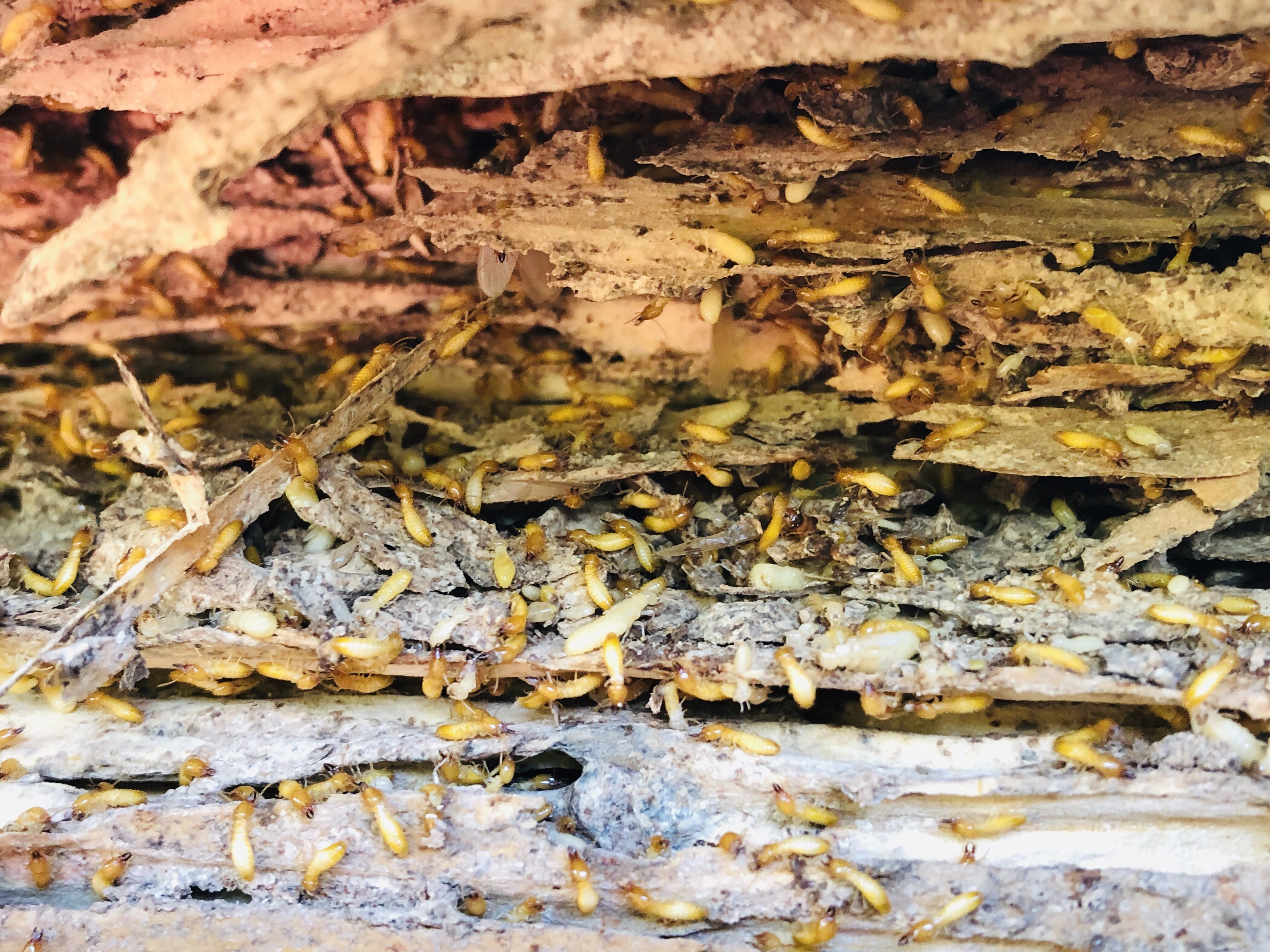
Swarmers and wings
- Winged bugs near windows and lights
- Piles of identical wings
- Usually spring, sometimes late winter indoors
Swarmers are the colony's way of starting new colonies. In a heated basement they can appear earlier than outside. It's often the first sign homeowners ever see.

Mud tubes
- Brown tubes about the width of a pencil
- On foundation walls, piers or pipes
- Break one open and you may see pale workers
Termites need moisture, so they build tunnels of soil and saliva to move from the ground to the wood. Tubes are one of the clearest signs an inspector looks for.
Damaged wood
- Wood that sounds hollow when tapped
- Layers eaten out, filled with soil
- Doors or windows that suddenly stick
Termites eat wood from the inside out, so the surface can look fine while the inside is hollow. Damage is most common in sill plates, joists and lower framing.
How termites got into your house
Subterranean termites don't fly in through an open window to eat your furniture. The workers come up from a colony in the soil. Common ways in:
- Cracks in the foundation or slab, including gaps around pipes, drains and expansion joints.
- Wood touching soil — deck posts, porch steps, door frames, fence boards or siding that reaches the ground.
- Moisture from leaky gutters, poor grading, a damp basement or a crawl space with no ventilation.
- Additions and porches, where the slab or footing meets the original foundation.
- Mulch, firewood and wood debris piled against the house.
How fast is the damage? Slower than most people fear. Termite damage usually builds over years, which is why many homeowners find it only when they renovate or sell. That's good news — you have time to get a proper inspection and a real treatment instead of a panic fix. It's not a reason to wait months, though; the colony keeps feeding every day.
Many older North Jersey homes have wood sill plates sitting right on stone or block foundations, basements that stay damp, and porches and additions built over the years — all places where termites find an easy path in.
Is it really termites?
A lot of termite calls turn out to be something else. These are the usual mix-ups:
| What you found | Termites | Look-alike |
|---|---|---|
| Winged insects | Thick waist, straight antennae, four equal wings | Flying ants: pinched waist, bent antennae, front wings longer |
| Sawdust | Termites don't leave sawdust piles | Carpenter ants push out sawdust-like frass |
| Soft wood | Soil packed into tunnels along the grain | Rot: soft and crumbly, no tunnels or soil |
| Damage on the outside of wood | Mud spots, tubes and hidden hollows | Water damage: stains, swelling, mold |
Compare flying ants vs. termite swarmers, carpenter ants vs. termites and termite damage vs. water damage.
How termites inside the home are treated
Because the colony lives in the soil, effective treatment targets the soil and the paths termites use — not just the wood where you found them. There are two main professional approaches:
- Liquid soil treatment — a termiticide is applied into the soil along the foundation and under slabs where needed, creating a treated zone termites pass through. It goes to work right away against termites in that zone.
- Bait systems — stations placed in the ground that termites feed on and share with the colony. They work more slowly and need regular monitoring.
Each has trade-offs, and the right choice depends on your foundation, how active the termites are and your home's layout. Our guide on termite bait stations vs. liquid treatment compares them honestly — ask us which fits your home.
What doesn't work: store-bought sprays and foams on the wood you can see. They may kill the termites in that board, but the colony simply feeds somewhere else. See does termite spray work? for why.
Selling or buying? Termites found during a sale usually need an inspection report and treatment. See homebuyer and seller termite inspections.
We repair the termite damage too
Killing the termites stops new damage, but it doesn't fix the wood they've already eaten. Many companies treat and leave you to find a contractor. We repair termite damage ourselves after treatment, so one company handles it start to finish.
- Sill plates — the boards where the house sits on the foundation, and the most common spot for damage.
- Floor joists and beams — reinforced or replaced so floors stop sagging or bouncing.
- Framing — wall studs and other structural wood near the foundation.
We treat first, then open up the damaged area, replace or reinforce what's needed and close it back up. More on our termite damage repair page.
What affects the cost of termite treatment
We give a free quote after inspecting. These are the things that change the price:
| Factor | Why it matters |
|---|---|
| Size of the foundation | Liquid treatment is applied along the foundation, so a longer perimeter means more work and material. |
| Foundation type | Slabs, finished basements and crawl spaces each need different access, like drilling through concrete. |
| How active the termites are | Several active areas take more treatment than one small spot. |
| Damage found | Repairs to sill plates, joists or framing are priced separately based on what's found. |
| Treatment method | Liquid treatment and bait systems have different setup and follow-up needs. |
For a deeper look, read termite treatment cost in NJ.
More termite help
Get a Free Termite Quote
Tell us what you found and where. Text a photo of the bugs, wings, tubes or damaged wood and we'll help you plan the next step.
Why homeowners call us when termites show up inside
- Winged bugs swarming in the basement
- Mud tubes on the foundation
- Wood that sounds hollow or crumbles
- Termites found during a home sale
- Damage that needs to be repaired after treatment
Request Service
🔒 Your info stays private · Hablamos español.
Termites Inside the House: Questions
Is it safe to stay in my house if I have termites?
Yes, it's safe to stay in your house with termites. They don't bite or sting people, and they don't spread disease. Termite damage builds slowly over months and years, so there's usually time to schedule an inspection and treatment calmly. The exception is severe, long-term damage to floors or framing, which an inspector will point out.
Do termites inside the house mean my whole house is infested?
Not usually. Seeing termites inside means a colony in the soil has found a way into the structure, but the activity is often limited to one area, like a sill plate, doorway or slab crack. A full inspection maps where they are and how far it goes, which decides how much treatment and repair you need.
Can termites spread to my furniture?
Subterranean termites, the kind found in New Jersey homes, rarely infest furniture. They need contact with moist soil, so they stay connected to the ground through mud tubes. Wooden furniture stored directly on a damp basement floor can be at risk, but couches and tables in living areas aren't the concern — the house framing is.
Why are termites swarming inside in winter?
Termites swarming indoors in winter usually means the colony is under a heated part of the house, like a basement or slab. The warmth tricks the colony into swarming early. It's a strong sign the colony is close to or under the structure, so it's worth an inspection soon rather than waiting until spring.
Can I get rid of termites myself?
Not reliably. Over-the-counter sprays and foams kill termites you can reach, but the colony lives in the soil and keeps feeding elsewhere. Professional treatments put termiticide into the soil along the foundation or use monitored bait systems, which reach the colony. DIY helps most with prevention: fixing leaks and removing wood that touches soil.
How long does it take termites to damage a house?
Serious termite damage usually takes years to develop, not weeks. A colony feeds every day, but slowly, which is why damage is often found only during renovations or home sales. How fast depends on the colony's size, moisture and how much wood it can reach. Treating early keeps repair costs much smaller.
Will the termites come back after treatment?
A proper treatment that reaches the soil around the foundation stops the existing colony and protects the house for a long time, but no house is permanently termite-proof. Keeping wood away from soil, fixing moisture problems and having periodic inspections are the best ways to catch any new activity early.
Does homeowners insurance cover termite damage?
Many homeowners policies don't cover termite damage, because insurers treat it as preventable maintenance. Policies vary, so check yours or ask your agent. That's one more reason to act early: the sooner termites are treated, the less wood needs to be repaired.
Do you repair termite damage after treating?
Yes. We repair termite damage ourselves after treatment, including sill plates, joists, beams and framing. One company handles the inspection, treatment and repair, so you're not coordinating with a separate contractor or guessing whether the termites are gone before the new wood goes in.
¿Qué hago si encuentro termitas dentro de mi casa?
No las rocíe. Guarde algunas en una bolsa, tome fotos y mándelas al 973-510-2585. Hacemos la inspección, el tratamiento y la reparación de la madera. Hablamos español.
Termite help near you
Based in Garfield, we serve Bergen, Passaic, Essex and Hudson counties. Local termite pages:
Our service area
Bergen County
973-510-2585- Allendale
- Bergenfield
- Bogota
- Carlstadt
- Cliffside Park
- Closter
- Cresskill
- Demarest
- Dumont
- East Rutherford
- Edgewater
- Elmwood Park
- Emerson
- Englewood
- Englewood Cliffs
- Fair Lawn
- Fairview
- Fort Lee
- Franklin Lakes
- Garfield
- Glen Rock
- Hackensack
- Harrington Park
- Hasbrouck Heights
- Haworth
- Hillsdale
- Ho-Ho-Kus
- Leonia
- Little Ferry
- Lodi
- Lyndhurst
- Mahwah
- Maywood
- Midland Park
- Montvale
- Moonachie
- New Milford
- North Arlington
- Northvale
- Norwood
- Oakland
- Old Tappan
- Oradell
- Palisades Park
- Paramus
- Park Ridge
- Ramsey
- Ridgefield
- Ridgefield Park
- Ridgewood
- River Edge
- River Vale
- Rochelle Park
- Rutherford
- Saddle Brook
- Saddle River
- South Hackensack
- Teaneck
- Tenafly
- Teterboro
- Upper Saddle River
- Waldwick
- Wallington
- Washington Township
- Westwood
- Woodcliff Lake
- Wood-Ridge
- Wyckoff
Passaic County
973-510-2585- Bloomingdale
- Clifton
- Haledon
- Hawthorne
- Little Falls
- North Haledon
- Passaic
- Paterson
- Pompton Lakes
- Prospect Park
- Ringwood
- Totowa
- Wanaque
- Wayne
- West Milford
- Woodland Park
Essex County
973-510-2585- Belleville
- Bloomfield
- Caldwell
- Cedar Grove
- East Orange
- Essex Fells
- Fairfield
- Glen Ridge
- Irvington
- Livingston
- Maplewood
- Millburn
- Montclair
- Newark
- North Caldwell
- Nutley
- Orange
- Roseland
- Short Hills
- South Orange
- Verona
- West Caldwell
- West Orange
Hudson County
973-510-2585Union County
973-510-2585- Berkeley Heights
- Clark
- Cranford
- Elizabeth
- Fanwood
- Garwood
- Hillside
- Kenilworth
- Linden
- Mountainside
- New Providence
- Plainfield
- Rahway
- Roselle
- Roselle Park
- Scotch Plains
- Springfield
- Summit
- Union
- Westfield
Morris County
973-510-2585- Boonton
- Butler
- Cedar Knolls
- Chatham
- Denville
- Dover
- East Hanover
- Florham Park
- Hanover
- Kinnelon
- Lincoln Park
- Madison
- Mendham
- Montville
- Morris Plains
- Morristown
- Mountain Lakes
- Parsippany
- Pequannock
- Randolph
- Riverdale
- Rockaway
- Roxbury
- Whippany
Updated November 2026 by the Silver Bullet Pest Control team, Garfield, NJ • NJ License 90568B