
 Silver Bullet Pest Control
Carpenter Ant Control in NJ: Find the Nest, Treat It, Fix the Wood
Large black ants on the kitchen floor at night, little piles of sawdust under a window, or winged ants in the spring? Those are classic carpenter ant signs. Silver Bullet Pest Control finds the nest — inside the house and out — treats it at the source, and can repair the damaged wood when the job calls for it.
4.9 stars on Google • NJ License 90568B • 15+ years • Free quotes • Hablamos español
Not sure if it's carpenter ants or termites? Text a close-up photo to 973-510-2585 and we'll tell you.
- ✓ Same-day appointments often available
- ✓ Licensed & insured in NJ
- ✓ Homes & businesses
- ✓ English & Español
What is the best carpenter ant control?
The best carpenter ant control is finding and treating the nest itself — usually in damp, softened wood around windows, roof edges, decks or bathrooms, plus a parent colony often outside in a tree or stump — rather than spraying the ants you see. Fixing the moisture that softened the wood keeps them from coming back. Silver Bullet Pest Control inspects for carpenter ant nests across North Jersey, treats them, and can repair the damaged wood afterward. Call or text 973-510-2585 for a free quote.
Signs of carpenter ants in your house
Any one of these is worth a closer look. Two or more usually means a nest nearby:
Large black ants indoors
Workers are big — often a quarter inch or more — and black or black-and-red. Seeing them inside in late winter or early spring often means the nest is in the house.
Activity at night
Carpenter ants forage mostly after dark. A few on the kitchen counter or bathroom floor late at night is a common first clue.
Sawdust piles (frass)
Small piles of coarse shavings below windows, baseboards, door frames or in the attic, often mixed with bits of dead ants.
Winged ants in spring
Swarmers inside the house in spring mean a mature colony is established nearby, possibly in the structure.
Faint rustling
In a quiet room, a large nest in a wall or hollow door can sometimes be heard as a soft crinkling sound.
Damp, soft wood
Wood that's spongy near a leak, gutter overflow or bathroom is exactly what carpenter ants look for.
More detail on our signs of carpenter ants in the house page.
Frass: the sawdust clue that points to the nest
Carpenter ants don't eat wood. They chew through it to make smooth, clean galleries for the colony and push the shavings out through small openings. That debris is called frass, and it's the single most useful clue for finding the nest.
- What it looks like: coarse, light-colored shavings like pencil-sharpener dust, often mixed with insect parts and bits of insulation.
- Where it shows up: on window sills, under baseboards, below a door frame, in a basement along the sill plate, or on attic insulation.
- What it tells us: the nest is usually right above or behind the pile. A fresh pile that comes back after you sweep it means the colony is active.
Don't vacuum it all up before we arrive if you can help it — snap a photo and leave a little so the technician can trace it. Frass is also one of the clearest ways to tell carpenter ants from termites, which leave mud, not sawdust.
Carpenter ants vs. termites: how to tell
Both damage wood and both swarm in spring, but they're treated very differently:
| Look at | Carpenter ants | Subterranean termites |
|---|---|---|
| Body | Pinched waist, bent antennae | Thick straight waist, straight beaded antennae |
| Wings (swarmers) | Front wings longer than back wings | All four wings the same length, break off easily |
| Inside the wood | Smooth, clean, sanded-looking tunnels | Rough galleries packed with mud and soil |
| What they leave | Sawdust-like frass piles | Mud tubes on foundation walls; discarded wings |
| Seen in the open? | Yes, workers forage openly at night | Rarely — workers stay hidden in wood and mud |
| What to do | Find and treat the nest, fix moisture | Get a termite inspection and treatment |
Still unsure? See carpenter ants vs. termites and flying ants vs. termite swarmers, or book a termite inspection.
Where carpenter ants nest in North Jersey homes
Nest finding is most of the job. These are the places we check first:
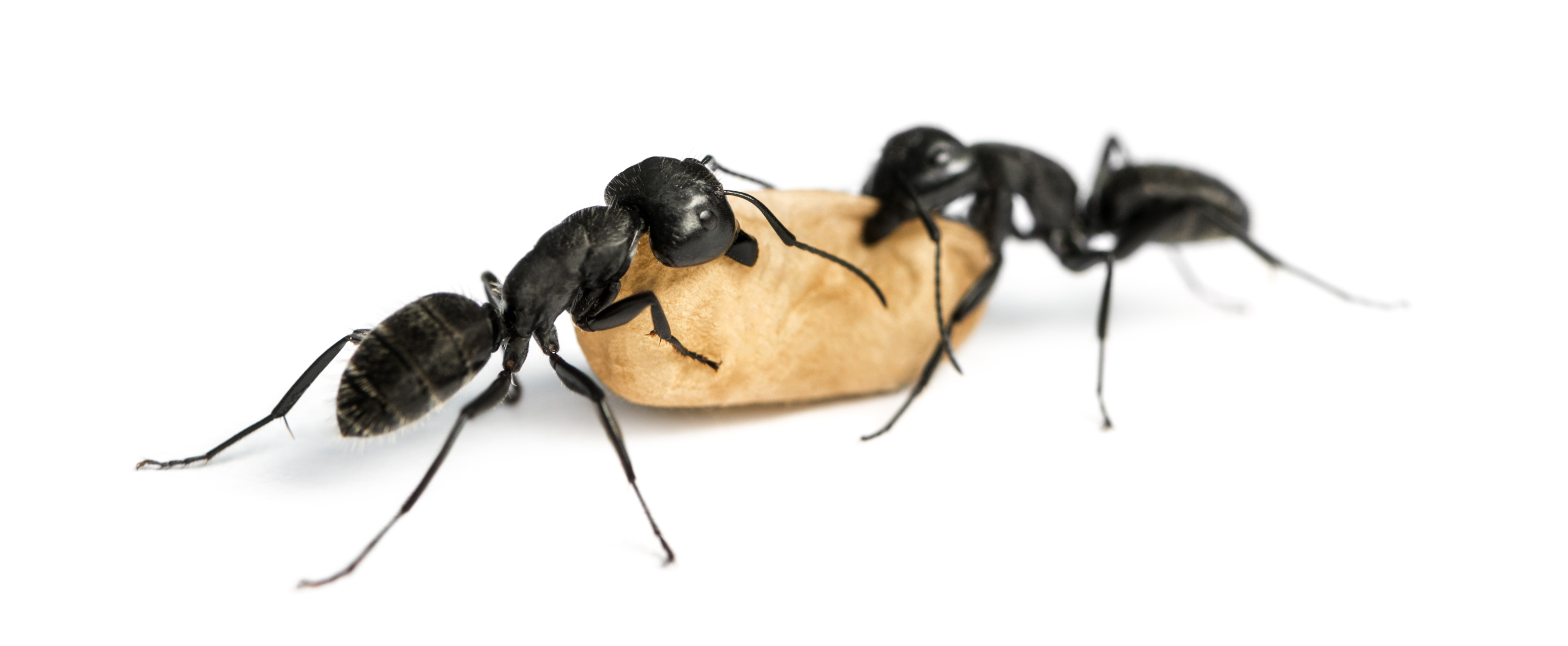
Damp wood in the house
- Window and door frames with old leaks
- Wood under bathrooms and kitchen sinks
- Sill plates and rim joists in the basement
Many North Jersey homes are older wood-frame houses where decades of small leaks have softened framing. Carpenter ants start in that moist wood and then can spread into sound wood nearby.
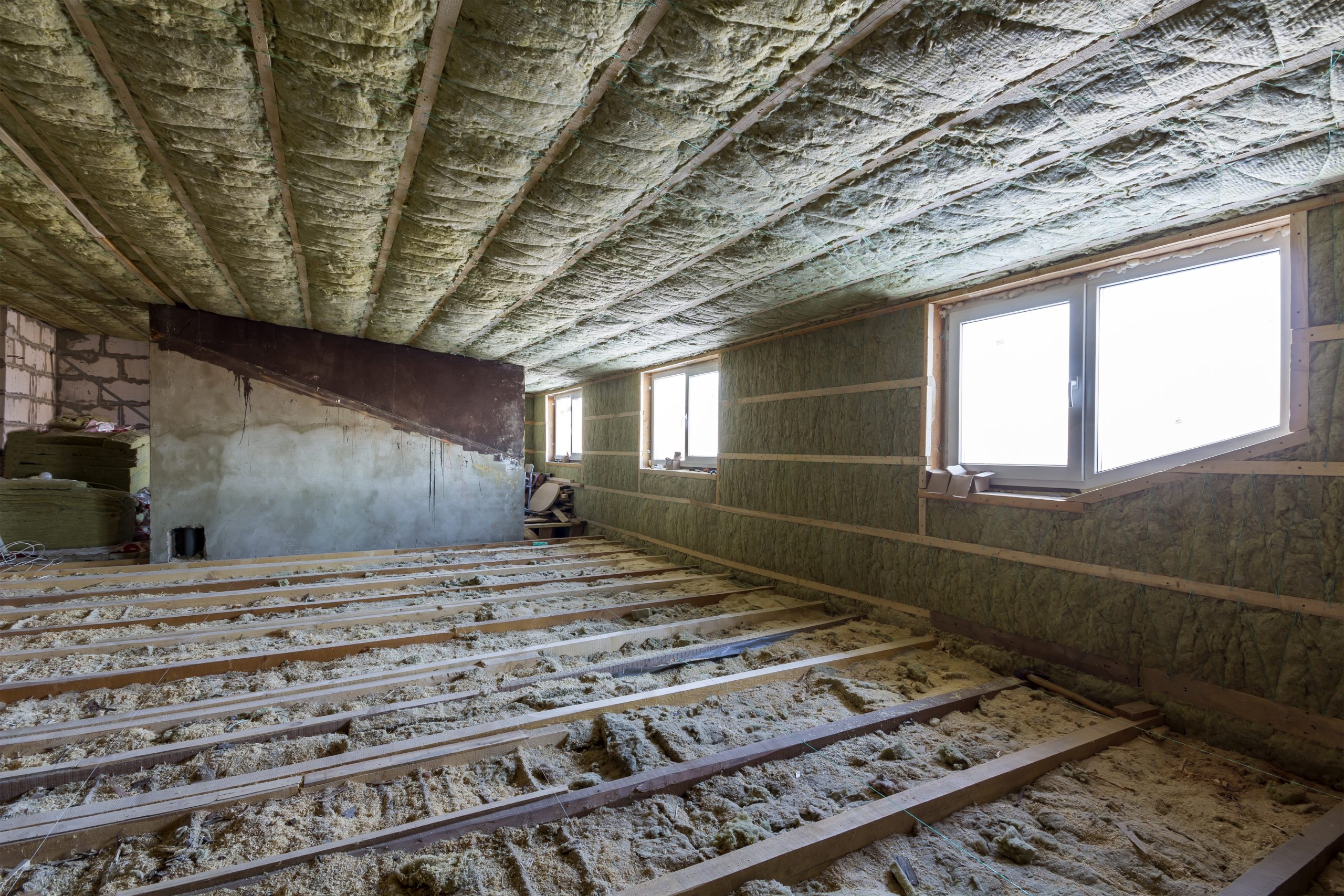
Roof edges and attics
- Rafters and sheathing near roof leaks
- Soffits and fascia behind clogged gutters
- Insulation with frass on top
Overflowing gutters and failed flashing keep the roof edge damp. Frass falling onto attic insulation is a common way we find these nests.
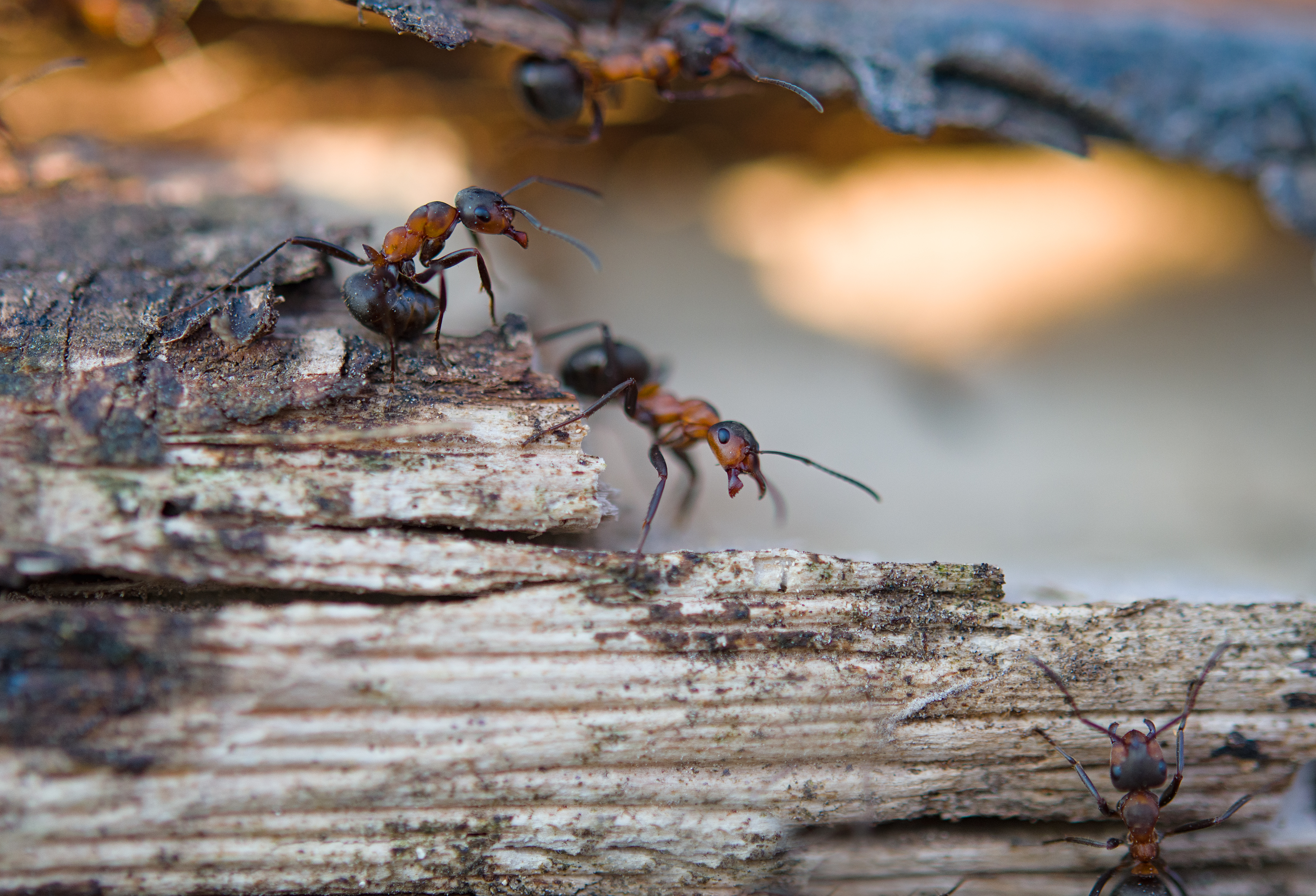
The parent colony outdoors
- Hollow trees and old stumps
- Firewood stacked against the house
- Landscape timbers, decks and fence posts
A large parent colony often lives outside and sends workers into the house through gaps, wires and branches touching the roof. Treating only the indoor nest lets the outdoor colony move right back in.
How our carpenter ant treatment works
Identify and inspect
We confirm they're carpenter ants (not termites or another ant), follow frass, trails and damp wood, and check the yard, trees, stumps and woodpiles for outdoor colonies.
Treat the nest at the source
A licensed technician treats into the nest galleries and the voids around them, and treats outdoor colonies and the routes ants use to get in — not just the ants on the floor.
Point out the moisture
We show you the leaks, gutter overflow, wood-to-soil contact and branches touching the house that made the wood attractive in the first place.
Check back and repair
We follow up on activity, and where the ants hollowed out structural wood, we can repair it after treatment.
Expect to see some ants for a short time after treatment as the colony dies off. If activity keeps going after that, call us.
Why spraying the ants you see doesn't work
A carpenter ant colony can hold thousands of workers, and the ones on your kitchen floor are a small part of it. The queen stays deep in the nest. Spraying the trail kills a handful of foragers, the rest keep chewing, and the trail just moves to a different room. Some repellent sprays can even cause a colony to split into new satellite nests.
Store ant baits are built mostly for small sugar ants and often aren't taken well by carpenter ants. That's why the nest — inside and out — has to be found and treated directly. More on this at does ant spray work? and ant bait vs. ant spray.
Carpenter ant damage repair: we fix the wood too
Carpenter ant damage usually grows slowly, but a colony left alone for years can hollow out window framing, rim joists, sill plates or roof rafters — usually wood that was already softened by water. After the colony is treated, the damaged wood still needs attention.
Just as with termite damage, we repair the damaged wood ourselves after treatment, so you aren't coordinating a separate contractor. Typical repairs include:
- Replacing or sistering damaged sill plates and rim joists
- Repairing joists, beams and framing members that were tunneled
- Replacing rotted, ant-damaged trim, fascia or window framing where it's part of the problem
The leak or moisture source has to be fixed too, or new wood will soften the same way. See our wood damage repair page for how repairs are handled.
What affects the cost of carpenter ant control
Quotes are free and given after we know what's going on. These change the size of the job:
| Factor | Smaller job | Bigger job |
|---|---|---|
| Nest location | One nest found quickly, easy to reach | Nests hidden in walls, ceilings or the attic |
| Number of colonies | A single indoor nest | Indoor nests plus an outdoor parent colony |
| Property | Small house with a clear problem spot | Large home, several buildings or heavy tree cover |
| Moisture issues | Already fixed | Ongoing leaks that need attention |
| Wood damage | Little or none | Framing, sill plates or joists to repair |
See our ant exterminator cost guide for more, or text a photo of the ants and any frass to 973-510-2585.
How to keep carpenter ants from coming back
Fix leaks and gutters
Repair roof, window and plumbing leaks and keep gutters flowing so wood stays dry.
Trim branches
Cut back branches touching the roof or siding — carpenter ants use them as bridges.
Move the firewood
Store firewood off the ground and away from the house, and remove old stumps near the foundation.
Seal entry points
Seal gaps around utility lines, wires and pipes where ants travel inside.
Large black bees boring round holes in the deck aren't ants — that's carpenter bees. See carpenter bee control.
Related ant and wood damage pages
Get a Free Carpenter Ant Quote
Send a photo of the ants and any sawdust piles, and tell us where you're seeing them. We'll explain what we think is going on and what the job needs.
Why North Jersey calls us for carpenter ants
- Big black ants inside every spring
- Sawdust piles under windows or in the attic
- Not sure if it's carpenter ants or termites
- We repair the damaged wood ourselves after treatment
- Licensed, with 4.9 stars on Google
Request Service
🔒 Your info stays private · Hablamos español.
Carpenter Ant Control Questions
How do I know if I have carpenter ants?
The clearest signs are large black or black-and-red ants indoors, especially at night, and small piles of sawdust-like frass under windows, baseboards or in the attic. Winged ants inside in spring and damp, soft wood are other clues. Text a close-up photo to 973-510-2585 and we'll confirm what you have.
Do carpenter ants damage houses?
Yes, over time. They don't eat wood but hollow it out to build nests, usually starting in wood softened by water. A colony left for years can weaken window framing, sill plates, joists or rafters. Damage is generally slower than termites, but it's worth treating early and fixing the moisture source.
How do you find a carpenter ant nest?
We follow frass piles, foraging trails and damp wood, check voids around leaks, and inspect the yard for outdoor colonies in trees, stumps and woodpiles. Ants are most active at night, so notes on when and where you see them help. Leaving a little frass in place helps the technician trace the nest.
Can I get rid of carpenter ants myself?
You can reduce them by fixing leaks, trimming branches and moving firewood, but sprays usually only kill the foragers you see. The queen stays in the nest, and repellent sprays can make colonies split. Most lasting results come from finding and treating the nest, inside and out, which is hard to do without experience.
How long does carpenter ant treatment take to work?
You may still see some ants for a short time while the colony dies off, which is normal. Most homes see activity drop off within a few weeks once the nests are treated. If you keep seeing ants after that, or new frass appears, call us so we can recheck and treat again.
Are carpenter ants a sign of a bigger problem?
Often they point to moisture. Carpenter ants prefer wood that's been softened by leaks, gutter overflow or poor ventilation, so finding them is a good reason to check roofs, windows, plumbing and the basement sill area. Fixing that moisture is part of keeping them from coming back.
Do you repair carpenter ant damage?
Yes. After treatment, we repair damaged wood ourselves, the same way we handle termite damage — sill plates, joists, beams and framing. That way you don't need a separate contractor. The leak or moisture problem behind the damage should be fixed as well so the new wood stays sound.
Are carpenter ants the same as termites?
No. Carpenter ants have a pinched waist and bent antennae, leave sawdust-like frass and smooth tunnels, and forage in the open. Termites have a thick waist and straight antennae, leave mud tubes and soil-packed galleries, and stay hidden. The treatments are different, so getting the identification right matters.
When are carpenter ants most active in New Jersey?
They become active as the weather warms in spring and stay busy through summer. Ants seen indoors in late winter or very early spring often mean a nest is inside the heated house. Winged swarmers usually appear in spring when a colony is mature.
Are you licensed?
Yes. Silver Bullet Pest Control holds New Jersey pesticide applicator business License 90568B, has over 15 years of experience and has 4.9 stars on Google. We're based in Garfield and serve Bergen, Passaic, Essex and Hudson counties.
¿Tratan hormigas carpinteras?
Sí. Buscamos el nido, lo tratamos y podemos reparar la madera dañada. Mande una foto por texto al 973-510-2585. Hablamos español.
Carpenter ant control across North Jersey
Based in Garfield, serving Bergen, Passaic, Essex and Hudson counties, plus scheduled visits in parts of Morris and Union.
Our service area
Bergen County
973-510-2585- Allendale
- Bergenfield
- Bogota
- Carlstadt
- Cliffside Park
- Closter
- Cresskill
- Demarest
- Dumont
- East Rutherford
- Edgewater
- Elmwood Park
- Emerson
- Englewood
- Englewood Cliffs
- Fair Lawn
- Fairview
- Fort Lee
- Franklin Lakes
- Garfield
- Glen Rock
- Hackensack
- Harrington Park
- Hasbrouck Heights
- Haworth
- Hillsdale
- Ho-Ho-Kus
- Leonia
- Little Ferry
- Lodi
- Lyndhurst
- Mahwah
- Maywood
- Midland Park
- Montvale
- Moonachie
- New Milford
- North Arlington
- Northvale
- Norwood
- Oakland
- Old Tappan
- Oradell
- Palisades Park
- Paramus
- Park Ridge
- Ramsey
- Ridgefield
- Ridgefield Park
- Ridgewood
- River Edge
- River Vale
- Rochelle Park
- Rutherford
- Saddle Brook
- Saddle River
- South Hackensack
- Teaneck
- Tenafly
- Teterboro
- Upper Saddle River
- Waldwick
- Wallington
- Washington Township
- Westwood
- Woodcliff Lake
- Wood-Ridge
- Wyckoff
Passaic County
973-510-2585- Bloomingdale
- Clifton
- Haledon
- Hawthorne
- Little Falls
- North Haledon
- Passaic
- Paterson
- Pompton Lakes
- Prospect Park
- Ringwood
- Totowa
- Wanaque
- Wayne
- West Milford
- Woodland Park
Essex County
973-510-2585- Belleville
- Bloomfield
- Caldwell
- Cedar Grove
- East Orange
- Essex Fells
- Fairfield
- Glen Ridge
- Irvington
- Livingston
- Maplewood
- Millburn
- Montclair
- Newark
- North Caldwell
- Nutley
- Orange
- Roseland
- Short Hills
- South Orange
- Verona
- West Caldwell
- West Orange
Hudson County
973-510-2585Union County
973-510-2585- Berkeley Heights
- Clark
- Cranford
- Elizabeth
- Fanwood
- Garwood
- Hillside
- Kenilworth
- Linden
- Mountainside
- New Providence
- Plainfield
- Rahway
- Roselle
- Roselle Park
- Scotch Plains
- Springfield
- Summit
- Union
- Westfield
Morris County
973-510-2585- Boonton
- Butler
- Cedar Knolls
- Chatham
- Denville
- Dover
- East Hanover
- Florham Park
- Hanover
- Kinnelon
- Lincoln Park
- Madison
- Mendham
- Montville
- Morris Plains
- Morristown
- Mountain Lakes
- Parsippany
- Pequannock
- Randolph
- Riverdale
- Rockaway
- Roxbury
- Whippany
Updated November 2026 by the Silver Bullet Pest Control team, Garfield, NJ • NJ License 90568B