Silver Bullet Pest Control logoSilver Bullet Pest Control
Ant guide Β· Bait or spray? Β· North Jersey

Ant Bait vs. Ant Spray: Which Actually Gets Rid of Ants?

You sprayed the trail, the ants vanished β€” and two days later they were back. Here's the honest difference between ant bait and ant spray, which one fits the ant you have, and when it's time to let a licensed exterminator find the nest.

4.9 stars on Google β€’ NJ License 90568B β€’ 15+ years β€’ Based in Garfield, NJ β€’ Hablamos espaΓ±ol

Not sure what ant you have? Text a close-up photo to 973-510-2585 and we'll identify it.

Ant bait vs. ant spray: which is better?

In the ant bait vs. ant spray question, bait usually wins for getting rid of ants, because worker ants carry it back and share it with the queens and the rest of the colony, while spray only kills the ants it touches. Spray is fine for a few strays outdoors or a quick barrier, but on a kitchen trail it often scatters the colony and the ants return. If baiting hasn't worked in two to three weeks, the nest needs to be found and treated directly β€” call or text 973-510-2585 for a free quote.

Ant bait vs. ant spray at a glance

The short version, for the ants most North Jersey homes deal with:

Ant baitAnt spray (store-bought aerosol or trigger)
What it killsWorkers, queens and young β€” the whole colony, if they take itOnly the ants it touches, plus some that walk over wet residue
How fastSlow: fewer ants in a few days, colony gone in about 1–3 weeksInstant on the ants you can see
Lasting resultGood, if the colony keeps feedingPoor β€” new workers keep coming from the nest
Risk of making it worseLowReal: repellent sprays can make some ants split into more nests
Best useIndoor trails of small ants in kitchens and bathroomsA few ants outdoors, or a band around a doorway on the outside
Works on carpenter ants?Sometimes, but the nest usually needs direct treatmentRarely reaches the nest inside the wall

The big takeaway: don't use both at the same time in the same spot. Spraying a trail that's feeding on bait kills the very ants that were carrying it home.

How ant bait and ant spray actually work

An ant colony works like a family business. The ants you see on the counter are foragers β€” a small slice of the colony. The queens, eggs and larvae stay hidden in the nest, which might be under a slab, in a wall, behind a dishwasher or out in the mulch bed. As long as the queens are alive, the colony keeps sending new workers.

Ant bait: the slow, sneaky method

Bait mixes a food the ants want β€” sugar, protein or oil β€” with a slow-acting insecticide. Foragers eat it, walk home and share it mouth-to-mouth with the rest of the colony, including the queens. Because it works slowly, the ants keep recruiting their nestmates to the bait before anyone gets sick. That's why you often see more ants around a bait for a day or two. That's a good sign.

Ant spray: the fast, visible method

Most store sprays are contact killers. They knock down what they hit within seconds, which feels great. But the foragers die before they can carry anything home, and many sprays leave a residue ants can smell and avoid. The colony simply reroutes β€” around the sprayed strip, through a different crack, or into another room.

With some ants that have many queens, like pharaoh ants and odorous house ants, the stress of repellent spray can make the colony bud β€” a few queens and workers move off and start a new nest. One trail becomes three. That's the most common reason we hear, "I sprayed and now they're everywhere."

Which ant do you have? Bait or spray depends on it

The right answer to bait vs. spray changes with the species:

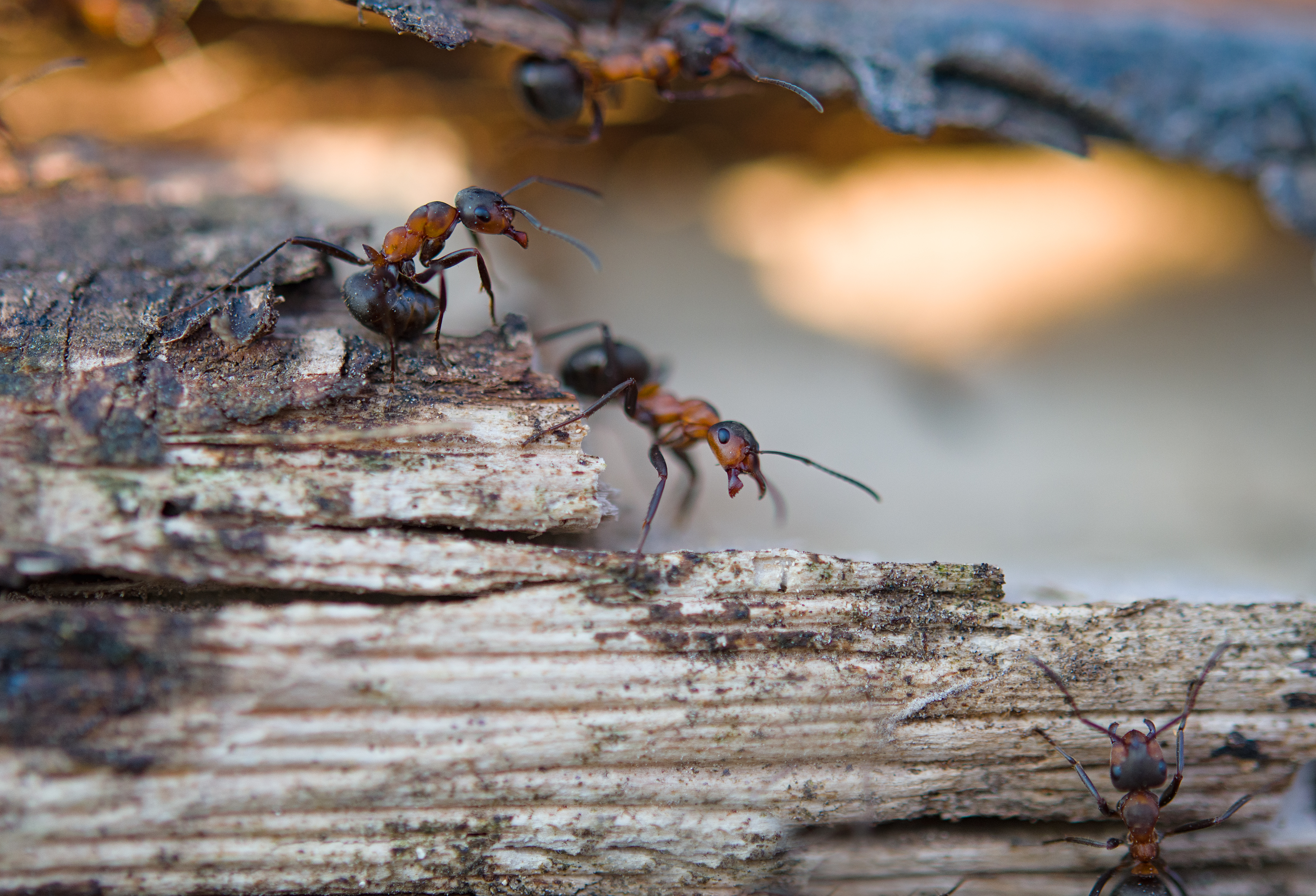
Small dark ants gathered together
Bait first

Odorous house ants & pavement ants

  • Tiny brown or black ants
  • Long trails to sweets, crumbs or water
  • Little sand piles along slab cracks (pavement ants)

These are bait ants. Odorous house ants have many queens and many nests, so spray tends to spread them. Pavement ants nest under concrete where spray can't reach. A well-placed bait the ants actually accept is the best DIY move.

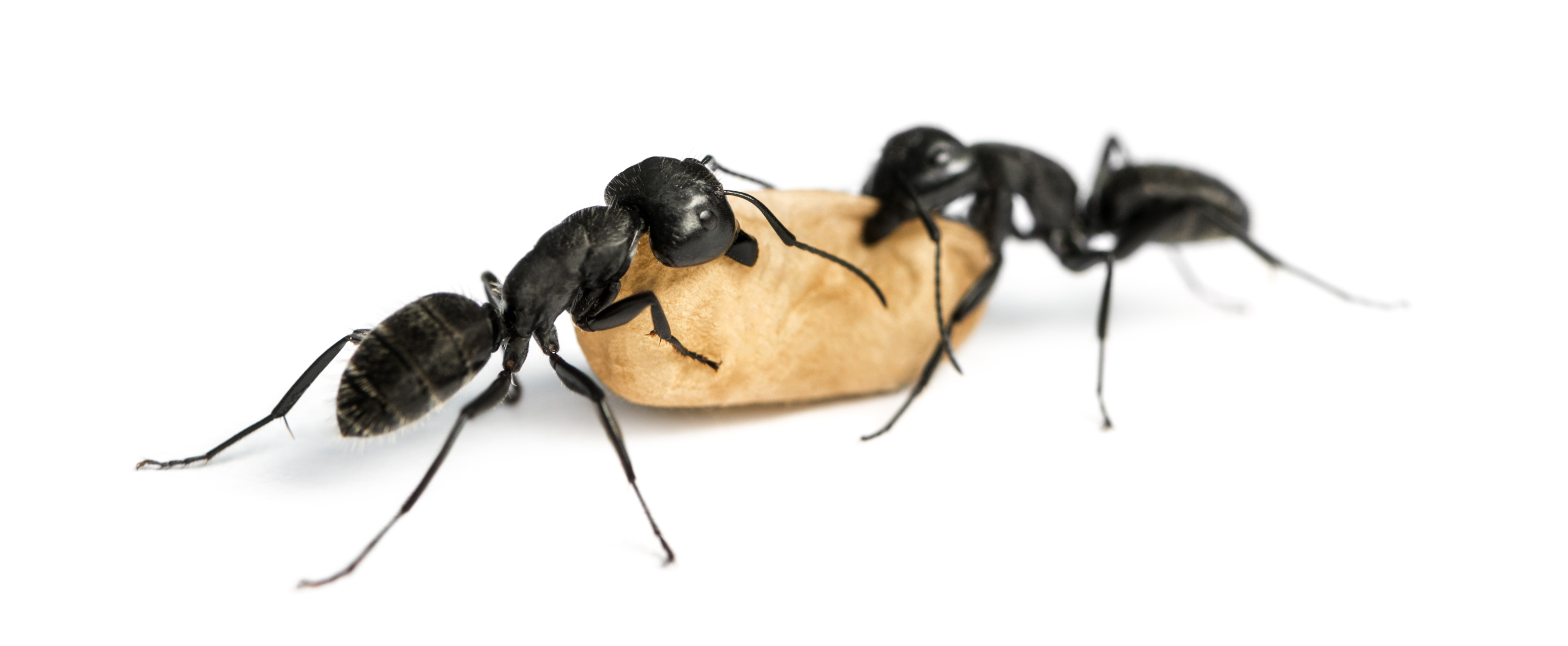
Two large black carpenter ants
Find the nest

Carpenter ants

  • Large black or black-and-red ants
  • Sawdust-like shavings under wood
  • Seen at night, or inside in winter

Carpenter ants can take bait, but a nest hollowed into a damp sill, window frame or wall usually needs to be located and treated directly. Surface spray won't touch it. If there's wood damage, it can be repaired the same way termite damage is.

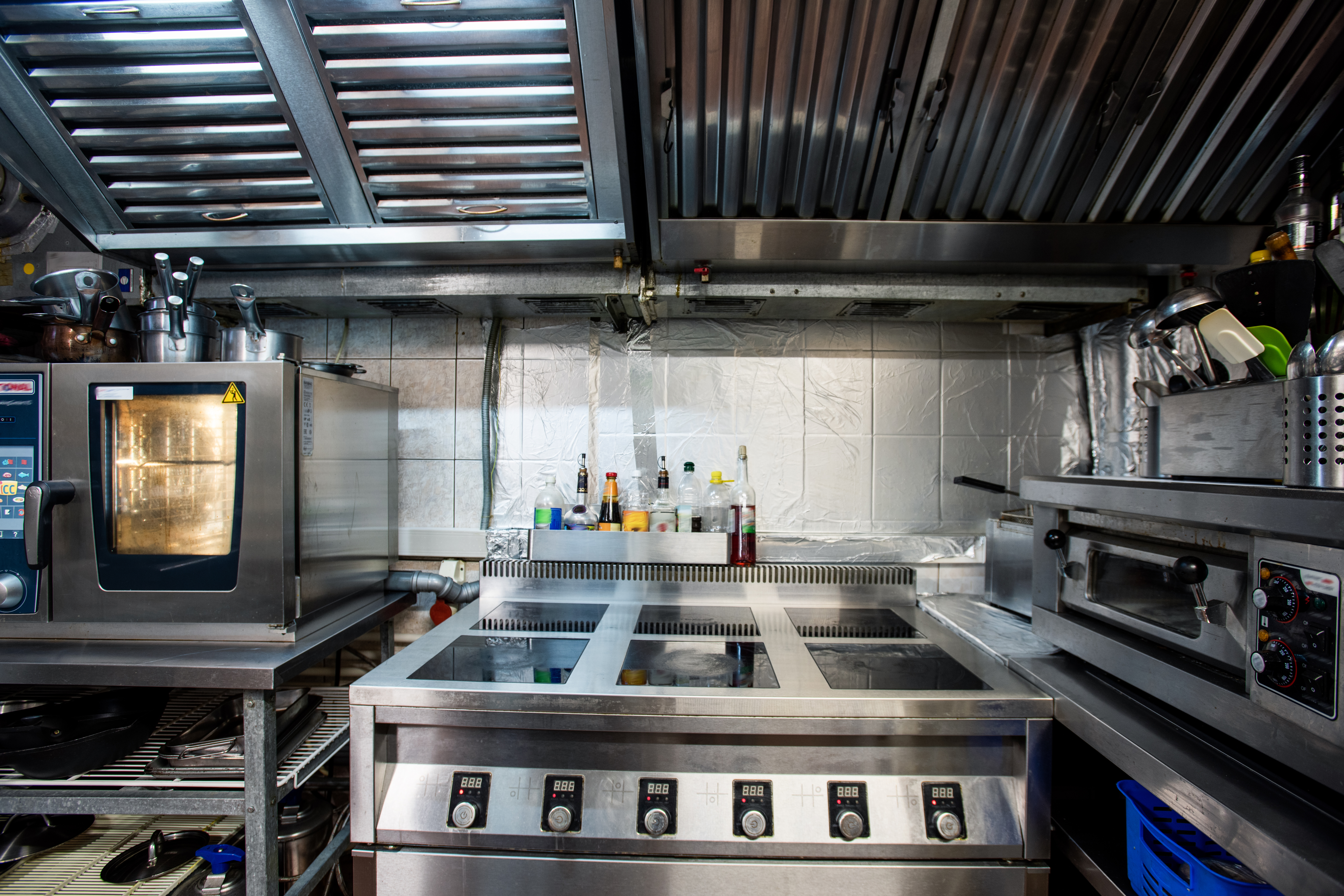
Commercial kitchen with stainless counters
Never spray

Pharaoh ants

  • Very tiny, pale yellow to light brown
  • Inside warm spots: kitchens, bathrooms, behind outlets
  • Common in apartments and multi-family buildings

Pharaoh ants are the classic case where spraying makes things worse β€” it triggers budding into new nests. Patient baiting across the whole unit, and often neighboring units, is the standard approach.

How to use ant bait so it actually works

1

Stop spraying and cleaning the trail

Wipe up spills and crumbs, but leave the trail alone for a few days. Cleaners and sprays wipe out the scent path that leads ants to the bait.

2

Put bait right on their route

Place stations or gel along the trail, near where ants enter β€” under the sink, along the backsplash, by a window frame. A bait across the room does nothing.

3

Match the food they want

If ants ignore a sweet bait, they may be on a protein or grease phase. Try a different bait type rather than adding more of the same.

4

Wait, then replace

Expect more ants for a day or two, fewer within a week. Refill bait that's eaten up. If nothing changes in 2–3 weeks, something else is going on.

Keep bait away from kids and pets and follow the label. If the ants are coming from outside, the real fix often includes sealing gaps around pipes, doors and the foundation β€” see how to prevent ants.

When ant spray makes sense (and when it doesn't)

βœ…

A few ants outside

A handful of ants on a patio, sidewalk or porch step, with no trail into the house, is a fine time to spot-treat outdoors.

βœ…

Outdoor barrier

A treatment around the outside of the foundation and entry points can help keep foraging ants out β€” applied outside, not on the indoor trail.

❌

Kitchen trails

Spraying counters, cabinets and food areas is a bad idea for safety and usually pushes the colony somewhere else.

❌

Inside walls and outlets

Spraying into outlets or wall voids is a safety risk and almost never reaches the nest. That's a job for a professional.

Curious whether the spray on your shelf is worth it at all? Read does ant spray work?

Five mistakes that keep ants coming back

  1. Bait and spray in the same spot. The spray kills your delivery crew.
  2. Giving up after two days. More ants at the bait early on means it's working. Colonies take time to die off.
  3. Treating the wrong ant. A carpenter ant nest in a damp wall, or termite swarmers mistaken for flying ants, won't respond to kitchen bait. Compare flying ants vs. termite swarmers if you're seeing wings.
  4. Leaving food and water out. Ants won't bother with bait when there's an open sugar bag, pet food or a dripping faucet nearby.
  5. Ignoring how they get in. Ants often enter through the same gaps every year β€” around utility lines, under door thresholds and along cracks in older foundations. Sealing those is the long-term fix.

Ants showing up out of nowhere? See why ants suddenly appear in the house.

What a professional ant treatment does differently

A professional visit isn't about stronger spray. It's about finding where the ants live and using the right tool for that species. When Silver Bullet Pest Control comes out, here's what usually happens:

  • We identify the ant β€” and rule out termites. Species decides whether bait, direct nest treatment or both is the right call.
  • We follow the trail to the source, inside and out: slabs, mulch beds, foundation cracks, window frames, decks and wall voids.
  • We use professional baits and, where it fits, non-repellent treatments that ants don't detect, so they carry the product back instead of avoiding it β€” plus direct treatment of carpenter ant nests.
  • We point out the cause: moisture, wood touching soil, branches on the roof, gaps around pipes.

For ants that come back every spring, ask about recurring home pest control, which comes with a 100% satisfaction guarantee. Wondering what affects the price? See ant exterminator cost. Same-day appointments are often available.

Get a Free Ant Control Quote

Tell us what ant you're seeing and what you've already tried. Text a photo and we'll tell you whether bait will work or the nest needs treatment.

Call us when

  • Bait hasn't worked after 2–3 weeks
  • Spraying made the ants spread
  • Big black ants inside in winter
  • You see sawdust or wings near windows
  • Ants are moving between apartments
πŸ“ž Call 973-510-2585

Request Service

πŸ”’ Your info stays private Β· Hablamos espaΓ±ol.

What's bugging you? - Step 1 of 3

Ant Bait and Ant Spray Questions

Is ant bait or spray better for ants in the kitchen?

Bait is better for kitchen ants. Workers carry it back to the nest and feed it to the queens, which is the only way to stop the trail for good. Spray only kills the ants you hit, and with multi-queen species like odorous house ants it can split the colony into new nests. Keep the counters clean, place bait right on the trail, and give it one to three weeks.

How long does ant bait take to work?

Most ant baits take a few days to show fewer ants and about one to three weeks to wipe out a colony. The bait is slow on purpose, so workers have time to share it before they die. If you still see the same number of ants after two to three weeks, the bait may be the wrong type for that ant, or the nest may need to be found and treated directly.

Why are there more ants after I put out bait?

More ants around fresh bait is normal and usually means it's working. Foragers that find a good food source lay a scent trail and recruit nestmates, so traffic goes up for a day or two. Don't spray them or wipe the trail. As the bait spreads through the colony, the numbers should drop noticeably within about a week.

Can I use ant bait and ant spray together?

You can, but not in the same place. Spraying a trail that's feeding on bait kills the ants that would carry it home, and repellent residue can steer ants away from the bait. If you want both, use bait indoors on the trail and keep any spray outside around the foundation, well away from the bait stations.

Does spraying ants make them spread?

With some species, yes. Pharaoh ants and odorous house ants have many queens, and stress from repellent sprays can make part of the colony move off and start a new nest, a process called budding. That's why one trail can turn into several after a round of spraying. These ants are best handled with patient baiting instead.

Does ant bait work on carpenter ants?

Sometimes. Carpenter ants do feed on certain baits, but a nest inside a damp sill, window frame or wall often needs to be located and treated directly to get rid of it. Large black ants indoors in winter usually mean the nest is inside the house. That's a good time to call for a professional inspection.

Is ant bait safe around kids and pets?

Ant bait stations are designed to keep the bait inside, but they still contain an insecticide, so place them out of reach β€” behind appliances, under sinks, along back edges of counters β€” and follow the label. Gel baits should go in cracks and hidden spots, not on open surfaces. If you're worried, a professional can place bait where kids and pets can't get to it.

Why does ant bait stop working?

Ants switch food preferences with the season and colony needs, so a sweet bait that worked in spring may be ignored later when they want protein or fat. Bait also fails if there's easier food nearby, if the trail was sprayed, or if the bait is placed away from their route. Try a different bait type and remove other food sources.

When should I call an exterminator for ants?

Call when baiting hasn't worked in two to three weeks, when ants keep returning every year, when you see big black ants or sawdust, or when ants are moving between apartments. Also call if you see winged insects, since termite swarmers are easy to mistake for flying ants. We're based in Garfield and offer free quotes at 973-510-2585.

ΒΏQuΓ© es mejor para las hormigas, cebo o spray?

Casi siempre el cebo. Las hormigas obreras lo llevan al nido y alimentan a las reinas, y asΓ­ se elimina la colonia. El spray solo mata las hormigas que toca y a veces hace que la colonia se divida en mΓ‘s nidos. Si despuΓ©s de dos o tres semanas siguen saliendo, llΓ‘menos o mande una foto al 973-510-2585. Hablamos espaΓ±ol.

Ant control across North Jersey

From our base in Garfield we serve homes and businesses in Bergen, Passaic, Essex and Hudson counties.

Our service area

Union County

973-510-2585
  • Berkeley Heights
  • Clark
  • Cranford
  • Elizabeth
  • Fanwood
  • Garwood
  • Hillside
  • Kenilworth
  • Linden
  • Mountainside
  • New Providence
  • Plainfield
  • Rahway
  • Roselle
  • Roselle Park
  • Scotch Plains
  • Springfield
  • Summit
  • Union
  • Westfield

Morris County

973-510-2585
  • Boonton
  • Butler
  • Cedar Knolls
  • Chatham
  • Denville
  • Dover
  • East Hanover
  • Florham Park
  • Hanover
  • Kinnelon
  • Lincoln Park
  • Madison
  • Mendham
  • Montville
  • Morris Plains
  • Morristown
  • Mountain Lakes
  • Parsippany
  • Pequannock
  • Randolph
  • Riverdale
  • Rockaway
  • Roxbury
  • Whippany

Updated November 2026 by the Silver Bullet Pest Control team, Garfield, NJ β€’ NJ License 90568B

Scroll to Top