
 Silver Bullet Pest Control
Ants in Sink and Walls
A line of tiny ants around the faucet every morning, ants crawling out of the drain, or ants pouring from a crack in the wall behind the sink? They're almost never coming from the drain itself. They're following water and pipes from a nest inside the wall, under the floor or outside the foundation. Here's how to figure out where they live and what actually stops them.
4.9 stars on Google • NJ License 90568B • 15+ years • Based in Garfield • Hablamos español
Text a close-up photo of one ant to 973-510-2585 and we'll tell you which ant it is and where it's probably nesting.
- ✓ Same-day appointments often available
- ✓ Licensed & insured in NJ
- ✓ Homes & businesses
- ✓ English & Español
Why are there ants in my sink and walls?
Ants in your sink and walls are usually after water, and they travel to it along the pipes from a nest hidden in a wall void, under the cabinet floor or just outside the foundation. Wiping or spraying the ants you can see won't fix it; the fix is finding the nest, using slow-acting bait or a targeted nest treatment, and drying up leaks and sealing pipe gaps. If they keep coming back, Silver Bullet Pest Control can find the source. NJ License 90568B. Call or text 973-510-2585.
Why ants come out of the sink and the walls
Kitchen and bathroom sinks give ants three things at once: water, a little food, and a hidden highway. The pipes that feed the faucet and carry water away run through holes in the cabinet floor and the wall. Those holes are usually cut bigger than the pipe, so there's a gap ants can walk right through, out of sight.
When people say ants are "coming out of the drain," what's usually happening is that ants are walking up the outside of the pipe, under the sink rim or behind the backsplash, and gathering at the wet edge of the basin. Ants can't live inside a working drain full of running water. The colony is somewhere drier nearby.
The most common reasons ants zero in on a sink:
- A slow drip under the cabinet, at the faucet base or at the dishwasher connection.
- Wet wood or wallboard behind the sink from an old leak, which can also attract carpenter ants.
- Food film in the drain basket, the garbage disposal and the overflow hole of a bathroom sink.
- Weather. Heavy rain floods outdoor nests and pushes ants indoors. A long dry spell sends them inside looking for water.
Which ant is in your sink?
The ant decides the fix. These are the ones we find most around sinks and inside walls in North Jersey homes:
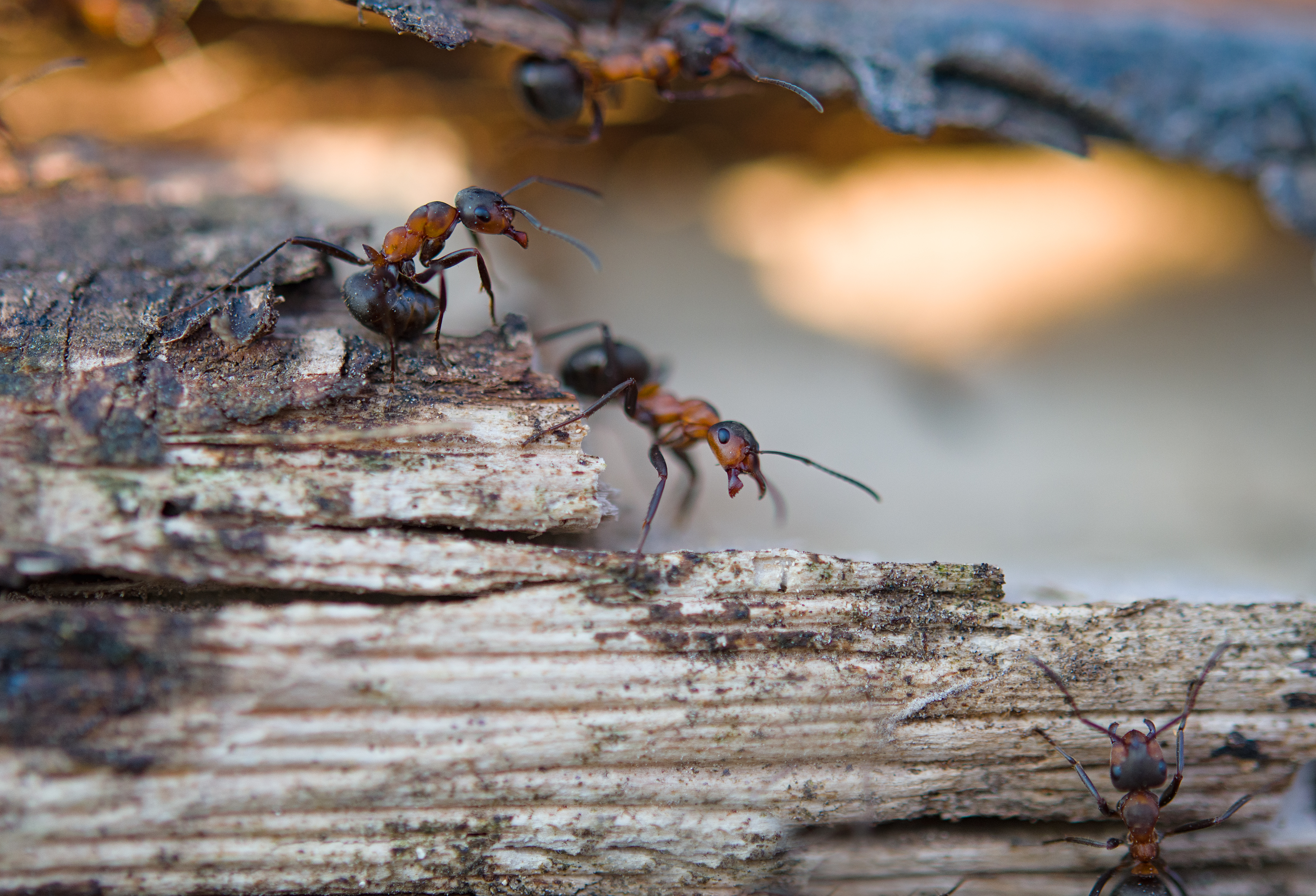
Odorous house ants
- Tiny, dark brown to black
- Long, busy trails along the backsplash and faucet
- Smell like rotten coconut when crushed
The classic kitchen-sink ant. Colonies have many queens and split into new nests easily, often in wall voids near pipes. Spraying the trail tends to make them scatter and multiply.
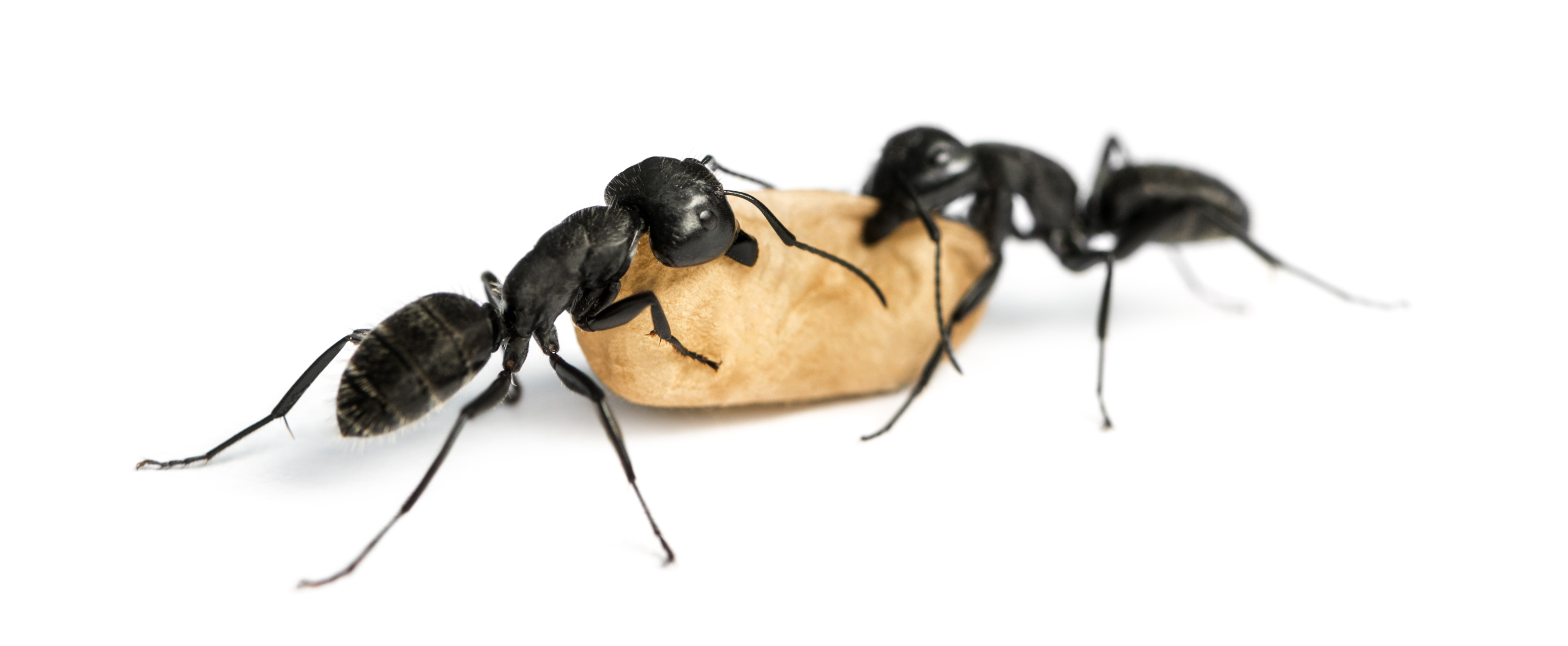
Carpenter ants
- Large, black or black-and-red
- Seen alone or a few at a time, often at night
- Sawdust-like shavings under the cabinet or baseboard
If large ants keep showing up at a bathroom or kitchen sink, check for water damage. Carpenter ants hollow out wet wood to nest, and a leaky sink wall is a favorite spot.

Pavement ants and tiny black ants
- Small, dark, slightly bigger than odorous house ants
- Little piles of sand along cracks or the floor edge
- Common in basement laundry and utility sinks
Pavement ants nest under slabs and walkways and come up through cracks, expansion joints and the gaps around floor drains and pipes. Basement utility sinks are a frequent target.
What you're seeing, and what it usually means
| What you see | Most likely cause | What to check |
|---|---|---|
| Trail of tiny ants around the faucet and sink rim | Odorous house ants after water | Faucet base, under-sink pipes, gap behind the backsplash |
| Ants coming up from the drain opening | Ants walking up outside the pipe or in drain film | Drain basket, disposal, bathroom sink overflow hole |
| Ants coming out of a crack or outlet in the wall | A nest inside the wall void | Wall behind the sink, nearby outlets and switch plates |
| Large black ants at night, sawdust under the cabinet | Carpenter ants in wet wood | Cabinet floor, wall behind the sink, window above it |
| Ants in the basement laundry or utility sink | Pavement ants from under the slab | Floor cracks, floor drain, pipe holes in the slab |
| Ants only after heavy rain | Outdoor nest flooded out | Foundation outside the kitchen, mulch and soil against the wall |
Seeing winged insects coming out of the wall instead? Those could be termite swarmers. Compare them on our flying ants vs. termite swarmers page.
How to find where the ants are coming from
Watch, don't wipe
Leave the trail alone for 10 to 15 minutes and follow it with a flashlight. Note where it goes into a gap, crack or hole. That's the doorway to the nest.
Empty under the sink
Clear the cabinet and look at the holes where pipes go into the wall and floor. Ants walking in and out of those gaps tell you the nest is inside the wall or below.
Check for moisture
Feel the cabinet floor and the wall behind it. Soft, swollen or stained wood means a leak, and a reason for ants (and possibly carpenter ants) to stay.
Look outside
Go to the outside wall behind the sink. Trails along the foundation, mulch piled against the siding or a window frame with ants point to an outdoor nest feeding inside.
If the trail disappears into an electrical outlet or switch plate, don't take the cover off or spray into it. Leave that to a professional.
What you can do yourself about ants in the sink
For a small, new problem with small ants, these steps often help:
- Fix the leak. Tighten or replace dripping supply lines, the faucet base seal and the drain trap connection. Dry the cabinet out.
- Clean the drain area. Scrub the drain basket, the garbage disposal and the bathroom sink overflow hole, where a sweet, slimy film builds up.
- Dry the sink at night. A dry basin and an empty dish rack overnight take away the water ants are coming for.
- Use slow-acting ant bait, not spray. Bait placed near the trail (not on it) gets carried back to the nest and shared. Expect more ants for a day or two before they drop off. Keep baits away from children and pets and follow the label.
- Seal pipe gaps after the ants are gone. Close the extra space around pipes under the sink with a sealant or a pipe collar so the next colony can't use the same path.
Want to know why baits work better than sprays? See ant bait vs. ant spray. Wondering about home remedies? We answer that honestly in does vinegar kill ants.
Mistakes that make ants in the walls worse
Spraying the trail
Store sprays kill the few ants you see and leave the nest alone. Odorous house ants often respond by splitting into more nests in more walls.
Pouring chemicals down the drain
Bleach or insecticide down the drain doesn't reach a nest that isn't in the drain, and it can damage pipes and septic systems.
Spraying into outlets
Never spray liquid into an electrical outlet or switch box. It's a shock and fire risk.
Sealing gaps too early
Caulking the hole while the colony is still active just pushes ants to the next gap. Treat first, seal after.
When to call an ant exterminator for ants in the walls
It's time to call a professional when:
- Ants keep coming back after two or three weeks of baiting.
- You see ants coming out of several places, like the sink, a wall crack and an outlet.
- They're large black ants, or you find sawdust-like shavings. That points to carpenter ants in wet wood.
- Ants show up in winter. Ants active indoors in cold months usually means a nest inside the house.
- You live in a multi-family house or apartment and the ants are coming from the unit next door.
When Silver Bullet Pest Control comes out, a licensed technician confirms which ant you have, follows the trail inside and outside, and finds the nest or the area it's in. Small ants get treated with bait products they carry back to the colony and, where it makes sense, a treatment around the foundation. Carpenter ant nests in a wall void are treated directly. We show you the leaks and gaps that drew them in so you can fix them. If carpenter ants have damaged the wood, we can repair it, the same way we repair termite damage.
We're based in Garfield and serve Bergen, Passaic, Essex and Hudson counties. Same-day visits are often available. Ongoing home pest control comes with a 100% satisfaction guarantee.
Large ants at the sink with soft or stained wood around it? Call or text 973-510-2585. Wet, ant-damaged wood is worth catching early.
Keep ants out of the sink for good
Stop every drip
Check under kitchen and bathroom sinks a few times a year. A dry cabinet is far less attractive.
Clean the hidden spots
Flush the disposal, wash the drain basket and clean the overflow hole on bathroom sinks.
Pull mulch back
Keep mulch, soil and plants a few inches away from the foundation under the kitchen window.
Close pipe gaps
Seal the extra space where pipes enter walls and floors once ants are gone.
More tips on our how to prevent ants page.
Get a Free Quote for Ants in the Sink or Walls
Tell us where the ants are showing up and send a photo of one if you can. We'll tell you what they are and give you a free quote.
Why homeowners call us for ants in the walls
- Ants keep coming back after store baits
- Ants coming out of an outlet or wall crack
- Large black ants and sawdust under the sink
- Ants moving between apartments
- Licensed technicians, NJ License 90568B
Request Service
🔒 Your info stays private · Hablamos español.
Questions About Ants in Sinks and Walls
Can ants live in my sink drain?
No, not in a drain that's used and full of moving water. Ants gather at the drain for water and food film, but the nest is nearby, usually in a wall void, under the cabinet floor or outside. They reach the sink by walking along the pipes.
Why do ants keep coming back to my bathroom sink?
Bathroom sinks offer steady water, soap and toothpaste residue, and a pipe path through the wall. If the colony isn't treated and the gap around the pipes isn't closed, new workers keep finding the same route. A slow leak under the vanity makes it worse.
Are ants in the wall a sign of a bigger problem?
Sometimes. Small ants in a wall usually just mean a nest near water. Large black ants, sawdust-like shavings or soft wood point to carpenter ants in wet framing, which can damage the house over time and should be checked by a professional.
Should I pour bleach down the drain to kill ants?
No. Bleach kills the few ants it touches but doesn't reach the nest, which isn't in the drain. It can also harm pipes and septic systems. Clean the drain basket and disposal, fix leaks, and use slow-acting bait near the trail instead.
How long does it take to get rid of ants in the walls?
With bait, small-ant activity usually drops within one to two weeks as workers carry bait back to the nest. Large or many-queen colonies can take longer. Carpenter ant nests treated directly often slow down faster, but the moisture problem still needs fixing.
Is it safe to treat ants near a kitchen sink?
Yes, when it's done carefully. Professionals use bait products placed in cracks and gaps, not sprayed on counters or dishes. If you use store bait, keep it where kids and pets can't reach it and follow the label exactly.
Can ants come through electrical outlets?
Yes. Ants nesting in a wall often use the gaps around outlets and switch plates as doors. Don't spray liquid into an outlet. A professional can treat the wall void safely.
What if the ants are coming from my neighbor's apartment?
In multi-family houses and apartment buildings, ants travel through shared walls and pipe chases. Treating only your unit often doesn't last. Tell your landlord or building manager in writing; our landlord and tenant guide explains the basics.
How much does it cost to get rid of ants in the walls?
It depends on the type of ant, how many places they're showing up, the size of the home and whether carpenter ants have damaged wood. We give a free quote after looking at what you're seeing. See our ant exterminator cost page for what changes the price.
¿Pueden ayudarme con hormigas en el fregadero y las paredes?
Sí. Hablamos español. Identificamos la hormiga, buscamos el nido y tratamos la fuente. Llame o mande un texto con una foto al 973-510-2585.
Ant control for sinks and walls in North Jersey
Based in Garfield, we serve Bergen, Passaic, Essex and Hudson counties, including:
Our service area
Bergen County
973-510-2585- Allendale
- Bergenfield
- Bogota
- Carlstadt
- Cliffside Park
- Closter
- Cresskill
- Demarest
- Dumont
- East Rutherford
- Edgewater
- Elmwood Park
- Emerson
- Englewood
- Englewood Cliffs
- Fair Lawn
- Fairview
- Fort Lee
- Franklin Lakes
- Garfield
- Glen Rock
- Hackensack
- Harrington Park
- Hasbrouck Heights
- Haworth
- Hillsdale
- Ho-Ho-Kus
- Leonia
- Little Ferry
- Lodi
- Lyndhurst
- Mahwah
- Maywood
- Midland Park
- Montvale
- Moonachie
- New Milford
- North Arlington
- Northvale
- Norwood
- Oakland
- Old Tappan
- Oradell
- Palisades Park
- Paramus
- Park Ridge
- Ramsey
- Ridgefield
- Ridgefield Park
- Ridgewood
- River Edge
- River Vale
- Rochelle Park
- Rutherford
- Saddle Brook
- Saddle River
- South Hackensack
- Teaneck
- Tenafly
- Teterboro
- Upper Saddle River
- Waldwick
- Wallington
- Washington Township
- Westwood
- Woodcliff Lake
- Wood-Ridge
- Wyckoff
Passaic County
973-510-2585- Bloomingdale
- Clifton
- Haledon
- Hawthorne
- Little Falls
- North Haledon
- Passaic
- Paterson
- Pompton Lakes
- Prospect Park
- Ringwood
- Totowa
- Wanaque
- Wayne
- West Milford
- Woodland Park
Essex County
973-510-2585- Belleville
- Bloomfield
- Caldwell
- Cedar Grove
- East Orange
- Essex Fells
- Fairfield
- Glen Ridge
- Irvington
- Livingston
- Maplewood
- Millburn
- Montclair
- Newark
- North Caldwell
- Nutley
- Orange
- Roseland
- Short Hills
- South Orange
- Verona
- West Caldwell
- West Orange
Hudson County
973-510-2585Union County
973-510-2585- Berkeley Heights
- Clark
- Cranford
- Elizabeth
- Fanwood
- Garwood
- Hillside
- Kenilworth
- Linden
- Mountainside
- New Providence
- Plainfield
- Rahway
- Roselle
- Roselle Park
- Scotch Plains
- Springfield
- Summit
- Union
- Westfield
Morris County
973-510-2585- Boonton
- Butler
- Cedar Knolls
- Chatham
- Denville
- Dover
- East Hanover
- Florham Park
- Hanover
- Kinnelon
- Lincoln Park
- Madison
- Mendham
- Montville
- Morris Plains
- Morristown
- Mountain Lakes
- Parsippany
- Pequannock
- Randolph
- Riverdale
- Rockaway
- Roxbury
- Whippany
Updated November 2026 by the Silver Bullet Pest Control team, Garfield, NJ • NJ License 90568B