Silver Bullet Pest Control logoSilver Bullet Pest Control
Ants Β· Union Township Β· Union County

Carpenter Ant Control in Union, NJ

Big black ants walking across the kitchen floor at night, a little pile of wood shavings under a window, or a trail of tiny ants that won't quit? Silver Bullet Pest Control serves Union Township for carpenter ants and the smaller house-invading ants. We figure out which ant you have, track it to the nest, and treat the colony instead of the trail.

4.9 stars on Google β€’ NJ License 90568B β€’ 15+ years β€’ Free quotes β€’ Hablamos espaΓ±ol

Not sure what you're looking at? Text a close-up photo of one ant to 973-510-2585 and we'll identify it.

  • βœ“ Same-day appointments often available
  • βœ“ Licensed & insured in NJ
  • βœ“ Homes & businesses
  • βœ“ English & EspaΓ±ol

How do you get rid of carpenter ants in Union, NJ?

To get rid of carpenter ants in Union, NJ, you have to find and treat the nest, which is usually hidden in damp wood inside a wall, window frame, porch or deck, and then fix the moisture that drew the ants there. Silver Bullet Pest Control serves Union Township: we identify the ant, track it to the parent and satellite nests, treat them directly and with baits, and point out the wet wood to correct. NJ License 90568B, 4.9 stars on Google, free quotes. Call or text 973-510-2585.

Three ants Union homeowners call about

Carpenter ants get the most attention, but they aren't the only ants that end up in a Union kitchen. Here's how the usual suspects differ:

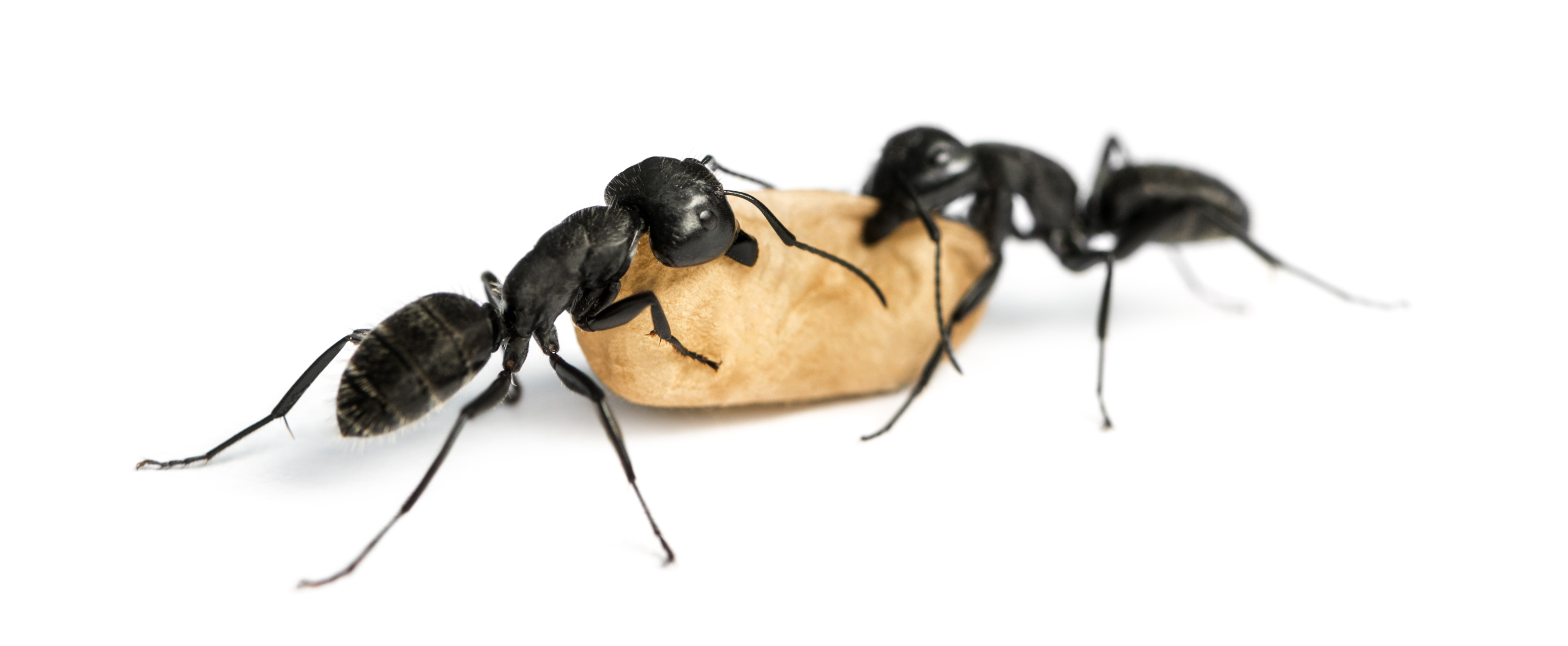
Two carpenter ants on a wood surface
Wood nester

Carpenter ants

  • Large, mostly black, some with reddish parts
  • Often seen one at a time after dark
  • Sawdust-like piles called frass

The biggest ant in a North Jersey house. Carpenter ants carve galleries in wet or softened wood to raise their brood. They don't eat the wood, but years of tunneling can weaken window framing, porch posts and roof edges.

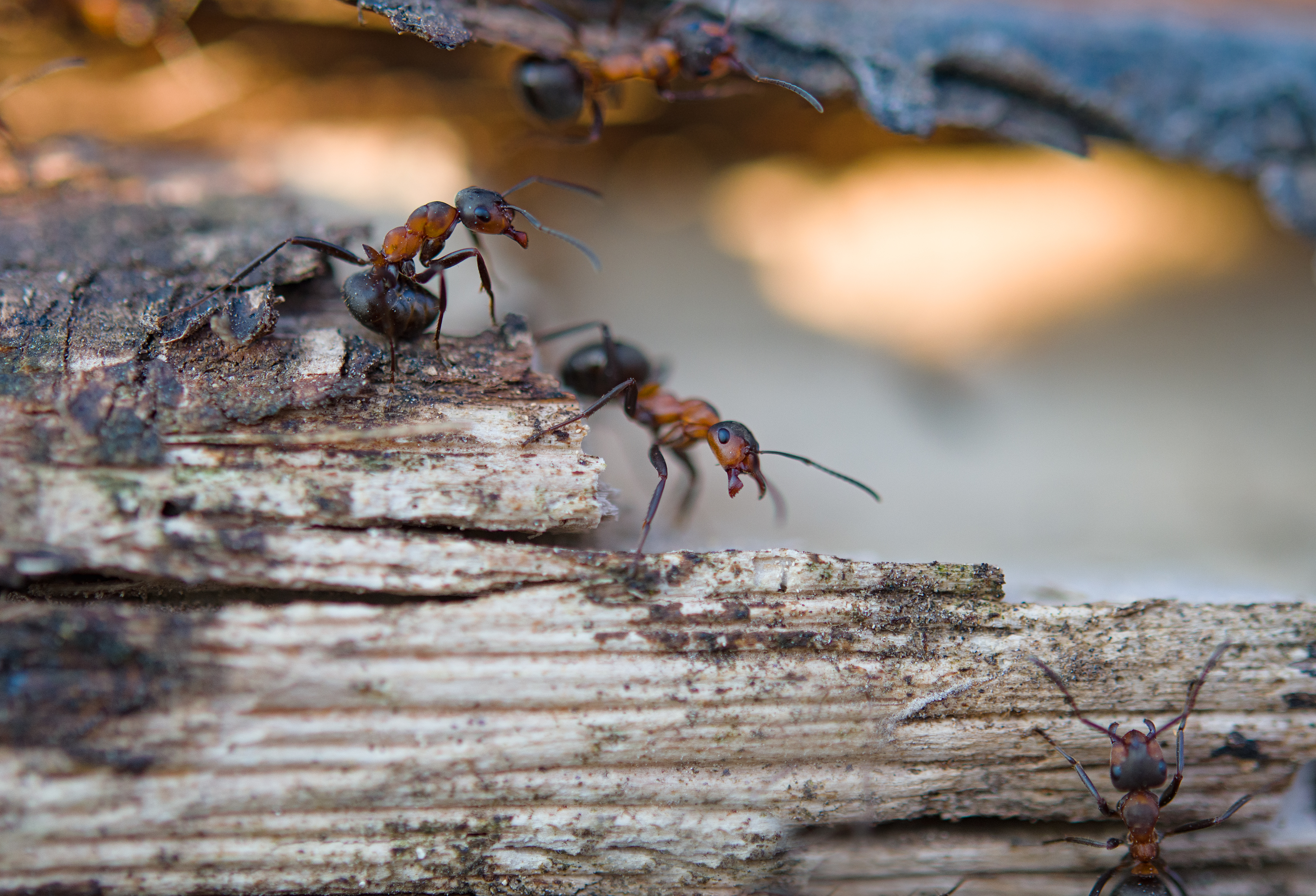
A cluster of small dark ants
Trail makers

Small house ants

  • Tiny, brown to black
  • Long, busy lines to food or water
  • Show up fast after a heavy rain

Odorous house ants and similar small ants nest under mulch, stones and slabs and forage inside. People often call these "Argentine ants" because of the huge trails. Either way, the fix is baiting the colony, not spraying the line.

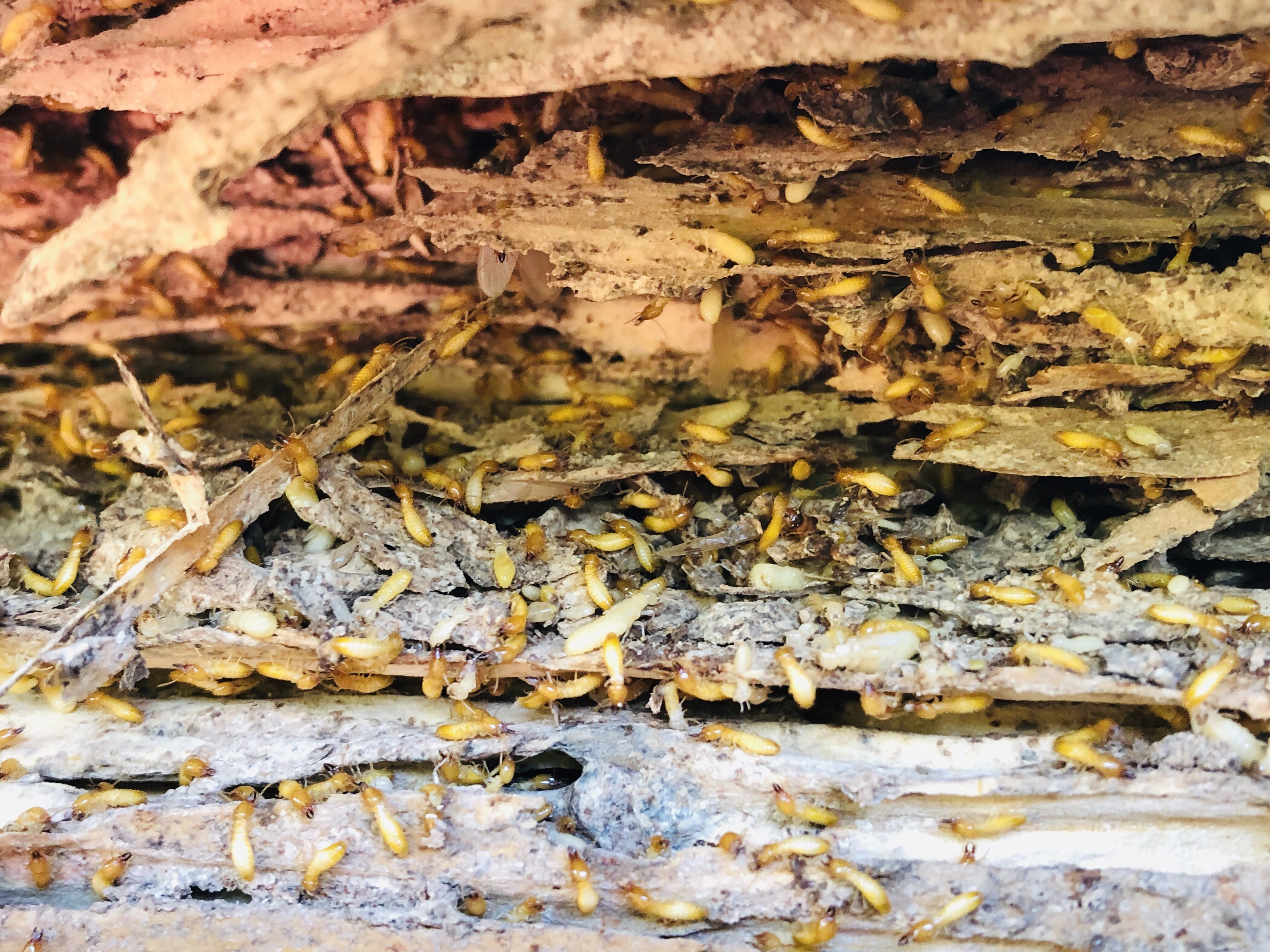
Termite workers inside damaged wood
Not an ant

Termites

  • Winged swarmers in spring
  • Straight body, no pinched waist
  • Mud tubes on foundation walls

Termites eat wood; carpenter ants just nest in it. Swarmers of both appear in spring, so a quick identification decides whether you need ant work or a termite inspection.

How to tell carpenter ants are living in the house

Seeing one big black ant on the patio in June doesn't mean much. Carpenter ants forage across yards and trees all summer. What matters is whether they're nesting in the structure. These clues point that way:

  • Frass piles. Fine, pale shavings that look like pencil sharpener dust, often mixed with dead ant parts, collecting under a window sill, a baseboard, a porch beam or in the basement along the sill plate.
  • Ants inside in late winter. Big black ants on the kitchen floor in February or early March almost always come from a nest that's warm inside the house, not one in the yard.
  • Winged ants indoors. When a mature colony is ready, it releases winged males and queens in spring. If they're coming out of a wall or a ceiling light, the nest is close.
  • Night traffic. Carpenter ants do most of their foraging after dark. A flashlight check of the kitchen and back door around 10 p.m. can show you where they enter.
  • A faint rustle in a wall on a quiet night, near a spot you know has had a leak.

The common thread is moisture. Carpenter ants start where wood stays damp: under a leaky window, behind a bathroom tub, beneath a roof edge where the gutter overflows, or in a porch floor that never fully dries.

Found frass? Leave the pile alone and text a photo to 973-510-2585. It shows us exactly where the ants are working.

Where we find ants in Union houses

Union Township is mostly single-family neighborhoods: Cape Cods, colonials, split-levels and ranches, many built in the decades after World War II, on lots with mature shade trees. That mix lines up with where carpenter ants like to live.

  • Old trees and stumps. A parent colony often lives in a hollow tree, stump or fence post in the yard and sends workers into the house, sometimes setting up a satellite nest inside.
  • Enclosed porches and sunrooms. Older add-ons tend to have more joints, more flashing and more places for water to sneak in.
  • Dormers and Cape Cod knee walls. Roof leaks around dormers can keep framing damp for years without anyone noticing.
  • Decks and wood steps that touch soil or hold water.
  • Wood piles stacked against the siding or garage.

We also help businesses along Route 22, Morris Avenue and Stuyvesant Avenue with ants in food and office spaces. See commercial pest control.

Small trailing ants, including "Argentine" ants

Not every ant problem in Union is a carpenter ant problem. Plenty of calls are about tiny ants marching along the counter, the dishwasher or the bathroom sink. Some homeowners search for "Argentine ant control" because of the huge trails.

True Argentine ants are far more common in warmer parts of the country than in North Jersey. Most of the small trailing ants we see here turn out to be odorous house ants (crush one and it smells like rotten coconut) or pavement ants (small piles of sand along driveway and sidewalk cracks). The treatment ideas are similar either way:

  • These colonies have many queens and many nests. Killing the trail just pulls in more workers from the next nest over.
  • Repellent sprays can make them split. A stressed colony can bud into several smaller ones, so the problem spreads to more rooms.
  • Slow baits work best. Workers carry bait home and share it, which reaches the queens.
  • The nests are usually outside under mulch, stones, slabs and walkways, so the perimeter matters as much as the kitchen.

Want to read more on specific small ants? We have pages on Argentine ants, pavement ants and pharaoh ants.

Carpenter ants vs. small ants at a glance

Carpenter antsOdorous house / trailing antsPavement ants
SizeLarge, about 1/4 to 1/2 inchTiny, about 1/8 inchSmall, about 1/8 inch
Where they nestDamp or soft wood, hollow treesUnder mulch, stones, in wall voidsUnder slabs, sidewalks, driveways
When you see themSpring through fall; indoors in winter means an inside nestAfter rain or during dry spellsWarm months, along cracks
DamageHollows out woodContaminates foodSand piles; contaminates food
What worksFind and treat the nest, fix moistureBaiting plus perimeter workBaiting plus sealing slab gaps

Seeing more than one kind? That's normal in older Union homes, and we plan the treatment around each species.

How we get rid of carpenter ants

1

Confirm the ant

We check the specimen and the signs, and rule out termites and wood rot.

2

Find the nests

Inside and out: window and door frames, porches, decks, roof edges, basement sills, trees, stumps and wood piles. Night trails help us follow workers home.

3

Treat the colony

Direct treatment of nest sites and wall voids where we can reach them, plus baits workers carry back, and an exterior treatment where it makes sense.

4

Fix what invited them

We show you the wet wood, the branches touching the roof and the gaps to seal, so a new colony doesn't move in next spring.

Small trailing ants get a bait-first plan instead. For ongoing protection ask about recurring home pest control, which comes with a 100% satisfaction guarantee.

What about the damaged wood?

Most carpenter ant jobs are caught before the wood is badly hurt. But a colony that has been working in a porch beam or window header for several years can leave galleries deep enough to matter.

After the ants are treated, we can repair damaged wood the same way our crew repairs termite damage: replacing or reinforcing sill plates, joists, beams and framing. Just as important, the moisture source has to be fixed. Rebuilding a sill under a window that still leaks only gives the next colony a fresh start.

Learn more about the repair side on our termite damage repair page. The work is similar.

Scheduling a visit in Union

Our base is in Garfield, and Union Township is farther out than our core Bergen, Passaic, Essex and Hudson service area. We do serve Union, and we schedule those visits ahead so the technician has time for a full inspection, inside and out. A same-day visit is sometimes possible, but we won't promise it.

To make the first visit count:

  • Text a photo of an ant (a coin or ruler next to it helps) and any frass piles.
  • Note when and where you see the most ants, especially at night.
  • Hold off on sprays before the visit so we can follow the trails.
  • Mention any past leaks, roof work or wet spots you know about.

Call or text 973-510-2585 for a free quote.

Get a Free Ant Control Quote in Union

Text a photo of the ant and tell us where you're seeing it. We'll identify it and explain the plan before we schedule.

Why Union homeowners call us

  • Big black ants inside in late winter
  • Frass piles under a window or porch beam
  • Tiny ants that came back after store sprays
  • Flying ants and a worry about termites
  • Damaged wood that needs repair after treatment
πŸ“ž Call 973-510-2585

Request Service

πŸ”’ Your info stays private Β· Hablamos espaΓ±ol.

What's bugging you? - Step 1 of 3

Carpenter Ant Questions from Union

How do I know if carpenter ants are nesting in my house?

Frass piles, winged ants coming out of a wall, and big black ants indoors in late winter are the strongest signs. A single ant on the patio in summer usually just means they're foraging.

Do carpenter ants eat wood like termites?

No. They chew galleries to nest in but don't digest the wood, which is why they leave sawdust-like frass behind and termites don't.

Why do carpenter ants pick certain spots in the house?

They prefer wood that's wet or already softened, so leaks around windows, roofs, tubs and porches are where nests usually start.

Can you repair wood damaged by carpenter ants?

Yes. After treatment we can repair damaged sill plates, joists, beams and framing, the same way we handle termite damage.

Are the tiny ants in my kitchen Argentine ants?

Probably not. Most small trailing ants in North Jersey are odorous house ants or pavement ants, and a photo lets us tell you for sure.

Why did the ants come back after I sprayed?

Sprays kill the workers you see, not the queens in the nest, and with some small ants they make the colony split into more nests.

How long does carpenter ant treatment take to work?

Activity usually drops off within days to a couple of weeks once the nests are treated. Hidden satellite nests can take a follow-up.

Do you come to Union Township?

Yes, we serve Union. Because it's farther from our Garfield base, visits are scheduled ahead; same-day is sometimes possible.

Is the treatment safe around kids and pets?

We explain where and what we treat and any precautions before we start, and baits are placed where kids and pets can't reach them.

Are you licensed?

Yes. Silver Bullet Pest Control holds NJ License 90568B and has over 15 years of experience.

ΒΏPueden ayudarme con hormigas en Union?

SΓ­, hablamos espaΓ±ol. Mande una foto de la hormiga al 973-510-2585 y le decimos quΓ© tipo es.

Updated November 2026 by the Silver Bullet Pest Control team, Garfield, NJ β€’ NJ License 90568B

Scroll to Top