Silver Bullet Pest Control logoSilver Bullet Pest Control
Termites Β· Roselle Park Β· Union County

Termite Treatment in Roselle Park, NJ

Termites in the porch, the basement sill or the old detached garage? Silver Bullet Pest Control serves Roselle Park with termite inspections and treatment. We find where the colony is getting in, treat the soil along the foundation and the active spots, and repair damaged wood ourselves once the termites are handled.

4.9 stars on Google β€’ NJ License 90568B β€’ 15+ years β€’ Free quotes β€’ Hablamos espaΓ±ol

Send a photo of the mud tubes, wings or damaged wood to 973-510-2585. We'll tell you if it's termites.

What is the best termite treatment for a Roselle Park, NJ home?

For most Roselle Park homes, the most effective termite treatment is a liquid termiticide applied in the soil along the entire foundation, under porches and slabs where needed, plus direct treatment of the active areas, so the underground colony can't keep feeding on the house. Silver Bullet Pest Control serves Roselle Park: we inspect first, explain what we found and what we recommend, treat, and can repair damaged sills, joists and framing afterward. NJ License 90568B, 4.9 stars on Google, free quotes. Call or text 973-510-2585.

Why older Roselle Park homes get termites

Roselle Park is a small, tightly built borough. Much of its housing is older: two-story houses and Cape Cods on narrow lots, many with full basements, front porches, and a detached garage at the end of a driveway. That age and layout matter for termites.

The termites here are eastern subterranean termites. They live in the soil and come up into buildings looking for wood, and they need moisture to survive. Older houses offer more ways in:

  • Foundations with more cracks and joints, including stone, brick or block walls that termites can travel through.
  • Wood sill plates sitting directly on the foundation, sometimes close to grade after decades of yard work raised the soil.
  • Porches built over filled soil, where the porch slab or steps meet the house framing.
  • Close neighbors. On small lots, a colony feeding on one property's fence or garage is never far from the next house.

None of this means every house has termites. It means a careful inspection in an older Roselle Park home looks at more places than a newer one would.

Four places termites get into Roselle Park houses

🏠

The front porch

Concrete porches and stoops are often filled with soil under the slab, right against the house. Termites can tunnel through that fill and into the rim joist without ever showing on the outside.

🧱

The basement sill line

Where the wood framing sits on the foundation. Mud tubes climbing the wall to this board are the classic find, and finished basements hide them.

πŸš—

The detached garage

Older garages often have wood framing at or near grade and slabs with wide cracks. They're a frequent first stop for a colony before it reaches the house.

πŸͺ΅

Fences, steps and wood piles

Wood touching soil along the property line feeds colonies and keeps them close. Firewood stacked against siding is an open invitation.

How to get rid of termites in New Jersey, start to finish

1

Confirm it's termites

Swarmers, mud tubes and damaged wood can look like flying ants, wood rot or carpenter ants. Getting this right first saves money.

2

Map the activity

A full inspection finds every active spot and every way into the house, not just the one you noticed.

3

Treat the soil and the active areas

The colony is underground, so the treatment has to be in the soil where termites travel up to the house, plus the spots where they're feeding now.

4

Fix the conditions

Gutters, downspouts, grading, mulch, leaks and wood-to-soil contact all affect whether termites come back.

5

Repair the damage

Once treatment is done, damaged wood can be replaced or reinforced.

Skipping straight to step five, or spraying what you can see, is the most common reason a termite problem comes back.

Where we treat a typical Roselle Park home

A treatment plan is drawn from the inspection, but most cover these three zones:

Cracks in a concrete foundation wall
Zone 1

Soil along the foundation

  • Trenching along exposed soil
  • Treating the soil down toward the footing
  • Following the whole perimeter, not just the active side

This is the core of the treatment. Termites coming up from the ground have to pass through treated soil to reach the house, and foragers that contact it carry the effect back toward the colony.

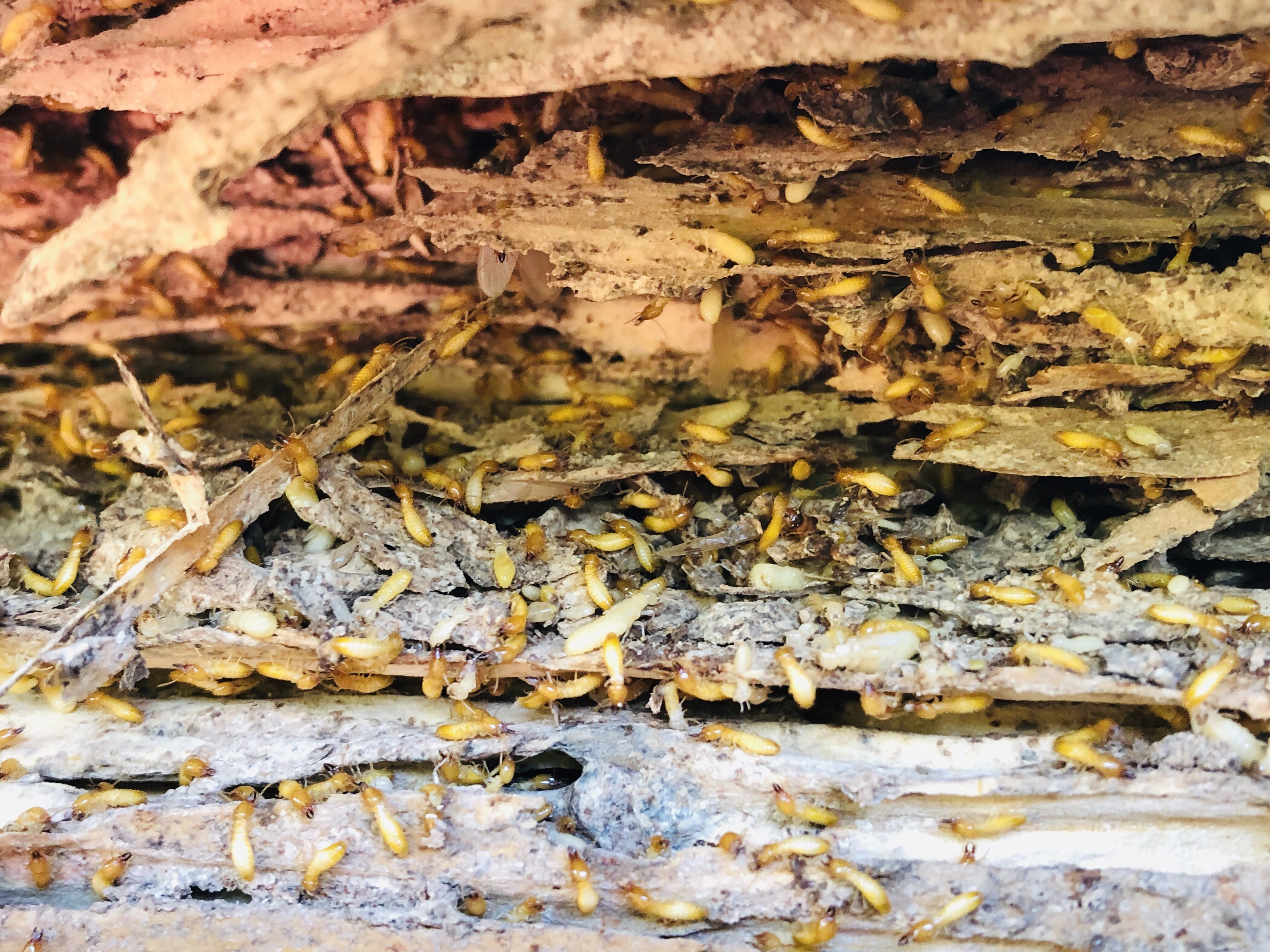
Subterranean termite workers in damaged wood
Zone 2

Under slabs and porches

  • Drilling small holes through porches, stoops and garage floors
  • Treating the soil underneath
  • Patching the holes afterward

Concrete covers a lot of the soil around older homes. Drilling lets us reach the fill under porches, walkways that meet the house, and garage slabs where termites travel unseen.

Silver Bullet Pest Control service van
Zone 3

Inside the house

  • Basement walls and sill plates with tubes
  • Wall voids and wood with active termites
  • Areas around pipes coming through the floor

Active areas inside are treated directly so the termites already in the wood are dealt with, not just the ones still coming from the soil.

What you found, and what it usually means

What you foundWhat it usually meansNext step
Piles of wings on a basement windowsillA termite colony nearby swarmed, often inside the houseSave a few wings, text a photo, set up an inspection
Brown tubes on the foundation wallActive or past termite travelLeave them intact; photograph and call
Wood that's hollow and packed with soilTermite feeding damageInspection, treatment, then repair
Clean galleries with sawdust pilesUsually carpenter ants, not termitesAnt treatment and fixing moisture
Soft, crumbly, dark wood with no insectsProbably wood rot from moistureFix the leak; we'll still check for termites

Not sure which one you have? A clear photo is usually enough for us to tell you.

Treatment day: what to expect

Because Roselle Park is outside our core Bergen, Passaic, Essex and Hudson area, we schedule treatment days ahead so the crew has the time and equipment for the whole job. Same-day work is sometimes possible, but plan on an appointment.

  • Before we arrive: clear a path along the basement walls if you can, move stored items a couple of feet back, and pull mulch and plantings away where the foundation meets the soil.
  • Outside: we trench or rod the soil along the foundation and treat it. Plants right against the house may need to be protected or moved.
  • Concrete: where porches, stoops, walkways or the garage floor block the soil, we drill small holes, treat underneath and patch them.
  • Inside: active areas in the basement and walls are treated directly.
  • Precautions: we explain what we're using, where, and how long to keep kids and pets off treated areas.

Most homes are done in one visit. A house with a lot of concrete or a detached garage to treat takes longer, and we tell you that up front.

After treatment: repairs and keeping them out

Some activity can show up for a short time after treatment as termites already in the wood contact the treated areas. That's normal. New tubes or new swarmers weeks later are not, and you should call us.

Repairs. If the sill plate, rim joist, floor joists or porch framing were damaged, our crew repairs termite damage ourselves after treatment. We replace or reinforce the damaged members so the structure is sound, and the wood isn't closed up before it's treated. See termite damage repair.

Keeping them away:

  • Keep gutters clean and extend downspouts away from the foundation.
  • Keep mulch thin and pulled back a few inches from the siding.
  • Store firewood and lumber off the ground and away from the house and garage.
  • Fix leaks and run a dehumidifier in a damp basement.
  • Take a flashlight along the basement walls each spring before swarm season.

Termite myths that cost Roselle Park homeowners money

  • "A brick or concrete house can't get termites." The walls may be masonry, but the floors, sills, joists and roof are wood, and termites travel through cracks and mortar joints to reach them.
  • "I saw termites once years ago and nothing since, so they're gone." Swarms are short and easy to miss. A colony can keep feeding quietly for years.
  • "I'll spray the wood and replace it myself." The colony is in the soil. Without a soil treatment, termites move to the new wood.
  • "Termites only matter if you're selling." Damage keeps adding up whether or not the house is on the market. Treating early is almost always cheaper than repairing late.

Selling or buying soon? See termite inspections for home sales and VA loans.

Get a Free Termite Treatment Quote in Roselle Park

Text photos of what you found and tell us about the house: basement, porch, garage. We'll explain the plan and set up an inspection.

Why Roselle Park homeowners call us

  • Swarmers in the basement in spring
  • Mud tubes on the foundation or porch
  • Termites in the detached garage
  • A soft or hollow sill plate
  • Damaged framing that needs repair after treatment
πŸ“ž Call 973-510-2585

Request Service

πŸ”’ Your info stays private Β· Hablamos espaΓ±ol.

What's bugging you? - Step 1 of 3

Termite Treatment Questions from Roselle Park

How do you get rid of termites in Roselle Park?

With a treatment in the soil along the foundation and under slabs where needed, plus direct treatment of active areas. That cuts the underground colony off from the house.

Why do older homes get termites so often?

Older foundations have more cracks and joints, sill plates are often closer to the soil, and porches and garages add wood near the ground.

Do you have to drill into my porch or garage floor?

Often, yes, if the soil termites travel through is under concrete. The holes are small and patched afterward.

Can termites get into a brick house?

Yes. They travel through cracks and mortar joints to reach the wood floors, sills and framing inside.

Can I treat termites myself?

It's very hard to do well. The colony is in the soil, and an even, continuous treatment along a whole foundation takes professional equipment.

How long does termite treatment take?

Most homes are done in one visit; extra concrete drilling or a detached garage adds time. We'll estimate it with the quote.

Will I still see termites after treatment?

You might for a short time as termites in the wood contact treated areas. New tubes or swarmers weeks later mean you should call us.

Do you repair termite damage?

Yes. After treatment our crew repairs damaged sill plates, joists, beams and framing.

Do you serve Roselle Park?

Yes. It's farther from our Garfield base, so we schedule visits ahead; same-day is sometimes possible.

Are you licensed?

Yes. Silver Bullet Pest Control holds NJ License 90568B and has over 15 years of experience.

ΒΏTratan termitas en Roselle Park?

SΓ­, hablamos espaΓ±ol. Mande fotos de lo que encontrΓ³ al 973-510-2585.

Termite pages in Union County

More termite pages for towns near Roselle Park.

Our service area

Union County

973-510-2585
  • Berkeley Heights
  • Clark
  • Cranford
  • Elizabeth
  • Fanwood
  • Garwood
  • Hillside
  • Kenilworth
  • Linden
  • Mountainside
  • New Providence
  • Plainfield
  • Rahway
  • Roselle
  • Roselle Park
  • Scotch Plains
  • Springfield
  • Summit
  • Union
  • Westfield

Morris County

973-510-2585
  • Boonton
  • Butler
  • Cedar Knolls
  • Chatham
  • Denville
  • Dover
  • East Hanover
  • Florham Park
  • Hanover
  • Kinnelon
  • Lincoln Park
  • Madison
  • Mendham
  • Montville
  • Morris Plains
  • Morristown
  • Mountain Lakes
  • Parsippany
  • Pequannock
  • Randolph
  • Riverdale
  • Rockaway
  • Roxbury
  • Whippany

Updated November 2026 by the Silver Bullet Pest Control team, Garfield, NJ β€’ NJ License 90568B

Scroll to Top