Silver Bullet Pest Control logoSilver Bullet Pest Control
Termites Β· New Providence Β· Union County

Termite Treatment in New Providence, NJ

Winged bugs on the family-room floor of your split-level, a mud tube climbing the garage wall, or a soft spot by the back door? Silver Bullet Pest Control serves New Providence with termite inspections, treatment and the wood repair that comes after β€” so you deal with one company from the first look to the last board.

4.9 stars on Google β€’ NJ License 90568B β€’ 15+ years β€’ We repair termite damage too β€’ Hablamos espaΓ±ol

Found wings or bugs by a window? Text a photo to 973-510-2585 β€” we'll tell you if they're termites or flying ants.

How do you get rid of termites in a New Providence home?

To get rid of termites in a New Providence home, you need a licensed professional to confirm the activity, find where the colony is entering, and treat the soil and wood at those points β€” store sprays only kill the termites you can see. Silver Bullet Pest Control serves New Providence with termite inspections, treatment and repair of damaged sills, joists and framing. NJ License 90568B, 4.9 stars on Google, free quotes. Call or text 973-510-2585.

Why New Providence homes get termites

The termites that damage houses here are eastern subterranean termites. They live in the soil in large colonies, need moisture to survive, and come up into houses through the foundation to feed on wood. You won't usually see them β€” they travel inside mud tubes and inside the wood itself.

New Providence has a few things that make that easy for them:

  • Lots of mid-century houses. Much of the borough was built out in the decades after World War II β€” ranches, colonials and a lot of split-levels. Those homes now have 60 or more years of settling cracks, patched slabs and additions.
  • Mixed foundations. A split-level often has a basement under one part, a slab under the family room and garage, and sometimes a crawl space. Every joint between them is a way in.
  • Damp ground. The Passaic River runs along the edge of town, and low spots near it and near the brooks stay wet. Clay-heavy soil holds water against foundations after storms.
  • Mature yards. Old trees, stumps, mulch beds, railroad-tie edging and wooden fences keep termite food close to the house.

None of that means your house has termites. It means it's worth knowing the signs and having a professional look every so often.

Signs of termites to look for

Termites hide, so these clues are usually all you'll see:

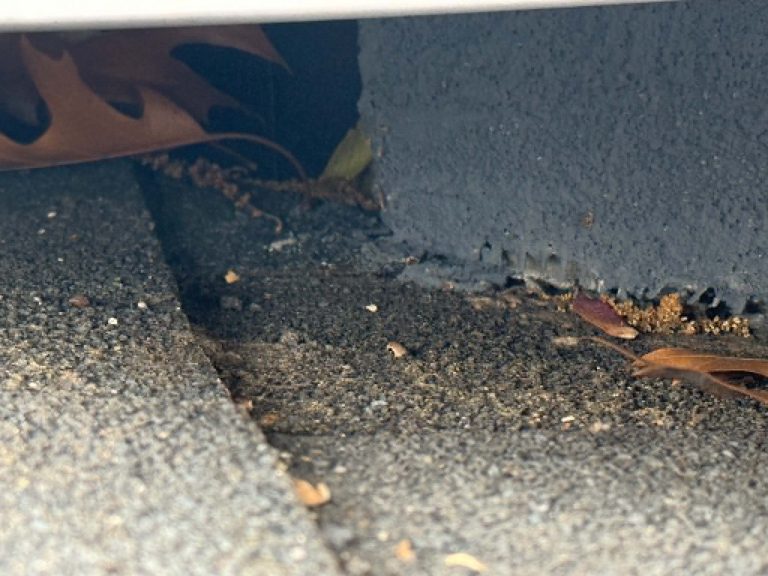
Cracks in a concrete foundation wall
Most common clue

Mud tubes on concrete

  • Pencil-width tubes of dirt
  • Running up foundation walls, slab edges or pipes
  • Often behind stored boxes or in the garage

Termites build these tubes to stay damp while they cross concrete. In a split-level, check where the garage slab meets the house wall and along the lower-level walls.

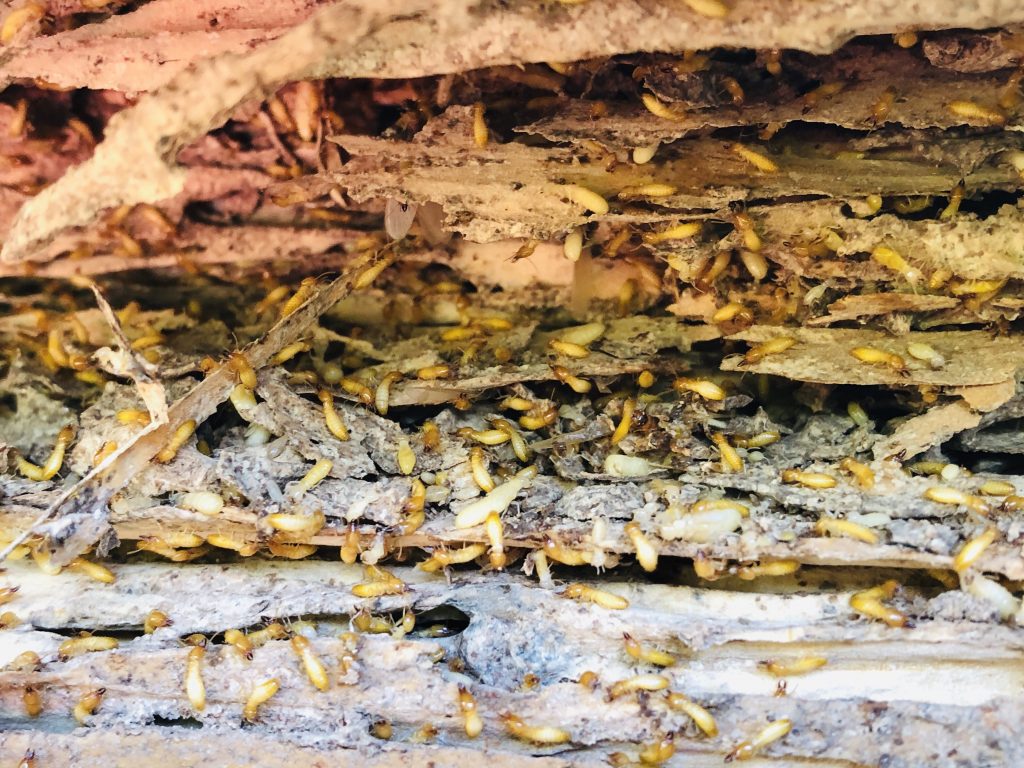
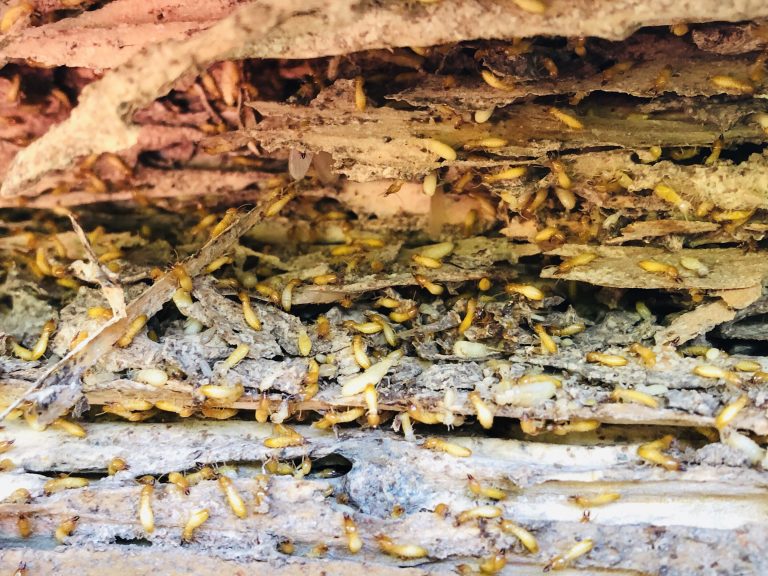
Subterranean termite workers inside wood
Spring warning

Swarmers and wings

  • Dark winged insects indoors on a warm spring day
  • Piles of small, equal-length wings
  • Near windows, doors and lights

A swarm inside means a mature colony is feeding nearby, usually in the structure. The swarmers die off quickly; the colony doesn't.

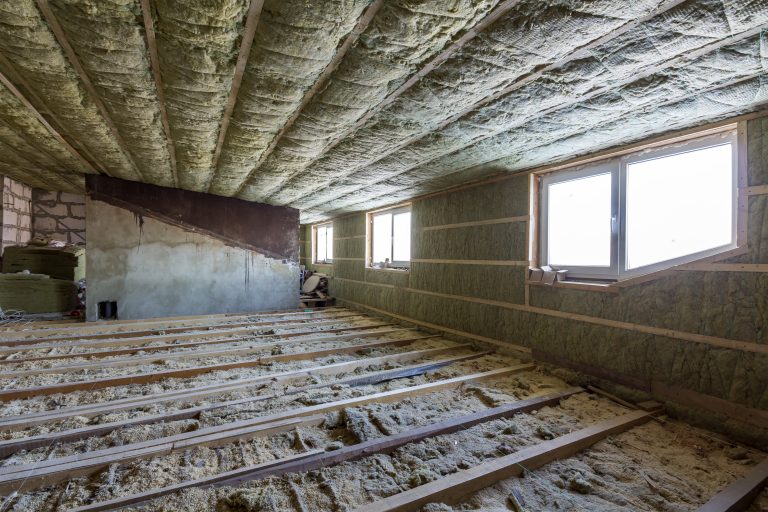
Exposed wood framing inside a house
Hidden damage

Wood that sounds hollow

  • Trim or baseboard that dents easily
  • Paint that bubbles or looks wavy
  • Floors that feel soft or springy

Termites eat wood from the inside and leave a thin outer shell. Damage often shows up during a renovation β€” when a wall or floor gets opened for another reason.

How to get rid of termites: the steps that actually work

Whether we do the work or someone else does, this is the order a real termite job follows:

1

Confirm it's termites

Flying ants, carpenter ants and wood rot all get mistaken for termites. A close look at the insects or the damage settles it before any money is spent.

2

Map how they get in

The inspection traces mud tubes, cracks, slab joints, plumbing gaps, wood touching soil and damp areas, inside and out.

3

Treat the soil and the active wood

A licensed applicator treats the soil along the foundation and at the entry points so termites coming up from the colony hit treated ground, plus the active areas inside.

4

Fix the conditions and the wood

Move water away from the house, break wood-to-soil contact, then repair damaged wood once the termites are gone.

Skipping step one or two is how people end up paying twice. The treatment only works if it's put where the termites actually travel.

Do DIY termite treatments work?

We get asked about these a lot. Here's the honest version:

DIY methodWhat it doesDoes it stop the colony?
Bug spray on the tubes or swarmersKills the termites it touchesNo β€” the colony in the soil keeps going
Orange oil or other spot productsCan kill termites in a small, reachable spot of woodNo β€” subterranean colonies live in the ground, not the board
Boric acid on woodCan protect bare wood it soaks intoNo β€” it doesn't reach the colony or treat the soil
Wet cardboard "traps"Draws a few termites to the cardboardNo β€” it's a curiosity, not a treatment
Scraping off mud tubesRemoves the tube you can seeNo β€” they rebuild it or take another route
Fixing leaks and moving mulchMakes the house less attractiveHelps prevent β€” but won't remove an active infestation

Please don't knock down mud tubes before an inspection. We want to see the activity as it is so we treat the right places.

Split-levels, slabs and finished lower levels

Split-level houses are common in New Providence, and they have a few termite trouble spots that a traditional basement house doesn't:

  • The joint where two slabs meet. A family room slab poured next to a basement wall leaves a seam termites can follow straight up into the wall framing.
  • Garage slabs. The garage floor often meets the house at a wood-framed wall. We check door frames, the wall bottom plate and the stairs into the house.
  • Finished lower levels. Paneling, drywall and carpet cover the concrete where termites travel. Tubes can run for years behind a wall nobody looks at.
  • Bathrooms and laundry areas on slabs. Plumbing comes up through holes in the concrete, and the gap around a pipe is a perfect termite entrance β€” with moisture nearby.
  • Additions and sunrooms. Newer foundations added onto an older house create another seam and sometimes a different foundation type.

When we treat a home like this, these joints and penetrations get special attention. If finished walls hide the area, we explain what we can reach and what the options are before we start.

Repairing termite damage after treatment

Once the termites are treated, the damaged wood still has to be dealt with. Silver Bullet does that work ourselves, so you don't need to find a separate contractor and explain the whole story again.

  • Sill plates β€” the wood that sits on top of the foundation, where termites usually hit first.
  • Joists and beams under floors, including sistering new wood alongside damaged pieces where that's the right repair.
  • Framing in walls, around doors and along the bottom plate of a garage wall.

We treat first and repair second, on purpose: replacing wood before the colony is stopped just gives them new wood to eat. See also termite damage repair.

Buying or selling a house in New Providence

A lot of New Providence homes change hands with buyers who are new to older houses. Many sales include a wood-destroying insect inspection, and VA loans require one. If termites or old damage turn up, it helps to have a clear explanation, a treatment plan and a repair plan in front of everyone quickly.

  • Call as early in the contract as you can and tell us the closing date.
  • Ask us about the specific report or paperwork your lender or attorney needs.
  • If old damage was treated years ago, any records you have help us tell old from new activity.

More on VA termite inspections in NJ.

What shapes your termite quote

The quote is free and comes after we've seen the house:

πŸ“

Size and layout

A small ranch is a simpler job than a large split-level with a garage, an addition and a sunroom, each with its own foundation edge.

🧱

Slabs and finished space

Treating through or around slabs and finished lower levels takes more work than an open, unfinished basement.

🐜

How active it is

One small area of tubes is different from several active spots or a swarm inside the house.

πŸͺ΅

Repairs needed

If sills, joists or framing are damaged, the repair is quoted separately once we've seen how far it goes.

Call or text 973-510-2585. New Providence visits are scheduled ahead, and same-day is sometimes possible.

Get a Free Termite Quote in New Providence

Tell us what you've found β€” wings, mud tubes, soft wood β€” or your closing date if you're buying or selling.

Why New Providence calls us for termites

  • Swarmers in a split-level family room
  • Mud tubes in the garage or lower level
  • Damage found during a renovation
  • An inspection needed for a home sale
  • One company for treatment and wood repair
πŸ“ž Call 973-510-2585

Request Service

πŸ”’ Your info stays private Β· Hablamos espaΓ±ol.

What's bugging you? - Step 1 of 3

Termite Questions from New Providence

What's the fastest way to get rid of termites?

A professional treatment at the places termites are entering, done after a proper inspection. Store sprays kill the termites you see but leave the colony in the soil.

Can I get rid of termites myself?

Not reliably. Subterranean termites live in the ground, so DIY products that treat wood or kill visible termites don't reach the colony.

Are termites common in New Providence?

Eastern subterranean termites are found throughout North Jersey, including Union County. Older homes, damp soil and wood near the foundation raise the risk.

My house is a split-level. Is that a problem?

It means more places to check. The seams between the basement, the slab family room and the garage are common termite routes.

When do termites swarm here?

Mostly in spring, often on a warm day after rain. Swarmers indoors mean a colony is nearby, usually in the structure.

How do I tell termites from flying ants?

Termites have a thick waist, straight antennae and four equal wings. Flying ants have a pinched waist, bent antennae and longer front wings.

Do you repair termite damage?

Yes. After treatment our crew repairs sill plates, joists, beams and framing ourselves.

How long does termite treatment take?

Most homes are treated in a single visit. Larger homes or homes with slabs and finished lower levels can take longer, and we tell you up front.

Is the treatment safe for my family and pets?

We explain where and how we treat and any precautions before we start, and answer every question you have.

How soon can you come to New Providence?

Visits are scheduled ahead of time, and same-day is sometimes possible. Call or text 973-510-2585.

ΒΏHablan espaΓ±ol?

SΓ­. Hablamos espaΓ±ol. Llame o mande un texto al 973-510-2585 para una cotizaciΓ³n gratis.

Termite service around New Providence

We also handle termites in these Union and Morris County towns:

Our service area

Union County

973-510-2585
  • Berkeley Heights
  • Clark
  • Cranford
  • Elizabeth
  • Fanwood
  • Garwood
  • Hillside
  • Kenilworth
  • Linden
  • Mountainside
  • New Providence
  • Plainfield
  • Rahway
  • Roselle
  • Roselle Park
  • Scotch Plains
  • Springfield
  • Summit
  • Union
  • Westfield

Morris County

973-510-2585
  • Boonton
  • Butler
  • Cedar Knolls
  • Chatham
  • Denville
  • Dover
  • East Hanover
  • Florham Park
  • Hanover
  • Kinnelon
  • Lincoln Park
  • Madison
  • Mendham
  • Montville
  • Morris Plains
  • Morristown
  • Mountain Lakes
  • Parsippany
  • Pequannock
  • Randolph
  • Riverdale
  • Rockaway
  • Roxbury
  • Whippany

Updated November 2026 by the Silver Bullet Pest Control team, Garfield, NJ β€’ NJ License 90568B

Scroll to Top