
 Silver Bullet Pest Control
Ants Flying Out of Heating and Cooling Ducts
Dozens of winged insects crawling out of a floor register, gathering at the window, and then dropping their wings? That's a swarm, and a swarm coming from your heating and cooling vents usually means the colony is inside the house, not outside. First you need to know whether they're ants or termites. Then you need to find the nest.
4.9 stars on Google • NJ License 90568B • 15+ years • Based in Garfield • Hablamos español
Save a few in a zip bag or on clear tape and text a close-up photo to 973-510-2585. We'll tell you if they're ants or termites.
- ✓ Same-day appointments often available
- ✓ Licensed & insured in NJ
- ✓ Homes & businesses
- ✓ English & Español
Why are flying ants coming out of my vents?
Flying ants coming out of your vents are swarmers leaving a colony that's nesting in the walls, floor framing, slab or crawl space around your ductwork, and the warm air and gaps around the ducts lead them to the registers. Because winged insects from vents can also be termite swarmers, the first step is to catch a few and identify them, then find and treat the nest instead of spraying the vents. Silver Bullet Pest Control identifies the insect and treats the source. NJ License 90568B. Call or text 973-510-2585.
What flying ants in the air ducts actually mean
Ant and termite colonies send out winged males and females, called swarmers or alates, to mate and start new colonies. Outdoors that's normal and harmless to you. Indoors it tells you something important: the colony is close enough that its swarmers ended up inside your house.
Your heating and cooling system doesn't create the problem, but it often shows it to you. Ductwork runs through basements, crawl spaces, wall cavities and sometimes under slabs. Swarmers move toward warmth and light, find the gaps where ducts pass through framing or where a register boot meets the floor, and come out of the vent into the room.
A few points worth knowing:
- Swarmers don't eat or damage anything. They live a short time indoors and die near windows and lights. The colony they came from is the concern.
- A swarm indoors in late winter or early spring often means the nest is inside the heated structure, where it warms up before the outdoors does.
- Dropped wings near a register or window sill are a clue on their own, even if you missed the swarm.
Flying ants or termites? How to tell the difference
This is the most important question, because ants and termites need completely different treatments. Look closely at one:
| Feature | Flying ant | Termite swarmer |
|---|---|---|
| Waist | Pinched and narrow, like a wasp | Thick and straight, no pinch |
| Antennae | Bent at an elbow | Straight, like a string of beads |
| Wings | Front wings longer than back wings | All four wings about the same length |
| Wing shedding | Wings stay on longer | Wings snap off easily and pile up |
| Body | Black, brown or reddish, often larger | Dark brown to black, small and slender |
| What's behind it | An ant colony in wood, a wall or the soil | A termite colony feeding on wood in or near the house |
More detail with photos on our flying ants vs. termite swarmers page and termite wings in the house.
The insects that usually swarm out of vents
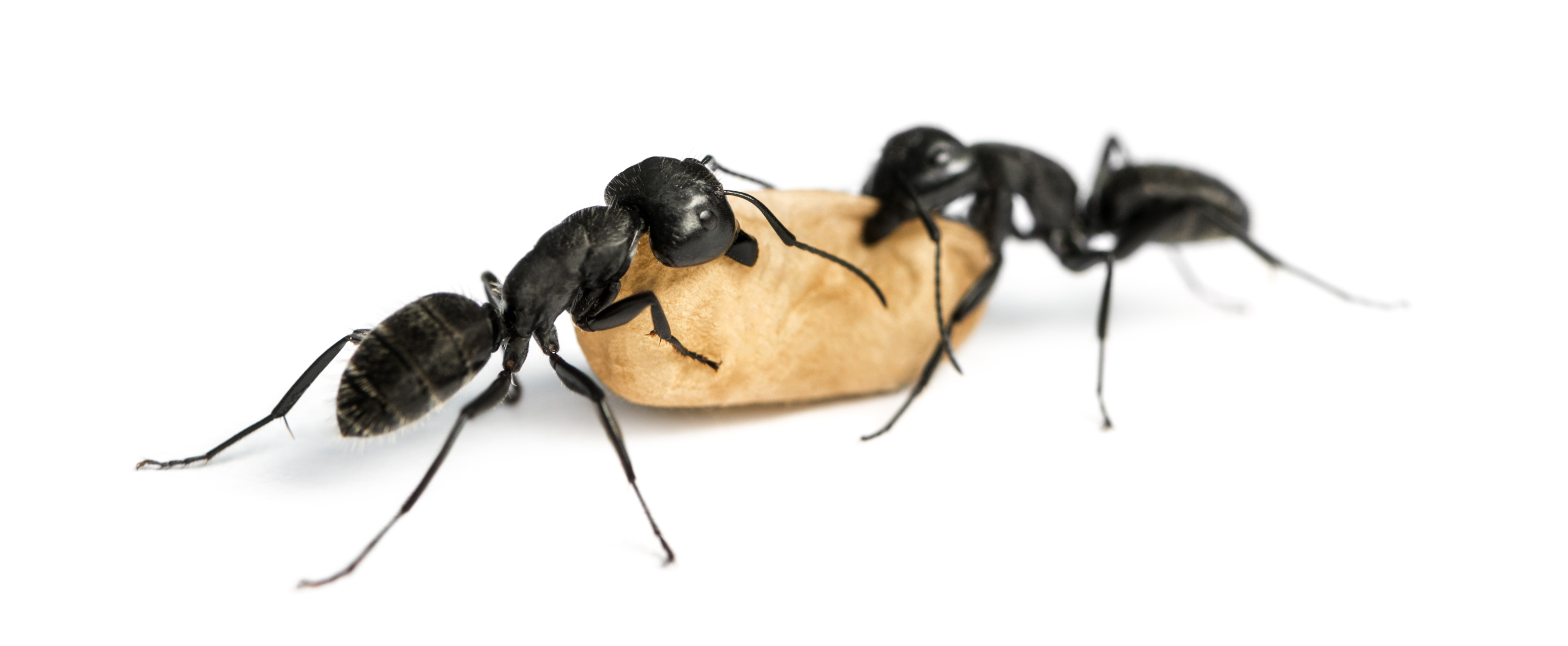
Carpenter ant swarmers
- Big winged black or red-and-black ants
- Often late winter to spring indoors
- Sawdust-like shavings near wet wood
A carpenter ant swarm inside the house strongly suggests a mature nest in the structure, often in wood softened by a leak around a window, bathroom, roof edge or the sill above the foundation.

Pavement and small house ant swarmers
- Small winged ants, dark brown to black
- Often from the basement floor or slab edge
- Little sand piles along cracks
Pavement ants nest under concrete slabs and basement floors. When ducts run under or along the slab, their swarmers can come up through gaps at the duct boots and floor registers.
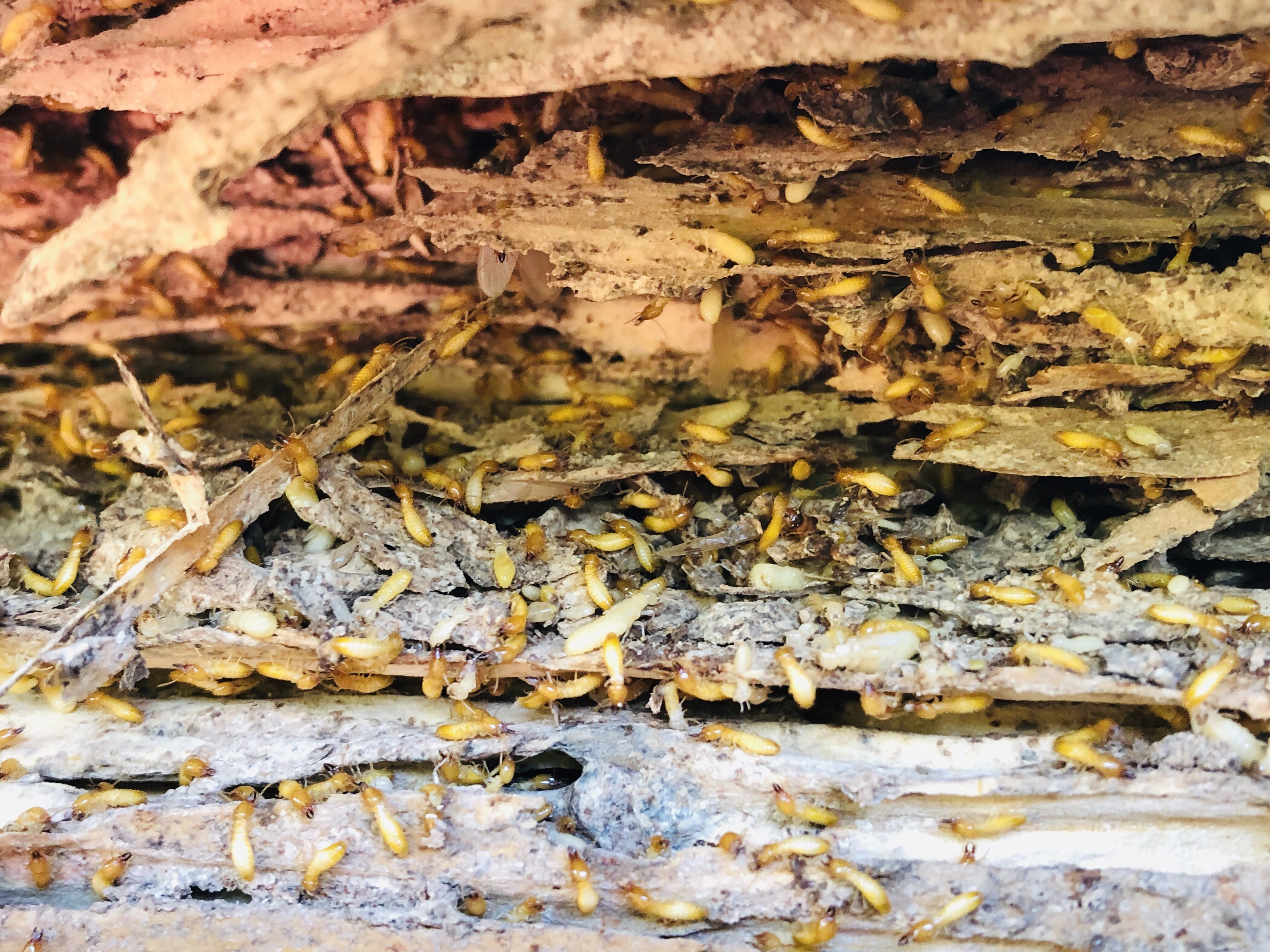
Termite swarmers
- Small, dark, four equal pale wings
- Most often on warm days in spring
- Piles of shed wings at windows and vents
Eastern subterranean termites are common in North Jersey. A swarm from a vent means a colony is feeding nearby and the house needs a termite inspection right away.
What to do right now if flying ants come out of your vents
Catch a few
Vacuum most of them up, but save a handful in a sealed zip bag or stuck to clear tape so they can be identified.
Don't spray into the ducts
Spraying insecticide into your heating and cooling system can spread it through the house and won't reach the nest.
Note where and when
Which register, what time of day, and whether you've seen them before. That helps narrow down where the nest is.
Text a photo
Send a close-up of one insect to 973-510-2585. If they're termites, schedule an inspection. If they're ants, the next step is finding the nest.
You can close the register or cover it with tape for now to keep more from getting into the room. That doesn't fix anything, but it keeps the mess down while you get answers.
How ants get into heating and cooling ducts
Ductwork isn't sealed the way most people think. These are the paths we see most often:
- Gaps at the register boot. The metal box under each floor or wall register is rarely sealed to the floor or framing. Ants in the joist space walk right in.
- Ducts running through wet framing. Where ducts pass near a leaky bathroom, kitchen or exterior wall, carpenter ants may be nesting in the same cavity.
- Crawl spaces and unfinished basements. Damp crawl spaces with wood in contact with soil are a favorite for both carpenter ants and termites, and ducts often run through them.
- Ducts in or under a slab. Some homes with additions or slab floors have ducts under the concrete, where pavement ants and termites can reach them through cracks and joints.
- Condensation from the air conditioner. Sweating ducts and condensate lines keep nearby wood and insulation damp, which attracts ants.
North Jersey has a lot of older homes with basements, crawl spaces and ductwork added years after the house was built. Those retrofits often leave unsealed holes cut through floors and walls. You'll find more about older-home pests on our residential pest control page.
When vent swarms happen in New Jersey
| Time of year | What's common | What it suggests |
|---|---|---|
| Late winter (Feb to March) | Carpenter ant swarmers indoors | A nest inside the heated house |
| Spring (April to May) | Termite swarms on warm days, often after rain; ant swarms | Termites: a nearby colony. Ants: a mature nest nearby |
| Summer | Ant swarms of several species | Outdoor or indoor nests; check for moisture |
| Fall and winter | Occasional indoor ant activity | Any indoor activity in cold months points to a nest in the structure |
Timing varies with the weather each year, so use this as a guide, not a rule. Termites can be active indoors in winter too; see are termites active in the winter.
What you can and can't do on your own
You can vacuum
Vacuuming swarmers is safe and effective for the ones you see. Empty the bag or canister outside.
You can fix moisture
Repair leaks, insulate sweating ducts and make sure condensate lines drain properly.
Duct cleaning won't fix it
Cleaning removes dust and dead insects, but the colony lives outside the ducts, in wood or soil.
Foggers and duct sprays
Bug bombs and sprays in the ductwork don't reach the nest and can leave residue in the air system.
Store-bought ant bait can help small ants on the floor, but swarmers don't feed, so bait doesn't stop a swarm. Read why on does ant spray work.
How a professional finds the nest behind the vents
When Silver Bullet Pest Control comes out for flying ants in the vents, a licensed technician:
- Identifies the insect from your samples or the ones still around. Ants and termites are treated completely differently, so this comes first.
- Inspects along the duct runs in the basement or crawl space, around register boots, the sill above the foundation, and walls near bathrooms and the kitchen, looking for frass, wet wood, mud tubes and shed wings.
- Treats the colony with the method that fits: direct treatment of carpenter ant nests in wall voids and wood, bait for small ant colonies, or a full termite treatment plan if they're termites.
- Shows you the cause, like leaks, soil against wood or unsealed gaps, so it doesn't happen again.
If carpenter ants or termites have damaged sill plates, joists or framing, we repair that ourselves after treatment. We're based in Garfield and serve Bergen, Passaic, Essex and Hudson counties, and same-day visits are often available.
Winged insects and piles of wings by a register in spring? Call or text 973-510-2585 to rule out termites. See termite swarm help.
Get a Free Quote for Flying Ants in the Vents
Send a photo of one of the winged insects and tell us which vent they came from. We'll identify it and give you a free quote.
Why homeowners call us for vent swarms
- Not sure if they're ants or termites
- Swarmers coming out of floor registers
- Large black ants in late winter
- Wet wood near the ductwork
- Termite damage repair done by our own crew
Request Service
🔒 Your info stays private · Hablamos español.
Flying Ants in Vents: Common Questions
Are flying ants in my vents dangerous?
The flying ants themselves don't bite much, don't eat anything and die within a day or so indoors. The concern is the colony they came from. If they're carpenter ants, the nest may be damaging wood; if they're actually termites, you need an inspection soon.
Does a swarm from the vents mean the nest is inside my house?
Usually, yes, or very close to it. Swarmers that come out of your ductwork most often come from a nest in the walls, floor framing, crawl space or under the slab. A swarm indoors in late winter is an especially strong sign.
Should I spray insecticide into my air ducts?
No. Spraying into ducts can spread chemicals through the house and won't reach the colony, which lives in wood or soil outside the duct. Vacuum the swarmers, save a few for identification and call a professional.
Will duct cleaning get rid of flying ants?
No. Duct cleaning removes dust and dead insects, but the ants come from a nest outside the ducts. Until the colony is found and treated, swarmers can keep coming out of the vents.
How can I tell if they're flying ants or termites?
Look at the waist, antennae and wings. Ants have a pinched waist, bent antennae and longer front wings. Termites have a thick waist, straight antennae and four equal wings that break off easily. Text us a photo if you're not sure.
Why do flying ants come out of vents in winter?
A heated house warms the nest inside your walls or floor, so the colony behaves as if it's spring and releases swarmers. Ants swarming indoors in winter usually means the nest is in the structure.
Should I turn off my heat or air conditioning?
You don't have to. Running the system doesn't cause the swarm. You can close or cover the register where they're coming out to keep them out of the room until the nest is treated.
Can carpenter ants damage my house around the ducts?
Yes, over time. Carpenter ants hollow out wet or softened wood, such as joists and sills near leaks or sweating ducts. If we find damage after treatment, we can repair the wood ourselves.
How fast can someone come out?
Same-day visits are often available in Bergen, Passaic, Essex and Hudson counties. Text a photo to 973-510-2585 first, and we can usually tell you right away whether it's ants or termites.
¿Qué hago si salen hormigas voladoras de las rejillas de ventilación?
Guarde algunas en una bolsa y mándenos una foto al 973-510-2585. Hablamos español. Le decimos si son hormigas o termitas y buscamos el nido.
Help with flying ants in vents across North Jersey
Based in Garfield, we serve Bergen, Passaic, Essex and Hudson counties, including:
Our service area
Bergen County
973-510-2585- Allendale
- Bergenfield
- Bogota
- Carlstadt
- Cliffside Park
- Closter
- Cresskill
- Demarest
- Dumont
- East Rutherford
- Edgewater
- Elmwood Park
- Emerson
- Englewood
- Englewood Cliffs
- Fair Lawn
- Fairview
- Fort Lee
- Franklin Lakes
- Garfield
- Glen Rock
- Hackensack
- Harrington Park
- Hasbrouck Heights
- Haworth
- Hillsdale
- Ho-Ho-Kus
- Leonia
- Little Ferry
- Lodi
- Lyndhurst
- Mahwah
- Maywood
- Midland Park
- Montvale
- Moonachie
- New Milford
- North Arlington
- Northvale
- Norwood
- Oakland
- Old Tappan
- Oradell
- Palisades Park
- Paramus
- Park Ridge
- Ramsey
- Ridgefield
- Ridgefield Park
- Ridgewood
- River Edge
- River Vale
- Rochelle Park
- Rutherford
- Saddle Brook
- Saddle River
- South Hackensack
- Teaneck
- Tenafly
- Teterboro
- Upper Saddle River
- Waldwick
- Wallington
- Washington Township
- Westwood
- Woodcliff Lake
- Wood-Ridge
- Wyckoff
Passaic County
973-510-2585- Bloomingdale
- Clifton
- Haledon
- Hawthorne
- Little Falls
- North Haledon
- Passaic
- Paterson
- Pompton Lakes
- Prospect Park
- Ringwood
- Totowa
- Wanaque
- Wayne
- West Milford
- Woodland Park
Essex County
973-510-2585- Belleville
- Bloomfield
- Caldwell
- Cedar Grove
- East Orange
- Essex Fells
- Fairfield
- Glen Ridge
- Irvington
- Livingston
- Maplewood
- Millburn
- Montclair
- Newark
- North Caldwell
- Nutley
- Orange
- Roseland
- Short Hills
- South Orange
- Verona
- West Caldwell
- West Orange
Hudson County
973-510-2585Union County
973-510-2585- Berkeley Heights
- Clark
- Cranford
- Elizabeth
- Fanwood
- Garwood
- Hillside
- Kenilworth
- Linden
- Mountainside
- New Providence
- Plainfield
- Rahway
- Roselle
- Roselle Park
- Scotch Plains
- Springfield
- Summit
- Union
- Westfield
Morris County
973-510-2585- Boonton
- Butler
- Cedar Knolls
- Chatham
- Denville
- Dover
- East Hanover
- Florham Park
- Hanover
- Kinnelon
- Lincoln Park
- Madison
- Mendham
- Montville
- Morris Plains
- Morristown
- Mountain Lakes
- Parsippany
- Pequannock
- Randolph
- Riverdale
- Rockaway
- Roxbury
- Whippany
Updated November 2026 by the Silver Bullet Pest Control team, Garfield, NJ • NJ License 90568B