

Snap traps
- Fast and certain
- Reusable
- Inexpensive
Old-fashioned snap traps are still the best indoor tool. Use several, set close to walls where droppings are, and check them every day. Enclosed snap traps keep curious pets and fingers out.
 Silver Bullet Pest Control
Poison sounds easier. Traps sound messier. Here's the honest trade-off between mouse poison and mouse traps inside a house — including the dead-mouse smell nobody warns you about — and why neither one works for long unless the holes get sealed.
4.9 stars on Google • NJ License 90568B • 15+ years • Based in Garfield, NJ • Hablamos español
Found droppings? Text a photo to 973-510-2585 — we'll tell you if it's mice or rats.
For mouse poison vs. traps inside a home, traps are usually the better choice: you know the mouse is dead, you can remove the body, and there's no poison for kids, pets or wildlife to find. Poison can knock down a population, but mice often die inside walls and ceilings where they cause a strong odor for days or weeks. Either way, mice keep coming back until the gaps they use to get in are sealed — call or text 973-510-2585 for a free quote.
Rodent Proofing & Exclusion – Quoted Separately
Rodent-proofing and exclusion services are quoted separately from pest control treatments and protection plans. Every property has unique entry points, structural conditions, and sealing requirements. Every home is built differently, so we use the materials each one needs, such as steel mesh, hardware cloth, sheet metal, concrete and sealant, on an as-needed basis. Following an inspection, we provide a customized estimate based on the specific work needed to help prevent rodents from entering your property.
| Snap traps | Mouse poison (rodenticide bait) | |
|---|---|---|
| Do you know it worked? | Yes — you find the mouse | No — the mouse leaves to die somewhere else |
| Where the mouse ends up | In the trap, where you can remove it | Often inside a wall, ceiling, cabinet base or crawlspace |
| Odor risk | Low, if traps are checked daily | High — a dead mouse in a wall can smell for days or weeks |
| Risk to kids and pets | Low with covered or enclosed traps placed out of reach | Real, even in stations, if bait is dragged out or a pet eats a poisoned mouse |
| Risk to wildlife | None | Owls, hawks and other predators can be poisoned by eating sick mice |
| Speed | Works the first night if placed right | Usually takes several days after feeding |
| Best use | Inside the living space, attic, basement and garage | Limited situations, placed in locked stations by a professional |
Glue boards are sometimes sold as a third option. We don't recommend them in homes: mice suffer, pets and kids get stuck, and a frightened mouse can still bite or leave droppings everywhere.
Most mouse poisons are slow on purpose. A mouse eats the bait, goes about its business, and dies a few days later — usually wherever it feels safe. In a house, that means inside the wall it lives in, under the kitchen cabinets, above a drop ceiling, or deep in the attic insulation.
That's where the trouble starts:
Poison isn't useless. In the right spot, in a locked, tamper-resistant station, it can help reduce a large population, especially outdoors or in a garage. But as the main tool inside a lived-in home, it usually causes more headaches than it solves.
Here's how the main tools fit together:
Old-fashioned snap traps are still the best indoor tool. Use several, set close to walls where droppings are, and check them every day. Enclosed snap traps keep curious pets and fingers out.
Bait is a tool for specific situations — like a garage, shed or outdoor perimeter — with locked stations out of reach. It doesn't tell you where mice are getting in and doesn't stop the next ones.
A mouse can squeeze through a gap about the size of a dime. Sealing gaps around pipes, garage doors, vents and foundation cracks is what keeps the problem from coming back.
One trap for a mouse problem rarely works. Set several in each area with activity, a few feet apart.
Mice run along walls. Set traps against the wall, with the trigger side facing the wall, behind appliances and in cabinet corners.
A pea-sized dab of peanut butter or chocolate spread works well. Too much and the mouse can lick it off without setting it off.
Remove mice right away with gloves, and keep trapping until a few nights pass with no catches and no new droppings.
Seeing droppings in the attic too? Read mice in the attic. And yes — if you've seen one, there are usually more: does one mouse mean more?
Keep any trap or bait station out of reach and out of sight. Enclosed traps are a good choice in homes with young children.
Pets can be harmed by eating bait directly or by eating a mouse that ate poison. Tell your exterminator about every pet in the house.
Hawks, owls and foxes that hunt poisoned rodents can be poisoned too. That's a big reason to keep poison use limited.
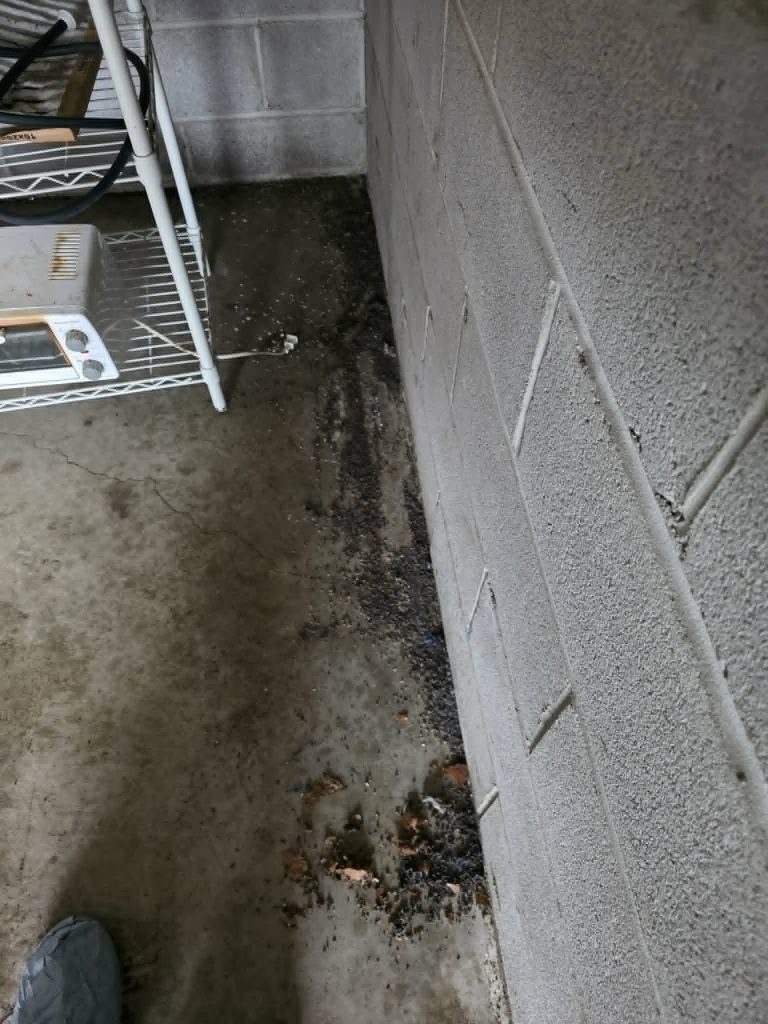
Mouse droppings and urine can carry disease. Don't sweep or vacuum dry droppings; wet them with disinfectant and wipe up with gloves.
Step-by-step cleanup: mouse droppings cleanup. If a pet may have eaten rodent bait, call your veterinarian or an animal poison hotline right away.
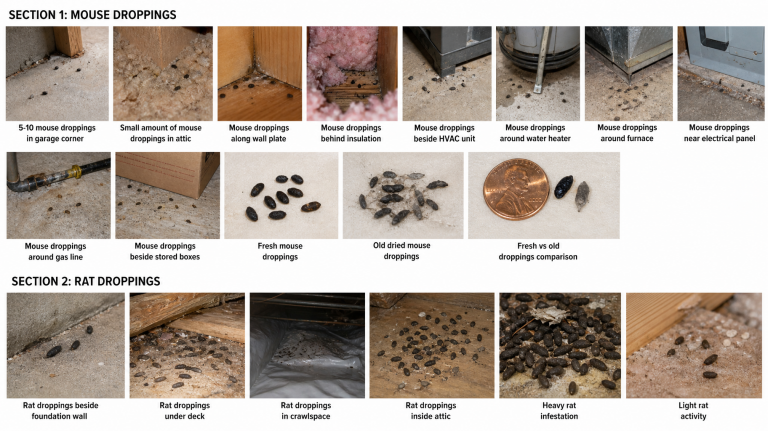
Traps and poison remove the mice that are already inside. They do nothing about the next ones. Many North Jersey homes — older two-family houses, brick and block foundations, homes with attached garages — have small gaps that give mice an open door every fall.
Common entry points we find:
Sealing is done with materials mice can't chew through, like stainless steel mesh and sealant — not foam alone. See stainless steel mesh exclusion and does spray foam stop mice?
Fall is mouse season. When the nights get cold, mice move in fast. If you're hearing scratching in walls or ceilings, don't wait. Call or text 973-510-2585.
Silver Bullet Pest Control is based in Garfield and handles mice in homes and businesses across Bergen, Passaic, Essex and Hudson counties. A typical mouse job looks like this:
Same-day appointments are often available. Want to know why mice pick your house? Read why mice love New Jersey homes, or see our main mice exterminator page.
Tell us where you're seeing droppings or hearing noises. We'll find how they're getting in and explain the plan.
🔒 Your info stays private · Hablamos español.
Inside a home, traps are usually better. They work quickly, you can confirm each catch, and you avoid the dead-mouse smell that happens when poisoned mice die inside walls. Traps also keep poison away from kids, pets and wildlife. Poison has a place in limited situations, in locked stations, but the lasting fix is sealing the gaps mice use to get in.
Most mice return to their nest or another sheltered spot after eating poison, since the bait takes several days to work. In a house, that's often inside a wall, under cabinets, in the ceiling or in attic insulation. That's why poison use indoors so often ends with a smell that's hard to locate and remove.
Most rodent baits sold today are slow-acting and take several days after the mouse feeds. That delay is intentional, so other mice don't connect the bait with sickness and avoid it. It also means you won't see quick results and won't know for sure which mice ate it. Traps show results the first night when placed correctly.
A small amount of peanut butter, chocolate spread or soft nut butter works well because it's sticky and smells strong. Use a pea-sized dab so the mouse has to work at it and trigger the trap. Placement matters even more than bait: put traps along walls and near droppings. Read our best mouse trap bait guide for more tips.
More than most people think. A good starting point is several traps in each room or area where you see droppings, spaced a few feet apart along walls. Mice don't travel far from their nest, so many traps close together catch more than one trap in the middle of the floor. Keep setting them until several nights pass with no catches.
Mouse poison is a real risk to pets. Dogs can eat bait that's been dragged out of a station, and cats or dogs can be harmed by eating a poisoned mouse. If you have pets, traps placed where pets can't reach them are the safer choice. If you think your pet ate rodent bait, call your veterinarian right away.
If traps keep catching mice week after week, new mice are getting in. Removing mice without sealing entry points means the house stays open to the next group, especially in fall and winter. Look for gaps around pipes, doors, vents and the foundation, or have a professional inspect the outside of the house and seal what they find.
The only real fix is finding and removing the body, then cleaning and disinfecting the area. Follow flies or the strongest smell, and check under appliances, cabinets and in the basement or attic. If the mouse is inside a closed wall, the smell usually fades over a couple of weeks. Avoid poison in the future to prevent repeats.
Some do, and in the right spot, in a locked station, it can be a useful tool. A good exterminator should explain where and why they're using it, and focus on trapping and sealing entry points inside a lived-in home. Our mouse service includes 90 days of coverage with unlimited free service calls, so we come back if activity continues.
Dentro de la casa, casi siempre las trampas. Con veneno, el ratón muchas veces muere dentro de la pared y deja mal olor por días. Las trampas no ponen en riesgo a niños ni mascotas. Lo más importante es sellar los huecos por donde entran. Llame o mande un texto al 973-510-2585. Hablamos español.
Rodent-proofing and exclusion services are quoted separately from pest control treatments and protection plans. Every property has unique entry points, structural conditions, and sealing requirements. Every home is built differently, so we use the materials each one needs, such as steel mesh, hardware cloth, sheet metal, concrete and sealant, on an as-needed basis. Following an inspection, we provide a customized estimate based on the specific work needed to help prevent rodents from entering your property.
From our base in Garfield we handle mice in homes and businesses in Bergen, Passaic, Essex and Hudson counties.
Updated November 2026 by the Silver Bullet Pest Control team, Garfield, NJ • NJ License 90568B