
 Silver Bullet Pest Control
Why Mice Love New Jersey Homes (and How to Make Yours Less Inviting)
Every fall, the same thing happens across North Jersey: the nights get cold and the scratching in the walls starts. It isn't bad luck or a dirty house. New Jersey homes give mice exactly what they need — warmth, food, water and a hundred small ways in. Here's why it happens, and what actually stops it.
4.9 stars on Google • NJ License 90568B • 15+ years • Based in Garfield • Hablamos español
Found droppings and not sure what they are? Text a photo next to a coin to 973-510-2585.
- ✓ Same-day appointments often available
- ✓ Licensed & insured in NJ
- ✓ Homes & businesses
- ✓ English & Español
Why do mice love New Jersey homes?
Mice love New Jersey homes because our cold winters push them indoors at the same time our older, densely built houses offer warmth, easy food and plenty of small gaps to squeeze through. A house mouse can fit through an opening about the width of a pencil, and many North Jersey homes have dozens of them around pipes, garage doors and old foundations. Sealing those gaps, not just trapping, is what keeps them out.
Why mice move into New Jersey homes: the four reasons
Warmth
New Jersey gets real winters. When nights drop toward freezing in October and November, mice look for shelter — and a heated basement or wall is the best shelter around.
Food
Pantry boxes, pet food, bird seed in the garage and crumbs under the stove. Mice eat small amounts many times a day, so even a tidy kitchen usually has enough.
Water
A sweating pipe, a slow drip under the sink or a damp basement corner. Mice get much of their water from food, but a moist basement makes a home even more attractive.
Easy ways in
Gaps around gas lines, cable wires, dryer vents and garage door corners. Older homes have more of them, and mice find every one.
Put those four together and you get the reason mouse calls in Bergen, Passaic, Essex and Hudson counties jump every fall. A clean house helps, but it doesn't solve the problem on its own — the gaps do the inviting.
Where mice get into the typical North Jersey house
These are the spots we find mouse activity again and again during inspections:

The garage
- Gaps at the bottom corners of the garage door
- Worn or missing door seals
- Bird seed, grass seed and pet food stored on the floor
An attached garage is the front door for a lot of mice. Once they're in the garage, the door into the house, the gap around the water heater flue or the wall behind the shelving gets them the rest of the way.

Pipes, lines and wires
- Gas, water and AC lines that enter through the foundation
- Cable and phone wires with loose openings
- Gaps behind the stove and under the sink
Wherever a pipe or wire passes through a wall, there's usually a gap around it. Mice follow those lines from the basement straight up into the kitchen.
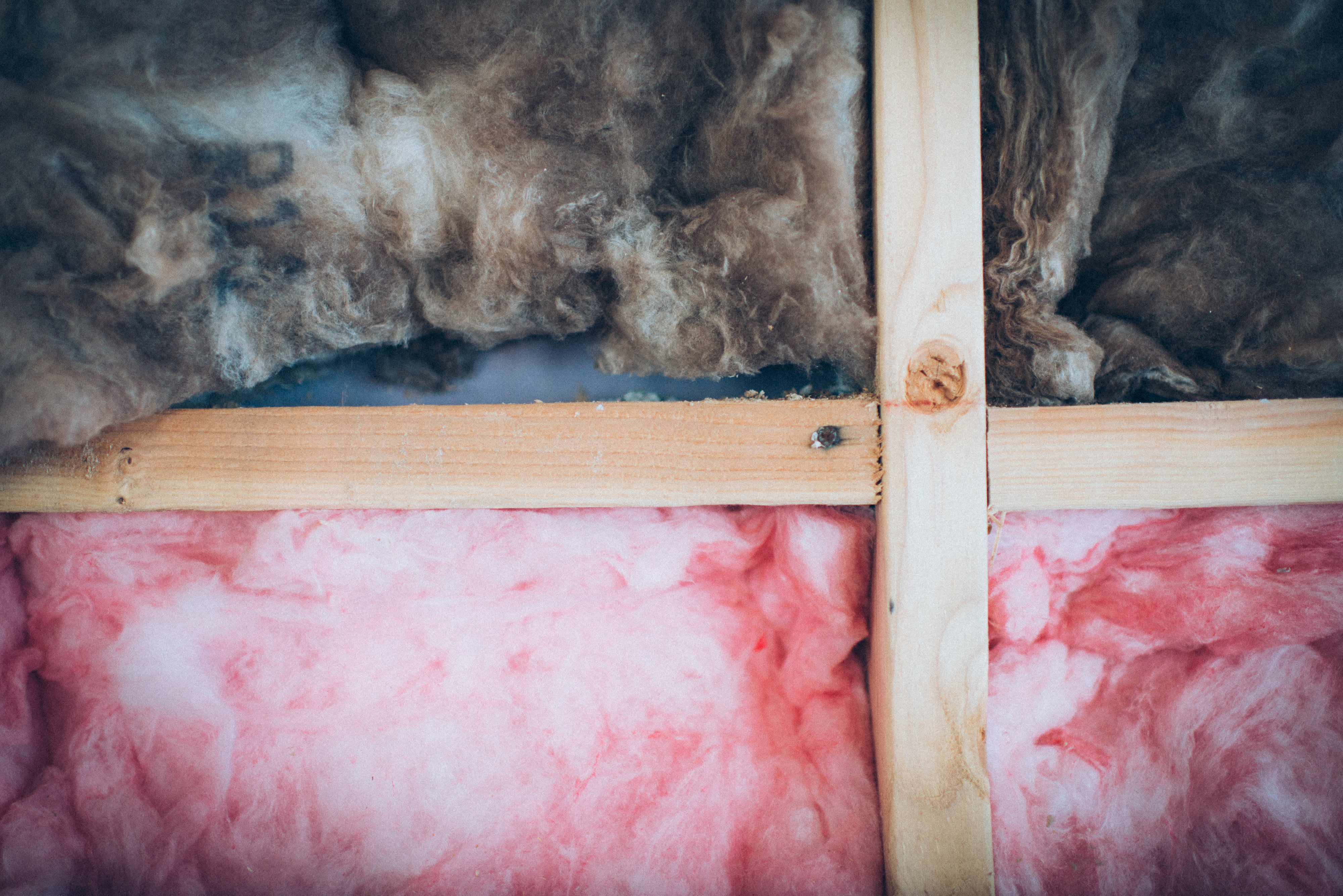
Attic and wall insulation
- Tunnels and flattened spots in insulation
- Shredded paper and fabric nests
- Droppings along the attic floor and eaves
Insulation is warm, soft and quiet — perfect nesting material. Mice reach the attic by climbing inside the walls or along the outside of the house to gaps at the roofline.
Mouse season in New Jersey, month by month
Mice can show up any time, but the pattern in North Jersey is predictable:
| Time of year | What mice are doing | What you'll notice |
|---|---|---|
| September – November | Moving indoors as nights get cold | First scratching in walls and ceilings; droppings in the garage and under sinks |
| December – February | Settled in, nesting and breeding indoors | Steady noise at night, droppings in drawers, chewed food packages |
| March – May | Breeding continues; some move back outside | Activity can grow if nests weren't found over winter |
| June – August | Most mice live outdoors in yards, sheds and woods edges | Fewer indoor sightings, but sheds and garages can still hold them |
The best time to seal a house is late summer, before the fall rush. If you're reading this in November, the second-best time is now.
Why older New Jersey homes have more mouse problems
A lot of North Jersey was built before 1960: two-family houses in Garfield, Passaic and Clifton, row houses and brownstones in Hudson County, and capes and colonials across Bergen and Essex. Those homes are full of character, and also full of openings.
- Stone and old block foundations crack and settle, leaving gaps at the sill where the house meets the foundation.
- Decades of upgrades — new gas lines, cable, central air, a new dryer vent — each one drilled another hole, and not every one was sealed properly.
- Shared walls in two-families, row homes and apartment buildings let mice travel between units. Treating only one side often just moves them next door.
- Detached garages and sheds give mice a safe place to live close to the house.
Newer homes aren't immune. Split-levels and ranches in the suburbs often back up to woods or brooks, where white-footed and deer mice live, and garage doors and utility penetrations are weak spots in any house.
Renting in a multi-family building? Our landlord and tenant guide explains the basics of who usually handles what.
Mouse myths vs. facts
A lot of popular advice doesn't hold up. Here's what we see in real homes:
| Myth | Fact |
|---|---|
| "It's just one mouse." | By the time you see one, there are usually more. Mice breed quickly and stay hidden. Does one mouse mean more? |
| "Irish Spring soap keeps them away." | Strong smells may make a spot less appealing for a while, but they don't close the gap mice use. Does Irish Spring work? |
| "Ultrasonic plug-ins solve it." | Mice get used to the sound, and it doesn't pass through walls or furniture. |
| "Cheese is the best bait." | Mice are more reliably drawn to foods like peanut butter and nesting material. Best mouse trap bait |
| "Mice only go to dirty houses." | Mice want warmth and shelter first. Spotless homes get mice when there's a way in. |
| "Poison is the fastest fix." | Poisoned mice can die inside walls and smell for weeks, and loose bait is risky for kids and pets. |
How to make your New Jersey home less inviting to mice
Walk the outside of the house
Look low: garage door corners, where pipes and wires enter, dryer and bathroom vents, foundation cracks and the sill line. Anything a pencil fits into is a mouse door.
Seal with the right materials
Use materials mice can't chew, like metal mesh and sealant or hardware cloth. Plain foam or steel wool alone gets chewed, rusts or gets pushed out.
Take away the easy food
Move pet food, bird seed and grass seed into sealed bins, especially in the garage. Store pantry food in hard containers.
Clear the hiding spots
Keep firewood, mulch piles and clutter away from the foundation, and lift storage boxes off the basement floor.
Watch for new signs
Fresh droppings, gnawing or noise after sealing means there's still a way in — or mice already living inside.
For a deeper look at prevention and treatment, see our mice and rats questions page.
When it's time to call a mouse exterminator
A single mouse in the garage in October can sometimes be handled with a few well-placed snap traps and a door seal. Call a professional when:
- You hear activity in more than one room or on more than one floor.
- You keep catching mice for more than a week or two.
- You find nests in insulation, chewed wiring or droppings in kitchen drawers.
- You live in a two-family or apartment building and the mice come from next door.
At Silver Bullet Pest Control we inspect the whole house, inside and out, set traps where kids and pets can't reach them, and seal the entry points with materials mice can't chew. Mouse service includes 90 days of coverage with unlimited free service calls in that time. Same-day appointments are often available, and quotes are free. Learn more on our mice and rat exterminator page.
More about mice in New Jersey
Get a Free Mouse Quote
Tell us what you're hearing or finding and where, and text a photo if you can. We'll give you a free quote and explain the plan.
Why North Jersey homeowners call us
- Scratching in the walls once it gets cold
- Droppings in the garage or under the sink
- Mice coming from the other unit
- Traps that keep catching mice week after week
- Mouse service includes 90 days of coverage
Request Service
🔒 Your info stays private · Hablamos español.
Questions About Mice in New Jersey Homes
Why do I suddenly have mice in my house in the fall?
Mice move indoors when nights get cold, usually from September through November in New Jersey. They follow warm air and food smells to small gaps around pipes, garage doors and vents. The mice were nearby all summer; the cold just gives them a reason to come inside, which is why fall is the busiest season for mouse calls.
How small of a hole can a mouse get through?
A house mouse can squeeze through a gap about the width of a pencil, roughly a quarter inch. If its head fits, the body follows. That's why we look closely at the small gaps around gas lines, cable wires, AC lines and the corners of garage doors, not just obvious holes in the foundation.
Does having mice mean my house is dirty?
No. Mice are looking for shelter and warmth first, and they get into clean homes all the time. Food left out makes a problem worse and helps them stay, but the real cause is almost always a way in. Sealing entry points matters more than scrubbing the kitchen.
Why do older New Jersey homes get more mice?
Older homes have settled foundations, gaps at the sill, and decades of pipes and wires drilled through the walls, often without proper sealing. Two-families and row houses also share walls, so mice can travel between units. That combination gives mice many more ways in than a newer, tightly built home.
Will mice leave on their own in the spring?
Some mice move back outside in warmer weather, but mice that have nested and found food indoors often stay and keep breeding. Waiting usually means a bigger problem later. It's better to find the nest areas, remove the mice and seal the gaps before the next cold season.
Are mice dangerous to have in the house?
Mice can contaminate food and surfaces with droppings and urine, chew wiring and insulation, and trigger allergies. Deer mice, more common near woods, are linked to hantavirus. Never sweep or vacuum droppings dry; wet them with a disinfectant first and wear gloves when you clean up.
Do mice come in through the garage?
Very often. Gaps at the bottom corners of the garage door, worn seals, and pet food or bird seed stored on the floor make the garage a favorite entry. From there, mice move into the house around pipes and through the door to the living space. Sealing the garage is one of the most effective fixes.
What is the best way to keep mice out for good?
Seal every gap a pencil can fit into using materials mice can't chew, then remove easy food and clutter. Trapping only removes the mice that are already inside. A professional inspection finds the entry points homeowners miss, especially at the sill line, under decks and around utility lines.
How long does it take a professional to get rid of mice?
Most homes see a big drop in activity within the first week or two once traps are set and entry points are sealed. Larger problems or multi-family buildings can take longer. Our mouse service includes 90 days of coverage with unlimited free service calls, so we come back if you still hear them.
¿Por qué entran ratones a las casas de New Jersey?
Entran buscando calor y comida cuando llega el frío, por huecos pequeños alrededor de tuberías, cables y puertas de garaje. Las casas antiguas tienen muchos de esos huecos. Hablamos español: llame o mande texto al 973-510-2585 y le damos un presupuesto gratis.
Mouse control across North Jersey
From our base in Garfield we serve Bergen, Passaic, Essex and Hudson counties.
Our service area
Bergen County
973-510-2585- Allendale
- Bergenfield
- Bogota
- Carlstadt
- Cliffside Park
- Closter
- Cresskill
- Demarest
- Dumont
- East Rutherford
- Edgewater
- Elmwood Park
- Emerson
- Englewood
- Englewood Cliffs
- Fair Lawn
- Fairview
- Fort Lee
- Franklin Lakes
- Garfield
- Glen Rock
- Hackensack
- Harrington Park
- Hasbrouck Heights
- Haworth
- Hillsdale
- Ho-Ho-Kus
- Leonia
- Little Ferry
- Lodi
- Lyndhurst
- Mahwah
- Maywood
- Midland Park
- Montvale
- Moonachie
- New Milford
- North Arlington
- Northvale
- Norwood
- Oakland
- Old Tappan
- Oradell
- Palisades Park
- Paramus
- Park Ridge
- Ramsey
- Ridgefield
- Ridgefield Park
- Ridgewood
- River Edge
- River Vale
- Rochelle Park
- Rutherford
- Saddle Brook
- Saddle River
- South Hackensack
- Teaneck
- Tenafly
- Teterboro
- Upper Saddle River
- Waldwick
- Wallington
- Washington Township
- Westwood
- Woodcliff Lake
- Wood-Ridge
- Wyckoff
Passaic County
973-510-2585- Bloomingdale
- Clifton
- Haledon
- Hawthorne
- Little Falls
- North Haledon
- Passaic
- Paterson
- Pompton Lakes
- Prospect Park
- Ringwood
- Totowa
- Wanaque
- Wayne
- West Milford
- Woodland Park
Essex County
973-510-2585- Belleville
- Bloomfield
- Caldwell
- Cedar Grove
- East Orange
- Essex Fells
- Fairfield
- Glen Ridge
- Irvington
- Livingston
- Maplewood
- Millburn
- Montclair
- Newark
- North Caldwell
- Nutley
- Orange
- Roseland
- Short Hills
- South Orange
- Verona
- West Caldwell
- West Orange
Hudson County
973-510-2585Union County
973-510-2585- Berkeley Heights
- Clark
- Cranford
- Elizabeth
- Fanwood
- Garwood
- Hillside
- Kenilworth
- Linden
- Mountainside
- New Providence
- Plainfield
- Rahway
- Roselle
- Roselle Park
- Scotch Plains
- Springfield
- Summit
- Union
- Westfield
Morris County
973-510-2585- Boonton
- Butler
- Cedar Knolls
- Chatham
- Denville
- Dover
- East Hanover
- Florham Park
- Hanover
- Kinnelon
- Lincoln Park
- Madison
- Mendham
- Montville
- Morris Plains
- Morristown
- Mountain Lakes
- Parsippany
- Pequannock
- Randolph
- Riverdale
- Rockaway
- Roxbury
- Whippany
Updated November 2026 by the Silver Bullet Pest Control team, Garfield, NJ • NJ License 90568B