
 Silver Bullet Pest Control
Signs of Mice & Rats in Your House: Droppings, Smells and Sounds
Found little black pellets in a drawer, smelled something stale in the pantry, or heard scratching in the walls at night? This guide shows you how to read the signs of a rodent infestation, tell mouse poop from rat droppings, and decide what to do next. Silver Bullet Pest Control checks homes for mice and rats across Bergen, Passaic, Essex and Hudson counties.
Featured on Telemundo 47 • EPA Pesticide Safety Certified • 5-Star Google Rated • NJ License 90568B
Text us a photo of the droppings next to a coin — we'll tell you if it's mice or rats.
- ✓ Same-day appointments often available
- ✓ Licensed & insured in NJ
- ✓ Homes & businesses
- ✓ English & Español
What are the signs of mice or rats in a house?
The surest sign of mice or rats is droppings: small, dark pellets along walls, in cabinets, behind appliances or in the garage, often together with a musky, ammonia-like smell, scratching in the walls or ceiling at night, chewed food packaging, and nests of shredded paper or insulation. Mouse droppings are about the size of a grain of rice with pointed ends; rat droppings are much bigger, about half an inch to three-quarters of an inch, with blunt ends. Fresh, dark droppings mean rodents are active right now. If you're seeing any of these, Silver Bullet Pest Control can inspect, find how they're getting in and get rid of them — call 973-510-2585.
Mouse poop and rat droppings: the sign almost everyone finds first
A single mouse leaves dozens of droppings a day, so they pile up long before you ever see the animal. Here's how to read what you found:

Big, Blunt Pellets
- Roughly half an inch to three-quarters of an inch long
- Thick, capsule-shaped, blunt at the ends
- Often in small groups near a run or burrow
In North Jersey these almost always come from the Norway rat — a heavy rodent that lives in burrows outside and comes in through basements, sewer lines and garages.
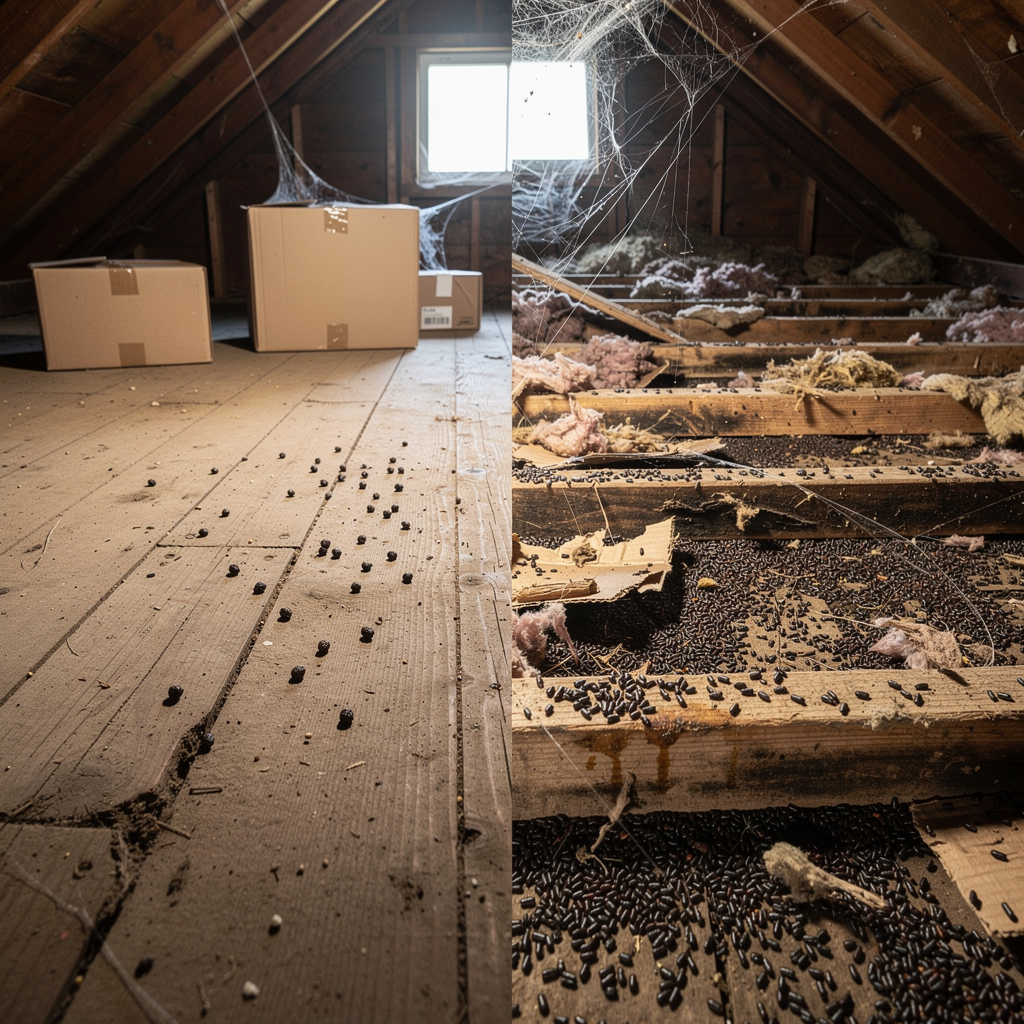
Light vs. Heavy Activity
- A few pellets: an early visitor or an old problem
- Droppings in several rooms: an established population
- Fresh and old droppings mixed: ongoing activity
Fresh droppings are dark, a little shiny and soft. Old ones turn gray, dry and crumble when touched. Counting isn't exact, but spread and freshness tell us a lot.

Droppings in the Garage
- Pellets along the walls and behind storage
- Chewed bags of grass seed, bird seed or pet food
- Droppings near the door seal corners
The garage is often where mice set up first. Worn door seals leave gaps at the corners, and stored seed or pet food gives them a pantry.
Mouse vs. rat droppings — and the other differences that matter
Mice and rats leave similar clues, but the size of everything is different. This side-by-side helps you tell which one you're dealing with:
| House mouse | Norway rat | |
|---|---|---|
| Droppings | About ¼ inch or less, like a grain of rice, pointed ends | About ½ to ¾ inch, thick, blunt ends |
| How they're spread | Scattered widely — mice drop pellets wherever they go | Grouped along runways and near burrows |
| Gnaw marks | Tiny, fine scratches; small round holes in packaging | Larger, rough chew marks; can gnaw through wood and soft materials |
| Sounds | Light scratching and fast scurrying | Heavier thumps, gnawing and dragging sounds |
| Gap they fit through | About ¼ inch — roughly the size of a dime | About ½ inch — roughly the size of a quarter |
| Outside signs | Usually none you'll notice | Burrow holes along foundations, sheds, decks and garbage areas |
| Where they live | Inside walls, cabinets, attics, insulation | Mostly basements, crawl spaces, garages and burrows outside |
Not sure which you have? Lay a coin next to the droppings, take a photo and text it to 973-510-2585. We'll tell you what we see. For a deeper look at the two, read mice vs. rats: how to tell the difference.
What do rats smell like? What about mice?
People describe a rodent smell as musty, stale and sharp — a lot like ammonia. It comes mostly from urine. Mice and rats mark the paths they travel, so the smell builds up in closed spaces: under the kitchen sink, inside lower cabinets, in pantries, closets and storage rooms that don't get much air.
- Mice: a stale, musky odor that's strongest when you first open a cabinet or drawer that's been closed for a while.
- Rats: a stronger, heavier version of the same smell. With a bigger rat problem, people notice it in the basement or garage as soon as they walk in.
- A dead rodent: a sweet, rotten smell that gets worse over a few days, often near one wall or ceiling. It can hang on for a week or more while the body dries out, and it sometimes brings flies.
A smell on its own doesn't prove you have rodents — a damp basement can smell musty too. But a smell together with droppings or chewed packaging almost always does.
Smell something dead in the wall? Don't open the wall yet. Call 973-510-2585 — we can usually narrow down where it is first, and then deal with the gap that let the animal in.
Scratching in the walls at night: what you're hearing
Mice and rats are most active after dark, when the house goes quiet. That's why most people first hear them lying in bed.
Light scratching in walls
Quick, light scratching or scurrying inside a wall or ceiling — usually mice moving between nest and food. Often loudest just after you turn out the lights.
Gnawing or chewing
A steady scraping or grinding sound. Rodent teeth never stop growing, so they chew constantly — wood, plastic, insulation and sometimes wiring.
Heavier thumps and dragging
Louder, heavier movement in a basement ceiling or crawl space points more toward rats than mice.
Noise in the morning instead?
Noises at dawn and dusk in the attic are more often squirrels. Heavy walking at night up there can mean a raccoon. Those need a different fix — see wildlife control.
Where to look for a mouse nest in your house
Mice nest close to food and warmth, in places you don't open every day. These are the spots worth checking with a flashlight:

The Nest Itself
- A loose ball of shredded paper, fabric, cardboard or insulation
- Hidden in drawers, boxes, behind appliances or in wall gaps
- Droppings and a strong smell around it
Kitchen drawers you rarely use, the space under the stove and dishwasher, and stored boxes in the basement are favorite spots.
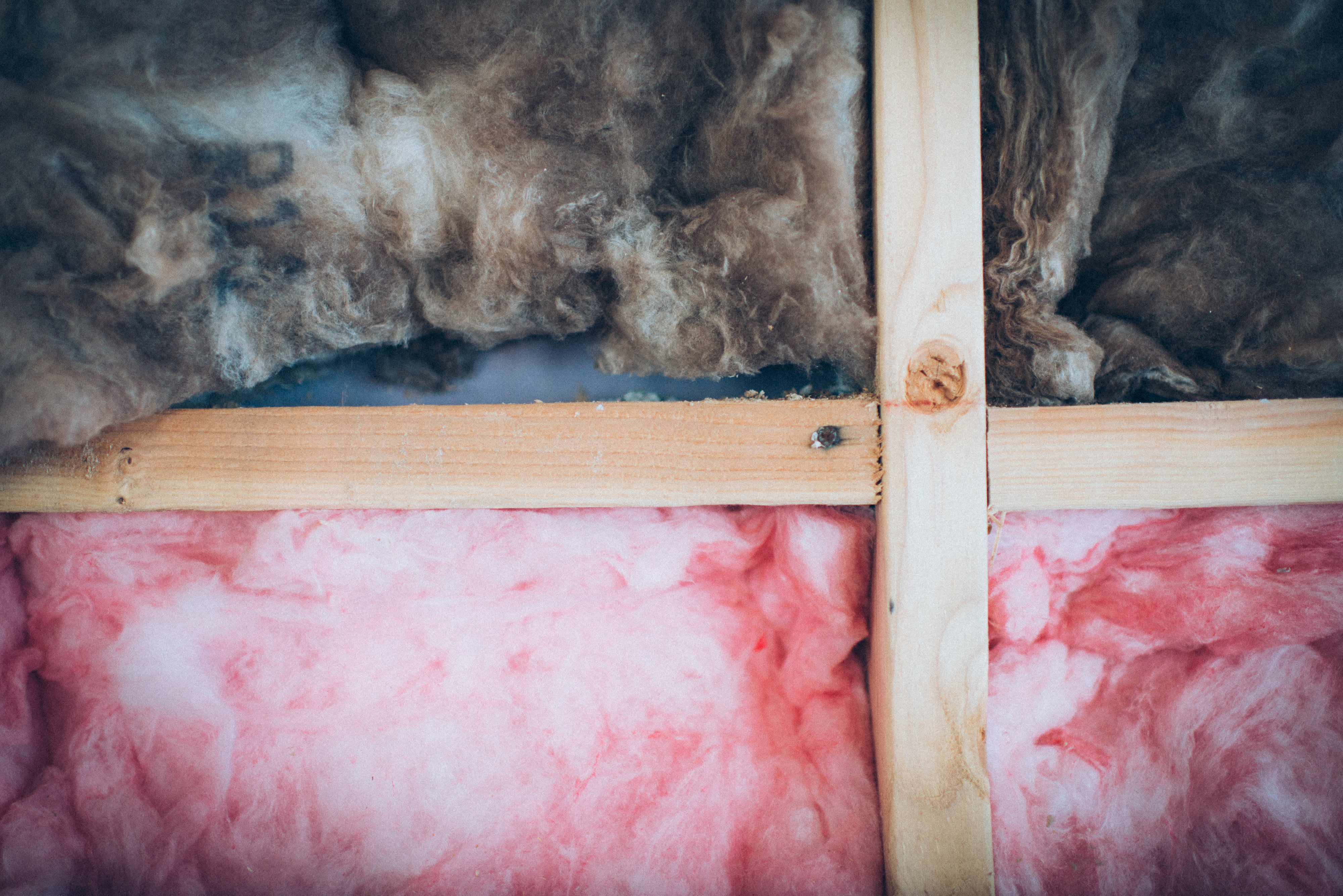
Torn or Flattened Insulation
- Tunnels or matted paths through attic or basement insulation
- Insulation pulled out of walls and dragged into nests
- Droppings mixed into it
Rodents love insulation for nesting. Damaged insulation loses its value and may need to be replaced after the rodents are gone.

Pipes and Gas Lines
- Droppings collected next to a pipe or line
- An opening around the pipe bigger than the pipe
- Rub marks or chewing at the edge of the hole
Mice follow pipes and wires straight into the house. Droppings beside a line usually mark the front door they're using.
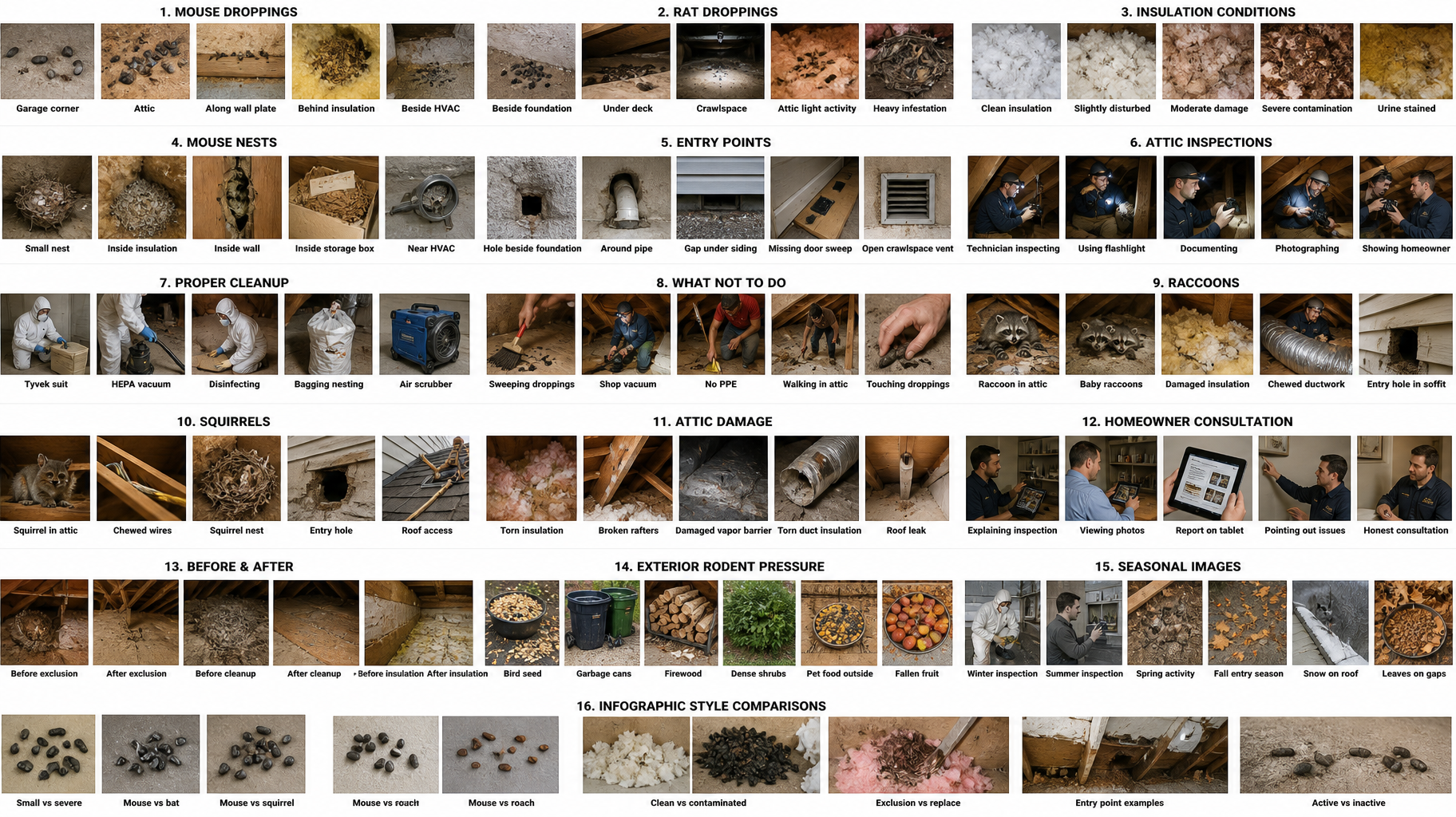
Gaps and Openings
- Droppings piled at one hole or gap
- Daylight under doors or around vents
- Fresh chewing at a crack in the foundation
Finding the way in matters as much as finding the mice. Every gap we close is one they can't come back through.
Other signs of a rodent infestation
Grease and rub marks
Dark, greasy smudges along baseboards, beams and around holes, left by oily fur rubbing the same path over and over. They're more obvious with rats.
Gnaw marks
Chewed corners on doors, cabinets, food packages and plastic bins. Chewed wires are a real fire risk — tell us if you see any.
Tracks and runways
Small footprints and a tail drag line in dust in the basement or garage, or a worn, clean path along a wall.
Pets acting strange
A dog or cat staring at one spot, sniffing under the fridge, or pawing at a wall can be hearing what you can't.
Outside, look for burrow holes about two to four inches wide along the foundation, under sheds and decks, and near garbage cans. That's a rat sign — mice don't usually dig burrows.
How to clean up droppings safely
Rodent droppings and urine can carry germs, and the worst thing you can do is stir up dust from them. Follow these steps:
Air it out and suit up
Open windows for at least 30 minutes if you can. Put on rubber or disposable gloves.
Wet it — don't sweep or vacuum
Spray the droppings and any urine with a household disinfectant or a mix of 1 part bleach to 10 parts water, and let it soak about 5 minutes.
Wipe and bag it
Pick everything up with paper towels, seal it in a plastic bag and put it in the outside trash. Then disinfect the area again.
Wash up
Wash your gloved hands, take the gloves off, then wash your hands with soap and water. Wash any bedding or clothes that were touched.
For a big buildup — an attic, a crawl space, a garage that's been full of rodents for months — call a professional instead of doing it yourself.
Found the signs? Here's what to do next
Mice and rats breed fast, so a few droppings this week can become a much bigger problem by next month. A good plan has three parts:
- Remove the rodents already inside. Traps and bait need to go in the right spots, away from kids and pets, and be checked.
- Find and seal the way in. Without this step, new mice just replace the ones you caught. See rodent proofing and exclusion.
- Take away food and shelter. Seal food in hard containers, don't leave pet food or bird seed out, and clear clutter off basement and garage floors. More tips: how to keep mice out of your house.
Silver Bullet Pest Control's One-Time Mouse Service is 100% guaranteed, and our mouse and rodent service includes 90 days of coverage with unlimited free service calls — if they come back in that time, so do we. We're licensed in New Jersey (License 90568B) and based in Garfield.
More help with mice and rats
Think You Have Mice or Rats?
Tell us what you found and where — a photo helps. We'll get back to you quickly and set up an inspection.
Why people call us about rodents
- Droppings in the kitchen, pantry or garage
- Scratching in the walls or ceiling at night
- A musty or dead-animal smell they can't find
- Chewed food boxes or wires
- Mice that come back every fall
Request Service
🔒 Your info stays private · Hablamos español.
Signs of Mice & Rats: FAQ
What does mouse poop look like?
Mouse poop is small, dark and about the size of a grain of rice — a quarter inch or less — with pointed ends. It's usually scattered along walls, in drawers and cabinets, and behind appliances.
How can I tell mouse droppings from rat droppings?
Size is the giveaway. Rat droppings are about half an inch to three-quarters of an inch long, thicker and blunt at the ends, while mouse droppings are much smaller and pointed.
What do rats smell like?
Rats leave a strong, musky smell similar to ammonia, mostly from urine. It's usually strongest in basements, garages, crawl spaces and closed cabinets.
Is scratching in the walls at night mice?
Usually, yes. Light scratching and scurrying at night is most often mice; heavier thumps can mean rats, and noises at dawn and dusk in the attic are more often squirrels.
Does one mouse mean I have more?
Usually. Mice live in family groups and breed quickly, so by the time you see one, there are often others nesting nearby.
Where do mice nest in a house?
Inside walls, under and behind kitchen appliances, in unused drawers, in stored boxes, and in attic or basement insulation — anywhere quiet, warm and close to food.
Should I vacuum mouse droppings?
No. Vacuuming or sweeping can stir up dust from the droppings. Wet them first with disinfectant or a bleach and water mix, let it soak, then wipe them up with paper towels while wearing gloves.
Why do I see more mice in the fall?
As nights get cold, mice look for warm shelter with food nearby, and houses are perfect. Fall is when most North Jersey homeowners first notice droppings and noise in the walls.
Do you guarantee your mouse service?
Yes. Silver Bullet's One-Time Mouse Service is 100% guaranteed, and our rodent service includes 90 days of coverage with unlimited free service calls.
¿Cómo sé si tengo ratones en casa?
Las señales más comunes son excrementos pequeños y oscuros, olor fuerte a orina, ruidos en las paredes por la noche y comida mordida. Hablamos español — llame o mande texto al 973-510-2585.
Mouse and rat inspections near you
Based in Garfield, we check homes for rodents in these towns and across Bergen, Passaic, Essex and Hudson counties.
Updated October 2026 by the Silver Bullet Pest Control team, Garfield, NJ • NJ License 90568B