Silver Bullet Pest Control logoSilver Bullet Pest Control
Wasp & Yellow Jacket Nests in Attics Β· Removal Β· North Jersey

Wasp Nest in the Attic? Safe Removal in NJ (and Why Not to Seal the Hole)

Wasps flying in and out of a gap by the roofline, buzzing in the ceiling, or a few showing up in an upstairs bedroom? A wasp or yellow jacket nest in the attic is more than an outdoor nuisance: it sits right above your living space, and the wrong move can send hundreds of stinging insects into the house. Silver Bullet Pest Control finds the nest, treats it and removes it safely.

4.9 stars on Google β€’ NJ License 90568B β€’ 15+ years β€’ Same-day often available β€’ Honey bees relocated with a beekeeper β€’ Hablamos espaΓ±ol

Text a photo of where the wasps go in (from a safe distance) to 973-510-2585.

How do you get rid of a wasp nest in the attic?

To get rid of a wasp nest in the attic, have a licensed technician treat the nest where it is β€” through the outside entry hole and inside the attic if it can be reached β€” and leave the entry open until all activity stops, then remove the nest and close the gap. Never seal the hole while wasps are inside: trapped yellow jackets and wasps will chew or crawl their way into your living space. Silver Bullet Pest Control removes attic wasp nests across North Jersey, often the same day. Call or text 973-510-2585.

Why you should never seal the hole with wasps inside

It feels like the obvious fix: wasps are going in through a gap in the soffit or siding, so you fill it with foam or caulk at night when they're all home. This is the single most common mistake we see, and it often turns a nuisance into an emergency.

  • The wasps don't die. A yellow jacket colony can live for days or weeks inside a sealed space.
  • They look for another exit. Blocked from outside, they follow light and air β€” through the attic hatch, recessed lights, ceiling fans, bath vents and gaps around pipes.
  • Yellow jackets chew. They can chew through soft materials, including drywall and ceiling board, and come out in a bedroom or hallway.
  • The workers outside get angry. Foragers coming home to a blocked entrance gather at the spot and sting anyone nearby.

The right order is always treat first, wait, then close the gap. Leave the hole open and let a professional deal with the nest.

Which stinging insect is in your attic?

The insect decides how the nest is handled. These are the ones we find in North Jersey attics and roof spaces:

InsectWhere in the atticNestHow it behaves
Yellow jacketsHidden inside wall voids, soffits, between rafters, under insulationPaper nest inside a cavity β€” can get very large by late summerDefensive; the most common cause of indoor stings
Paper waspsOpen rafters, gable vents, roof sheathing, attic windowsOpen, umbrella-shaped comb with visible cellsCalmer unless disturbed; often several small nests
European hornetsAttic spaces, wall voids, hollow trees nearbyBrown paper nest in a cavityLarge; can fly at night and come to lights
Bald-faced hornetsUsually outside under eaves, rarely in atticsGray, football-shaped paper ballVery defensive near the nest
Honey beesWall voids and roof cavitiesWax comb with honeyUsually calm; relocated with a beekeeper, not exterminated

Not sure which you have? Read wasp, hornet and yellow jacket identification or text us a photo.

The real risks of a wasp nest in the attic

⚠️

Stings inside the home

When a nest grows big enough, or its exit gets blocked, wasps find their way into upstairs rooms. That's a real danger for kids and anyone allergic to stings.

🏠

Damage to ceilings

Yellow jackets in a ceiling or wall void can chew through drywall. A damp stain or a soft spot in the ceiling above a bedroom is a warning sign.

🍯

Honey and wax (bees only)

An established honey bee colony leaves comb and honey in the wall. If it's left to melt or rot, it can stain and attract other pests, which is why bee colonies are removed with their comb.

πŸ“ˆ

Growth by late summer

Yellow jacket nests start with one queen in spring and keep growing until fall. A nest you hear in August can be many times bigger than it was in June.

Signs of a wasp nest in your attic or walls

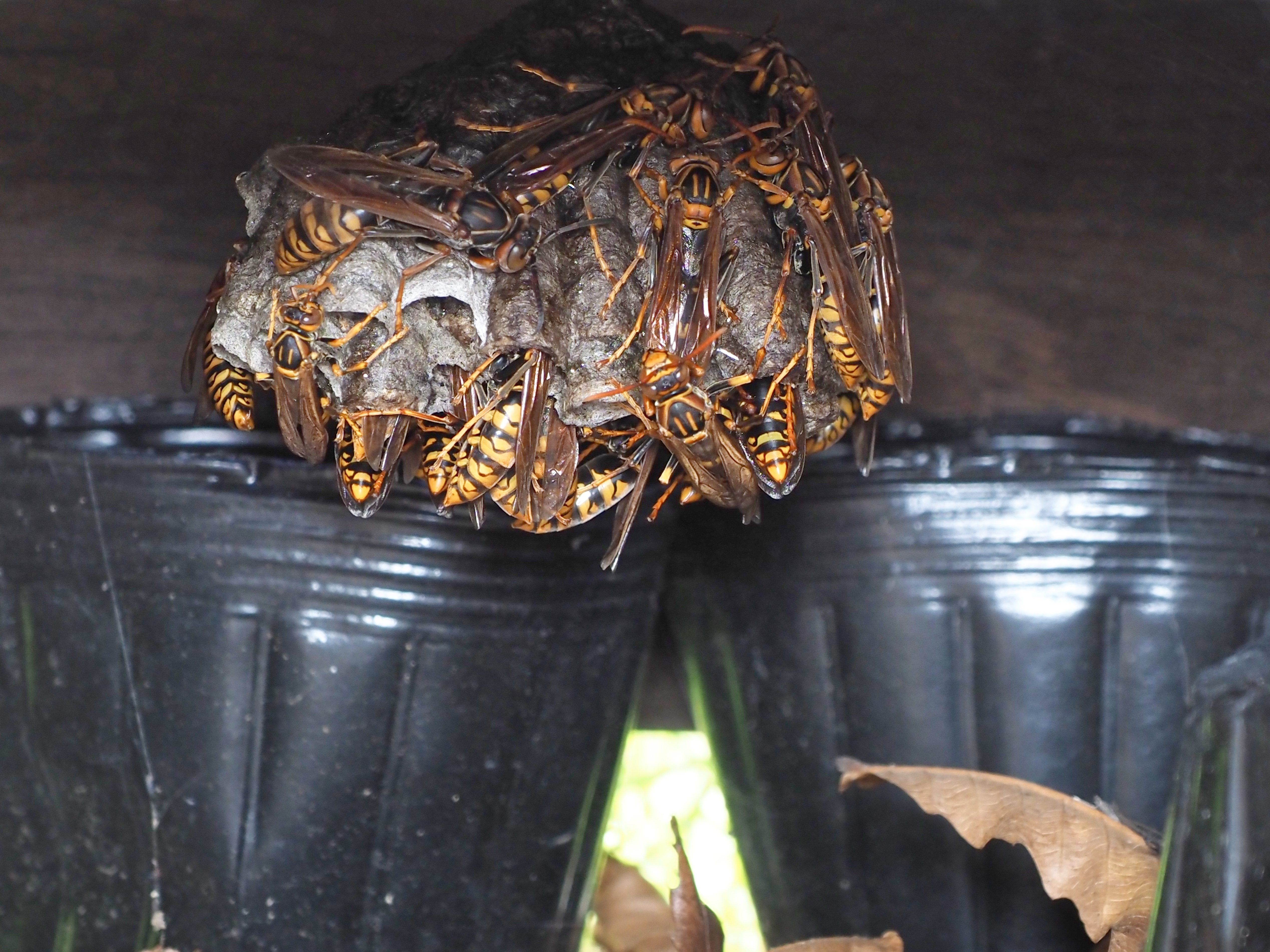
Paper wasp nest with open cells
Outside

Traffic at the roofline

  • A steady stream of wasps in and out of one gap
  • Activity at a soffit, gable vent or siding seam
  • Most busy on warm afternoons

Stand back in the yard and watch the roofline for a few minutes. One busy entry point where wasps fly straight in and out is the classic sign of a hidden nest.

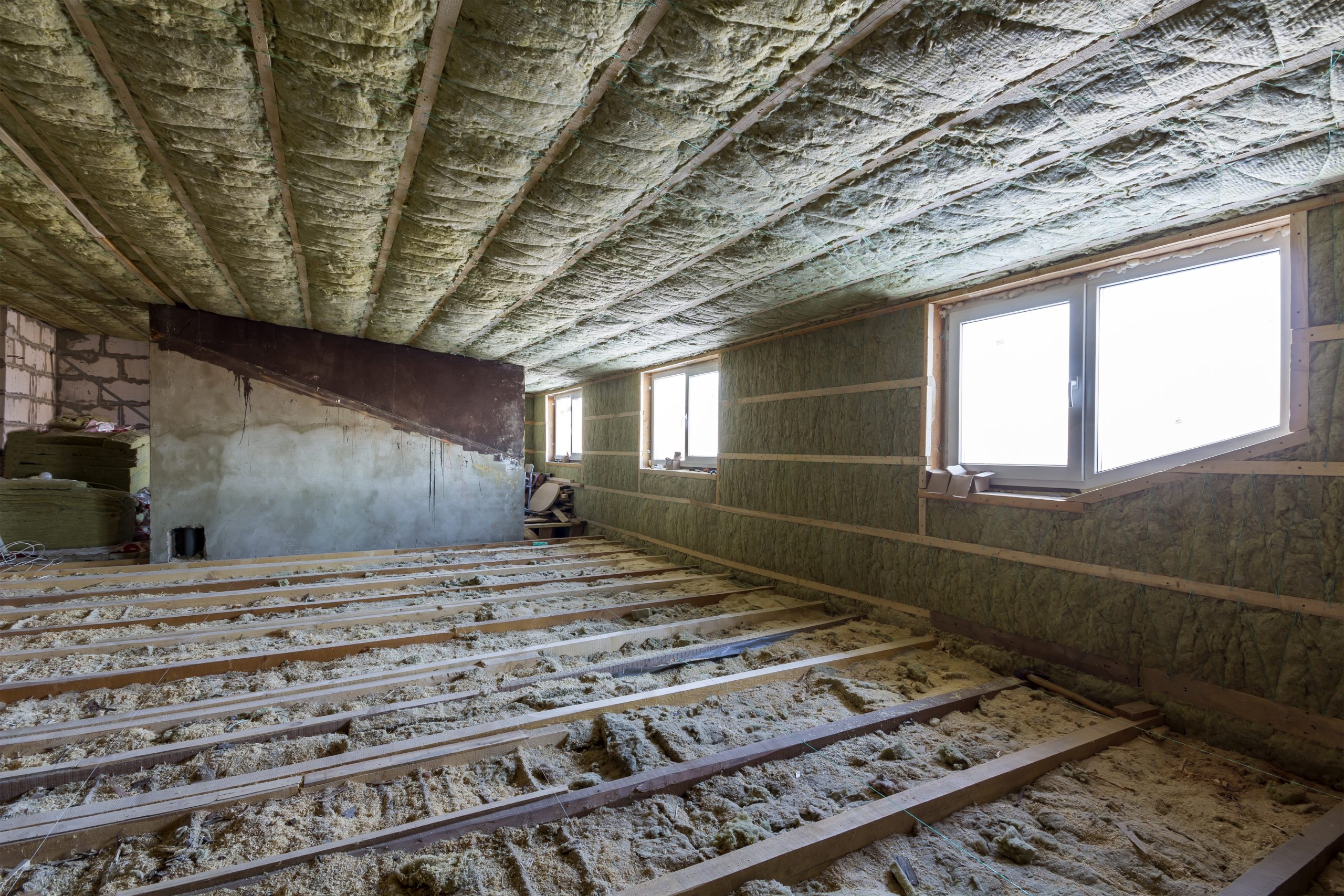
Exposed attic rafters and sheathing
In the attic

What you see up there

  • Paper nests on rafters or in gable vents
  • Wasps flying near the attic window
  • Dead wasps on the attic floor or under insulation

Only look if you can do it calmly with a flashlight from the hatch. Don't climb into a hot attic to get close, and don't disturb insulation where wasps are active.

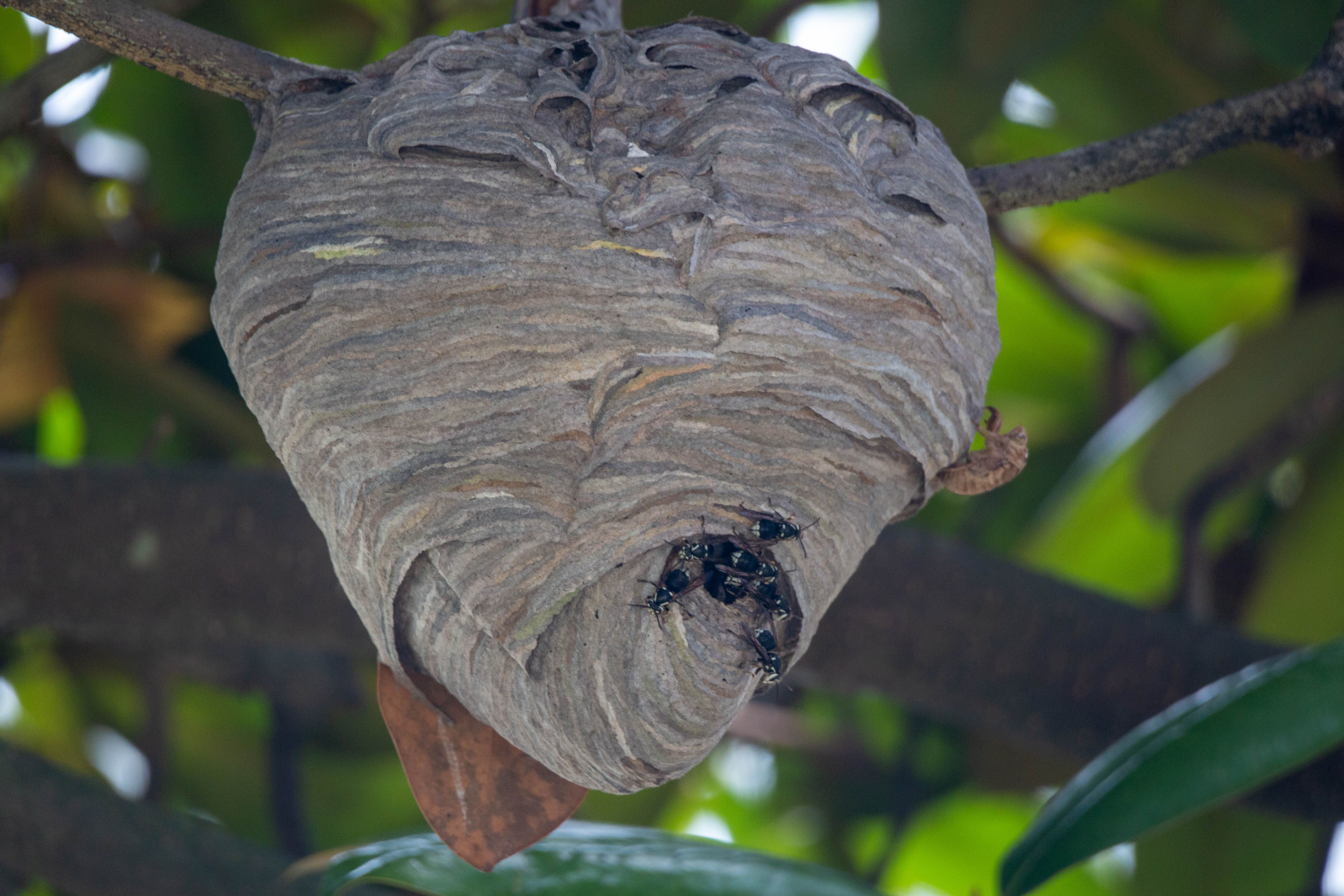
Large paper hornet nest
Inside the house

Wasps in living space

  • Wasps around ceiling lights or bath fans
  • Buzzing or crackling in a ceiling or wall
  • Several wasps in an upstairs room each day

Wasps showing up inside, especially upstairs and around light fixtures, usually means the nest is very close. Call before they chew through, and keep the room closed.

Found an attic nest? What to do right now

1

Leave the entry open

Don't plug, foam or caulk the hole on the outside, and don't block vents.

2

Close off the room

If wasps are coming inside, shut the door to that room and put a towel along the bottom. Turn off ceiling lights that attract them at night.

3

Skip the spray can

Store sprays rarely reach a nest inside a wall or under insulation, and spraying from a ladder near a roofline is how people get hurt.

4

Call or text us

Send a photo of the entry point to 973-510-2585. Same-day visits are often available. Anyone stung with face or throat swelling or trouble breathing should call 911.

How we remove a wasp nest from the attic

1

Find the nest

We locate the outside entry and, when it's safe, the nest itself in the attic or wall void. We also check the rest of the house β€” there's often more than one nest.

2

Identify the insect

Yellow jackets, paper wasps and hornets are treated. Honey bees are not: we relocate them with a local beekeeper.

3

Treat it where it lives

A licensed technician in protective gear treats the nest through the entry point and inside the cavity. The entry is left open so returning wasps contact the treatment.

4

Remove and close up

Once activity stops, reachable nests are removed. We show you the gap so it can be closed properly, and explain what to watch for over the next few days.

Expect a few stragglers for a day or two after treatment. That's normal. If activity keeps going after that, call us.

After the nest is gone: keeping wasps out of the attic

Wasps don't reuse an old nest, but a protected attic space with an easy opening will attract a new queen next spring. Once the nest is dead and removed:

  • Close the entry gap in the soffit, fascia, siding or vent. Ask us what's best for your opening.
  • Check gable and ridge vents for torn screens.
  • Look again in early spring, when small new nests are easy to remove.
  • Fix wildlife damage too. Old squirrel or bird holes are a favorite wasp entry. We repair chewed soffits, fascia and trim after wildlife jobs β€” see wildlife damage repair.

More tips: how to prevent wasp nests.

What affects the price of attic wasp nest removal

Quotes are free. These are the things that change the size of the job:

FactorSimpler jobBigger job
AccessLow roofline, easy attic hatchSecond or third story, steep roof, no attic access
Nest locationOpen rafters in the atticInside a finished ceiling or wall void
InsectSmall paper wasp nestLarge yellow jacket or hornet nest
SeasonSpring or early summerLate summer, when nests are biggest
Honey beesNot involvedBee colony with comb that must be relocated

More detail on wasp nest removal cost.

Get a Free Quote for Attic Wasp Nest Removal

Tell us where the wasps are going in and whether any are getting inside. Send a photo if you can. Same-day visits are often available.

Why homeowners call us about attic wasps

  • Wasps going in and out of the roofline
  • Buzzing in a ceiling or wall
  • Wasps showing up in an upstairs room
  • Someone in the home is allergic
  • A nest you can't safely reach
πŸ“ž Call 973-510-2585

Request Service

πŸ”’ Your info stays private Β· Hablamos espaΓ±ol.

What's bugging you? - Step 1 of 3

Wasp Nest in Attic Questions

Can I seal the hole at night when the wasps are inside?

No. Sealing the entry traps a living colony inside, and the wasps will look for another way out, often into the house through lights, vents or chewed drywall. Treat the nest first, wait for activity to stop, then close the gap.

Can wasps chew through my ceiling?

Yellow jackets can chew through drywall and ceiling board, especially when their normal exit is blocked. A damp spot, a soft area or a crackling sound in the ceiling is a reason to call right away.

Will the wasps die on their own in winter?

In New Jersey most wasp and yellow jacket colonies die off in late fall, and only new queens survive the winter elsewhere. But the nest keeps growing until then, and it's a risk all summer.

How long does it take after treatment?

Most activity stops within a day or two, with a few stragglers returning. If you still see steady traffic after several days, call us for a follow-up.

Should the nest be removed from the attic?

Reachable nests are removed after treatment. Nests sealed inside a wall or ceiling are usually left once they're dead, unless they're very large or, for honey bees, contain comb and honey.

What if it's honey bees in the attic?

Honey bees are not exterminated. We work with a local beekeeper to relocate the colony, and the comb needs to come out so it doesn't melt or attract pests.

Why are wasps coming into my bedroom?

Wasps indoors usually come from a nest in the attic, ceiling or wall right nearby, following light from fixtures and windows. Keep the room closed and call before trying to find the nest yourself.

Is it safe for kids and pets?

We explain where we treat, how long to keep people and pets away from treated areas, and any precautions before we start.

How fast can you come?

Same-day visits are often available, especially if wasps are getting into the living space or someone is allergic. We're based in Garfield and serve Bergen, Passaic, Essex and Hudson counties.

ΒΏHablan espaΓ±ol?

SΓ­. Hablamos espaΓ±ol. Si tiene avispas en el Γ‘tico, llame o mande un texto al 973-510-2585.

Attic wasp removal near you

Based in Garfield, we remove wasp, yellow jacket and hornet nests across North Jersey.

Our service area

Union County

973-510-2585
  • Berkeley Heights
  • Clark
  • Cranford
  • Elizabeth
  • Fanwood
  • Garwood
  • Hillside
  • Kenilworth
  • Linden
  • Mountainside
  • New Providence
  • Plainfield
  • Rahway
  • Roselle
  • Roselle Park
  • Scotch Plains
  • Springfield
  • Summit
  • Union
  • Westfield

Morris County

973-510-2585
  • Boonton
  • Butler
  • Cedar Knolls
  • Chatham
  • Denville
  • Dover
  • East Hanover
  • Florham Park
  • Hanover
  • Kinnelon
  • Lincoln Park
  • Madison
  • Mendham
  • Montville
  • Morris Plains
  • Morristown
  • Mountain Lakes
  • Parsippany
  • Pequannock
  • Randolph
  • Riverdale
  • Rockaway
  • Roxbury
  • Whippany

Updated November 2026 by the Silver Bullet Pest Control team, Garfield, NJ β€’ NJ License 90568B

Scroll to Top