Silver Bullet Pest Control logoSilver Bullet Pest Control
Wasp guide Β· DIY spray or pro? Β· North Jersey

Wasp Spray vs. Professional Removal: When Is DIY Safe?

A can of wasp spray costs a few dollars. A trip to the ER doesn't. Here's an honest guide to when store-bought wasp spray is a reasonable fix, when it makes things worse, and when a nest is a job for a licensed pro.

4.9 stars on Google β€’ NJ License 90568B β€’ 15+ years β€’ Based in Garfield, NJ β€’ Hablamos espaΓ±ol

Not sure what's buzzing? Text a photo of the nest (from a safe distance) to 973-510-2585.

  • βœ“ Same-day appointments often available
  • βœ“ Licensed & insured in NJ
  • βœ“ Homes & businesses
  • βœ“ English & EspaΓ±ol

Wasp spray vs. professional removal: which should I choose?

For wasp spray vs. professional removal, store-bought spray is reasonable only for a small, fully visible paper wasp nest you can reach from the ground, treated at dusk by someone who isn't allergic. Call a professional for yellow jackets in the ground or walls, bald-faced hornet nests, anything high up or bigger than a softball, or if anyone in the house is allergic to stings. Honey bees should never be sprayed β€” we relocate them with a local beekeeper. Call or text 973-510-2585 for a free quote.

DIY wasp spray or call a pro? A quick decision table

SituationDIY spray reasonable?Why
Small paper wasp nest under a railing, eave or mailbox, reachable from the groundUsually yesOpen, umbrella-shaped comb; spray reaches every cell
Paper wasp nest high on a second-story eaveNoLadders plus stinging insects is how people get hurt
Yellow jackets going in and out of a hole in the lawnNoNest is underground and can hold thousands; spray at the hole rarely reaches it
Wasps going in and out of siding, a soffit or a wall gapNoSpraying or plugging the hole can push wasps into the house
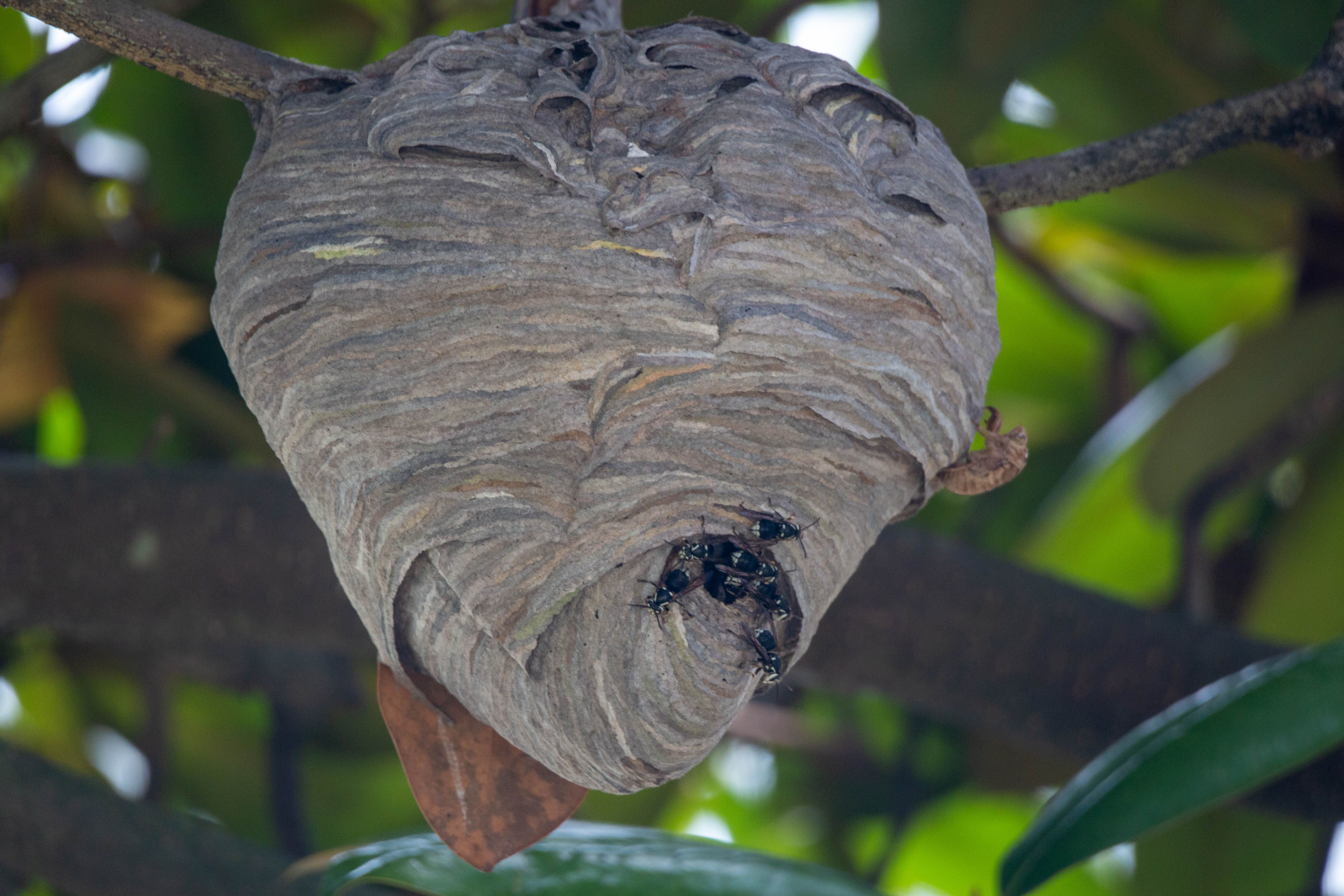
Gray, football-shaped paper nest in a tree or bushNoLikely bald-faced hornets β€” very defensive
A ball or cluster of bees on a branch, or bees in a wallNever sprayHoney bees are relocated with a beekeeper, not killed
Anyone in the home allergic to stingsNoOne mistake can be a medical emergency

Not sure which row you're in? Read are yellow jackets bees or wasps? or just text us a photo.

Wasp, hornet or bee? It changes the answer

The insect decides whether spray is reasonable at all:

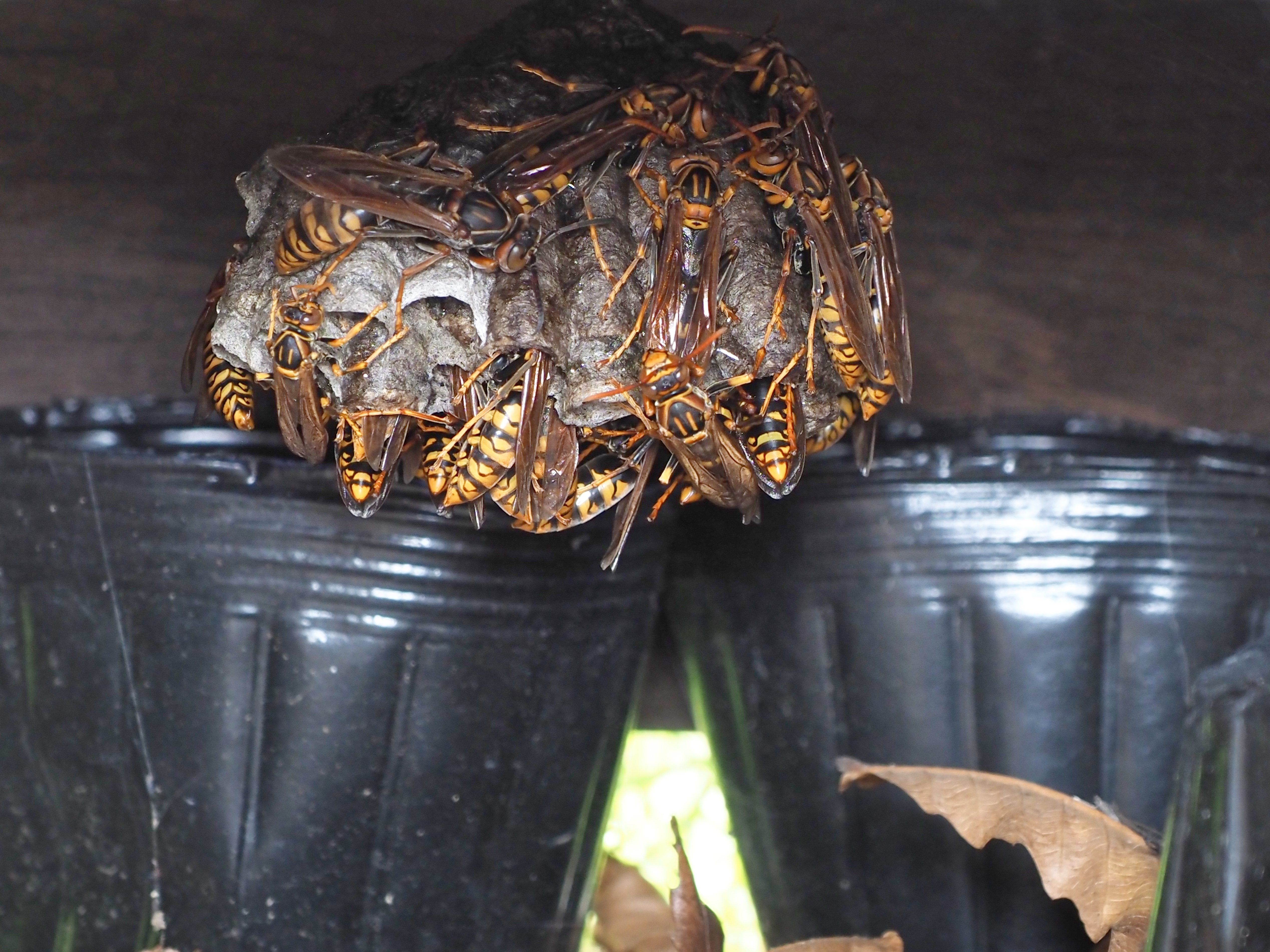
Paper wasps on an open paper nest
Sometimes DIY

Paper wasps

  • Long legs that dangle in flight
  • Open, umbrella-shaped comb
  • Under eaves, railings, grills and shutters

Paper wasps are the most DIY-friendly. Nests are small and exposed, and the wasps are less aggressive than yellow jackets. A small nest you can reach from the ground is often fine to treat at dusk.

Gray paper hornet nest on a tree branch
Call a pro

Bald-faced hornets & yellow jackets

  • Enclosed gray paper nest with one opening
  • Steady traffic in and out of a hole
  • Very defensive near the nest

These build enclosed nests in trees, shrubs, the ground and wall voids. Colonies get large by late summer and defend the nest hard. Spray rarely reaches the comb inside, and a near miss means a lot of angry insects.

Silver Bullet Pest Control service van
Never spray

Honey bees

  • Fuzzy, golden-brown bees
  • Swarm hanging in a cluster on a branch
  • Bees going in and out of a wall or tree

Honey bees are valuable pollinators. We work with a local beekeeper so swarms and colonies are relocated, not exterminated. Spraying a wall colony can also leave honey and wax to rot and leak inside the wall.

If you spray a small paper wasp nest yourself

1

Pick dusk or dawn

Wasps are home and slower when it's cool and dim. Midday treatment means foragers come back to find you standing there.

2

Stand back and stay on the ground

Use a jet-type wasp spray from the distance on the label, with an escape path behind you. Skip the ladder.

3

Soak the whole nest

Cover the comb and the wasps on it, then walk away. Don't stand and watch.

4

Wait before removing it

Leave it a day. If no wasps are active, knock it down and dispose of it. Activity the next day means a second round β€” or a call to us.

Wear long sleeves, keep kids and pets inside, and follow the product label exactly. Never use gasoline, fire or water hoses on a nest β€” those cause injuries and house fires every summer.

Why spraying wall and ground nests backfires

The nests that send people to us after a failed DIY attempt are almost always hidden ones. Yellow jackets in particular love two places in North Jersey homes: holes in the lawn or garden beds, and gaps in siding, soffits, attic vents and brick mortar on older houses.

The problem is that you only see the entrance. The nest itself may be a foot or more inside the wall or underground, and spray from a can doesn't travel that far. What happens next is predictable:

  • Wasps sting the person spraying, because the colony is alarmed but not dead.
  • If the hole is plugged or caulked, wasps look for another way out β€” sometimes into the attic or living space through light fixtures and outlets.
  • The surviving colony keeps growing until the first hard frost.

Don't seal the hole while the nest is active. Seal it after the nest is treated and dead. See wasp nest in the attic and yellow jacket nest in the ground.

Risks people underestimate

πŸͺœ

Ladders

A sting or a cloud of wasps at the top of a ladder causes falls. Second-story eaves and gable peaks are pro territory.

⚠️

Allergies

Some people don't know they're allergic until it happens. Multiple stings can be dangerous for anyone, especially kids and older adults.

πŸ”

Late-summer colonies

By August and September yellow jacket and hornet colonies are at their biggest and most defensive. A nest that was small in June isn't small now.

🏠

Spray inside the house

Fogging or spraying insecticide indoors to chase wasps from a wall creates a mess and a breathing hazard without reaching the nest.

If someone is stung and has trouble breathing, swelling of the face or throat, or feels faint, call 911 right away.

What professional wasp removal looks like

A professional visit is built around getting to the nest itself, safely:

  1. Identify the insect and find the nest β€” not just the entrance. Honey bees get referred to our beekeeper for relocation.
  2. Treat with professional products and equipment, including dusts and tools that reach into wall voids and ground nests where aerosols can't.
  3. Use protective gear so a defensive colony isn't a danger to the tech or your family.
  4. Remove reachable nests and recommend when and how to seal the entry once activity stops.
  5. Point out what attracts them β€” open soffits, loose siding, uncovered garbage, sheds and play sets.

We're based in Garfield and handle wasps, hornets and yellow jackets across Bergen, Passaic, Essex and Hudson counties. For nests next to a door or where kids play, same-day service is often available. For prevention, see how to prevent wasp nests and bee and wasp exclusion and sealing.

What affects the cost of professional wasp removal

There's no one price for every nest, and any company that quotes before knowing the details is guessing. These are the things that matter:

  • Type of insect β€” an open paper wasp nest is simpler than a large hornet nest or a yellow jacket colony in a wall.
  • Location and height β€” ground level, second-story eave, roof peak, inside a wall or attic.
  • Number of nests on the property.
  • Follow-up work, like opening and sealing an entry or a return visit if activity continues.

Compare the cost of a professional visit to the real cost of DIY gone wrong: multiple cans of spray, a sting reaction, or wasps in the house. Read more in wasp nest removal cost, and call for a free quote.

Get a Free Wasp Removal Quote

Tell us where the nest is and what you're seeing. Text a photo from a safe distance and we'll tell you if it's a DIY job or one for us.

Call us when

  • Wasps going in and out of a wall or soffit
  • Yellow jackets in the lawn
  • A gray football-shaped nest in a tree
  • The nest is high up or near a door
  • Someone in the house is allergic
πŸ“ž Call 973-510-2585

Request Service

πŸ”’ Your info stays private Β· Hablamos espaΓ±ol.

What's bugging you? - Step 1 of 3

Wasp Spray and Removal Questions

Does wasp spray actually work?

Wasp spray works well on wasps it soaks directly, which is why it's fine for a small, exposed paper wasp nest. It works poorly on nests you can't see, like yellow jackets in the ground or wasps inside a wall, because the spray never reaches the comb. In those cases it mostly angers the colony, and a professional treatment that reaches the nest is the safer choice.

Is it safe to remove a wasp nest myself?

It can be, for a small paper wasp nest you can reach from the ground, treated at dusk, by someone who isn't allergic. It isn't safe on a ladder, with large or enclosed nests, with yellow jackets or hornets, or for anyone with a sting allergy. If you're unsure what kind of nest it is, text a photo before you try anything.

What time of day is best to spray a wasp nest?

Dusk or just before dawn is best. Wasps are back in the nest and moving slowly when it's cool and dim, so more of the colony gets treated and fewer foragers are flying around you. Avoid using a bright flashlight pointed at the nest, and never spray in the middle of a warm afternoon when activity is highest.

Should I plug the hole where wasps are going into my wall?

Not while the nest is active. Plugging the entrance can force wasps to chew or find another way out, sometimes into the attic or living space through vents, light fixtures or outlets. Have the nest treated first, wait until there's no activity, then seal the gap so a new colony doesn't move in next year.

How much does professional wasp removal cost?

It depends on the insect, how many nests there are, how high or hidden the nest is, and whether follow-up sealing or a return visit is needed. A ground-level paper wasp nest is simpler than yellow jackets inside a wall. We don't guess at prices without the details; send a photo or call 973-510-2585 for a free quote.

Can I spray honey bees with wasp spray?

Please don't. Honey bees are important pollinators, and Silver Bullet Pest Control works with a local beekeeper so swarms and colonies are relocated instead of killed. Spraying a colony in a wall can also leave honey and wax to ferment, drip and attract other pests. If you see fuzzy bees clustered on a branch or going into a wall, call us.

Do wasps come back to the same nest?

Wasps don't reuse an old nest from a previous year; most colonies die off after a hard frost and new queens start fresh in spring. But they often build in the same kinds of spots, like the same eave, shed or wall gap. Removing old nests and sealing openings after the season helps cut down on repeat problems.

How long after spraying will wasps die?

Wasps directly hit by a good jet spray usually drop within seconds to minutes. Returning foragers that land on the treated nest may take longer. If you still see steady activity the next day, the spray didn't reach the whole colony β€” often because the nest is bigger or more hidden than it looked. That's the time to call a professional.

Is wasp spray safe around kids and pets?

Wasp spray is an insecticide and should be used exactly as the label says, outdoors, with kids and pets inside and away from the area. Don't spray near open windows, vents, play sets or pet bowls, and don't use it indoors. If the nest is near a doorway or play area where people will be close, a professional treatment is usually the better option.

ΒΏPuedo quitar un nido de avispas yo mismo?

Solo si es un nido pequeΓ±o de avispas de papel, a la vista y al alcance desde el suelo, tratado al anochecer, y nadie en la casa es alΓ©rgico. Para avispas en la pared, en el suelo, avispones o nidos altos, llΓ‘menos. Las abejas de miel no se fumigan: las reubicamos con un apicultor. Llame al 973-510-2585. Hablamos espaΓ±ol.

Wasp and hornet removal across North Jersey

From our base in Garfield we handle wasps, hornets, yellow jackets and bee relocations in Bergen, Passaic, Essex and Hudson counties.

Updated November 2026 by the Silver Bullet Pest Control team, Garfield, NJ β€’ NJ License 90568B

Scroll to Top