
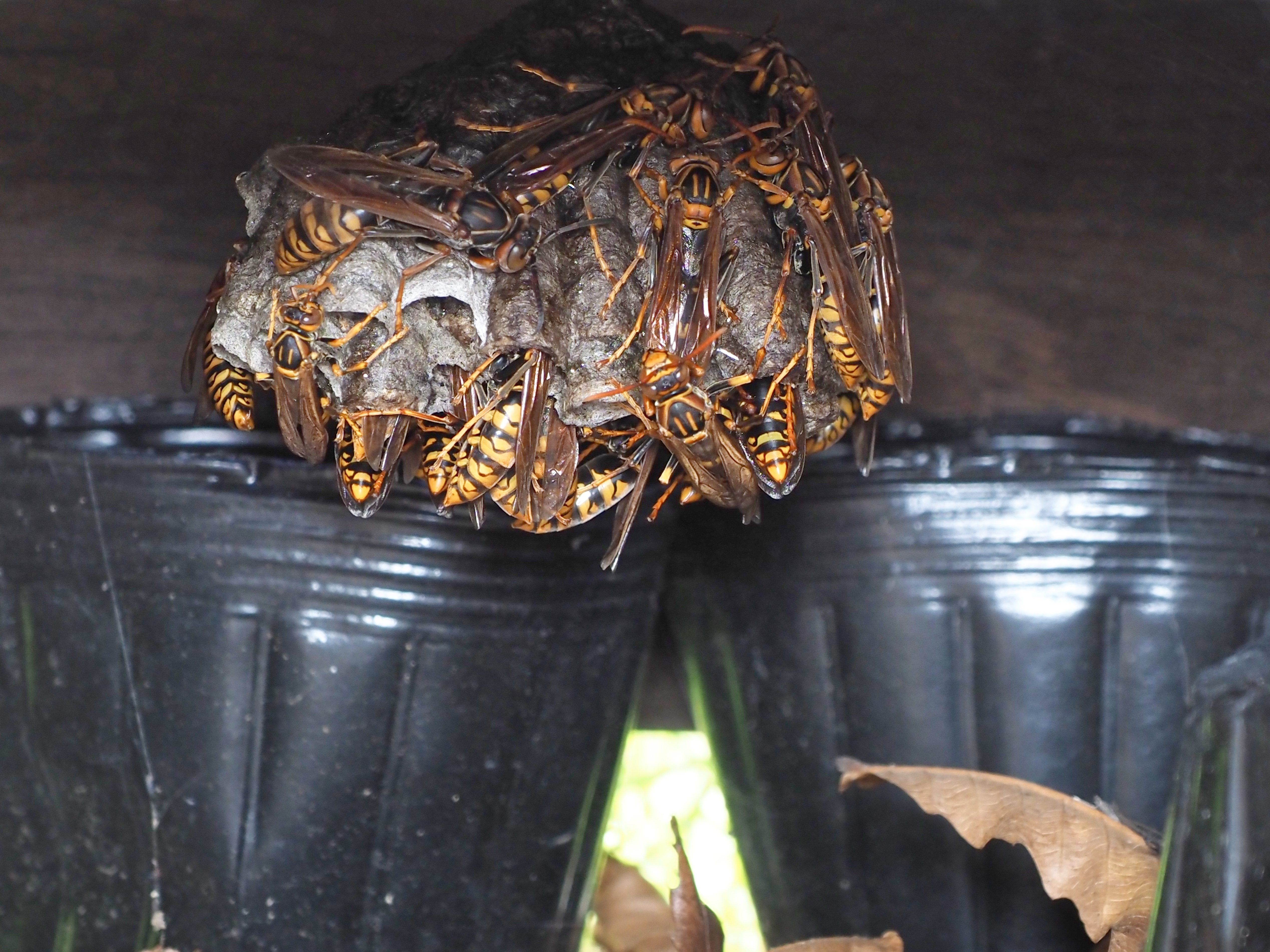
Nest under the eaves
- Open, umbrella-shaped paper nest
- Under eaves, railings and grills
- Thin wasps with dangling legs
Paper wasps aren't relocated. We treat and remove the nest so you can use the porch or deck again.
 Silver Bullet Pest Control
A ball of bees hanging from a branch, or a steady line of bees going in and out of your siding? If they're honey bees, Silver Bullet Pest Control doesn't spray them. We work with a local beekeeper so honey bee swarms and colonies in South Orange are relocated, not exterminated. Wasps and hornets are a different story, and we handle those too.
4.9 stars on Google • NJ License 90568B • Over 15 years of experience • Serving Essex County • Hablamos español
Not sure what kind of bee it is? Text a photo from a safe distance to 973-510-2585.
Yes. Humane bee relocation in South Orange, NJ means a honey bee swarm or colony is collected alive and moved to a beekeeper's hive instead of being sprayed. Silver Bullet Pest Control works with a local beekeeper to relocate honey bees, and we remove wasp, hornet and yellow jacket nests that can't be relocated. Text a photo to 973-510-2585 and we'll tell you what you have and the next step.
Only honey bees are collected for a beekeeper. Here's how to tell what's buzzing around your South Orange home:
| Insect | What it looks like | Where it lives | What we do |
|---|---|---|---|
| Honey bee | Fuzzy, golden-brown with darker bands, about half an inch | Swarms on branches; colonies in walls, soffits, hollow trees, sheds | Relocated with a local beekeeper |
| Bumble bee | Big, round and very fuzzy, black and yellow | Small nests in the ground, under decks, in old insulation | Often left alone if out of the way; ask us |
| Yellow jacket | Smooth and shiny, bright yellow and black, quick flight | In the ground, in wall voids, under siding | Nest treated and removed |
| Paper wasp | Thin waist, long dangling legs | Open umbrella-shaped nests under eaves and railings | Nest treated and removed |
| Bald-faced hornet | Black and white | Large gray paper ball nests in trees and bushes | Nest treated and removed |
The fastest way to know: snap a photo from a safe distance and text it to 973-510-2585. Our wasp, hornet and yellow jacket guide has more photos and tips.
A swarm is what happens when a healthy honey bee colony splits. The old queen leaves with a big group of workers, and they cluster on a branch, fence, mailbox or the side of a house while scouts look for a new home. In New Jersey, swarm season is mostly in late spring and early summer.
A swarm looks scary, but it's usually the calmest bees ever get. They have no home and no honey to defend yet. That changes fast. A swarm may move on within hours or a couple of days, and if the scouts pick your wall, soffit or chimney, you go from a swarm on a branch to a colony inside your house.
Allergic to stings? Stay inside, keep windows closed, and don't try to move the bees yourself. If someone is stung and has trouble breathing or swelling of the face or throat, call 911.
An established colony is a bigger job than a swarm. Once honey bees move into a wall void, soffit, porch roof or chimney, they build wax comb and store honey and pollen. The bees can't just be lured out, and spraying them doesn't solve the problem. Dead bees, wax and honey left in a wall can attract other insects, melt in summer heat and stain ceilings and walls.
Signs you have a colony and not just a few visitors:
South Orange has a lot of older homes with wood siding, porches, decorative trim and chimneys, and those have plenty of hollow spaces bees like. When bees are inside a structure, getting the comb and bees out usually means opening part of the wall or soffit. We'll look at where they are, explain what's involved, and work with the beekeeper so the bees are moved alive. Ask us how the opening gets closed up afterward for your home.
From your photo or a visit, we confirm it's honey bees and not yellow jackets or wasps, and find exactly where they are.
A swarm on a branch is a quick collection. A colony in a wall needs a plan for reaching the comb. We explain what's involved before anything starts.
We work with a local beekeeper so the bees, and when possible their comb, go to a hive instead of being exterminated.
Once the bees are out, the gap they used should be sealed so a new swarm isn't drawn to the same spot next year.
Learn more about how we work with New Jersey beekeepers, and about bee and wasp exclusion and sealing.
Paper wasps aren't relocated. We treat and remove the nest so you can use the porch or deck again.
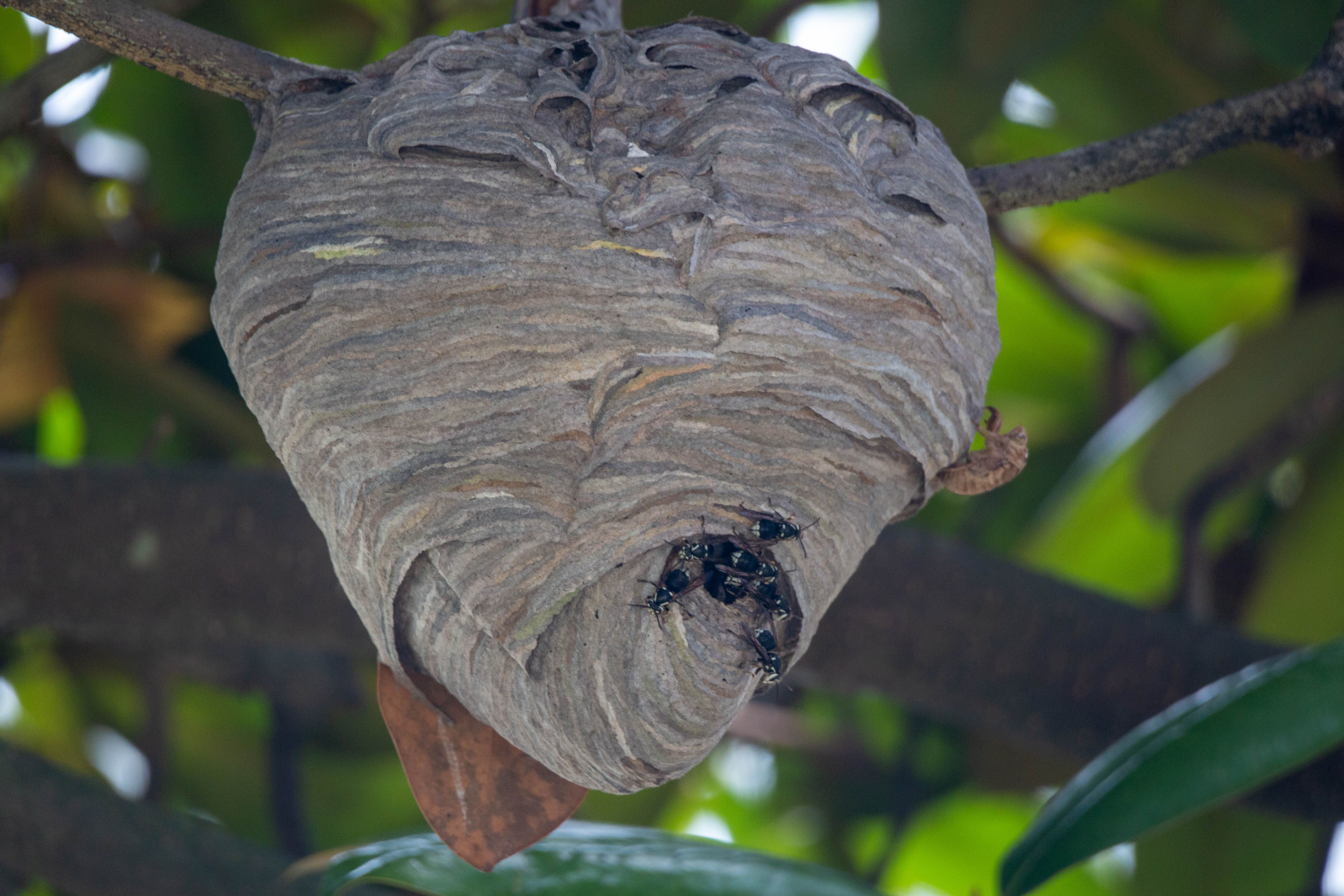
Hornet nests near walkways and play areas should be handled by a pro. We remove them safely.

Text a photo and we'll tell you what it is before you spend anything. Ground nests are covered on our ground bee page.
Store sprays rarely reach the colony inside a wall and leave dead bees and honey behind.
Plugging the hole traps bees inside. They may find a new way out, sometimes into your living room.
Water breaks the cluster apart and turns calm bees into angry ones.
Never try to smoke bees out of a wall, porch roof or chimney.
The kindest and safest option is to leave them alone and call. Honey bees are important pollinators, and relocation gives them a second chance.
Every job is different, so we give a free quote once we know what we're dealing with. The main factors:
| Factor | Usually simpler | Usually more involved |
|---|---|---|
| Swarm or colony | A fresh swarm on a branch or fence | An established colony with comb and honey |
| Location | Low, out in the open | Inside a wall, soffit, ceiling or chimney |
| Height and access | Reachable from the ground | Second story, steep roof, tight spot |
| How long they've been there | A day or two | Months or more, a lot of comb |
| Afterward | Nothing to close up | Opening and gap to seal after removal |
Call or text 973-510-2585 with a photo and a description of where the bees are. That's usually enough for us to explain your options.
Only honey bees are relocated. Yellow jackets, paper wasps and hornets don't make honey, can't be moved to a hive, and can sting over and over. Yellow jackets in particular often nest in the ground or inside walls and can get very aggressive in late summer, when their nests are biggest.
For those nests we treat and remove them. With its tree-lined streets and South Mountain Reservation close by, South Orange gets plenty of nests in trees, shrubs, sheds and under porch roofs. If a nest is near a door, a play set or a walkway, don't wait. Same-day service is often available for stinging insect nests in Essex County.
Related pages: emergency bee and wasp removal, carpenter bees drilling into wood, and other pests we treat in town, like roaches in South Orange and mice and rats in South Orange.
Tell us where the bees are and send a photo if you can. We'll tell you what they are, whether they can be relocated, and give you a free quote.
🔒 Your info stays private · Hablamos español.
No, not when they can be relocated. We work with a local beekeeper so honey bee swarms and colonies are collected alive and moved to a hive. Wasps, hornets and yellow jackets are different: they can't be relocated, so we treat and remove those nests.
Often only a few hours to a couple of days while scout bees look for a new home. The problem is where they go next. If they choose a wall, soffit or chimney on your house, you'll have a colony to deal with, so it's best to call while the swarm is still out in the open.
Swarms are usually calm because they have no hive or honey to protect yet. Still, keep kids and pets away, don't disturb the cluster, and never spray it. Anyone allergic to stings should stay inside. If someone has trouble breathing after a sting, call 911.
Look for a steady line of bees going in and out of the same gap all day, a humming sound behind the wall, or bees showing up inside near lights or outlets. In hot weather you may also see stains or notice a sweet smell. Text us a short video and we'll take a look.
We don't recommend it. Spray rarely reaches the whole colony, and the dead bees, wax and honey left behind can melt, stain walls and attract other insects. For honey bees, relocating the colony and its comb with a beekeeper is the better fix.
It depends on whether it's a swarm or an established colony, how high and hidden it is, and how long the bees have been there. A swarm on a low branch is a much smaller job than a colony inside a wall. We give a free quote once we see photos or the spot.
The same bees won't, but the spot can attract a new swarm if the gap stays open and the old comb scent is left behind. That's why we recommend sealing the opening after the bees are removed. Ask us about closing up the area for your home.
Bumble bees nest in small numbers and are often fine to leave alone if they're out of the way. Carpenter bees drill holes in wood trim, decks and fascia. Text us a photo and we'll explain your options; see our carpenter bee page for more.
Yes. Essex County is one of the four core counties we serve from our base in Garfield, along with Bergen, Passaic and Hudson. Same-day service is often available. Call or text 973-510-2585.
Sí. Trabajamos con un apicultor local para reubicar las abejas de miel vivas en lugar de exterminarlas. Las avispas y los avispones sí se eliminan. Hablamos español. Mande una foto por texto al 973-510-2585 y le decimos qué tipo de abeja es.
We serve South Orange and the rest of Essex County, plus Bergen, Passaic and Hudson, from our base in Garfield.
Updated November 2026 by the Silver Bullet Pest Control team, Garfield, NJ • NJ License 90568B