
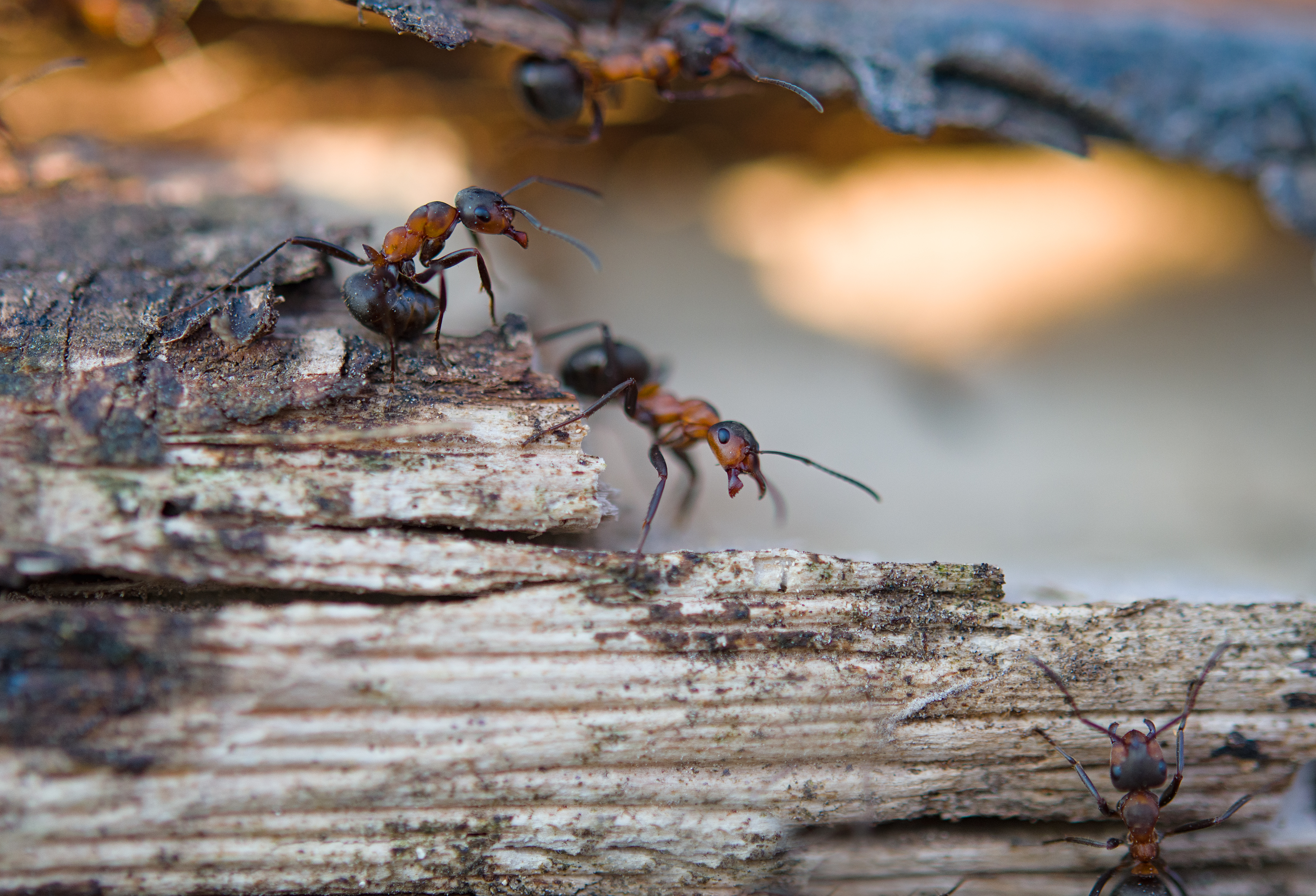
More ants at first
- Busy trails near the bait
- Ants seem to multiply
- Normal — they're feeding
Seeing more ants right after baiting is normal. Workers are recruiting nestmates to the bait. Leave them alone and don't spray or wipe the bait spots.
 Silver Bullet Pest Control
Endless lines of tiny brown ants along the counter, the windowsill and the baseboard — and they come right back after you wipe them up? People often call these Argentine ants. Silver Bullet Pest Control identifies what you really have, finds where the colony is living and treats it so the trails stop for good.
4.9 stars on Google • NJ License 90568B • 15+ years • Serving all of Passaic County • Hablamos español
Text a close-up photo of one ant (next to a coin helps) to 973-510-2585 and we'll tell you what it is.
You get rid of Argentine-type trailing ants by identifying the species, following the trails back to the nests and using slow-acting baits the workers carry home to the queens, because spraying the trail only scatters the colony. In Wanaque and the rest of Passaic County, the ant people call an Argentine ant is usually the odorous house ant, which trails and nests the same way. Silver Bullet Pest Control, NJ License 90568B, identifies the ant, finds the nests and treats them. Free quotes — call or text 973-510-2585.
The Argentine ant is a small, plain brown ant famous for huge, busy trails and colonies with many queens. It's a warm-climate species, and it is not commonly established outdoors in North Jersey — our winters are hard on it. So when a Wanaque homeowner tells us they have Argentine ants, we look closely before we treat.
Most of the time the ant turns out to be the odorous house ant, a native species that behaves almost exactly like the Argentine ant: thin trails that run for yards, many queens, many small nests, and a habit of moving the whole colony when it's disturbed. Other times it's pavement ants or, in spring, termite swarmers.
Why does the name matter? Because the treatment depends on the species. Baits that one ant loves, another ignores. A spray that knocks down one kind can split another into five new nests. Getting the ID right is the first thing we do on every ant job.
Quick test: crush one ant on a paper towel and smell it. A sharp rotten-coconut or sweet chemical smell points to the odorous house ant. Argentine ants have only a faint, musty smell.
All of these show up in Passaic County homes as small ants in lines:
| Ant | Size & color | Trail and nest | Tell-tale sign |
|---|---|---|---|
| Argentine ant | Tiny, light to medium brown, all one color | Wide, busy trails; many queens; nests in mulch, soil and wall gaps | Rare outdoors in North Jersey; faint musty smell |
| Odorous house ant | Tiny, dark brown to black | Long thin trails to sweets and water; many shallow nests | Rotten-coconut smell when crushed |
| Pavement ant | Small, dark brown to black, grooved head | Under slabs, walkways and patios | Little piles of sand along cracks |
| Pharaoh ant | Very tiny, yellowish-tan | Indoors in warm wall voids, near pipes and outlets | Common in larger heated buildings |
| Termite swarmer | Dark body, four equal pale wings | Comes out of wood or a foundation crack in spring | Straight antennae, no pinched waist |
Can't tell? Put a few on clear tape and text us a photo. If they look like termites, our Passaic County termite page explains what comes next.
Trailing ants like these don't have one queen in one nest. Kill a few hundred workers and the queens simply replace them.
One colony can live in a dozen spots at once — under mulch, beneath a stone wall, inside a wall void — linked by trails.
When a nest is sprayed or disturbed, groups of workers and queens walk off and start new nests nearby. Sprays can make the problem bigger.
Heavy rain floods outdoor nests and drives ants inside. Dry spells send them looking for sinks, pet bowls and bathrooms.
That's why the fix is a slow bait the workers share with the queens, not a fast spray on the trail.
Wanaque — including the Haskell section — sits at the edge of the Highlands, with the Wanaque Reservoir to the north, wooded hillsides, and lake and stream neighborhoods. A lot of homes back up to trees, have stone walls and big mulch beds, and sit on sloped lots where water runs toward the foundation. All of that is good ant habitat.
What we tend to see on Wanaque ant jobs:
Wanaque is in the northern part of our service area, so we schedule visits up Route 287 from our base in Garfield. Call or text with a photo and we'll set a time that works.
This page also covers trailing-ant calls from the rest of Passaic County. The ant may be the same, but the house usually isn't:
Prefer Spanish? Read control de hormigas — hablamos español.
We confirm the species on the first visit and rule out termites. If we see carpenter ants too, we plan for both.
Inside and out: counters, sinks, windows, the foundation, mulch beds, stone walls, patios and the base of trees. Trails point to the nests.
We place slow-acting baits right on the active trails so workers carry them home and share them with the queens.
Where it makes sense, we treat nest sites and the foundation edge outdoors, and point out mulch, branches and soil touching the house.
Trails should thin out over days, not hours. If a trail keeps going, we come back, swap the bait or treat the spot it's coming from.
For year-round protection, ask about recurring home pest control, which comes with a 100% satisfaction guarantee.
Seeing more ants right after baiting is normal. Workers are recruiting nestmates to the bait. Leave them alone and don't spray or wipe the bait spots.

As the bait works through the colony, the trails thin and stop. Big colonies with many nests take longer than one small nest.
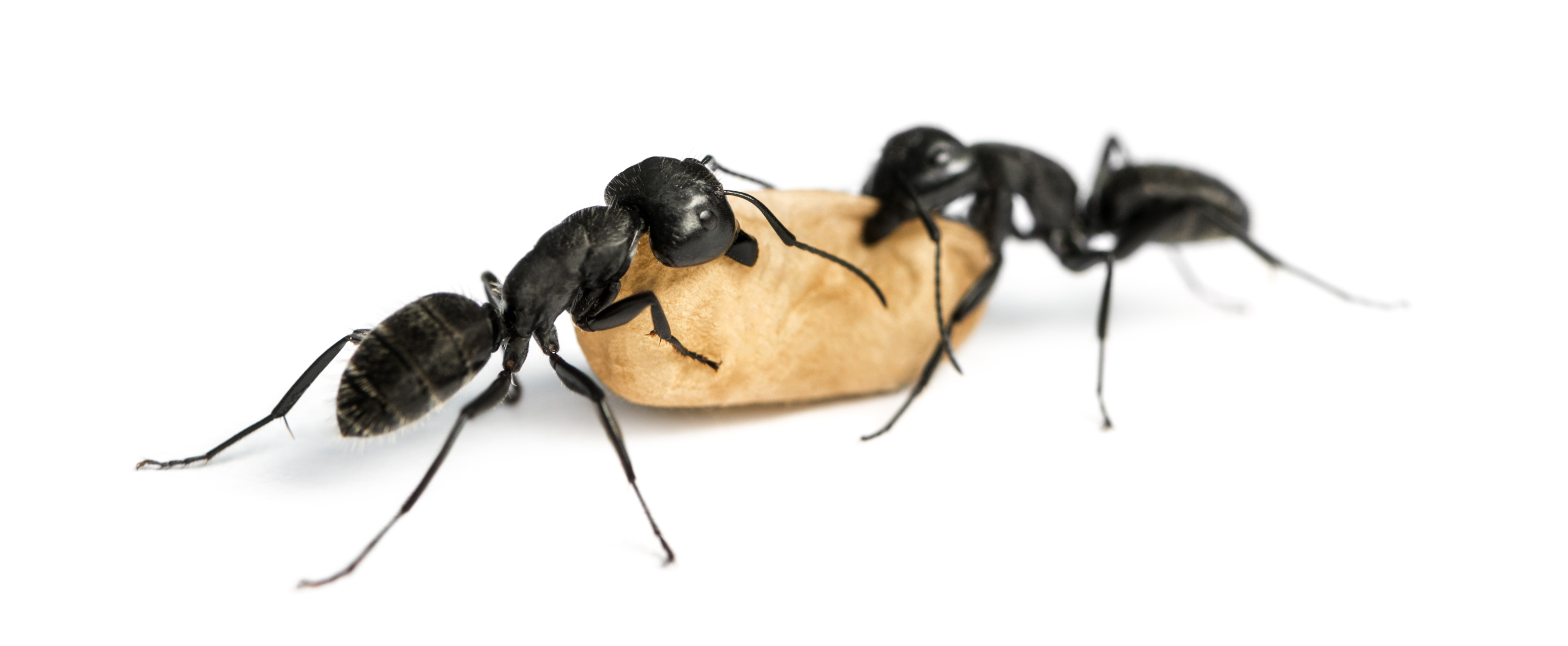
A new trail usually means a nest we haven't reached yet, or a different species. Call or text and we'll check it.
Store-bought baits can help with a small problem, but don't mix them with sprays, and if the trails are still there after a week or two, call us.
Quotes are free. These are the main things that change the scope of an ant job:
| Factor | Smaller job | Bigger job |
|---|---|---|
| Species | One kind of small ant | Small ants plus carpenter ants |
| Nests | A few, outdoors | Many nests, some inside walls |
| Property | Single-family home | Multi-family building or food business |
| Yard | Little mulch, dry soil | Heavy mulch, stone walls, wet slopes |
| Follow-up | One visit | Return visits or recurring service |
Text a photo of the ant and tell us where you see the trails: 973-510-2585.
Send a close-up photo of one ant and tell us where the trails are. We'll identify it and explain the plan.
🔒 Your info stays private · Hablamos español.
Argentine ants are a warm-climate species and are not commonly established outdoors in North Jersey. Most trailing ants called Argentine ants here are odorous house ants, which look and act very similar.
They are tiny, light to medium brown ants, all one color, that travel in wide, busy trails. Odorous house ants are a little darker and smell like rotten coconut when crushed.
Trailing ants have many queens and many nests, so a large number of workers can show up at once, especially after rain or during dry weather.
Spraying kills the workers you see but not the queens, and it can make the colony split into new nests nearby. Baits work better because workers carry them back to the queens.
Most trails thin out within several days to two weeks after baiting. Large colonies with many nests can take longer and may need a follow-up visit.
Yes. We serve Wanaque, including Haskell, along with Wayne, Passaic, Paterson and the rest of Passaic County from our base in Garfield.
In spring, winged termites are often mistaken for flying ants. Termites have straight antennae, a thick waist and four equal wings — text us a photo if you're not sure.
Small trailing ants don't damage wood, but carpenter ants hollow out damp wood to nest. If you see large black ants or sawdust piles, tell us.
We explain where and how we treat and any precautions before we start, and baits are placed in protected spots.
Yes. Silver Bullet Pest Control holds NJ License 90568B, has over 15 years of experience and 4.9 stars on Google.
Sí, hablamos español. Mande una foto de la hormiga al 973-510-2585.
From our base in Garfield we serve Wanaque and towns across Passaic County.
Real photos from our recent jobs. We show only the street and town, never the customer's exact address.

Pigeon Net Install

Rat & mouse control for a home on Mckinley St in Passaic, NJ by Silver Bullet Pest Control.

Rat & mouse control for a home on Mckinley St in Passaic, NJ by Silver Bullet Pest Control.

Rat & mouse control for a home on Marconi St in Clifton, NJ by Silver Bullet Pest Control.

Bird & pigeon control for a home on Howe Ave in Passaic, NJ by Silver Bullet Pest Control.

Bee & wasp removal for a home on Paulison Ave in Passaic, NJ by Silver Bullet Pest Control.
Wallington, NJClifton, NJGarfield, NJWood-Ridge, NJRutherford, NJCarlstadt, NJHasbrouck Heights, NJNutley, NJLodi, NJLyndhurst, NJ
Updated November 2026 by the Silver Bullet Pest Control team, Garfield, NJ • NJ License 90568B