Silver Bullet Pest Control logoSilver Bullet Pest Control
Ants Β· Chatham Township & Chatham Borough Β· Morris County

Argentine Ant Control in Chatham Township, NJ

A busy line of tiny brown ants running along the counter, up the dishwasher and into the wall? Plenty of Chatham homeowners search for β€œArgentine ants” when they see a trail like that. Silver Bullet Pest Control starts by identifying the ant you actually have β€” because in North Jersey it is usually a different, native ant β€” and then treats the colony the way that species needs.

4.9 stars on Google β€’ NJ License 90568B β€’ 15+ years β€’ Serving Morris County by appointment β€’ Hablamos espaΓ±ol

Text a close-up photo of a few ants (next to a coin is perfect) to 973-510-2585 and we'll tell you what they are.

Do Argentine ants live in Chatham Township, NJ?

True Argentine ants are uncommon in Chatham Township and the rest of North Jersey, and most big indoor ant trails here turn out to be odorous house ants, a native ant that forms the same kind of fast, crowded trails. Silver Bullet Pest Control identifies the ant first, finds where the colony is nesting, and uses a bait-based plan that matches the species instead of spraying the trail. We serve Chatham Township and Chatham Borough with visits scheduled ahead. NJ License 90568B, 4.9 stars on Google, free quote. Call or text 973-510-2585.

Is it really an Argentine ant? Probably not β€” and that's good news

Argentine ants come from South America and have spread through warm parts of the world, including California and the Southeast. They are famous for enormous β€œsupercolonies” with many queens, where neighboring nests cooperate instead of fighting. That reputation is why the name gets searched so often.

New Jersey winters are hard on them. Outdoors, Argentine ants have a tough time holding on in Morris County, so when they do turn up here it is usually somewhere warm and sheltered β€” a greenhouse, a heated sunroom full of plants, or a pot that came home from a nursery.

The ant that most often gets mistaken for them is the odorous house ant. It is native, it is everywhere in North Jersey, and it behaves a lot like an Argentine ant: many queens, many nests, long busy trails, and a habit of moving into the house after heavy rain. The good news is that both ants respond to the same basic approach β€” slow-acting bait the workers carry home β€” and both are made worse by the same mistake, which is spraying the trail.

So the name on the search bar matters less than getting the identification right. That is the first thing we do.

The three ants behind most Chatham calls

Two of these make trails across your counter. The third is the one to take seriously for the house itself.

Small dark ants clustered together on a surface
Most likely

Odorous house ants

  • Tiny, dark brown to black
  • Rotten-coconut smell when crushed
  • Run in a zig-zag, often with the rear end raised

The ant behind most β€œArgentine ant” calls. Colonies nest under mulch, stones and siding outside and inside wall voids, and they split into new nests when disturbed.

Close view of small ants gathered in a group
Possible, less common

Argentine ants

  • Light to medium brown, all the same size
  • Very fast, wide, orderly trails
  • Only a faint musty smell when crushed

When we do confirm them, there is usually a warm source nearby: plants brought in for winter, a greenhouse, or new nursery stock. They also β€œfarm” aphids on shrubs for their sweet honeydew.

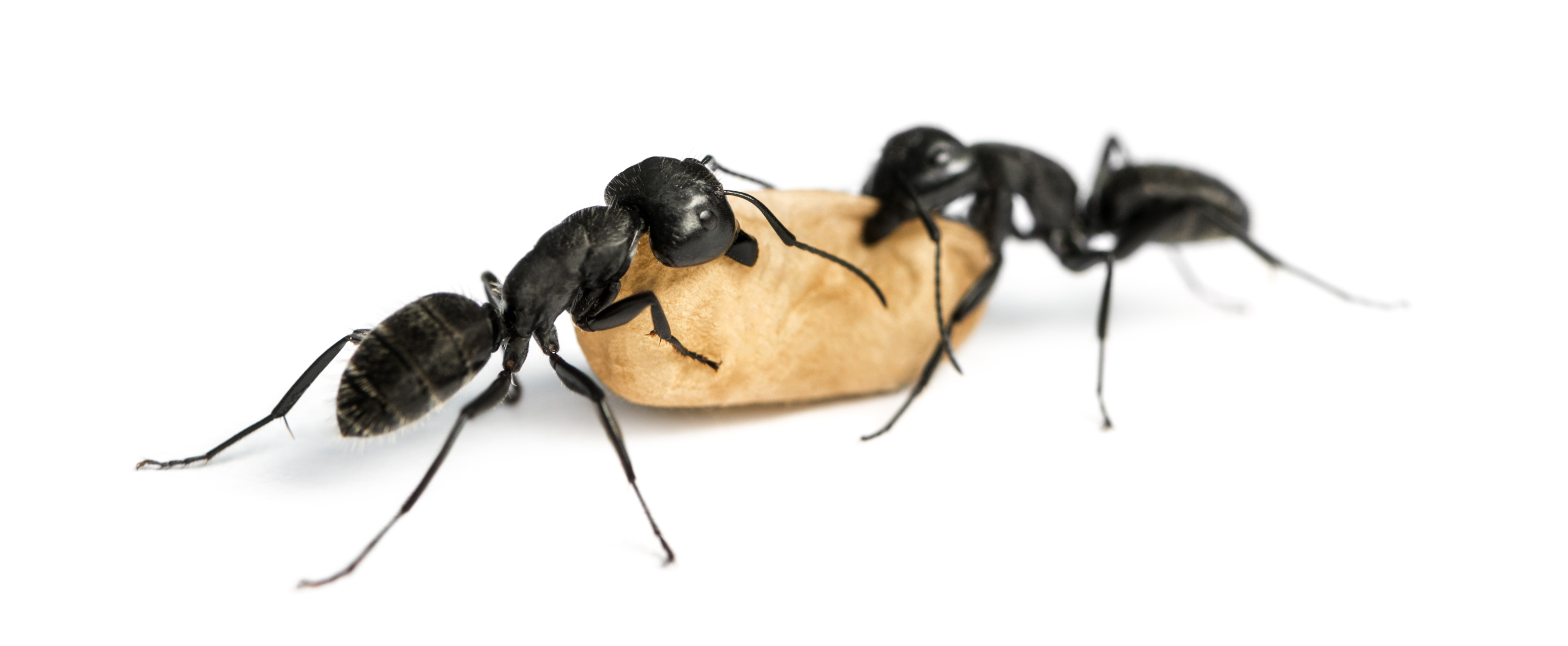
Two large carpenter ants carrying food
Bigger concern

Carpenter ants

  • Large, black or black and red
  • Seen one or a few at a time, often at night
  • Sawdust-like shavings near wood

Not a trailing sugar ant, but worth ruling out. Carpenter ants hollow out damp wood around windows, decks and rooflines β€” a common issue on wooded lots.

Side-by-side: trailing ants you might see in Chatham

You don't need a microscope for most of this. A phone camera zoomed in and your nose will get you most of the way.

AntSize and colorSmell when crushedTrail behaviorWhere it usually nests
Odorous house antAbout 1/8 inch or smaller; dark brown to blackStrong rotten coconutLong trails; scatters erratically when disturbedMulch, under stones and siding, wall voids, under floors
Argentine antAbout 1/8 inch; light to medium brown, all workers the same sizeFaint and musty, not coconutVery fast, dense, orderly; often runs up trees and shrubsWarm, moist spots; potted plants, greenhouses, under slabs
Pavement antAbout 1/8 inch; dark brown to black, grooved headLittle to noneTrails from cracks; swarms of winged ants in spring and summerUnder driveways, patios and slab edges β€” small dirt piles
Pharaoh antVery tiny; pale yellow to light brownLittle to noneThin trails, often near warm pipes and outletsInside heated buildings, in wall voids and cabinets
Little black antVery tiny; shiny jet blackLittle to noneSlow, thin trailsLawns, under stones, rotting wood, sometimes indoors

If what you have looks like the pale, very tiny ant in row four, read our pharaoh ant page before you treat anything β€” pharaoh ants are made much worse by sprays. For dirt piles along the driveway, see pavement ants.

A four-minute kitchen test you can do yourself

1

Look at the color in daylight

Take a few ants to a window or under a bright lamp. Uniform light-to-medium brown leans Argentine. Dark brown to black leans odorous house ant or pavement ant.

2

Crush one and smell it

A sharp, sweet, rotten-coconut smell is the classic sign of an odorous house ant. A faint, musty smell or almost nothing points elsewhere.

3

Wipe a gap in the trail

Swipe a paper towel across the line and watch. Odorous house ants scatter in every direction. Argentine ants tend to re-form a fast, orderly line quickly.

4

Note where the trail goes

Follow it as far as you can: into a wall, out a window frame, down to a potted plant, under the dishwasher. That direction is the most useful clue we get.

Then snap a close-up photo and text it to 973-510-2585 along with what you noticed. It saves time on the visit and helps us bring the right materials.

Ants in Chatham Township and Chatham Borough homes

This page now covers both Chathams. The two towns share a school district and a lot of the same ant problems, but the houses are a little different, and that changes where we look.

  • Wooded lots in the township. Many Chatham Township homes sit among mature trees, with deep mulch beds, stone walls and landscape timbers. Those are prime nesting spots for odorous house ants, and the tree line is where we check for carpenter ants.
  • Close to the Great Swamp and the Passaic River. Damp ground and lots of shade keep outdoor colonies busy for much of the year, and heavy rain pushes them toward foundations and into houses.
  • Older homes in the borough. Houses on the streets around Main Street often have additions, porches and older foundations with plenty of small gaps. Trails tend to come in along plumbing, baseboards and door thresholds.
  • Sunrooms, conservatories and houseplants. Warm rooms full of plants are exactly where a true Argentine ant would survive a New Jersey winter β€” and where odorous house ants like to set up indoor nests in potting soil.
  • Townhouses and attached homes. Ants travel through shared walls, so a trail in one unit often means the nest is next door or under a shared slab.

Silver Bullet Pest Control is based in Garfield. We serve Chatham Township and Chatham Borough on scheduled visits; same-day service is sometimes possible, but plan on booking ahead.

Where ant trails show up in Chatham kitchens and beyond

🍽️

Dishwasher and sink

Moisture plus food scraps. Trails often come up through the gap behind the dishwasher or along the sink cutout, from a nest in the wall or under the floor.

🐾

Pet food and water bowls

A bowl left down all day can feed a whole colony. Ants find it fast and keep the trail running day and night.

πŸͺ΄

Plants brought in for winter

Patio pots carried inside in fall can carry a colony with them. If the trail starts at a planter, that pot is likely the nest.

πŸ›

Upstairs bathrooms

Ants follow pipes and wiring up through walls. A trail on a second-floor vanity usually means water nearby and a nest in the wall below.

Seeing ants indoors in December or January is a useful sign too: it usually means part of the colony is nesting inside the heated house, not just visiting from outside.

How we treat once we know which ant it is

The plan follows the identification. Here is how it usually goes for the ants we see most:

Odorous house ants. We trace the trails back to their nests indoors and out, then place baits along the active routes so workers carry them home to the queens. Outside, we look at mulch depth, stones, shrubs touching siding and other nesting spots around the foundation. Because these colonies have many nests, expect it to take some time and possibly a follow-up visit.

Argentine ants. If we confirm them, we look hard for the warm source β€” houseplants, a greenhouse, new landscape plants β€” and for shrubs covered in aphids or scale, since the ants feed heavily on the honeydew those insects leave. Baits plus fixing those food and shelter sources is the core of the plan.

Carpenter ants. Different ant, different job. We find the nest in damp wood and treat it directly, then point out the moisture problem that attracted them. If the wood is damaged, ask us about repair.

Please don't spray the trail before we come. Store sprays kill the ants you can see, chase the rest into new nests, and make baits less appealing. Wipe trails with soapy water instead.

For homes that want ants handled before they show up every spring, recurring home pest control comes with a 100% satisfaction guarantee.

What to send us for the fastest answer

A good text message often lets us identify the ant before anyone drives out. Send these to 973-510-2585:

  • A sharp close-up of two or three ants, ideally next to a coin or ruler.
  • A wider shot of the trail so we can see how busy it is and where it goes.
  • The smell test result β€” coconut, musty, or nothing.
  • Where and when you see them: which rooms, what time of day, and whether it started after rain or after bringing plants inside.
  • Your town β€” Chatham Township or Chatham Borough β€” so we can plan the visit.

If you see winged insects instead, compare them carefully. Termite swarmers in spring get confused with flying ants all the time; our Chatham Township termite page explains the difference.

Get a Free Ant Control Quote in the Chathams

Text a photo of the ants and tell us where the trail goes. We'll tell you what they are and plan the visit.

Why Chatham homeowners call us about ants

  • A trail of tiny brown ants that keeps coming back
  • Not sure if they're Argentine ants or something else
  • Ants coming out of houseplants or a sunroom
  • Ants inside in winter
  • Store sprays made it worse
πŸ“ž Call 973-510-2585

Request Service

πŸ”’ Your info stays private Β· Hablamos espaΓ±ol.

What's bugging you? - Step 1 of 3

Argentine Ant Questions from Chatham

Are Argentine ants common in Chatham Township?

No. True Argentine ants are uncommon in North Jersey because of the cold winters, and most large trails here are odorous house ants.

How can I tell an odorous house ant from an Argentine ant?

Crush one and smell it: odorous house ants give off a strong rotten-coconut smell, while Argentine ants smell faintly musty at most. Argentine ants are also a lighter, more even brown.

Does it matter which one I have if they both make trails?

Yes, because it tells us where to look for the nest and what is feeding the colony. Both respond to baiting, but an Argentine ant problem usually points to plants or a warm, sheltered spot.

Can Argentine ants survive a New Jersey winter?

They have a hard time outdoors here, which is why confirmed cases usually involve greenhouses, heated sunrooms or plants brought indoors.

Why are ants coming out of my houseplant?

The colony is probably nesting in the potting soil. Don't drench the pot with spray; text us a photo and we'll tell you how to handle it.

Do these ants bite or damage my house?

Odorous house ants and Argentine ants don't sting, rarely bite and don't damage wood. Carpenter ants are the ones that can hollow out damp wood.

Why didn't the spray from the hardware store work?

Sprays kill the workers you see but not the queens, and with multi-queen ants they can split the colony into more nests.

How long until the trail is gone?

Bait treatments usually take days to a couple of weeks as workers carry bait back to the nests. Homes with several nests may need a follow-up visit.

Do you also cover Chatham Borough?

Yes. This page covers both Chatham Township and Chatham Borough, and visits are scheduled ahead.

Are you licensed?

Yes. Silver Bullet Pest Control holds NJ License 90568B, has over 15 years of experience and 4.9 stars on Google.

ΒΏAtienden en espaΓ±ol?

SΓ­, hablamos espaΓ±ol. Mande una foto de las hormigas al 973-510-2585 y le decimos quΓ© son.

Ant and pest help near Chatham

We serve Chatham Township, Chatham Borough and other Morris County towns on scheduled visits from our Garfield base.

Our service area

Union County

973-510-2585
  • Berkeley Heights
  • Clark
  • Cranford
  • Elizabeth
  • Fanwood
  • Garwood
  • Hillside
  • Kenilworth
  • Linden
  • Mountainside
  • New Providence
  • Plainfield
  • Rahway
  • Roselle
  • Roselle Park
  • Scotch Plains
  • Springfield
  • Summit
  • Union
  • Westfield

Morris County

973-510-2585
  • Boonton
  • Butler
  • Cedar Knolls
  • Chatham
  • Denville
  • Dover
  • East Hanover
  • Florham Park
  • Hanover
  • Kinnelon
  • Lincoln Park
  • Madison
  • Mendham
  • Montville
  • Morris Plains
  • Morristown
  • Mountain Lakes
  • Parsippany
  • Pequannock
  • Randolph
  • Riverdale
  • Rockaway
  • Roxbury
  • Whippany

Updated November 2026 by the Silver Bullet Pest Control team, Garfield, NJ β€’ NJ License 90568B

Scroll to Top