Silver Bullet Pest Control logoSilver Bullet Pest Control
Wildlife Β· Raccoons Β· North Jersey

Raccoons in the Attic in NJ: Signs, Removal, Cleanup and Repair

Loud thumps overhead at night, a torn soffit, or a smell coming through the ceiling? A raccoon in the attic is one of the most destructive wildlife problems a North Jersey home can have. Silver Bullet Pest Control gets the raccoon (and any kits) out, seals the entry, cleans the attic, replaces soiled insulation and repairs the roofline β€” one licensed company from the first visit to the last.

4.9 stars on Google β€’ NJ License 90568B β€’ Licensed by NJ Fish & Wildlife for wildlife work β€’ 15+ years β€’ Based in Garfield β€’ Hablamos espaΓ±ol

Spring call? Tell us if you hear soft chirping or crying sounds β€” that usually means babies. Call or text 973-510-2585.

What should I do about raccoons in the attic in NJ?

If you have raccoons in the attic in NJ, don't seal the hole or try to trap the animal yourself; have a licensed wildlife company confirm whether a mother and kits are inside, remove them humanely, and then seal the entry for good. After removal, the attic usually needs HEPA cleanup of the latrine, insulation replacement and repair of the torn soffit, fascia or vent. Silver Bullet Pest Control handles all of it, licensed by the NJ Division of Fish and Wildlife. Call or text 973-510-2585.

Rodent Proofing & Exclusion – Quoted Separately
Rodent-proofing and exclusion services are quoted separately from pest control treatments and protection plans. Every property has unique entry points, structural conditions, and sealing requirements. Every home is built differently, so we use the materials each one needs, such as steel mesh, hardware cloth, sheet metal, concrete and sealant, on an as-needed basis. Following an inspection, we provide a customized estimate based on the specific work needed to help prevent rodents from entering your property.

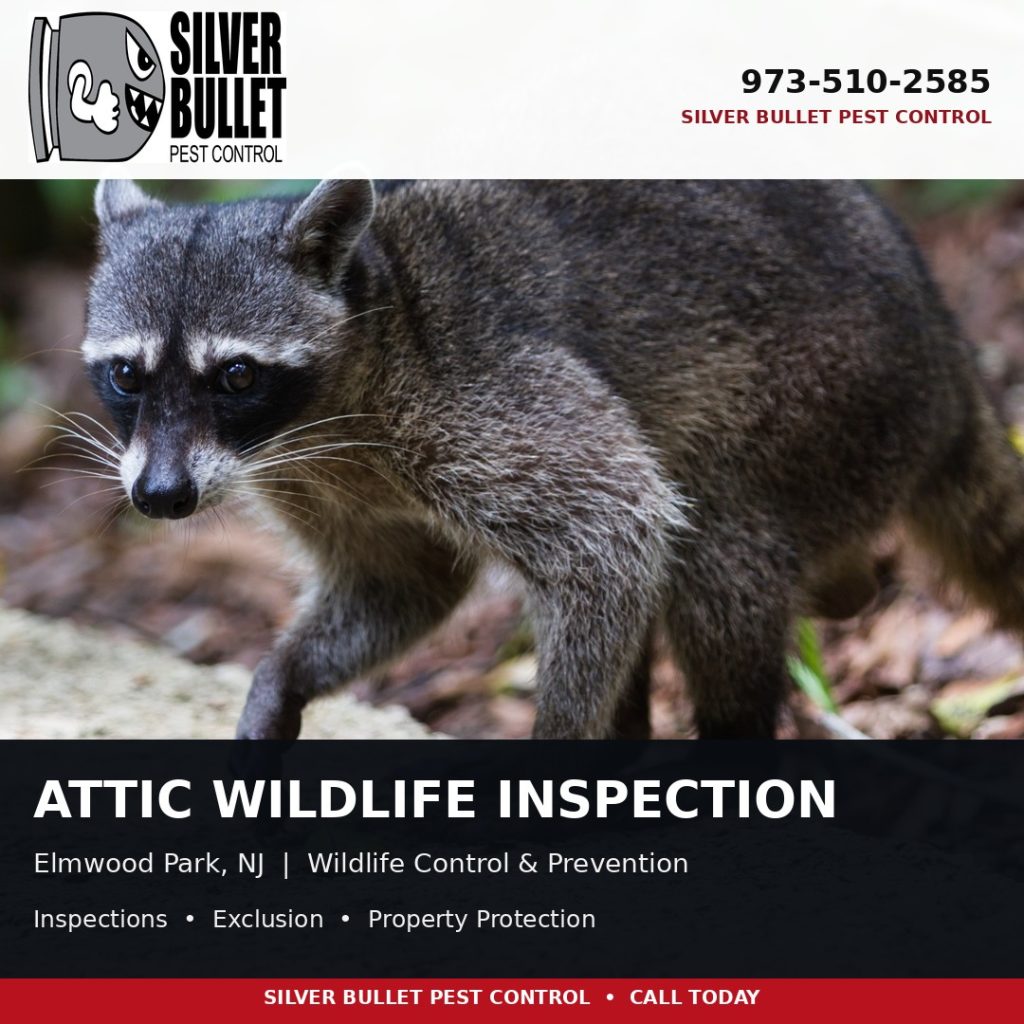
Signs of raccoons in your attic

Raccoons aren't subtle. Most homeowners notice at least two of these before they call:

Technician inspecting an attic for raccoon activity
Sounds

Heavy walking and thumping

  • Thuds and walking sounds at night
  • Noise around dusk and before dawn
  • Chirping or crying sounds in spring

A raccoon weighs far more than a squirrel or a rat, so it sounds like a person or a big dog moving overhead. Activity usually starts around dusk when the raccoon leaves and again in the early morning when it comes back.

Raccoon damage and entry area found during an attic wildlife inspection
Outside

Torn roof edges and vents

  • Ripped soffit or fascia boards
  • Bent or torn roof and gable vents
  • Muddy prints on siding or gutters

Raccoons don't need an existing hole. They are strong enough to pull back soft soffit panels, tear roof vents and peel shingles at a weak corner. Many entries are at the spot where a lower roof meets a wall.

Attic insulation flattened and soiled by raccoons
Inside

Crushed insulation and a latrine

  • Trampled paths through insulation
  • A pile of large droppings in one area
  • Stains or odor on the ceiling below

Raccoons pick one corner of the attic as a toilet and use it every day. Over weeks that latrine soaks into the insulation and can stain the drywall below, which is often the first thing people notice from inside the house.

Raccoon, squirrel or rat? How to tell what's up there

The noise and the timing usually tell the story. Here's a quick comparison of the three animals we find most often in North Jersey attics:

ClueRaccoonGray squirrelRat
SoundHeavy walking, thumps, growlsRunning, scratching, rollingQuick scurrying, gnawing
Time of dayDusk, night and before dawnMorning and late afternoonMostly night
EntryLarge torn opening at the rooflineChewed hole about the size of a fist or smallerSmall gaps, often lower on the house
DroppingsLarge, piled in one latrine spotSmall, scatteredSmall capsule-shaped, along runways
DamageTorn vents, soffits, ductwork, insulationChewed wood, wiring, insulationChewed wiring, nesting in insulation

Still not sure? Text a photo of the droppings or the outside hole to 973-510-2585 and we'll tell you what we think it is. For other animals see squirrels in the attic and mice in the attic.

Mother raccoons and kits in the attic

Most raccoon attic calls in North Jersey come in spring. A pregnant female looks for a dry, warm, quiet place to give birth, and an attic is perfect. The kits are born blind and stay in the den for weeks before they can follow their mother outside.

That changes how removal has to be done:

  • The kits have to come out too. If the mother is removed or locked out and the babies are left behind, they will cry for days and die in the attic. That leads to odor, flies and a much bigger cleanup.
  • A locked-out mother will fight to get back in. A female raccoon separated from her kits will tear new holes in the roof, sometimes in a single night.
  • The kits have to be found. They are often tucked deep in the insulation, under floor boards or at the far end of a low eave, so we search the attic by hand.

When kits are present, the plan changes: the family has to leave together, so we explain the options that fit your attic and NJ wildlife rules before anything is sealed. Only when every raccoon is out is the entry closed.

Don't seal the hole and don't set off a fogger. Sealing traps the family inside, and repellents can drive the mother to rip a new opening. Call first so the job is done in the right order.

Read more about baby squirrel and raccoon season in NJ.

How raccoon removal from an attic works

1

Inspection inside and out

We look at the whole roofline, chimney, vents and soffits, then go into the attic to find the den, the latrine, any kits and the damage.

2

Remove the raccoons

Depending on what we find, we use one-way doors and a plan that gets the whole family out, kits included. We're licensed by the NJ Division of Fish and Wildlife for this work.

3

Seal the entry for good

Once the attic is empty, the entry is closed with heavy-duty materials a raccoon can't pull apart, and other weak spots on the roof are reinforced.

4

Clean and restore the attic

Latrine and nesting debris come out with HEPA cleanup and odor control, and soiled insulation is removed and replaced.

5

Repair the roofline

We repair torn soffits, fascia and trim ourselves, so you don't need a second contractor to finish the job.

For the outside of the house after removal, see raccoon proofing in NJ. Need help tonight? Our emergency raccoon removal page explains what to do in the meantime.

Health risks of raccoons living in the attic

A raccoon in the attic is more than noise. The biggest concerns are what it leaves behind:

  • Raccoon latrines. Raccoon droppings can carry raccoon roundworm, a parasite whose eggs can survive in dried droppings for a long time. That's why latrines should never be swept or vacuumed with a household vacuum, which can stir up dust.
  • Rabies. Raccoons are one of the main wildlife species that carry rabies in New Jersey. Most raccoons in attics are healthy mothers, but none should be handled. If anyone is bitten or scratched, wash the wound and call a doctor and your local health department right away.
  • Fleas, mites and odor. Nesting material holds parasites, and urine-soaked insulation keeps smelling long after the animal is gone.
  • Fire and water damage. Raccoons can tear ductwork, disturb wiring and open roof holes that let rain in. Have an electrician check any wiring that looks chewed or pulled.

Keep kids and pets out of the attic until it has been cleaned, and keep the attic hatch closed.

Raccoon attic cleanup, insulation replacement and repair

Getting the raccoon out is only half the job. These are the four things we do ourselves afterwards:

🧹

HEPA latrine cleanup

Droppings, nesting material and contaminated debris are bagged and removed with HEPA equipment, then the area is treated for odor.

🏠

Insulation removal and replacement

Crushed, soiled insulation is taken out and new insulation goes in, so the attic keeps the house warm and stops smelling.

πŸ”¨

Soffit, fascia and trim repair

Torn roofline wood and panels are repaired so the house looks right and the weak spot is gone.

πŸ›‘οΈ

Vent and roof-edge reinforcing

Roof vents, gable vents and corners near the entry are reinforced so the next raccoon can't use the same spot.

More detail: attic wildlife cleanup and sanitation, attic insulation removal and replacement and wildlife damage repair.

What affects the cost of raccoon removal from an attic

Every attic is different, so we give a free quote after the inspection. These are the main things that change the price:

FactorSimpler jobBigger job
AnimalsOne adult, no kitsA mother with a litter of kits
EntryOne opening, easy ladder accessSeveral openings, steep or high roof
Attic conditionLittle contaminationLarge latrine, soiled insulation throughout
RepairsMinor patchingTorn soffits, fascia, vents or ductwork
PreventionEntry sealed onlyChimney cap, vent guards and roof-edge reinforcing

For a fuller explanation, see raccoon removal cost. Call or text 973-510-2585 to book an inspection.

Get a Free Quote for Raccoon Removal

Tell us what you're hearing, when, and where on the house you've seen damage. We'll inspect the attic and roofline and explain removal, cleanup and repair before any work starts.

Why homeowners call us about raccoons

  • Heavy thumping in the ceiling at night
  • Babies crying in the attic in spring
  • A torn soffit, vent or roof corner
  • A smell or stain on the ceiling
  • A raccoon came back after being chased out
πŸ“ž Call 973-510-2585

Request Service

πŸ”’ Your info stays private Β· Hablamos espaΓ±ol.

What's bugging you? - Step 1 of 3

Raccoons in the Attic: Common Questions

How do I know if I have a raccoon in my attic?

Heavy walking or thumping at dusk and before dawn is the clearest sign, along with a torn soffit, vent or roof corner outside. Inside the attic you'll usually find trampled insulation and a latrine of large droppings in one spot. In spring, soft chirping or crying sounds often mean there are kits.

Will a raccoon leave the attic on its own?

Sometimes for a night, but rarely for good. An attic is safe, dry and warm, and a mother with kits won't abandon them. Waiting usually means more damage and a bigger latrine, so it's better to have the raccoons removed and the entry sealed.

When do raccoons have babies in NJ?

Most raccoon kits in New Jersey are born in spring, and they stay in the den for weeks before they can follow the mother outside. That's why spring is the busiest time for raccoon attic calls and why every spring job starts with a search for kits.

Can I just seal the hole the raccoon is using?

Not until you're sure the attic is empty. Sealing a hole with a raccoon or kits inside traps them, and a mother locked away from her babies will tear a new hole, often in one night. Confirm the attic is empty first, then seal.

Is it dangerous to have raccoons in the attic?

Yes, mainly because of what they leave behind. Raccoon droppings can carry raccoon roundworm, raccoons are a rabies carrier in NJ, and they can tear ductwork and disturb wiring. Don't handle the animal or the droppings yourself.

How long does raccoon removal take?

Many jobs take from a few days to a couple of weeks from inspection to final sealing, depending on whether kits are present and how the adult is removed. Cleanup, insulation replacement and repairs follow once the attic is confirmed empty.

Do you clean up raccoon droppings and replace insulation?

Yes. We remove raccoon latrines and nesting debris with HEPA cleanup and odor control, and we remove and replace soiled attic insulation ourselves.

Do you repair the soffit and fascia the raccoon tore?

Yes. We repair torn soffits, fascia and trim ourselves after the raccoons are out, and we reinforce nearby vents and roof edges so the same spot can't be used again.

Does homeowners insurance cover raccoon damage?

It depends on your policy, so call your insurance company and ask. We can document what we find during the inspection, including photos of the entry and the attic damage, which can help with a claim.

What areas do you serve for raccoon removal?

We're based in Garfield and serve Bergen, Passaic, Essex and Hudson counties. We also serve towns in Morris and Union counties; those visits are scheduled ahead.

ΒΏAtienden mapaches en el Γ‘tico en espaΓ±ol?

SΓ­. Hablamos espaΓ±ol. Si escucha golpes fuertes en el techo de noche, llame o mande un texto al 973-510-2585 y no selle el agujero antes de que revisemos.

Is rodent proofing included in the price?

Rodent-proofing and exclusion services are quoted separately from pest control treatments and protection plans. Every property has unique entry points, structural conditions, and sealing requirements. Every home is built differently, so we use the materials each one needs, such as steel mesh, hardware cloth, sheet metal, concrete and sealant, on an as-needed basis. Following an inspection, we provide a customized estimate based on the specific work needed to help prevent rodents from entering your property.

Raccoon attic removal across North Jersey

From our base in Garfield we remove raccoons from attics and repair the damage throughout Bergen, Passaic, Essex and Hudson counties.

Our service area

Union County

973-510-2585
  • Berkeley Heights
  • Clark
  • Cranford
  • Elizabeth
  • Fanwood
  • Garwood
  • Hillside
  • Kenilworth
  • Linden
  • Mountainside
  • New Providence
  • Plainfield
  • Rahway
  • Roselle
  • Roselle Park
  • Scotch Plains
  • Springfield
  • Summit
  • Union
  • Westfield

Morris County

973-510-2585
  • Boonton
  • Butler
  • Cedar Knolls
  • Chatham
  • Denville
  • Dover
  • East Hanover
  • Florham Park
  • Hanover
  • Kinnelon
  • Lincoln Park
  • Madison
  • Mendham
  • Montville
  • Morris Plains
  • Morristown
  • Mountain Lakes
  • Parsippany
  • Pequannock
  • Randolph
  • Riverdale
  • Rockaway
  • Roxbury
  • Whippany

Updated November 2026 by the Silver Bullet Pest Control team, Garfield, NJ β€’ NJ License 90568B

Scroll to Top