
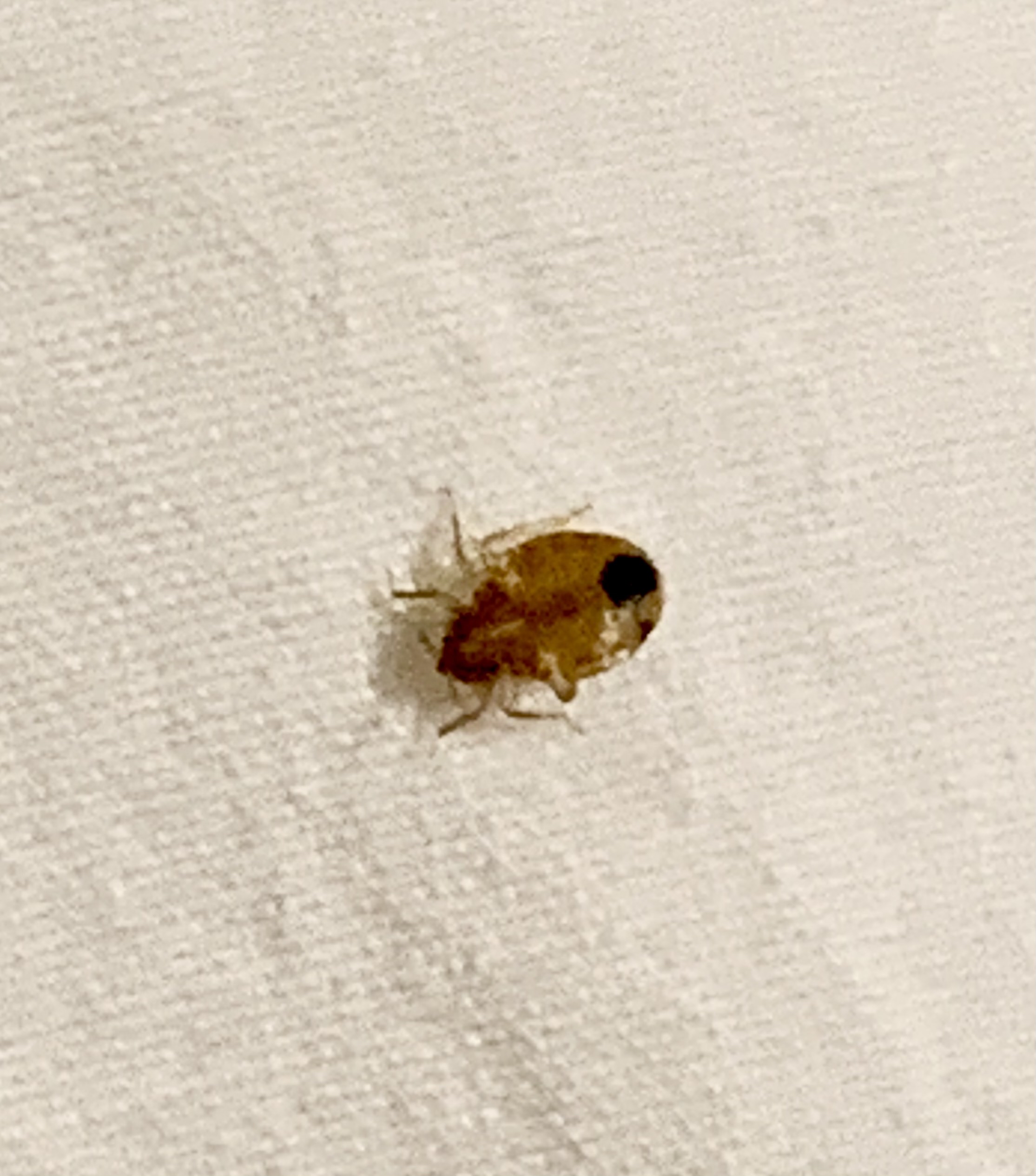
Live bed bugs
- Flat, oval, reddish brown
- About apple-seed size as adults
- Young ones pale and tiny
Most often found in seams and folds, alone or in small clusters. After feeding they look darker and rounder.
 Silver Bullet Pest Control
Bites after falling asleep on the sofa, or dark spots along the cushion seams? Bed bugs don't only live in beds. Couches, recliners, sleeper sofas, nightstands and dressers are some of their favorite hiding places. Here's how to check your furniture, what you can save, how to get rid of something safely, and how professional treatment handles furniture.
4.9 stars on Google • NJ License 90568B • 15+ years • Based in Garfield • Hablamos español
Text a photo of the spots or the bug to 973-510-2585 and we'll tell you if it looks like bed bugs.
Yes, bed bugs can live in a couch, and they often do when someone sleeps or naps on it. They hide in the seams, under cushions, inside the frame, in the fabric under the base and in the folding parts of recliners and sleeper sofas. Most couches can be treated professionally, often with heat, rather than thrown out, and throwing an infested couch out the wrong way spreads bed bugs.
Bed bugs want a tight, dark crack close to where a person sits or sleeps for a long time. In furniture, that means:
The welt cord along cushion edges, under the zipper flap and where the arm meets the seat.
The thin fabric dust cover stapled under the base. Bed bugs gather behind it and around the staples.
Folding metal mechanisms, the gaps around footrests and the mattress of a sofa bed.
Joints of nightstands and dressers, drawer runners, screw holes, and the back of the headboard.
Furniture right next to a bed, or any couch someone sleeps on, is the most likely to have them. A couch nobody sleeps on can still get a few bugs if it's in the same room as an infested bed.
A bright flashlight and an old credit card or putty knife help you look into seams and slide bugs out of cracks.
Check every seam, zipper and tag on each cushion, top and bottom. Look in the crease where the back meets the seat.
Check the arm seams, skirt and the corners of the frame where fabric is stapled to wood.
Tip the couch and look at the dust cover underneath, around legs and staples. Dark spots there are a strong sign.
Look at end tables, the floor and baseboards under the couch, throw pillows and blankets.
Put a bug on clear tape or in a sealed bag and text a photo to 973-510-2585. Correct ID matters before treatment.
Don't drag the couch to another room or outside to inspect it. Moving it can shake bugs off along the way.
Most often found in seams and folds, alone or in small clusters. After feeding they look darker and rounder.

Dark spots that smear when you rub them with a damp cloth are bed bug droppings. Rusty spots are small blood stains.

Bites alone can't confirm bed bugs, since many people don't react. But bites tied to time on the couch are a strong clue.
Most people's first instinct is to throw it out. Often, that's not necessary, and it doesn't solve the problem by itself. A rough guide:
| Situation | Usually | Why |
|---|---|---|
| Light activity, couch in good shape | Treat it | Seams and frame can be treated; heat reaches hiding spots |
| Heavy activity, couch in good shape | Treat it, then re-inspect | Often salvageable with heat; follow-up confirms |
| Torn fabric, broken frame, bugs inside the stuffing | Consider disposal | Too many hiding places to reach well |
| Recliner or sleeper with a mechanism | Treat carefully | Mechanisms hide bugs but can be treated; ask us |
| Inexpensive or old furniture you planned to replace | Your choice | If you toss it, wrap and mark it first |
| Bugs also in the bed and bedroom | Treat the whole area | Throwing out the couch alone won't end it |
The key point: getting rid of one piece of furniture almost never ends a bed bug problem, because bugs are usually also in nearby furniture, carpet edges, outlets and the bed. Treat the room first, then decide.
These steps help contain the problem and make treatment work better. They won't usually wipe out bed bugs in a couch on their own.
Wondering about store products? Read does bed bug spray work?
A licensed technician inspects the couch, the bed and the furniture around both, so the plan covers every spot the bugs are using, not just the piece you found them in.
Compare the methods in heat vs. chemical bed bug treatment, see what affects bed bug treatment cost, and get ready with our prep checklist.
If you decide the couch has to go, how you remove it matters a lot, especially in apartment buildings:
In an apartment, tell your landlord or manager first. Our bed bugs in apartments guide explains why neighboring units matter.
Check seams, the underside and joints with a flashlight. Walk away from anything with dark spots or shed skins.
Couches and mattresses left on the curb are a common way bed bugs travel between homes.
Vacuum and wipe used wood furniture before bringing it inside, and run fabrics through a hot dryer.
If you're unsure, keep a used piece in a garage or porch and check it again before bringing it in.
Coming home from a trip with bites? See bed bugs from a hotel for what to do with luggage and clothes.
Tell us what furniture is involved and send a photo of what you found. We'll explain your options and give you a free quote.
🔒 Your info stays private · Hablamos español.
Look for live bugs, dark or rusty spots, pale shed skins and tiny white eggs along cushion seams, zippers, the frame and the fabric under the couch. Bites after napping or sleeping on the couch are another clue, but bites alone can't confirm bed bugs. If you find something, put it on clear tape and text a photo for identification.
Yes. If someone regularly sleeps or naps on a couch, bed bugs can live there and feed without ever reaching a bed. That's common in living rooms where someone falls asleep watching TV. Couches in rooms where nobody rests for long are less likely to be heavily infested, but they still get checked during inspection.
Usually not. Most couches in good condition can be treated, often with heat, which reaches into cushions and frames. Throwing a couch out doesn't end the problem if bugs are also in the bed or nearby furniture, and moving it can spread them. Disposal makes more sense for badly torn or broken furniture with bugs deep inside.
Bed bugs can survive a long time without feeding, often several months and sometimes longer in cool conditions. That's why leaving a couch in an empty room or a garage for a few weeks won't reliably kill them. Treatment, not waiting, is what clears bed bugs from furniture.
Yes, though the folding parts make it harder. Mechanisms, footrest gaps and sofa bed mattresses give bed bugs extra hiding spots. Heat treatment can reach them, and targeted treatment can be applied carefully to the mechanism and frame. Your technician will check whether the piece is worth treating.
Steam can kill bed bugs and eggs it reaches directly, but it often doesn't penetrate deep enough into thick cushions, frames and the fabric under the couch. It can help as part of a plan, not as the whole solution. Be careful with fabrics that steam can damage.
Yes. Smooth leather gives them fewer places to hide on the surface, but they still live in seams, stitching and the frame underneath. Wood furniture has joints, screw holes and drawer runners that bed bugs use, especially nightstands and headboards. Bed bugs don't eat furniture; they just hide in it between meals.
Wrap it completely in heavy plastic, tape the seams, mark it "bed bugs," and take it straight out on the shortest path. Vacuum the route afterward and follow your town's bulk pickup rules so it doesn't sit at the curb. If you're in an apartment, tell your landlord first, and ideally wait until the room has been treated.
Wait until the room has been treated and checked. A new couch brought into a room that still has bed bugs can become infested quickly, and you'll have lost the money. Once treatment is finished and follow-up shows no activity, it's safe to bring in new furniture.
Sí, sobre todo si alguien duerme en el sofá. Se esconden en las costuras, debajo de los cojines y en la tela debajo del mueble. Muchas veces el sofá se puede tratar con calor sin tener que botarlo. Hablamos español. Llame o mande texto al 973-510-2585.
Updated November 2026 by the Silver Bullet Pest Control team, Garfield, NJ • NJ License 90568B