
 Silver Bullet Pest Control
Carpet Beetles vs Bed Bugs: How to Tell and How to Get Rid of Carpet Beetles
Found a small bug in the bed and your heart sank? Before you assume bed bugs, check whether it's a carpet beetle — one of the most common mix-ups we see in North Jersey homes. This guide shows how to tell them apart, why carpet beetles don't bite, and how to get rid of them for good.
Featured on Telemundo 47 • EPA Pesticide Safety Certified • 4.9 Stars on Google • NJ License 90568B
Text us a close-up photo — we'll tell you if it's a carpet beetle or a bed bug.
- ✓ Same-day appointments often available
- ✓ Licensed & insured in NJ
- ✓ Homes & businesses
- ✓ English & Español
How can I tell a carpet beetle from a bed bug?
A carpet beetle adult is a tiny, round, hard-shelled beetle with a mottled white, brown and yellow pattern (or shiny black) that can fly, while a bed bug is a flat, oval, wingless, reddish-brown bug about the size of an apple seed that hides in mattress seams and feeds on blood at night. Carpet beetle larvae look different again: fuzzy, striped and carrot-shaped, and they leave behind shed skins on rugs, closets and bedding. Carpet beetles don't bite, but the hairs on their larvae can irritate skin in some people. If you're not sure what you found, text a photo to Silver Bullet Pest Control at 973-510-2585.
Carpet beetle vs bed bug: side by side
Size alone won't settle it — both are small. Look at shape, color, hair and where you found it:
| Carpet beetle (adult) | Carpet beetle larva | Bed bug | |
|---|---|---|---|
| Size | About 1/16 to 1/8 inch | Up to about 1/4 inch | About 1/4 inch when grown |
| Shape | Round, dome-shaped, hard shell | Long, carrot-shaped, very hairy | Flat and oval; swells after feeding |
| Color | Mottled white, brown and yellow — or shiny black | Brown with lighter bands, bristly | Reddish-brown; nymphs are pale |
| Wings / movement | Has wings and flies; drawn to windows and light | No wings; crawls slowly | No wings; crawls, can't fly or jump |
| What it eats | Pollen outdoors | Wool, silk, fur, feathers, leather, pet hair, lint, dead insects | Human blood |
| Where you find it | Windowsills, light fixtures, on the bed or walls | Under furniture, rug edges, closets, vents, along baseboards | Mattress seams, box spring, headboard, bed frame, sofa seams |
| Signs left behind | Few | Shed skins, holes in wool and fabric | Tiny dark spots, blood stains, shed skins, eggs in seams |
| Bites? | No | No — but hairs can irritate skin | Yes, at night, often in lines or clusters |
The quickest tell: if it's round, patterned and can fly, it's not a bed bug. If it's flat, reddish and hiding in the seam of the mattress, take it seriously and see our bed bug page.
What you might be looking at
These are the three situations that bring most people to this page:
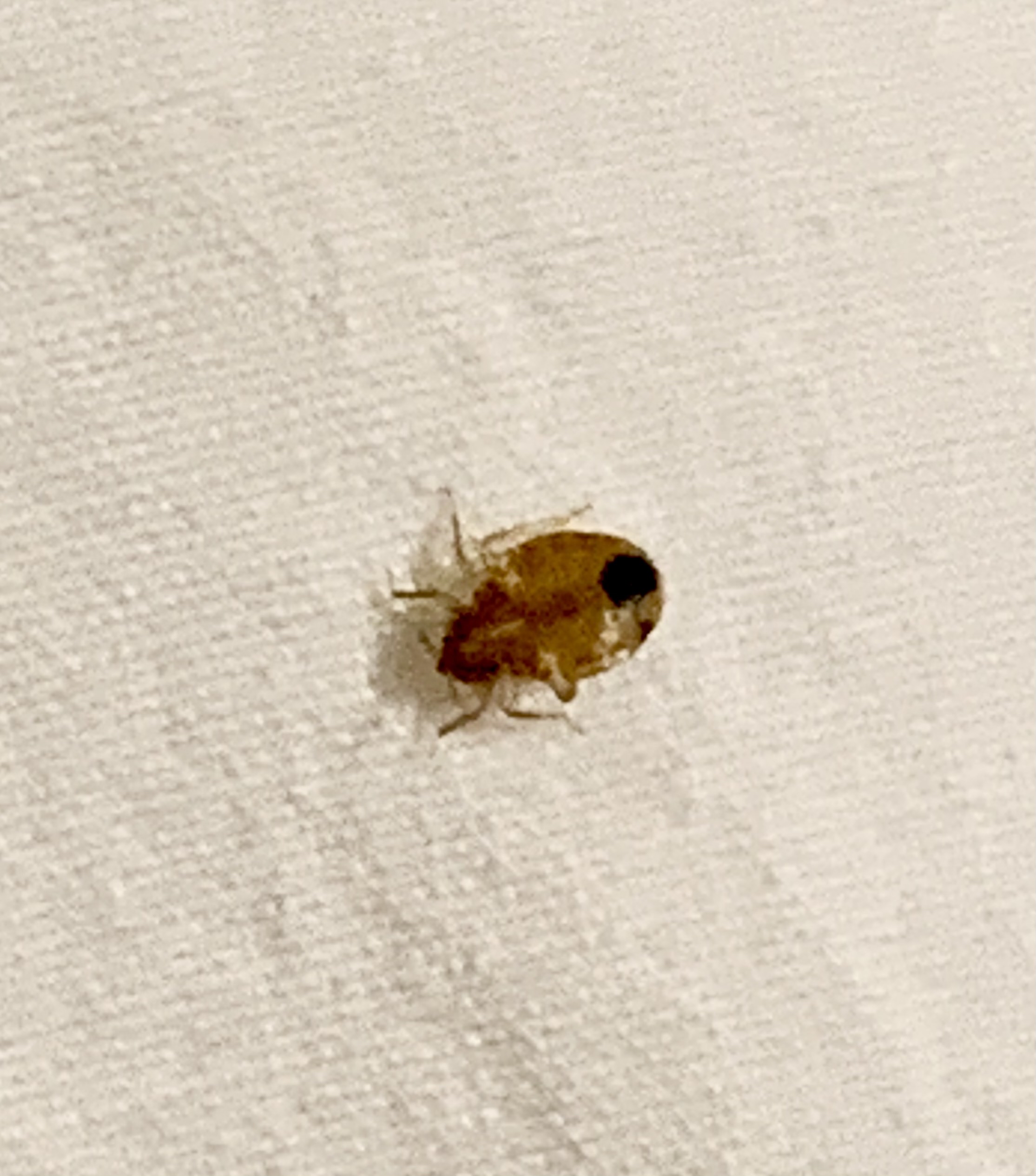
A Flat, Reddish Bug on the Sheets
- Oval, flat and about the size of an apple seed
- Found in mattress seams or along the headboard
- Itchy bites that appeared after sleeping
This is the one to act on fast. Check the seams, piping and tags of the mattress and box spring for dark spots, shed skins and eggs. Don't move furniture or bedding to other rooms before an inspection.
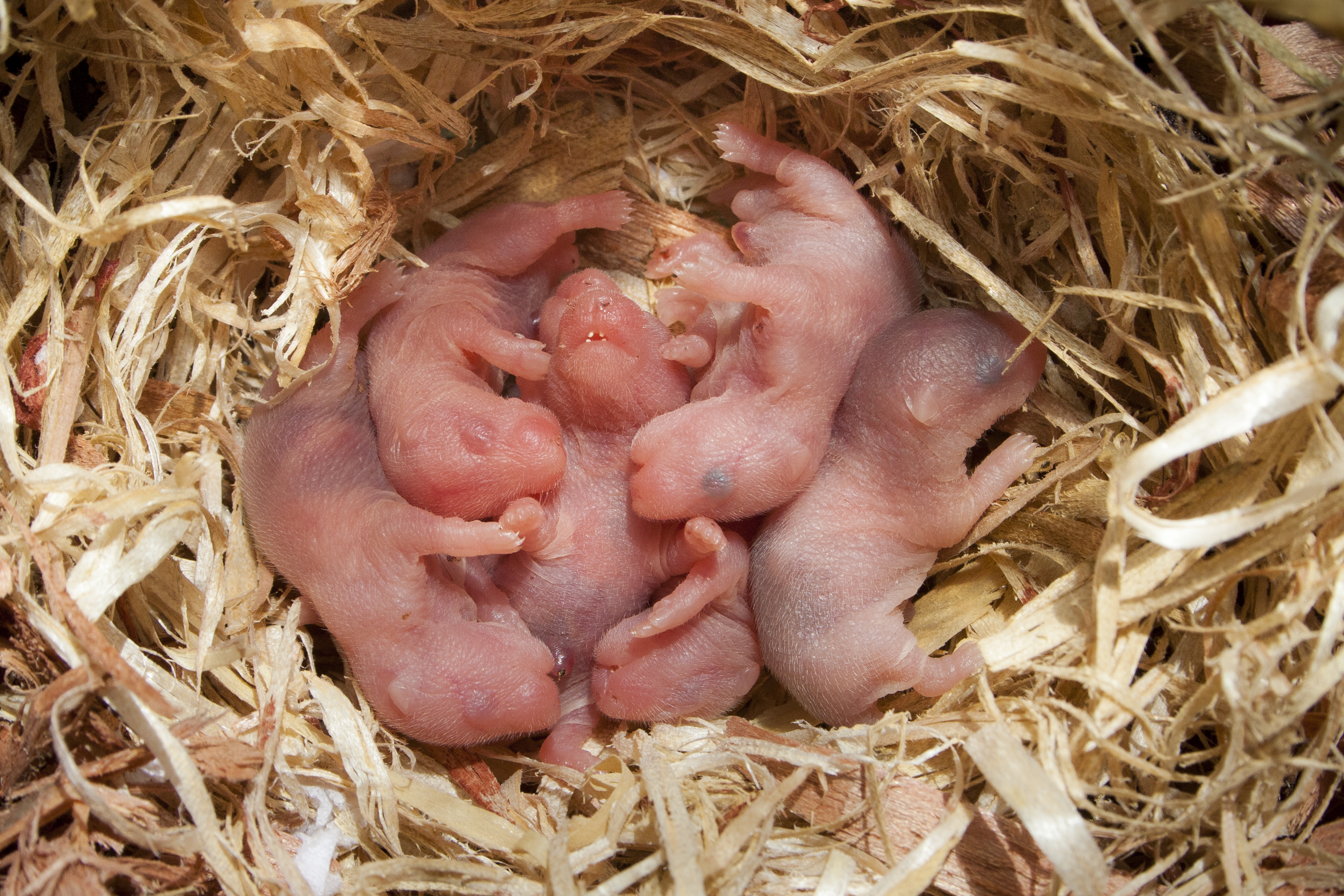
Tiny Beetles Coming From Nowhere
- Small round beetles on windowsills in spring
- Beetles on the walls, ceiling or bed
- Keeps happening even after cleaning
Adult carpet beetles often come from a hidden food source — an old bird or rodent nest in the attic or a wall, dead insects in a light fixture, or a forgotten wool rug or box of clothes.
Fuzzy Little Worms and Shed Skins
- Hairy, striped larvae under furniture or rugs
- Empty skins in closets, drawers or along baseboards
- Holes in sweaters, blankets or rug edges
That's carpet beetle larvae — the stage that does the damage. They feed in dark, undisturbed spots on anything with natural fibers, hair or feathers.
Carpet beetle larvae: the stage that causes the trouble
The adult beetles you see on the windowsill don't eat your things — they feed on pollen outside. It's the carpet beetle larvae that chew through wool, silk, fur, feathers, leather and pet hair. They also eat lint, crumbs and dead insects, which is why they turn up along baseboards and in vents.
Larvae shed their skins several times as they grow, and those empty, bristly skins are often the first thing people find — in a drawer, a closet corner or on the bed. They can feed for months, longer in a cool house, before turning into adults.
Signs of a larval infestation:
- Irregular holes in wool sweaters, blankets, coats or the edges of wool rugs
- Bare, thin patches in rugs, often under furniture where nobody vacuums
- Shed skins and tiny, sand-like droppings in closets and drawers
- Damage to feather pillows, down comforters, felt, or stored furs and leather
Clothes moths cause similar holes — see our moth control page if you're seeing small, pale moths too.
Do carpet beetles bite?
No — carpet beetles don't bite. They have no way to feed on blood and no interest in people. But many people search for “carpet beetle bites” for a real reason: the bristly hairs on carpet beetle larvae can irritate skin in some people, causing itchy red bumps or a rash where skin touched infested bedding, rugs or clothing.
That reaction can look a lot like bed bug bites, which is why the two get confused. A few clues help:
- Bed bug bites tend to show up on skin exposed during sleep — arms, neck, shoulders — often in a line or cluster, and keep appearing night after night.
- Carpet beetle irritation tends to show up where skin rubbed against larvae or their hairs, and you'll usually find larvae or shed skins nearby but no bugs in the mattress seams.
Rash that won't go away or is getting worse? See your doctor — many skin problems look like bug bites. We can tell you what insect is in the house; a doctor can tell you what's on your skin.
Where carpet beetles come from
In through the windows
Adults fly in from flowering shrubs and gardens in spring and early summer. They're attracted to light, so you see them on windowsills.
Old nests
Bird, squirrel and rodent nests in attics, chimneys and walls are full of feathers and hair — a perfect carpet beetle nursery. Wildlife in the attic?
Natural fibers
Wool rugs, stored sweaters, felt, down, furs and taxidermy left undisturbed for months.
Pet hair & lint
Hair and lint packed under furniture, in floor vents and along baseboards feed larvae even in homes without wool.
How to get rid of carpet beetles
Find the source
Look for the spot where larvae are feeding: closets, stored clothes, rug edges under furniture, vents, and the attic. One forgotten box or old nest can feed the whole house.
Vacuum hard
Vacuum rugs on both sides, baseboards, under furniture, inside closets, vents and upholstered furniture. Empty the vacuum outside right away.
Clean the fabrics
Wash infested clothes and bedding in hot water and dry on high heat, or dry-clean. Items that can't be washed can be bagged and frozen for several days.
Store smart
Put wool, silk, down and furs in sealed plastic bins or bags. Cardboard boxes don't stop larvae.
Professional treatment
A licensed technician treats the cracks, baseboards, closets and voids where larvae hide, and checks the attic and walls for nests feeding the problem.
Looking for carpet beetle treatment near me in North Jersey? Silver Bullet Pest Control (NJ License 90568B) inspects first, confirms whether it's carpet beetles or bed bugs, and treats only what's needed. Regular service comes with a 100% satisfaction guarantee.
If it turns out to be bed bugs
Bed bugs are a different problem with a different fix. They don't eat fabric; they feed on people, hide in and around the bed and sofa, and spread by hitching rides on luggage, furniture and clothing. Store-bought sprays usually scatter them deeper into the room.
- Don't throw out the mattress or move to another room yet — that can spread them.
- Save a sample on clear tape or in a sealed bag, or take a sharp photo.
- Check the seams of the mattress, box spring and headboard with a flashlight for dark spots and shed skins.
- Call for an inspection so the treatment matches what's actually there.
Learn more: bed bug inspection and treatment · bed bug FAQ.
Related guides and services
Get a Carpet Beetle or Bed Bug Inspection
Send us a photo and tell us where you found the bugs — we'll tell you what it is and what it takes to get rid of it.
Why people call us
- Small bugs on the bed and fear of bed bugs
- Fuzzy larvae or shed skins in closets
- Holes in wool rugs, sweaters or blankets
- Tiny beetles on the windowsills every spring
- Itchy rash with no bugs found in the mattress
Request Service
🔒 Your info stays private · Hablamos español.
Carpet Beetles vs Bed Bugs FAQ
Is it a carpet beetle or a bed bug?
If it's round, patterned or shiny black and can fly, it's a carpet beetle. If it's flat, oval, reddish-brown and wingless and you found it in mattress seams, it's likely a bed bug.
Do carpet beetles bite people?
No. Carpet beetles can't bite or feed on blood, but the hairs on their larvae can cause an itchy rash in some people.
What do carpet beetle larvae look like?
Small, fuzzy, carrot-shaped larvae with brown and lighter bands, up to about a quarter inch long. You often find their empty shed skins before the larvae themselves.
Why are carpet beetles in my bed?
Adults fly in and wander, and larvae feed on hair, skin flakes, lint and natural fibers in bedding, down comforters and rugs nearby.
Are carpet beetles harmful?
They don't spread disease or bite, but their larvae damage wool, silk, fur, feathers, leather and rugs, and their hairs can irritate skin.
How do I get rid of carpet beetles?
Find and remove the source, vacuum thoroughly, wash or freeze infested fabrics, and store natural fibers in sealed plastic. A professional treatment handles larvae hiding in cracks, closets and voids.
Can carpet beetles come from a bird nest?
Yes. Old bird, squirrel and rodent nests in attics, chimneys and walls are a common hidden source of carpet beetles.
Do carpet beetles go away on their own?
Rarely. As long as they have a food source like a wool rug, stored clothes or an old nest, larvae keep feeding and new adults keep showing up.
When are carpet beetles most common in New Jersey?
You usually notice adults on windowsills in spring and early summer, while larvae can feed indoors all year.
Do you treat carpet beetles and bed bugs?
Yes. Silver Bullet Pest Control inspects for both, confirms which one you have and treats it. Call or text 973-510-2585.
¿Cómo sé si son chinches o escarabajos de alfombra?
Las chinches son planas, rojizas y sin alas; los escarabajos de alfombra son redondos, con manchas, y pueden volar. Mándenos una foto al 973-510-2585.
Carpet beetle and bed bug help near you
Based in Garfield, we inspect and treat homes in these towns and across Bergen, Passaic, Essex and Hudson counties.
Updated October 2026 by the Silver Bullet Pest Control team, Garfield, NJ • NJ License 90568B