
Book now
Tawny Field Cockroach Identification & Control in New Jersey
Tawny Field Cockroach Identification & Control in New Jersey
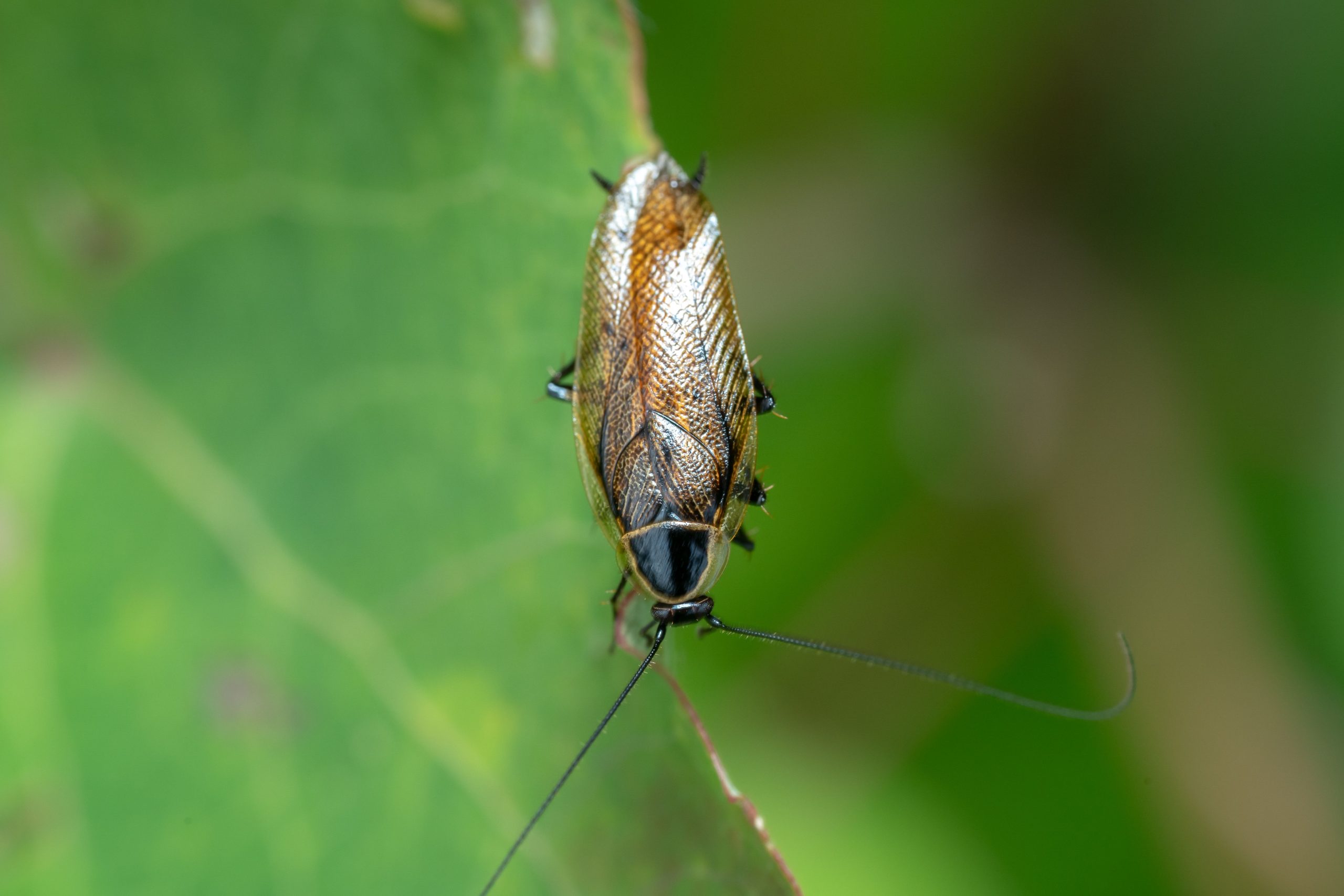
The tawny field cockroach (Ectobius pallidus) is one of the most common outdoor roaches found around New Jersey homes, businesses and parking areas. It’s frequently mistaken for a German cockroach because of its size and color, but it behaves completely differently. This guide covers how to identify it, where it lives, and when it’s a nuisance versus a real problem – including how it ends up inside parked cars.
What a tawny field cockroach looks like
- Light tan to golden-brown body, generally smaller and slimmer than a German cockroach
- Fully developed wings that allow strong, direct flight – unlike most indoor roach species
- Often seen flying toward porch lights, headlights and windows on warm evenings
- Frequently confused with German cockroaches at a glance, especially by homeowners who don’t normally see roaches outdoors
Where tawny field cockroaches live
True to their name, tawny field cockroaches live in outdoor “field” habitat rather than kitchens or bathrooms:
- Leaf litter, mulch beds and ground cover along the edges of lawns and gardens
- Grassy fields, low vegetation and the transition zone between lawns and woods
- Woodpiles, tree bark and fallen logs at the edge of wooded lots
- Landscaping near building foundations, especially where mulch stays damp
They do not build nests indoors and generally cannot survive long-term inside a home, garage or vehicle – there simply isn’t the food debris and moisture they rely on outside.
How tawny field cockroaches end up in cars
Because they fly well and are drawn to light, tawny field cockroaches commonly land on parked cars in the evening, especially vehicles parked near mulch beds, grass edges or a nearby wood line. From there they can crawl into wheel wells, door seams, the cowl area near the windshield, or through the HVAC air intake. A single tawny field cockroach in a car is almost always a hitchhiker, not the start of an infestation – it wandered in seeking shelter and will not reproduce inside the vehicle.
4-step approach to tawny field cockroach control
- Inspection: Confirm the species and locate nearby outdoor harborage such as mulch, leaf litter or woodpiles.
- Exterior treatment: Targeted product applied to foundation perimeters, mulch beds and entry points rather than broad indoor spraying.
- Exclusion: Seal gaps around doors, windows, utility lines and garage seals that let outdoor roaches wander inside.
- Follow-up: Reduce attractants like exterior lighting angle, leaf buildup and mulch depth close to the home or driveway.
Find Us
FAQs
Are tawny field cockroaches dangerous?
They are considered a nuisance pest rather than a health hazard, since they don’t infest food storage areas the way German cockroaches do.
Will they infest my house?
They may wander indoors occasionally, especially near lit entryways, but they do not establish breeding populations inside structures.
Should I still get my car checked?
If you’ve been finding tawny field cockroaches in your car repeatedly, it’s worth an inspection to rule out a different species and to check for easy entry points.
Recent finds

Related pages
- Car Roach Treatment in New Jersey (main service page)
- Car Roach Exterminator in New Jersey
- German Cockroaches in Cars
- Wood Cockroach vs German Cockroach
- How to Get Rid of Roaches in a Car (Tips & Guide)
- Cockroach Control for Work Vans & Fleets
- How Do Roaches Get Into a Car?
- Signs You Have Roaches in Your Car
- Can Roaches Live in a Car?
- Roach Extermination Cost for Cars in NJ
Silver Bullet Pest Control – licensed and insured cockroach treatment for cars, trucks, work vans and fleets throughout New Jersey. Friendly, discreet service for families and businesses. Call 973-510-2585.