
 Silver Bullet Pest Control
Attic Insulation with Pest Protection in NJ
Flattened, soiled or tunneled attic insulation is more than an energy problem. Silver Bullet Pest Control removes insulation ruined by mice, rats, squirrels, raccoons and bats, cleans and deodorizes the attic, seals the way animals got in, and installs fresh insulation — so the new layer stays clean.
4.9 stars on Google • NJ License 90568B • Licensed by NJ Fish & Wildlife • 15+ years • Hablamos español
Text a photo of your attic insulation to 973-510-2585 and we'll tell you if it can stay or needs to go.
- ✓ Same-day appointments often available
- ✓ Licensed & insured in NJ
- ✓ Homes & businesses
- ✓ English & Español
What is attic insulation with pest protection?
Attic insulation with pest protection means replacing insulation that animals have damaged only after the pests are gone and their entry points are sealed, so the new insulation isn't nested in or soiled again. Silver Bullet Pest Control does the whole job in one plan: removal of the animals, HEPA cleanup and odor control, sealing, and new insulation. Free quote — call or text 973-510-2585.
Why pest protection has to come before new attic insulation
Most homeowners find out about an attic problem in one of two ways: they hear scratching overhead, or an energy auditor, roofer or home inspector pulls back the hatch and sees droppings and trails in the insulation. The natural reaction is to call an insulation company. The trouble is that insulation crews install insulation — they don't remove animals, and they don't seal the soffit gap, roof vent or plumbing chase the animals use.
If new insulation goes in while mice or squirrels can still get in, you've given them a fresh, warm nesting material. We've seen attics re-insulated in the fall that were full of tunnels again by spring. Pest protection simply means doing the steps in the right order:
- Stop the animals. Identify which pest it is and remove it the right way for that animal.
- Close the doors. Seal every entry point with materials the animal can't chew or pull out.
- Clean the attic. Remove the contaminated insulation, droppings and nesting, then HEPA-vacuum and treat for odor.
- Insulate last. Install new insulation in a clean, sealed attic.
Because we handle the pest work, the cleanup, the insulation and any chewed soffit or fascia repair ourselves, there's no gap between contractors where the problem can come back.
Signs your attic insulation needs to be replaced
Not every attic needs a full tear-out. These are the signs we look at to decide:
| What you see | What it usually means | Typical answer |
|---|---|---|
| A few droppings near the hatch, insulation still fluffy | Light, recent mouse activity | Spot cleanup and sealing; insulation often stays |
| Tunnels and runways through the insulation | Mice or rats living in it for a while | Remove the affected areas or the whole layer |
| Flattened, matted patches | Squirrels or raccoons sleeping and moving across it | Usually removal in those zones or the whole attic |
| Yellow or brown stains, ammonia smell | Urine soaked into the insulation | Removal — urine can't be cleaned out of loose fill |
| Piles of dark droppings in one area | Raccoon latrine or bat roost | Removal, HEPA cleanup and odor treatment |
| Insulation pulled away from soffits or vents | An entry point right there | Seal the opening, then repair the insulation |
Smell in the upstairs rooms on hot days is a common clue too — attic heat pushes the odor down through ceiling fixtures and the hatch.
Which pest got into your attic insulation?
Each animal damages insulation differently, and each needs its own removal plan before anything gets replaced.
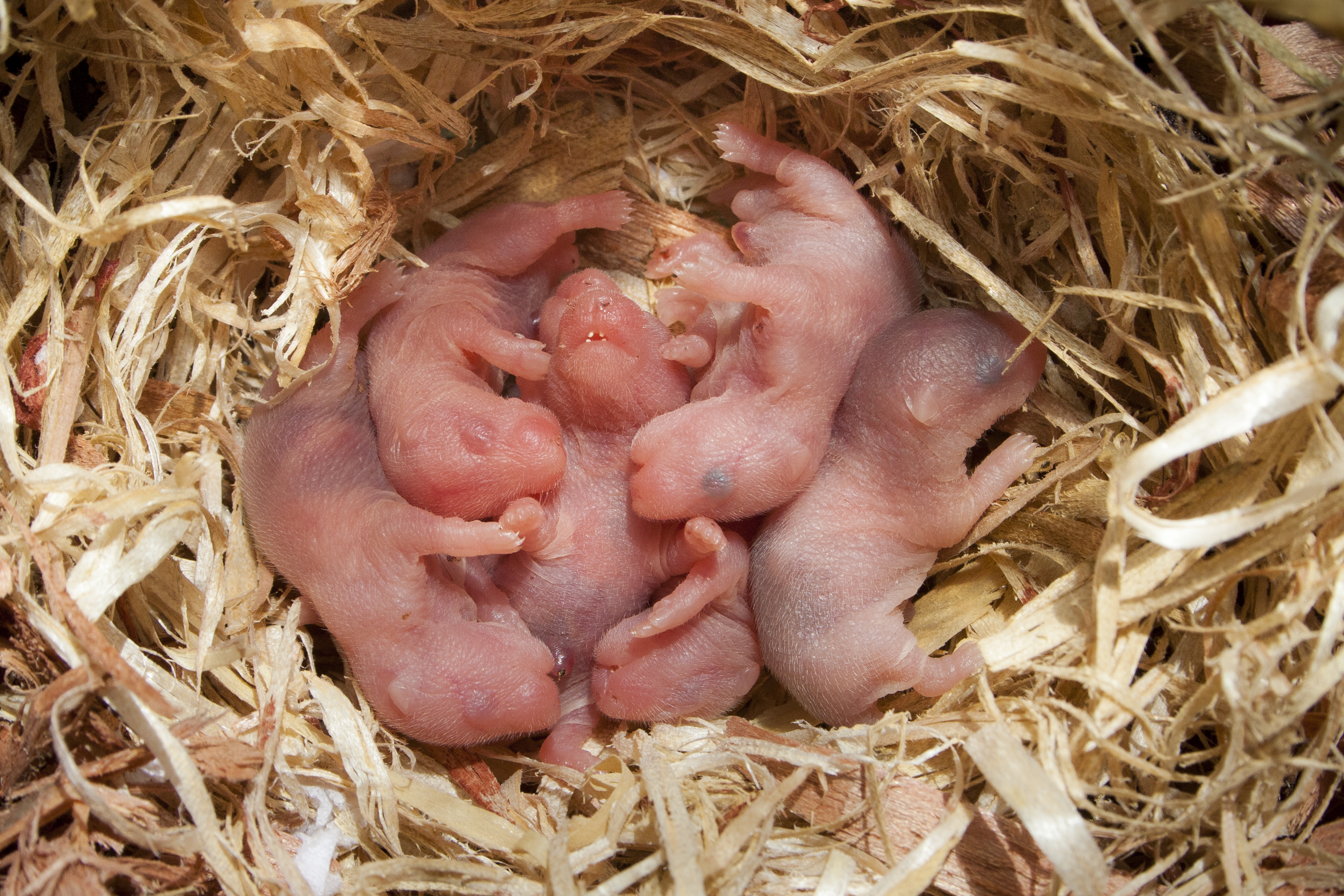
Mice and rats in the insulation
- Small runways and tunnels
- Rice- or raisin-sized droppings
- Chewed wires or duct wrap
Rodents burrow into loose insulation for warmth. We trap, seal the gaps at the roofline and foundation, then clean. Mouse service includes 90 days of coverage with unlimited free service calls.
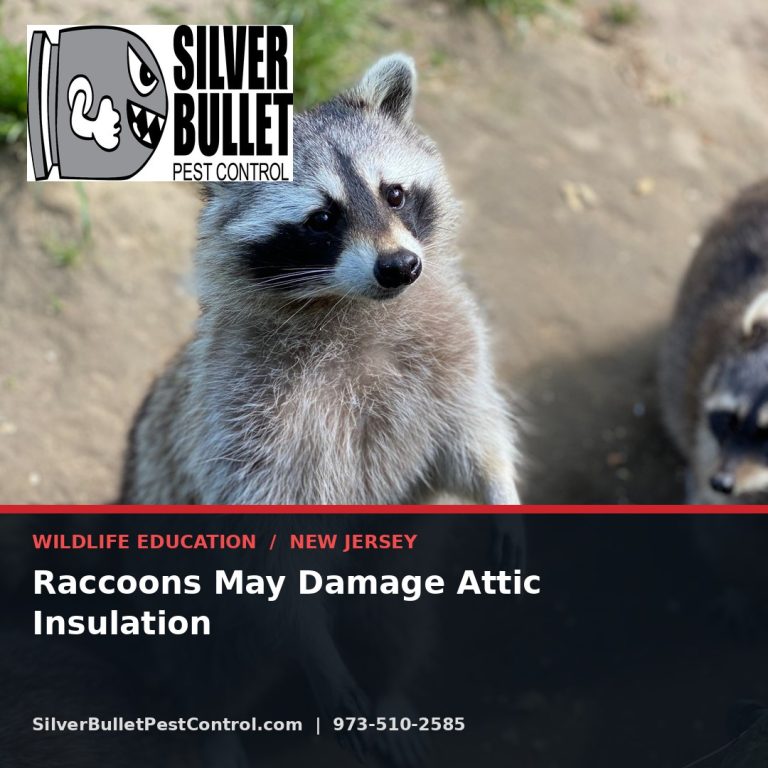
Raccoons crushing and soiling insulation
- Large flattened areas
- Latrine piles in one corner
- Torn soffit or roof vent
Raccoons are heavy and use one spot as a toilet. Their droppings can carry roundworm eggs, so this cleanup needs protective gear and HEPA filtration.
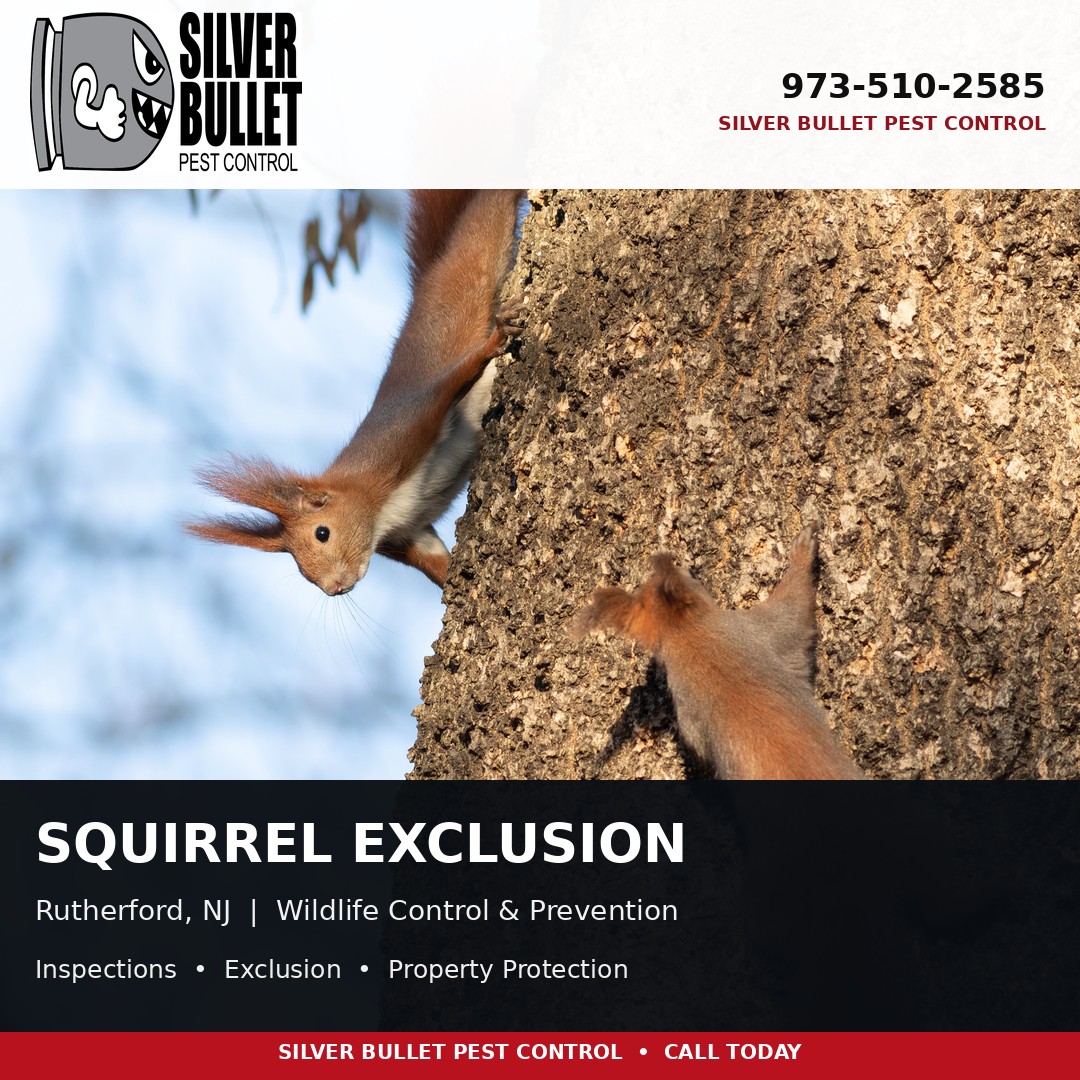
Squirrels nesting at the eaves
- Nests of leaves and insulation
- Chewed fascia or soffit corners
- Running sounds in the morning
Squirrels pull insulation into leaf nests near the eaves. We use exclusion so they leave on their own, seal the hole, then repair the attic.
Our attic insulation and pest protection process
Inspect the attic and the roofline
We check the insulation, the framing, ductwork and wiring, and walk the outside of the house looking at soffits, roof vents, gable vents, chimney and plumbing stacks to find how the animals got in.
Remove the animals
Trapping for rodents; one-way exclusion for squirrels, raccoons and bats, with timing that follows NJ wildlife rules. Bats, for example, can't be excluded from May 1 through July 31 while pups can't fly.
Seal the entry points
Gaps are closed with heavy screen, metal flashing and other chew-resistant materials, and vents get proper covers so air still moves.
Remove the old insulation
Contaminated insulation is bagged and taken out of the house, with care taken around wiring and recessed lights.
HEPA cleanup and odor control
We HEPA-vacuum the attic floor and framing, then treat for odor so the smell doesn't linger in the rooms below.
Install new insulation
Fresh insulation goes into a clean, sealed attic. We'll talk with you about the type and depth that make sense for your attic.
Want details on the cleanup half of the job? See attic insulation removal and replacement.
Insulation types and how pests treat them
No insulation is pest-proof on its own. What keeps animals out is sealing the attic. Still, the type matters for cleanup and replacement:
| Insulation | How pests use it | Cleanup notes |
|---|---|---|
| Blown-in fiberglass | Easy for mice to tunnel through; holds droppings and urine | Removed with a vacuum system and bagged |
| Fiberglass batts | Rodents nest between batts; squirrels shred the paper facing | Soiled batts are pulled and replaced |
| Blown-in cellulose | Mice and rats tunnel freely; absorbs urine and odor | Usually needs full removal once soiled |
| Spray foam | Harder to nest in, but rodents can still chew it where it fills gaps | Damaged foam is cut back and the gap sealed properly |
| Old loose fill (older homes) | Often settled and dusty; may hide years of activity | Ask us — some older materials need special handling |
Some insulation products are sold as pest-resistant. They can help, but they don't replace sealing the entry points. Ask us which option fits your attic.
What affects the cost of attic insulation replacement after pests
We don't publish one price, because attics vary too much. After we see your attic, you get a free quote that separates the pest work, the sealing, the cleanup and the new insulation. The main things that move the number:
- Attic size and access. A walk-up attic is quicker than a low crawl space reached through a closet hatch.
- How much insulation is affected. One corner near the soffit costs far less than the whole attic floor.
- Which animal. Raccoon latrines and bat guano need more protective handling than a few mouse droppings.
- Number of entry points. A cape with dormers or a house with many roof lines has more places to seal.
- Repairs. Chewed soffit, fascia, vents or wiring add to the job.
- The new insulation. Type and depth chosen for the replacement.
If you're selling a home or responding to a home inspection report, tell us your timeline when you call. Same-day visits are often available for the inspection itself.
Can I remove attic insulation myself?
Health risk
Droppings and urine dry into dust. Raccoon feces can carry roundworm and bat guano can grow fungus — breathing it in isn't worth the savings.
Wiring and fixtures
Attics hide live wiring, junction boxes and recessed lights. Stepping off a joist can put a foot through the ceiling.
Animals still inside
If the animals aren't out and the gaps aren't sealed, new insulation just becomes new nesting.
Heat and space
North Jersey attics get extremely hot in summer and cramped under low roofs. A short job can turn dangerous.
If you're cleaning up a few mouse droppings yourself, wet them with disinfectant first and never sweep or vacuum them dry. More here: mouse droppings cleanup.
Related attic and wildlife pages
Get a Free Attic Insulation & Pest Quote
Tell us what you're hearing or what you saw in the attic, and send a photo if you can. We'll explain the plan and give you a free quote.
Why homeowners call us for attic insulation
- One company for removal, sealing, cleanup and insulation
- Licensed for pest control (NJ License 90568B) and wildlife work
- HEPA cleanup and odor control done by our own team
- Mouse service includes 90 days of coverage
- Same-day visits often available
Request Service
🔒 Your info stays private · Hablamos español.
Attic Insulation & Pest Questions
Do I need to replace insulation after mice?
Not always. If there are only a few droppings and the insulation is still fluffy, cleaning and sealing may be enough. If you see tunnels, urine stains or a strong smell, the affected insulation should be removed and replaced, because urine and droppings can't be cleaned out of loose fill.
Is there insulation that keeps pests out?
No insulation keeps animals out by itself. Some products are treated to resist insects or are harder to nest in, but a mouse or squirrel will still get into an unsealed attic. Sealing the entry points is what actually protects new insulation; the type you choose is the second step.
How long does attic insulation removal and replacement take?
Most average attics take one to two days for removal, cleanup and new insulation once the animals are gone. The animal removal and sealing may take longer, because exclusion for squirrels, raccoons or bats needs time for the animals to leave before the last openings are closed.
Is it safe to stay home during attic cleanup?
Yes, in most cases. The work stays in the attic, contaminated insulation is bagged before it moves through the house, and HEPA filtration controls the dust. We'll tell you if anything in your attic calls for extra precautions, such as keeping the hatch area closed off.
Will homeowners insurance pay for attic insulation damaged by animals?
It depends on your policy. Some policies cover sudden damage from certain animals and exclude rodents or gradual damage. Call your insurer before the work starts, take photos of the attic, and ask us for a written description of what we found.
Can you replace insulation before the animals are gone?
We don't recommend it. Insulating an attic that animals can still enter gives them clean nesting material, and you'll pay for the job twice. We remove the animals and seal first, then insulate last.
How do I know if raccoons or squirrels damaged my insulation?
Raccoons leave large crushed areas and piles of big droppings in one spot, and they're louder at night. Squirrels are active in the early morning and evening and make leaf nests near the eaves. Text us a photo and we'll help identify it.
Does new insulation get rid of the smell?
Removing soaked insulation removes most of the odor source, but the smell can stay in the wood framing. That's why we HEPA-vacuum and treat the attic for odor before the new insulation goes in.
Do you work on attics outside Bergen, Passaic, Essex and Hudson counties?
Our core area is Bergen, Passaic, Essex and Hudson counties, based in Garfield. We also serve parts of Morris and Union counties with visits scheduled ahead. Call to check your town.
¿Hacen limpieza de aislamiento en el ático?
Sí. Sacamos el aislamiento dañado por ratones, ardillas o mapaches, limpiamos con filtro HEPA, sellamos las entradas y ponemos aislamiento nuevo. Hablamos español: llame o mande texto al 973-510-2585.
Attic insulation and pest protection near you
Based in Garfield, we cover Bergen, Passaic, Essex and Hudson counties.
Our service area
Bergen County
973-510-2585- Allendale
- Bergenfield
- Bogota
- Carlstadt
- Cliffside Park
- Closter
- Cresskill
- Demarest
- Dumont
- East Rutherford
- Edgewater
- Elmwood Park
- Emerson
- Englewood
- Englewood Cliffs
- Fair Lawn
- Fairview
- Fort Lee
- Franklin Lakes
- Garfield
- Glen Rock
- Hackensack
- Harrington Park
- Hasbrouck Heights
- Haworth
- Hillsdale
- Ho-Ho-Kus
- Leonia
- Little Ferry
- Lodi
- Lyndhurst
- Mahwah
- Maywood
- Midland Park
- Montvale
- Moonachie
- New Milford
- North Arlington
- Northvale
- Norwood
- Oakland
- Old Tappan
- Oradell
- Palisades Park
- Paramus
- Park Ridge
- Ramsey
- Ridgefield
- Ridgefield Park
- Ridgewood
- River Edge
- River Vale
- Rochelle Park
- Rutherford
- Saddle Brook
- Saddle River
- South Hackensack
- Teaneck
- Tenafly
- Teterboro
- Upper Saddle River
- Waldwick
- Wallington
- Washington Township
- Westwood
- Woodcliff Lake
- Wood-Ridge
- Wyckoff
Passaic County
973-510-2585- Bloomingdale
- Clifton
- Haledon
- Hawthorne
- Little Falls
- North Haledon
- Passaic
- Paterson
- Pompton Lakes
- Prospect Park
- Ringwood
- Totowa
- Wanaque
- Wayne
- West Milford
- Woodland Park
Essex County
973-510-2585- Belleville
- Bloomfield
- Caldwell
- Cedar Grove
- East Orange
- Essex Fells
- Fairfield
- Glen Ridge
- Irvington
- Livingston
- Maplewood
- Millburn
- Montclair
- Newark
- North Caldwell
- Nutley
- Orange
- Roseland
- Short Hills
- South Orange
- Verona
- West Caldwell
- West Orange
Hudson County
973-510-2585Union County
973-510-2585- Berkeley Heights
- Clark
- Cranford
- Elizabeth
- Fanwood
- Garwood
- Hillside
- Kenilworth
- Linden
- Mountainside
- New Providence
- Plainfield
- Rahway
- Roselle
- Roselle Park
- Scotch Plains
- Springfield
- Summit
- Union
- Westfield
Morris County
973-510-2585- Boonton
- Butler
- Cedar Knolls
- Chatham
- Denville
- Dover
- East Hanover
- Florham Park
- Hanover
- Kinnelon
- Lincoln Park
- Madison
- Mendham
- Montville
- Morris Plains
- Morristown
- Mountain Lakes
- Parsippany
- Pequannock
- Randolph
- Riverdale
- Rockaway
- Roxbury
- Whippany
Updated November 2026 by the Silver Bullet Pest Control team, Garfield, NJ • NJ License 90568B