Silver Bullet Pest Control logoSilver Bullet Pest Control
Cockroaches Β· Identification Guide Β· North Jersey

Water Bug vs. Cockroach: How to Tell Them Apart

Found a big, dark, shiny bug by the floor drain and someone told you it's "just a water bug"? In North Jersey homes, that "water bug" is almost always a cockroach. Here's how to tell a true water bug from a roach, why it matters, and what actually gets rid of them.

4.9 stars on Google β€’ NJ License 90568B β€’ 15+ years β€’ Roach treatment with a 90-day warranty β€’ Hablamos espaΓ±ol

Text a photo of the bug to 973-510-2585 β€” we'll tell you what it is.

What's the difference between a water bug and a cockroach?

The difference between a water bug and a cockroach is that a true water bug is an aquatic insect that lives in ponds and streams, has short hidden antennae and pincer-like front legs, and does not infest houses, while a cockroach has long, thread-like antennae, runs on six similar legs and breeds indoors. In New Jersey, the large dark "water bugs" people find in basements, drains and bathrooms are almost always Oriental or American cockroaches, and they need roach treatment. Text a photo to 973-510-2585 and we'll identify it.

Water bug vs. cockroach: side-by-side comparison

True water bug (giant water bug)Oriental cockroachAmerican cockroach
Where it livesPonds, lakes, slow streamsBasements, crawl spaces, floor drains, under porchesBoiler rooms, sewers, basements, commercial buildings
SizeLarge β€” often 1 to 2+ inchesAbout 1 inchAbout 1.5 inches or more
Color & shapeFlat, oval, brown, leaf-likeShiny, very dark brown to blackReddish-brown with a lighter band behind the head
AntennaeShort, tucked under the head β€” hard to seeLong and thread-likeLong and thread-like, often longer than the body
Front legsThick, pincer-like, for grabbing preyNormal running legsNormal running legs
Wings / flightFlies, often to porch lights at nightCan't fly; females have only wing stubsHas full wings, can glide short distances
Inside the house?Only by accident, one at a timeYes β€” breeds in damp areasYes β€” breeds in warm, damp areas
Bites?Can give a painful bite if handledRarelyRarely

The fastest tell: look at the antennae. Long, wavy feelers mean cockroach. If you can't see any feelers at all and the front legs look like little claws, it's probably a real water bug that flew in.

What a real water bug looks like

"Water bug" is a real name for a group of aquatic insects. The one people mean most often is the giant water bug, sometimes called a "toe-biter." It spends its life in ponds, lakes and slow-moving water, where it hunts small fish, tadpoles and other insects by grabbing them with its thick front legs and piercing them with a short, beak-like mouth.

Giant water bugs breathe air through a short tube at the tip of the body, so you'll see them hang at the water's surface. In summer they fly at night, and they're attracted to bright lights β€” that's when one ends up on a patio, by a garage light, or in a pool.

The good news: a true water bug can't live and breed in your house. It needs open water. If you find one inside, it flew in or was carried in. Scoop it up carefully with a container (don't grab it bare-handed β€” the bite hurts) and release it outside. No extermination needed.

The cockroaches people call "water bugs"

In North Jersey, these are the usual "water bugs" in basements and bathrooms:

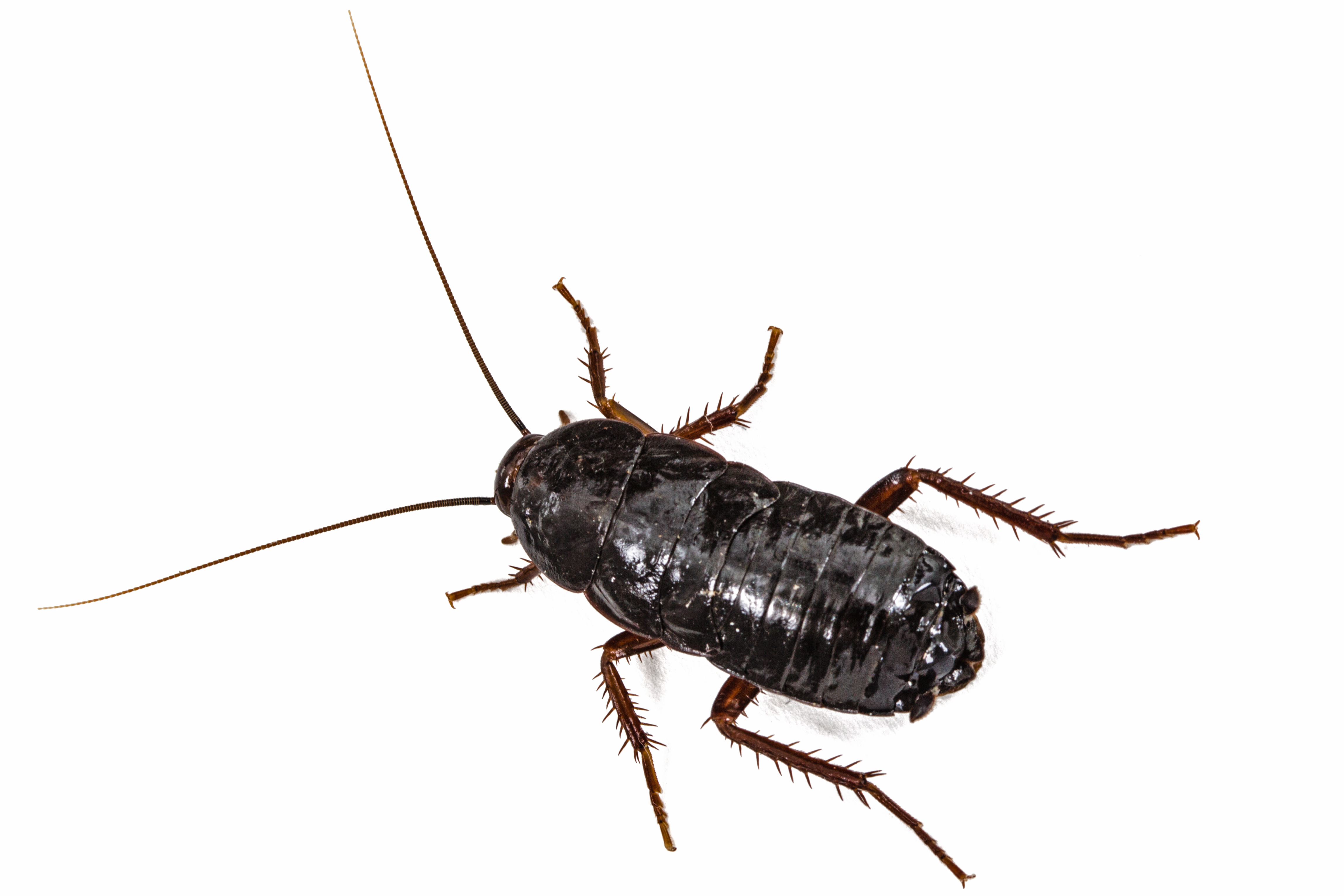
Oriental cockroach, dark and shiny, on a white background
Most common "water bug"

Oriental cockroach

  • Shiny, nearly black body about an inch long
  • Slow-moving; can't climb smooth surfaces well
  • Found by floor drains, sump pits, laundry rooms

This is the roach most often called a water bug. It loves cool, damp places and moves in from crawl spaces, under porches and sewer lines. Older homes with stone or block foundations see them a lot.

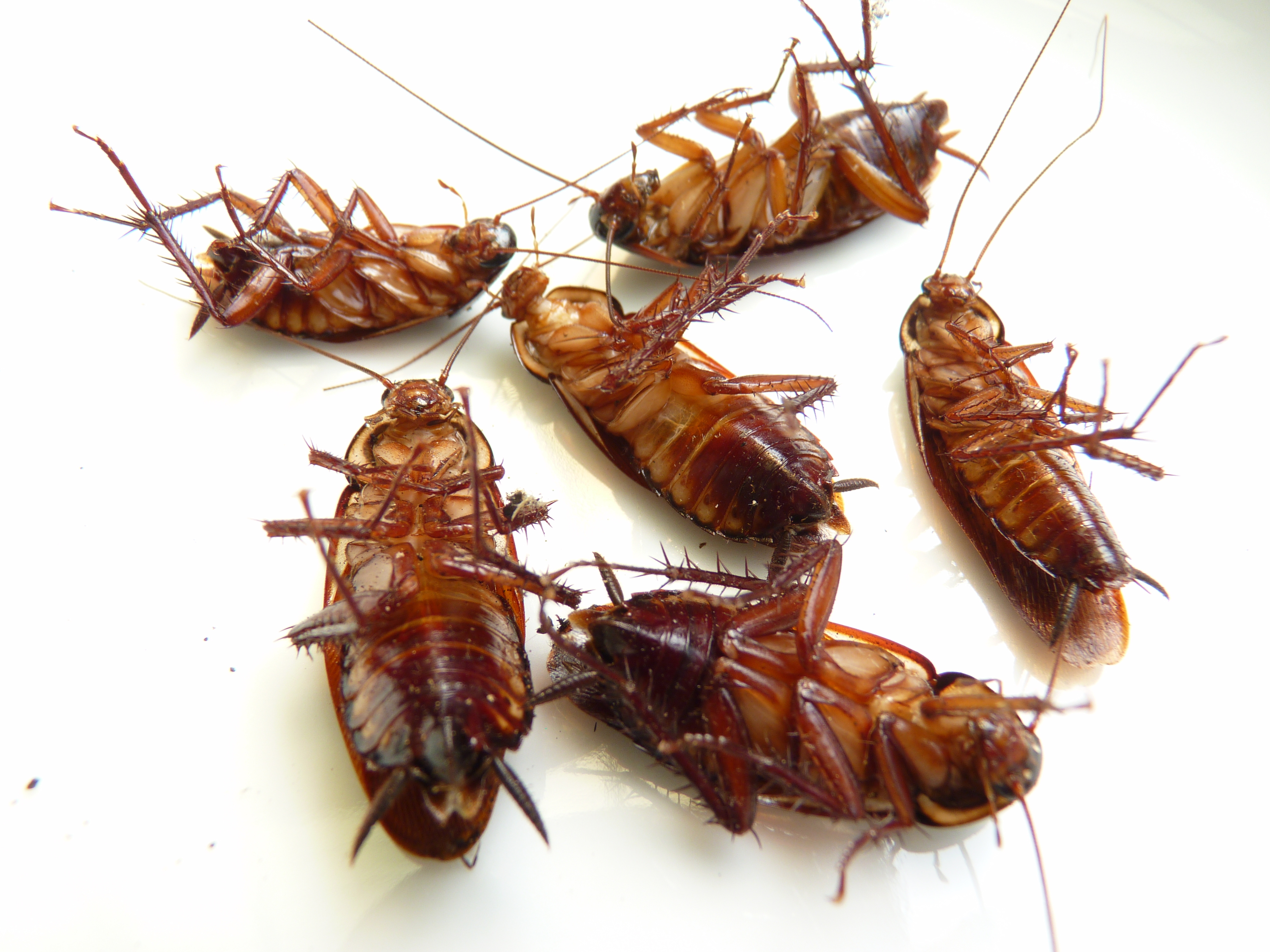
Close-up of several cockroaches on a light surface
Big and fast

American cockroach

  • Reddish-brown, 1.5 inches or larger
  • Light, figure-8 shaped band behind the head
  • Runs fast; can glide when startled

The largest common roach. In homes it usually comes up from sewers and drains; in apartment buildings and businesses it lives around boiler rooms, steam pipes and basements.

Smaller cockroaches on a surface
Not a water bug

German cockroach

  • Small β€” about half an inch
  • Light brown with two dark stripes behind the head
  • Kitchens and bathrooms, behind appliances

Nobody calls these water bugs, but they're the roach that turns into an infestation fastest. If you see small light-brown roaches in the kitchen, treat it as urgent.

Is it a water bug or a roach? A 4-point check

1

Look at the antennae

Long, thin and moving constantly = cockroach. Short and hidden = water bug.

2

Look at the front legs

Pincer-like grabbing legs = water bug. Six similar running legs = cockroach.

3

Note where you found it

Pool, patio light or near a pond in summer = maybe a water bug. Drain, basement, bathroom or kitchen = cockroach.

4

Count them

One odd bug once = probably a stray. Several, or the same kind every week = a roach population living nearby.

Still not sure? Text a clear photo to 973-510-2585 and we'll tell you what it is.

Why "water bugs" show up in your basement and bathroom

The roaches people call water bugs need moisture more than food. That's why you find them in the same few places:

  • Floor drains and sump pits β€” roaches come up from drain lines, especially when a trap dries out.
  • Laundry rooms and boiler rooms β€” warm, damp and dark.
  • Crawl spaces, porches and stone foundations β€” older North Jersey houses often have gaps they walk right through.
  • Under bathroom and kitchen sinks β€” slow leaks and gaps around the pipes.
  • Mulch and leaf litter against the house β€” Oriental roaches live outside in damp debris and move in when it gets hot and dry, or after heavy rain.

Quick fixes that help: pour water into drains you rarely use so the trap stays full, run a dehumidifier in the basement, fix drips, and pull mulch back from the foundation.

Do water bugs or cockroaches bite, and are they dangerous?

πŸ¦‚

True water bugs

They can bite if you pick them up, and it's painful, but they don't attack people and aren't known to spread disease. They don't infest homes.

πŸͺ³

Cockroaches

Roaches rarely bite. The bigger issue is that they crawl through drains and sewers, then across floors and counters.

🀧

Allergies & asthma

Roach droppings and shed skins are a known trigger for allergies and asthma, especially for kids.

🏚️

A sign of moisture

Lots of roaches in the basement often points to a leak, a dry drain trap or a damp crawl space that should be fixed.

How to get rid of "water bugs" (cockroaches) for good

Since the basement "water bug" is a roach, it needs a roach plan β€” not a bug spray:

ApproachWhat happensOur take
Store sprayKills the roach you hitDoesn't reach the ones in drains and walls; can scatter them
Bug bombs / foggersFills the room with sprayDoesn't get into the cracks where roaches hide; not recommended
Boric acidSlow-acting dustCan help in dry voids; useless in wet areas. See boric acid for roaches
Gel bait + IGR + follow-up (our method)Roaches eat the bait and spread it; the growth regulator stops young from maturingTargets the whole population, with a follow-up visit and a 90-day warranty
Sealing & moisture fixesRemoves the way in and the waterMakes treatment last; we point out what to fix

Most homes see far fewer roaches within a couple of weeks. Same-day visits are often available β€” call or text 973-510-2585.

Get a Free Quote for "Water Bug" (Roach) Treatment

Tell us where you're seeing them and how often. A photo helps us confirm what it is. We'll give you a free quote and explain the plan.

Why people call us about water bugs

  • Big dark bugs by the floor drain
  • Roaches in the bathroom at night
  • Bugs coming up from the basement
  • Tenants complaining about "water bugs"
  • They want to know for sure what it is
πŸ“ž Call 973-510-2585

Request Service

πŸ”’ Your info stays private Β· Hablamos espaΓ±ol.

What's bugging you? - Step 1 of 3

Water Bug vs. Cockroach Questions

Is a water bug just a cockroach?

Usually, yes β€” in everyday talk. People in New Jersey say "water bug" for large Oriental and American cockroaches found near drains and in basements. A true water bug is a different insect that lives in ponds and streams and doesn't infest homes. If it has long antennae and lives in your basement, it's a roach.

How can you tell a water bug from a cockroach?

Check the antennae and front legs. Cockroaches have long, thread-like antennae and six similar running legs. True water bugs have short antennae tucked under the head and thick, pincer-like front legs for grabbing prey. Where you found it helps too: drains and basements mean roach.

Why do I only see water bugs at night?

Cockroaches are nocturnal. They hide in drains, wall voids and damp corners during the day and come out to feed in the dark. Seeing a few at night usually means more are hiding nearby, which is why a whole-house plan works better than spraying the ones you see.

Do water bugs come up through drains?

Roaches do. Oriental and American cockroaches travel through drain and sewer lines and can come up through floor drains, especially when the drain trap dries out. Pouring water into rarely used drains and keeping covers on helps a lot.

Are water bugs dangerous?

True water bugs can give a painful bite if handled but aren't otherwise a threat, and they don't live in houses. The roaches called water bugs rarely bite, but they walk through drains and their droppings can trigger allergies and asthma, so an indoor population should be treated.

Does one water bug mean an infestation?

Not always. One large roach in a basement can be a stray that came in from outside or a drain. If you see them every week, in more than one room, or see small ones too, there's a population nearby and it's time for treatment.

What kills water bugs in the basement?

Gel bait combined with an insect growth regulator works best because roaches carry the bait back to where they hide and the regulator stops young roaches from maturing. Pair that with moisture fixes β€” dehumidifier, drain traps, leaks β€” for lasting results.

Do bug bombs work on water bugs?

No, not well. Foggers settle on open surfaces but don't reach the drains, cracks and voids where roaches hide, and they can push roaches deeper into the walls. Targeted baits and sealing are far more effective.

How long does roach treatment take to work?

Most homes see a big drop within one to two weeks. We use gel bait, an insect growth regulator and a follow-up visit, and roach treatment carries a 90-day warranty.

ΒΏLas "water bugs" son cucarachas?

Casi siempre, sΓ­. Las "water bugs" grandes y oscuras del sΓ³tano son cucarachas orientales o americanas. Mande una foto por texto al 973-510-2585 y le decimos quΓ© es.

Roach control near you

Based in Garfield, we treat roaches (and "water bugs") across Bergen, Passaic, Essex and Hudson counties.

Our service area

Union County

973-510-2585
  • Berkeley Heights
  • Clark
  • Cranford
  • Elizabeth
  • Fanwood
  • Garwood
  • Hillside
  • Kenilworth
  • Linden
  • Mountainside
  • New Providence
  • Plainfield
  • Rahway
  • Roselle
  • Roselle Park
  • Scotch Plains
  • Springfield
  • Summit
  • Union
  • Westfield

Morris County

973-510-2585
  • Boonton
  • Butler
  • Cedar Knolls
  • Chatham
  • Denville
  • Dover
  • East Hanover
  • Florham Park
  • Hanover
  • Kinnelon
  • Lincoln Park
  • Madison
  • Mendham
  • Montville
  • Morris Plains
  • Morristown
  • Mountain Lakes
  • Parsippany
  • Pequannock
  • Randolph
  • Riverdale
  • Rockaway
  • Roxbury
  • Whippany

Updated November 2026 by the Silver Bullet Pest Control team, Garfield, NJ β€’ NJ License 90568B

Scroll to Top