
 Silver Bullet Pest Control
NPMA-33 Wood Destroying Insect (WDI) Report in New Jersey
Your lender or attorney asked for an "NPMA-33" — and you're not sure what that is? It's the standard wood destroying insect report used in home sales. Here's what the form covers, what the inspector checks, how to read the results in plain English, and what happens next. Silver Bullet Pest Control completes NPMA-33 reports across North Jersey.
Featured on Telemundo 47 • EPA Pesticide Safety Certified • 4.9 Stars on Google • NJ License 90568B
Text us the address and closing date — we'll tell you the soonest opening.
- ✓ Same-day appointments often available
- ✓ Licensed & insured in NJ
- ✓ Homes & businesses
- ✓ English & Español
What is an NPMA-33 report?
An NPMA-33 is the National Pest Management Association's Wood Destroying Insect Inspection Report — the standard form lenders use to document whether a home shows visible evidence of termites and other wood destroying insects. It's used for VA, FHA and conventional loans and is completed by a licensed pest control company after inspecting the accessible areas of the house. In New Jersey, every VA purchase loan requires one. Silver Bullet Pest Control (NJ License 90568B) does NPMA-33 inspections across Bergen, Passaic, Essex and Hudson counties — call 973-510-2585.
What is the NPMA-33 form?
The NPMA-33 is a standard report form published by the National Pest Management Association, the trade group for the pest control industry. Its full name is the Wood Destroying Insect Inspection Report, so you'll hear it called a WDI report, a WDI inspection, a termite report or a "termite letter." In most New Jersey closings, those all mean the same piece of paper.
The point of a standard form is simple: a lender, an attorney or a buyer can pick up a report from any licensed company and find the same information in the same place. It records:
- Who inspected the property, their company and license information, and the inspection date.
- The property address and the structures that were inspected.
- Whether the inspector saw visible evidence of wood destroying insects — or didn't.
- If evidence was found: what kind of insect, where, and whether there's visible damage.
- Signs of earlier treatment, if any were seen.
- Areas that were inaccessible or obstructed and couldn't be inspected.
It's a snapshot of what a trained inspector could see on one day. That's its strength — and its limit, which we cover below.
Who asks for an NPMA-33 WDI report?
The same form shows up in almost every kind of New Jersey home sale.
| Who | Why they want it | Notes |
|---|---|---|
| VA lenders | New Jersey is a required state for VA purchase loans | Usually not needed for a VA Streamline (IRRRL). See VA requirements |
| FHA lenders | To document the home's condition for the loan | Lender decides if it's needed; the NPMA-33 is the standard form |
| Conventional lenders | Same reason — some require it, some don't | Ask your loan officer early |
| Buyers | Peace of mind before closing, even on a cash deal | Often ordered alongside the home inspection |
| Sellers | To know what a buyer's inspector will find | A pre-listing report can avoid surprises |
| Attorneys and agents | To keep the closing on schedule | They often order it for the client and receive a copy |
Buying with a VA loan? Our VA termite inspection page covers who pays (the rules changed in 2022), ordering, and sending the report to your lender.
What the inspector looks for
"Wood destroying insects" means more than termites. In North Jersey these are the ones that show up on reports:
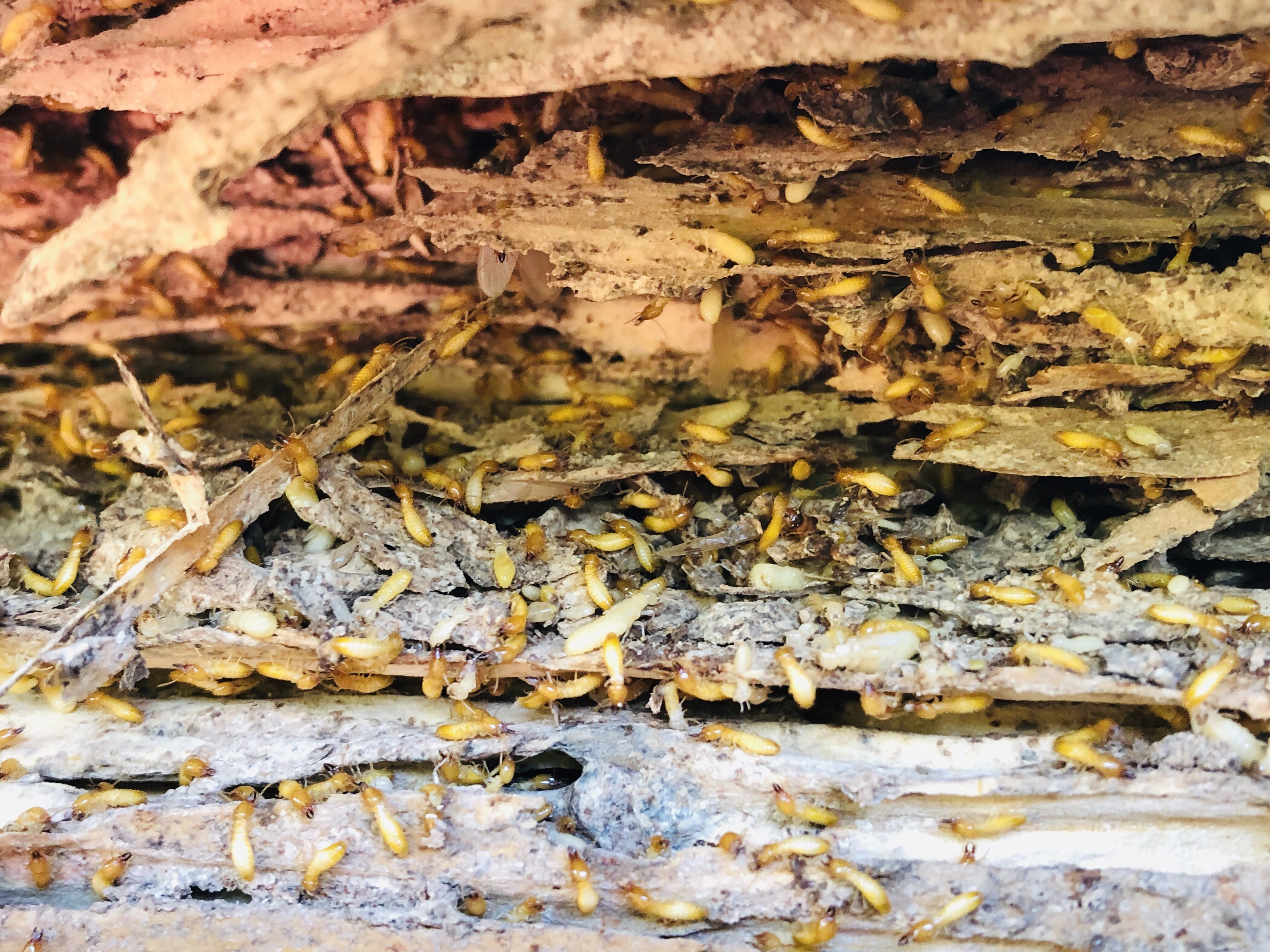
Subterranean Termites
- Mud tubes on foundation walls, piers and pipes
- Swarmers or shed wings near windows in spring
- Damaged wood near soil or moisture
The eastern subterranean termite lives in the soil throughout New Jersey and eats wood from the inside out. It's the main reason the form exists.
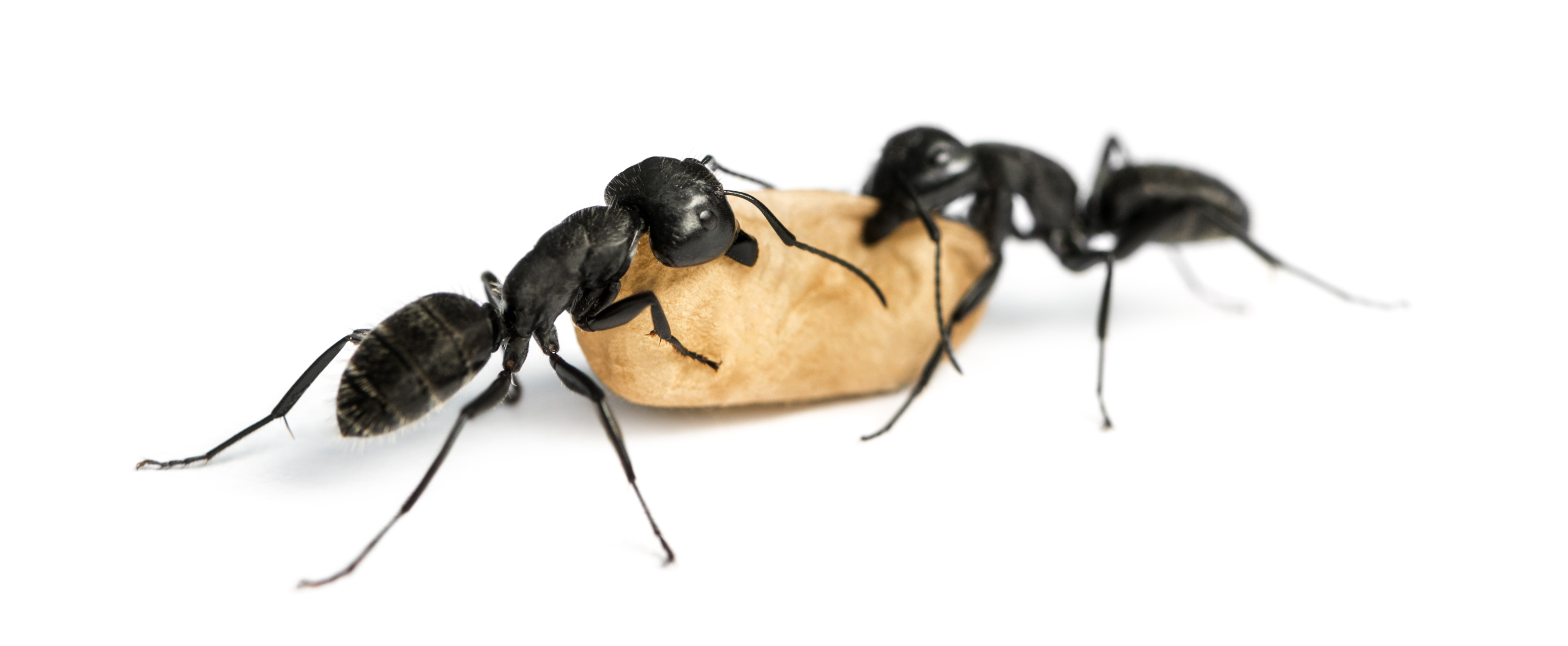
Carpenter Ants
- Piles of coarse, sawdust-like debris
- Large ants indoors, often in spring
- Activity near leaks, rot or damp wood
Carpenter ants don't eat wood — they carve galleries in it to nest, usually where moisture has softened it. That still counts as wood destroying activity.
Carpenter Bees and Wood-Boring Beetles
- Neat round holes in fascia, decks and railings
- Tiny pinholes with fine, flour-like powder
- Damage in older or unfinished wood
Carpenter bees drill tunnels in exposed wood to lay eggs. Powderpost and other wood-boring beetles develop inside wood and leave small exit holes and powder behind.
What happens during an NPMA-33 inspection
Outside
The inspector walks the foundation looking for mud tubes, wood touching soil, moisture problems and damaged trim, decks and porches.
Basement or crawl space
Sill plates, joists, beams, posts and the spots where pipes come through — where subterranean termites usually start.
Garage and other rooms
Accessible framing, door and window trim, and any outbuildings that are part of the inspection.
Report
The NPMA-33 is filled out and sent to the people you name, along with the invoice.
For a typical single-family house in North Jersey the visit usually takes under two hours; multi-family houses, big basements or lots of storage take longer. If something needs a closer look, we may use thermal imaging and TermaTrac to check behind walls without cutting into them.
How to read your WDI report in plain English
You don't need to know the form inside out. Look for these findings — exact wording varies a little, but the meaning is the same:
| What the report says | What it means | What usually happens next |
|---|---|---|
| No visible evidence of wood destroying insects | The inspector didn't see insects, damage or other signs in the areas that could be inspected | The report goes into the loan file. It's not a guarantee — see the limits below |
| Visible evidence of active infestation | Live insects (or fresh signs like active mud tubes) were seen | Treatment by a licensed company; the lender may want proof before closing |
| Visible evidence of a past infestation | Dead insects, old tubes, shed wings or damage — but no live activity seen | Ask whether the home was treated; the buyer may want a closer look or treatment |
| Visible damage noted | Wood damage from insects was seen | Repairs may be needed; on a VA loan, repairs may be needed to meet VA Minimum Property Requirements |
| Evidence of previous treatment | Drill holes, bait stations or other signs of earlier treatment | Ask the seller for old treatment paperwork |
| Inaccessible or obstructed areas | Some areas couldn't be checked — finished walls, storage, locked rooms, no crawl space access | Open them up and ask for a re-inspection if they matter to you |
Read the inaccessible-areas part carefully. In older North Jersey homes with finished basements, the most important wood (sill plates and joists) is sometimes hidden behind drywall or ceiling tiles.
What an NPMA-33 report is — and isn't
- It's a visual inspection. The inspector reports what can be seen in accessible areas on that day. Nothing is torn out or opened up.
- It isn't a warranty or guarantee that the house is free of insects, now or later.
- It isn't a structural report. If damage is noted, a contractor or engineer may need to judge how serious it is.
- It isn't a home inspection. Roof, plumbing, electrical and the rest of the house are a different inspection.
- It has a shelf life. Lenders decide how recent the report must be — ask yours. Many want it within about 30 to 90 days of closing.
None of this makes the report less useful. It's the fastest, most standard way for everyone at the closing table to know whether wood destroying insects are a problem in this house right now.
What happens next if activity is found
Treatment
Active termites are treated with a liquid treatment around the foundation, a bait system or both. Termite treatment from Silver Bullet comes with a 90-day warranty.
Repairs
Damaged wood may need repair. We also do termite damage repair once activity is under control.
Paperwork
The lender will want to see that the work was done. Ask us for the treatment paperwork so the file is complete.
Who pays
Settled between buyer and seller. On a VA loan the veteran may pay for necessary repairs, but sellers often cover it.
Book the inspection early in the contract so there's time for all of this. Questions about VA timing? See VA termite inspection requirements in NJ.
More on WDI and termite inspections
Order an NPMA-33 WDI Report
Send the address, closing date, loan type and who should get the report. We'll confirm the soonest opening.
Why people order WDI reports from us
- VA, FHA or conventional lender asked for an NPMA-33
- Buyer wants a termite check before closing
- Seller wants to know before listing
- Old report is too old for the lender
- Report found activity and treatment is needed
Request Service
🔒 Your info stays private · Hablamos español.
NPMA-33 WDI Report FAQ
What does NPMA-33 stand for?
It's the National Pest Management Association's Wood Destroying Insect Inspection Report — form 33. Lenders and attorneys usually just call it a WDI report or termite report.
Is an NPMA-33 the same as a termite inspection?
It's the written report of a wood destroying insect inspection. It covers termites plus carpenter ants, carpenter bees and wood-boring beetles.
Which loans use the NPMA-33?
VA, FHA and conventional loans all use it as the standard WDI form. In New Jersey, every VA purchase loan requires one.
What does "no visible evidence" mean on a WDI report?
The inspector didn't see insects, damage or other signs in the areas that could be inspected that day. It isn't a guarantee the house is insect-free.
What does "inaccessible" mean on the report?
Some areas couldn't be inspected — for example finished walls, heavy storage or a crawl space with no entry. Clear them and ask for a re-inspection if they matter to you.
How long does a WDI inspection take?
For a typical single-family house, usually under two hours. Larger or multi-family homes take longer.
How long is an NPMA-33 report valid?
Your lender decides. Many want it within about 30 to 90 days of closing, so ask before you book.
What happens if the report shows termites?
The termites are treated, and damaged wood may need repair. Our termite treatment comes with a 90-day warranty.
Who can fill out an NPMA-33 in New Jersey?
A licensed pest control company. Silver Bullet Pest Control holds NJ Pesticide License 90568B.
Do you send the report to the lender and attorneys?
Yes. Give us their emails when you book and we'll send it to everyone you name.
¿Hacen reportes NPMA-33 de termitas en español?
Sí. Hacemos la inspección y el reporte NPMA-33 en el norte de New Jersey, y le explicamos los resultados en español. Llame o mande texto al 973-510-2585.
NPMA-33 inspections near you
Based in Garfield, we complete WDI reports across Bergen, Passaic, Essex and Hudson counties.
Our service area
Bergen County
973-510-2585- Allendale
- Bergenfield
- Bogota
- Carlstadt
- Cliffside Park
- Closter
- Cresskill
- Demarest
- Dumont
- East Rutherford
- Edgewater
- Elmwood Park
- Emerson
- Englewood
- Englewood Cliffs
- Fair Lawn
- Fairview
- Fort Lee
- Franklin Lakes
- Garfield
- Glen Rock
- Hackensack
- Harrington Park
- Hasbrouck Heights
- Haworth
- Hillsdale
- Ho-Ho-Kus
- Leonia
- Little Ferry
- Lodi
- Lyndhurst
- Mahwah
- Maywood
- Midland Park
- Montvale
- Moonachie
- New Milford
- North Arlington
- Northvale
- Norwood
- Oakland
- Old Tappan
- Oradell
- Palisades Park
- Paramus
- Park Ridge
- Ramsey
- Ridgefield
- Ridgefield Park
- Ridgewood
- River Edge
- River Vale
- Rochelle Park
- Rutherford
- Saddle Brook
- Saddle River
- South Hackensack
- Teaneck
- Tenafly
- Teterboro
- Upper Saddle River
- Waldwick
- Wallington
- Washington Township
- Westwood
- Woodcliff Lake
- Wood-Ridge
- Wyckoff
Passaic County
973-510-2585- Bloomingdale
- Clifton
- Haledon
- Hawthorne
- Little Falls
- North Haledon
- Passaic
- Paterson
- Pompton Lakes
- Prospect Park
- Ringwood
- Totowa
- Wanaque
- Wayne
- West Milford
- Woodland Park
Essex County
973-510-2585- Belleville
- Bloomfield
- Caldwell
- Cedar Grove
- East Orange
- Essex Fells
- Fairfield
- Glen Ridge
- Irvington
- Livingston
- Maplewood
- Millburn
- Montclair
- Newark
- North Caldwell
- Nutley
- Orange
- Roseland
- Short Hills
- South Orange
- Verona
- West Caldwell
- West Orange
Hudson County
973-510-2585Union County
973-510-2585- Berkeley Heights
- Clark
- Cranford
- Elizabeth
- Fanwood
- Garwood
- Hillside
- Kenilworth
- Linden
- Mountainside
- New Providence
- Plainfield
- Rahway
- Roselle
- Roselle Park
- Scotch Plains
- Springfield
- Summit
- Union
- Westfield
Morris County
973-510-2585- Boonton
- Butler
- Cedar Knolls
- Chatham
- Denville
- Dover
- East Hanover
- Florham Park
- Hanover
- Kinnelon
- Lincoln Park
- Madison
- Mendham
- Montville
- Morris Plains
- Morristown
- Mountain Lakes
- Parsippany
- Pequannock
- Randolph
- Riverdale
- Rockaway
- Roxbury
- Whippany
Updated November 2026 by the Silver Bullet Pest Control team, Garfield, NJ • NJ License 90568B