
 Silver Bullet Pest Control
Humane Wildlife Removal in NJ: No Traps, No Harm
Raccoons, squirrels, bats and skunks leave your house on their own through one-way doors, and then we seal it so they can’t come back. No trapping, no poison, no harm. Silver Bullet Pest Control, Garfield, NJ. Licensed by the NJ Division of Fish and Wildlife.
Featured on Telemundo 47 • EPA Pesticide Safety Certified • 4.9 Stars on Google • NJ License 90568B
Text a photo of the roofline or a recording of the noise and we’ll tell you what it is and what to do.
- ✓ Same-day appointments often available
- ✓ Licensed & insured in NJ
- ✓ Homes & businesses
- ✓ English & Español
What is humane wildlife removal?
Humane wildlife removal means getting animals out of your house without trapping, poisoning or harming them. Silver Bullet Pest Control does it with exclusion: we install a one-way door on the opening the animal uses, it leaves on its own to feed and can’t get back in, and then we seal every entry point with metal it can’t chew. If there are babies, we time the work so the mother takes them with her. It’s the method we use for raccoons, squirrels, bats, skunks, groundhogs, opossums and birds across Bergen, Passaic, Essex and Hudson counties. Call or text 973-510-2585.
Why we don’t trap
Trapping looks like a fix, but it usually isn’t one. The hole the animal used stays open, and the smell it left behind leads the next squirrel or raccoon straight to it. A trap can also catch a nursing mother and leave her young inside the walls, which turns into a crying, smelly problem a few days later. And a trapped animal is stressed, can get hurt, and is a bite risk for whoever handles it.
Exclusion fixes the cause. The animal leaves on its own, the house gets sealed, and there’s nothing left to come back to. It’s also the only legal way to deal with bats in New Jersey, because bats are a protected species.
Humane exclusion, step by step
Inspect
A licensed tech checks the house from roof to foundation, finds every way in, and confirms the animal and whether there are babies.
One-way door
We put a one-way door on the main opening. The animal walks out on its own to feed and can’t get back in. No traps, no harm.
Seal
Once it’s out, we close that opening and every other weak spot with heavy-gauge metal and mesh it can’t chew or tear.
Confirm
We check that the house is empty and help with insulation, droppings and repairs so nothing draws the next animal in.
If there are babies, we time the work so the mother moves her young out with her. Nothing is ever sealed inside.
What about baby animals?
Spring and early summer are baby season for raccoons, squirrels, skunks and bats in New Jersey. A one-way door alone would split a mother from her young, so we plan around it:
- Raccoons and squirrels: we confirm whether there’s a litter and time the exclusion so the mother moves her young out herself before the last opening is sealed.
- Bats: pups can’t fly in early summer, so bat exclusion waits until they can. We seal the extra gaps first and do the final exclusion when it’s safe.
- Skunks under decks: we wait until the young are following the mother out at night, then close the den.
That’s why you should never seal a hole yourself when you hear chirping or crying in the attic or walls.
Animals we remove humanely
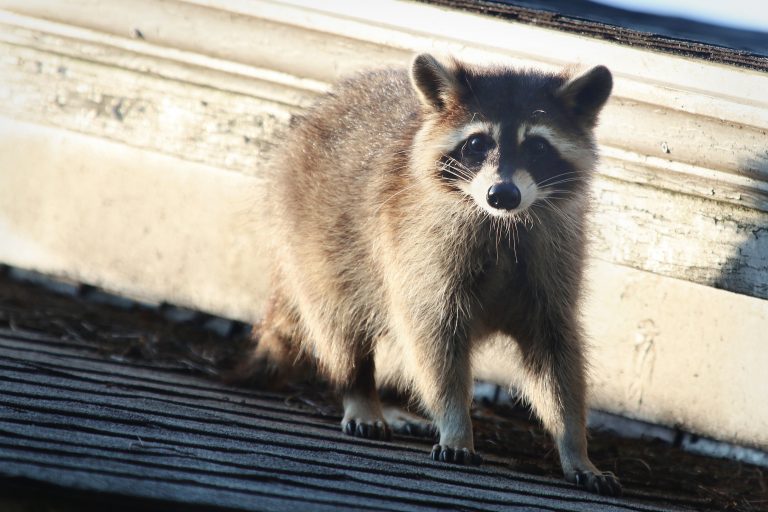
Raccoons
- Heavy walking in the attic at night
- Torn soffit or roof vent
- Noises in the chimney
A heavy-duty one-way door on the entry, babies out with the mother, then the opening is rebuilt with metal raccoons can’t tear.
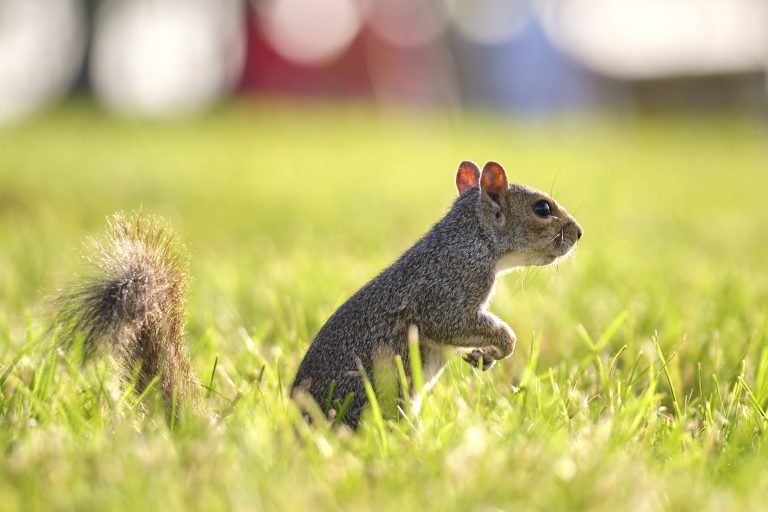
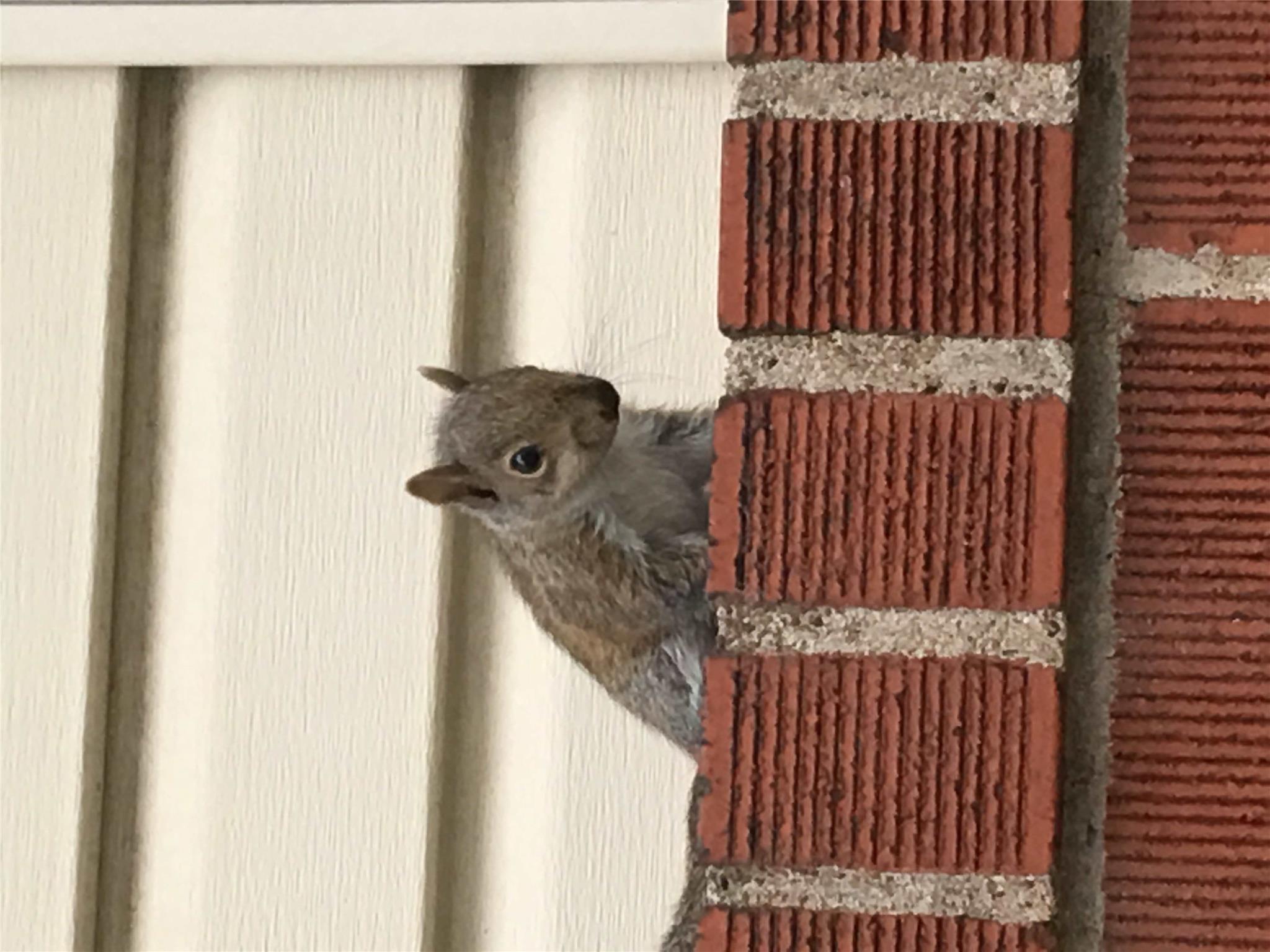
Squirrels
- Running at sunrise and before dark
- Chewed roof corners
- Chewed wires
A one-way door on the main hole, every other gap sealed with metal, and a check that no squirrels are left inside.
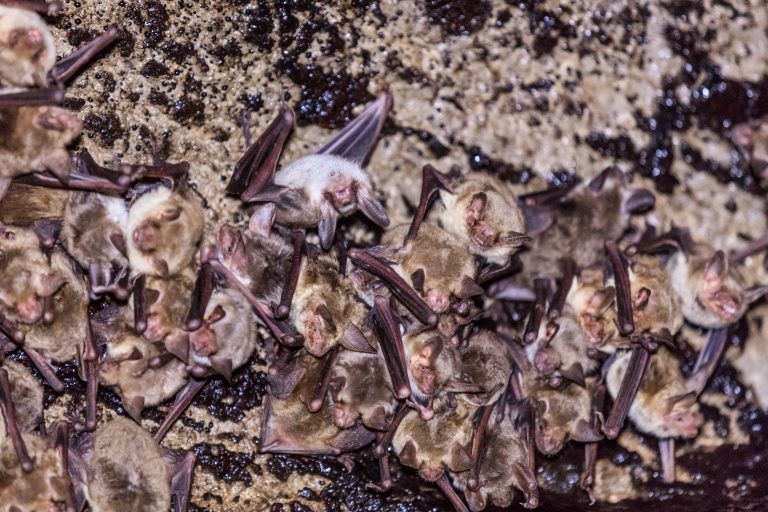
Bats
- Squeaking at dusk
- Droppings below a gap
- A bat inside the house
Bats are protected, so they’re only excluded, timed around pup season. Bat exclusion comes with a 5-year warranty.

Skunks and groundhogs
- Musky smell under a deck
- Holes along the foundation
- Dug-up lawn
A one-way exit on the den, then buried L-shaped wire screening so they can’t dig back under the deck, porch or shed.
Exclusion vs trapping
| Humane exclusion | Trapping | |
|---|---|---|
| Animal harmed? | No, it leaves on its own | Can be stressed or injured |
| Babies left behind? | No, timed so the mother takes them | Can happen if the mother is caught |
| Entry hole fixed? | Yes, sealed with metal | Often left open |
| Next animal gets in? | Unlikely once sealed | Likely, the scent trail stays |
| Legal for bats in NJ? | Yes | No, bats are protected |
See how this plays out for each animal on our main wildlife removal in NJ page.
Related humane wildlife services
Get Animals Out the Humane Way
Call or text 973-510-2585 for the fastest answer, or tell us what’s going on and we’ll get right back to you.
Calls we get every week
- Scratching or thumping in the attic
- Babies crying in the walls or chimney
- A bat in the house
- A skunk or groundhog under the deck
- Chewed soffits or roof vents
Request Service
🔒 Your info stays private · Hablamos español.
Frequently Asked Questions
What is humane wildlife removal?
Getting animals out without trapping, poison or harm. We use one-way doors so the animal leaves on its own, then seal the house so it can’t return.
Do you trap animals?
No. We use humane exclusion: a one-way door lets the animal leave on its own, then we seal the house so it can’t get back in. Nothing is trapped or harmed.
How does a one-way door work?
It’s a short tunnel or flap fitted over the opening the animal uses. The animal can push its way out to feed, but the door won’t let it back in. Once it’s gone, we seal the opening.
What happens to baby animals?
We check for babies first and time the exclusion so the mother moves them out herself. Bats are excluded only after the pups can fly.
Is humane removal more expensive?
It includes sealing the house, which is the part that actually stops the problem. Text photos to 973-510-2585 and we’ll tell you what your job involves.
Where do the animals go?
They leave the house and stay in the area outdoors, where they belong. With the house sealed, they find shelter somewhere else.
Are you licensed for wildlife work in New Jersey?
Yes. We’re licensed by the NJ Division of Fish and Wildlife and hold NJ Pesticide License 90568B.
Do you come at night or on weekends?
We answer calls 24/7 and can send a tech at any hour. How fast we arrive depends on where you are.
¿Hablan español?
Sí. Llame o envíe un texto al 973-510-2585. Sacamos ardillas, mapaches y murciélagos de forma humana en todo el norte de Nueva Jersey.
Our service area
Bergen County
973-510-2585- Allendale
- Bergenfield
- Bogota
- Carlstadt
- Cliffside Park
- Closter
- Cresskill
- Demarest
- Dumont
- East Rutherford
- Edgewater
- Elmwood Park
- Emerson
- Englewood
- Englewood Cliffs
- Fair Lawn
- Fairview
- Fort Lee
- Franklin Lakes
- Garfield
- Glen Rock
- Hackensack
- Harrington Park
- Hasbrouck Heights
- Haworth
- Hillsdale
- Ho-Ho-Kus
- Leonia
- Little Ferry
- Lodi
- Lyndhurst
- Mahwah
- Maywood
- Midland Park
- Montvale
- Moonachie
- New Milford
- North Arlington
- Northvale
- Norwood
- Oakland
- Old Tappan
- Oradell
- Palisades Park
- Paramus
- Park Ridge
- Ramsey
- Ridgefield
- Ridgefield Park
- Ridgewood
- River Edge
- River Vale
- Rochelle Park
- Rutherford
- Saddle Brook
- Saddle River
- South Hackensack
- Teaneck
- Tenafly
- Teterboro
- Upper Saddle River
- Waldwick
- Wallington
- Washington Township
- Westwood
- Woodcliff Lake
- Wood-Ridge
- Wyckoff
Passaic County
973-510-2585- Bloomingdale
- Clifton
- Haledon
- Hawthorne
- Little Falls
- North Haledon
- Passaic
- Paterson
- Pompton Lakes
- Prospect Park
- Ringwood
- Totowa
- Wanaque
- Wayne
- West Milford
- Woodland Park
Essex County
973-510-2585- Belleville
- Bloomfield
- Caldwell
- Cedar Grove
- East Orange
- Essex Fells
- Fairfield
- Glen Ridge
- Irvington
- Livingston
- Maplewood
- Millburn
- Montclair
- Newark
- North Caldwell
- Nutley
- Orange
- Roseland
- Short Hills
- South Orange
- Verona
- West Caldwell
- West Orange
Hudson County
973-510-2585Union County
973-510-2585- Berkeley Heights
- Clark
- Cranford
- Elizabeth
- Fanwood
- Garwood
- Hillside
- Kenilworth
- Linden
- Mountainside
- New Providence
- Plainfield
- Rahway
- Roselle
- Roselle Park
- Scotch Plains
- Springfield
- Summit
- Union
- Westfield
Morris County
973-510-2585- Boonton
- Butler
- Cedar Knolls
- Chatham
- Denville
- Dover
- East Hanover
- Florham Park
- Hanover
- Kinnelon
- Lincoln Park
- Madison
- Mendham
- Montville
- Morris Plains
- Morristown
- Mountain Lakes
- Parsippany
- Pequannock
- Randolph
- Riverdale
- Rockaway
- Roxbury
- Whippany
Updated November 2026 by the Silver Bullet Pest Control team, Garfield, NJ • NJ License 90568B