Silver Bullet Pest Control logoSilver Bullet Pest Control
Ant Exterminator · Bergen, Passaic & Essex

Ant Exterminator in New Jersey

Ant trails on the counter, big black ants in the basement, or little piles of sawdust under the trim? Silver Bullet Pest Control finds out which ant you have, tracks it back to the colony and treats the nest itself — not just the ants you can see. Homes, apartments and businesses across North Jersey.

Featured on Telemundo 47 • EPA Pesticide Safety Certified • 5-Star Google Rated • NJ License 90568B

Text us a close-up photo of one ant — size and color tell us a lot.

  • ✓ Same-day appointments often available
  • ✓ Licensed & insured in NJ
  • ✓ Homes & businesses
  • ✓ English & Español

How do you get rid of ants in a New Jersey house?

You get rid of ants for good by finding the colony and treating it, usually with slow-acting baits the workers carry back to the nest, instead of spraying the trail you can see. Which bait and where depends on the ant: odorous house ants and pavement ants nest under slabs, in walls and in the yard, while carpenter ants nest in damp or damaged wood and need the nest located and treated directly. Store-bought sprays mostly kill the foragers and can split a colony into several new ones. Silver Bullet Pest Control is a licensed ant exterminator serving Bergen, Passaic and Essex counties. Call or text 973-510-2585.

The ants we treat most in North Jersey homes

Three groups cause almost all of the ant calls we get in Bergen, Passaic and Essex County:

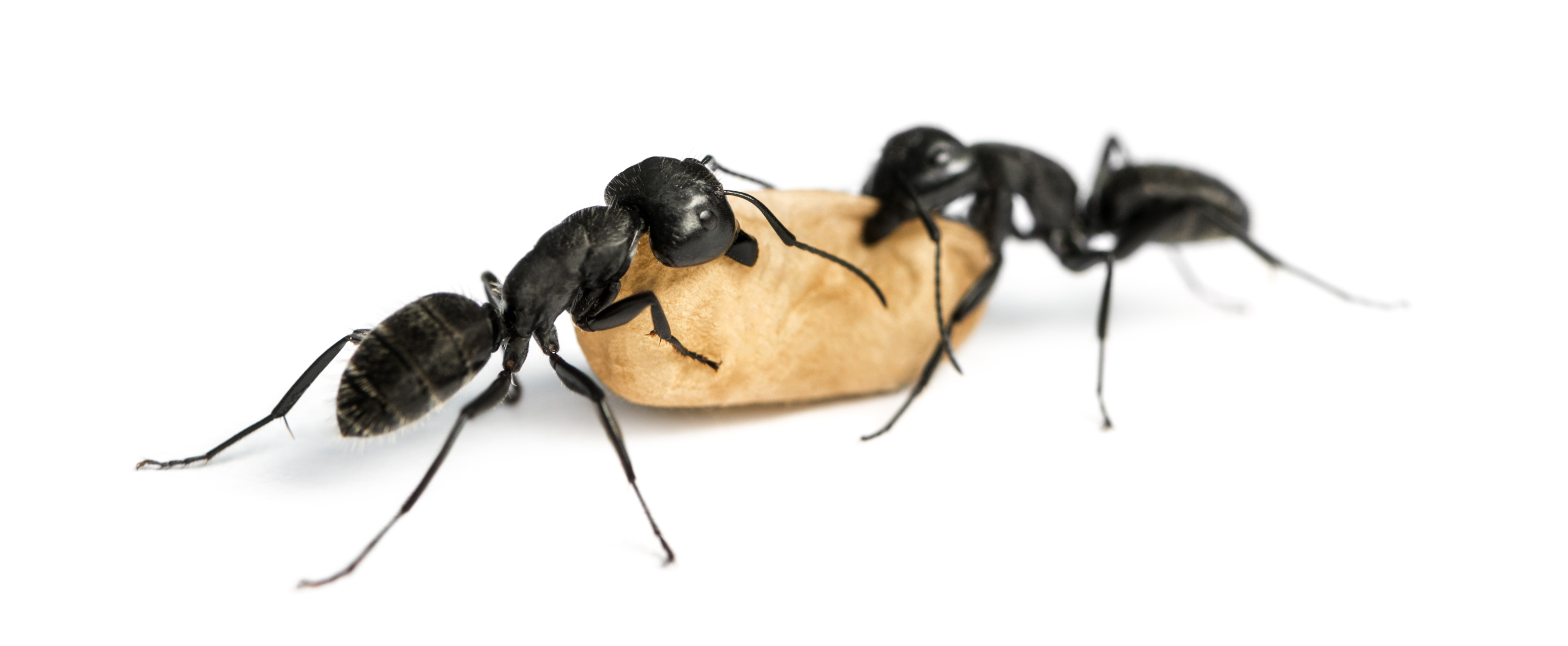
Two carpenter ants carrying food
Wood-nesting

Carpenter Ants

  • Large black ants, often a quarter inch or bigger
  • Seen at night or coming out of walls and ceilings
  • Small piles of sawdust-like debris below wood

Carpenter ants don't eat wood — they chew it out to make room for the nest, usually in wood that's already damp from a leak. Seeing them inside in late winter or early spring often means a nest is in the house, not just outside.

Small ants on leaves
Kitchen ants

Odorous House Ants

  • Small dark brown or black ants in long trails
  • Smell like rotten coconut when crushed
  • Show up in kitchens and bathrooms, often after rain

These are the tiny black ants most people find on the counter. Colonies can be large, with many queens, and they move nests quickly — which is why spraying them tends to make the problem spread.

Cracks in a foundation
Under the slab

Pavement Ants

  • Small dark ants near sidewalks, patios and driveways
  • Little piles of sand along slab edges or basement floors
  • Come up through cracks in basement and garage floors

Pavement ants nest under concrete and push soil up through the cracks. They wander inside looking for food, especially greasy and sweet crumbs, and are common in older North Jersey homes with slab additions and basements.

Which ant do you have? A quick ID guide

The right treatment depends on the ant, so identification comes first. Here's what we look for:

Carpenter antOdorous house antPavement antPharaoh ant
Size & colorLarge, usually black (some reddish-black)Small, dark brown to blackSmall, dark brown to black, grooved headTiny, pale yellow to light brown
Where they nestDamp or damaged wood, wall voids, porch posts, treesWall voids, under floors, mulch, under stonesUnder slabs, sidewalks and patio paversWarm hidden spots inside — walls, behind appliances
What you noticeAnts at night, sawdust piles, rustling in wallsLong trails to sweets, coconut smellSand piles along slab cracksTrails in apartments, bathrooms and kitchens
DamageCan hollow out wood over timeContaminate food, no structural damageContaminate food, no structural damageContaminate food; hard to control in multi-unit buildings
Spraying?Doesn't reach the nestCan split the colonyKills foragers onlyCan cause the colony to split and spread

We also see acrobat ants (they hold up a heart-shaped abdomen when disturbed) and, in apartment buildings, Pharaoh ants. Not sure which one you have? Text a clear photo to 973-510-2585 — put a coin next to the ant for size.

Finding the colony is the whole job

An ant trail is a delivery route. The workers you see on the counter are a small share of the colony, and the queens never leave the nest. If the nest isn't treated, new workers just keep coming. So most of an ant visit is detective work:

  • Follow the trail both ways. We trace where the ants go into the wall, floor or window frame, and where they come out outside.
  • Check for moisture. Carpenter ants and odorous house ants both like damp spots — leaky window sills, bathroom walls, roof edges, porch posts and wood touching soil.
  • Look for frass. Carpenter ants push out a coarse, sawdust-like debris that often has bits of dead insects in it. Fresh piles under trim or in the basement point right to the nest.
  • Check the yard. Stumps, firewood piles, landscape timbers, mulch beds and trees touching the roof are common outdoor nests that feed ants into the house.
  • Watch at night. Carpenter ants are most active after dark. A flashlight check around 10 p.m. in the kitchen or basement can tell you more than a week of daytime spotting.

When you call us, tell us where you see the ants, what time of day, and whether you've noticed sawdust, a recent leak or ants with wings. That narrows it down before we even arrive.

Ant baits vs. sprays — why the method matters

Most failed ant jobs we're called to after a DIY attempt come down to this:

Slow-acting baitRepellent spray (most store sprays)Targeted nest treatment
How it worksWorkers carry it back and share it with the queens and youngKills the ants it touches; others avoid the areaProduct placed right into the nest, wall void or damaged wood
Reaches the colony?Yes — that's the pointRarelyYes, once the nest is found
Best forOdorous house, pavement and Pharaoh antsNot recommended for trails insideCarpenter ants and nests we can locate
SpeedDays to a couple of weeks; activity may rise briefly firstInstant, but ants come backFast once applied where they live
RiskLow when placed out of reach of kids and petsCan split colonies into several new nestsLow — applied by a licensed technician

Tip: once baits are out, don't spray or wipe the trail with cleaner for a few days. The ants need to find the bait and carry it home. We usually combine baiting inside with a treatment around the outside of the house so new ants don't walk right back in.

Carpenter ant damage vs. termite damage

Both insects ruin wood and both swarm in spring, so homeowners mix them up all the time. The difference matters, because the treatment is different.

  • The galleries: carpenter ant tunnels are smooth and clean, almost sanded. Termite galleries are rough and packed with mud and soil.
  • The debris: carpenter ants push out frass — sawdust with insect parts. Subterranean termites don't leave sawdust; they leave mud tubes on the foundation.
  • The swarmers: flying ants have a pinched waist, bent antennae and front wings longer than the back. Termite swarmers have a thick waist, straight antennae and wings all the same length.
  • The speed: carpenter ant damage usually builds slowly in wood that's already wet. Termite damage can spread through sill plates and joists without any outside sign.

Found winged insects inside in spring? Save a few in a bag or take a sharp photo. If it turns out to be termites, see our termite inspection and treatment page — termite treatment comes with a 90-day warranty.

More on spotting a nest: signs of carpenter ants in the house.

How our ant service works

1

Call or text

Tell us where you see ants and send a photo if you can. Same-day appointments are often available.

2

Identify & track

We identify the species, follow the trails and find the nest or the moisture problem feeding it.

3

Treat the colony

Baits, targeted nest treatment or both inside, plus a perimeter treatment outside where it makes sense.

4

Prevent the comeback

We point out the leaks, gaps and wood-to-soil contact that invite ants, so they don't move back in.

Regular service from Silver Bullet comes with a 100% satisfaction guarantee. For homes that get ants every spring, ask about a residential pest control plan.

When ants show up in New Jersey

🌱

Late winter & spring

Carpenter ants seen indoors in February or March often mean an indoor nest. Spring is also swarm season for carpenter ants and pavement ants.

🌧️

After heavy rain

Odorous house ants get flooded out of soil and mulch and move inside — trails suddenly appear on counters and in bathrooms.

☀️

Summer

Peak foraging. Ants come in for water and sugar, and outdoor colonies are at full size around patios, pools and decks.

🍂

Fall & winter

Activity drops outside, but ants nesting in warm walls or near heating pipes can stay active all winter. Ants coming out of vents?

How to keep ants out after treatment

  • Fix leaks fast. Wet window sills, bathroom subfloors and roof edges are where carpenter ants start.
  • Trim branches that touch the roof or siding — they're ant highways into the attic.
  • Move firewood away from the house and off the ground, and pull mulch a few inches back from the foundation.
  • Seal gaps around pipes, wires, door thresholds and where the slab meets the foundation.
  • Keep sweets sealed and wipe up crumbs, pet food and sticky spills, especially in spring and after rain.
  • Don't spray trails with store-bought spray while baits are working.

Ants keep coming back to the same house when the reason they came — water, food or an easy path in — is still there. We'll show you what we see so you can fix it once.

Get an Ant Control Quote

Tell us where you're seeing ants, how big they are and how long it's been going on — we'll get back to you quickly.

Why people call us about ants

  • Large black ants in the house in late winter or spring
  • Ant trails in the kitchen that keep coming back
  • Sawdust piles under trim or in the basement
  • Winged ants inside — and worry they're termites
  • Ants in an apartment building, restaurant or office
📞 Call 973-510-2585

Request Service

🔒 Your info stays private · Hablamos español.

What's bugging you? - Step 1 of 3

Ant Exterminator FAQ

What's the best way to get rid of ants in my house?

Find and treat the colony. For most small house ants that means slow-acting baits the workers carry back to the nest; for carpenter ants it means locating the nest in the wood and treating it directly.

Why do ants keep coming back after I spray?

Most sprays kill only the ants they touch, and some ants respond by splitting into new colonies. The nest and the queens are untouched, so new workers keep showing up.

Are carpenter ants dangerous to my house?

They can be. Carpenter ants hollow out wood for their nests, usually in wood that's already damp, and over time that can weaken trim, sills and framing.

How do I tell carpenter ant damage from termite damage?

Carpenter ant tunnels are smooth and clean and come with sawdust-like frass. Termite galleries are rough and packed with mud, and termites leave mud tubes instead of sawdust.

What are the tiny black ants in my kitchen?

In North Jersey they're usually odorous house ants or pavement ants. Odorous house ants smell like rotten coconut when crushed; pavement ants leave little sand piles near slab cracks.

How long does ant treatment take to work?

Baits usually take several days to a couple of weeks, and you may see more ants for a day or two as they find the bait. Direct nest treatments work faster once the nest is found.

Is ant treatment safe for kids and pets?

Yes, when it's done right. Baits are placed in protected spots out of reach, and we tell you what was applied and where before we leave.

Why do I see ants after it rains?

Heavy rain floods nests in the soil and mulch, so odorous house ants move indoors looking for dry ground and food.

Do you offer same-day ant control?

Same-day appointments are often available depending on the schedule and your location. Call or text 973-510-2585.

Are you licensed to do ant control in New Jersey?

Yes. Silver Bullet Pest Control holds NJ Pesticide License 90568B and has over 15 years of experience.

¿Ustedes eliminan hormigas carpinteras?

Sí. Hablamos español. Llame o mande texto al 973-510-2585 para eliminar hormigas en su casa o negocio.

Ant control near you

Based in Garfield, we treat ants in these towns and across Bergen, Passaic and Essex counties.

Updated October 2026 by the Silver Bullet Pest Control team, Garfield, NJ • NJ License 90568B

Scroll to Top