Silver Bullet Pest Control logoSilver Bullet Pest Control
Carpenter Bee Control Β· North Jersey

Carpenter Bee Control & Prevention in New Jersey

Perfectly round holes in the deck, fascia or eaves β€” and big black bees hovering around them every spring? Those are carpenter bees. Silver Bullet Pest Control treats the tunnels, seals them up and helps you keep the bees from coming back to homes across Bergen, Passaic, Essex and Hudson counties.

Featured on Telemundo 47 β€’ EPA Pesticide Safety Certified β€’ 4.9 Stars on Google β€’ NJ License 90568B

Text us a photo of the holes and the sawdust underneath β€” we'll tell you if it's carpenter bees.

  • βœ“ Same-day appointments often available
  • βœ“ Licensed & insured in NJ
  • βœ“ Homes & businesses
  • βœ“ English & EspaΓ±ol

How do you get rid of carpenter bees in New Jersey?

The way to get rid of carpenter bees is to treat inside each tunnel (gallery) with an insecticide dust, leave the holes open for a few days so returning bees contact it, then seal the holes and paint or stain the wood so new bees don't move in. Spraying the bees you see flying doesn't reach the eggs and larvae inside the wood, and plugging the holes right away traps them in to chew back out. Treatment works best in spring, when females are drilling and laying eggs. Silver Bullet Pest Control treats and seals carpenter bee damage across North Jersey β€” call or text 973-510-2585.

How much does carpenter bee treatment cost?

Carpenter bee coverage is included in Silver Bullet's Plus plan, starting at $75.99 a month, and in the Premium plan, starting at $105.99 a month. A one-time carpenter bee treatment is quoted on the call, because the price depends on how many holes there are and how high they are.

ServicePriceDetails
Plus plan with carpenter bee coverage$75.99/moAlso adds mice control and a yearly WDO report
Premium plan$105.99/moAdds termite control, stink bugs, ticks & mosquitoes
One-time carpenter bee treatmentCall for quoteDepends on number and height of holes

Plan prices are starting prices and need an initial fee and a 12-month agreement. See every Silver Bullet price.

Signs you have carpenter bees

Carpenter bees are the large, shiny black-and-yellow bees that hover around porches and rooflines in spring. They don't eat wood like termites do β€” they chew tunnels into it to raise their young. One hole isn't a disaster, but the same bees and their offspring come back to the same wood year after year and keep extending the tunnels.

  • Round holes about the size of a fingertip (roughly half an inch), so clean they look drilled, usually on the underside or edge of a board.
  • Little piles of coarse sawdust on the deck, steps, car or patio furniture right below the holes.
  • Yellow-brown stains streaking down siding or trim below the holes β€” that's bee waste.
  • Big bees hovering in front of your face near the eaves or deck. Those are usually males guarding the area, and they can't sting.
  • Buzzing or a faint chewing sound inside a fascia board or rail in spring.
  • Woodpecker holes torn open along a board in late summer or fall β€” birds hunting the larvae inside.

Not sure? Text a photo of the hole and the bee to 973-510-2585.

Carpenter bee or bumble bee? How to tell

They're about the same size and both buzz loudly, but they behave very differently around a house:

Carpenter beeBumble bee
Abdomen (rear end)Shiny, bare and mostly blackFuzzy all over, with yellow bands
Where it nestsTunnels drilled into wood β€” decks, fascia, eaves, shedsIn the ground, old rodent burrows, under sheds or in thick grass
Lives inSmall family groups reusing the same woodColonies of dozens to a few hundred
StingingMales can't sting; females rarely do unless handledWill sting to defend the nest
Damage to your houseYes β€” holes, tunnels, stains and woodpecker damageNo β€” they don't damage wood
What to doTreat the galleries and seal the holesUsually leave them alone unless the nest is in a high-traffic spot

More detail: carpenter bee vs. bumble bee. If what you have looks more like a wasp or yellow jacket, see our bee and wasp removal page.

Where carpenter bees drill on North Jersey homes

They pick bare, weathered softwood β€” pine, cedar, cypress and other untreated or worn lumber. These are the spots we check first:

🏠

Fascia, soffits & eaves

The most common spot. The underside of fascia boards and exposed rafter tails stay dry and sheltered, and the paint is often worn on older homes.

πŸͺ΅

Decks, railings & steps

The underside of handrails, deck rails, stair stringers and joists β€” especially on decks that haven't been sealed or stained in a few years.

🏑

Porches, pergolas & gazebos

Exposed beams and posts in porch ceilings, pergolas and arbors. Cedar and other natural wood finishes are a favorite.

πŸ›–

Sheds, fences & playsets

Wooden sheds, fence rails, garage trim, window frames and backyard play equipment β€” anywhere bare wood faces the sun.

Carpenter bees, carpenter ants or termites?

Three different insects can damage the wood in a New Jersey home. They leave different clues and need different treatment:

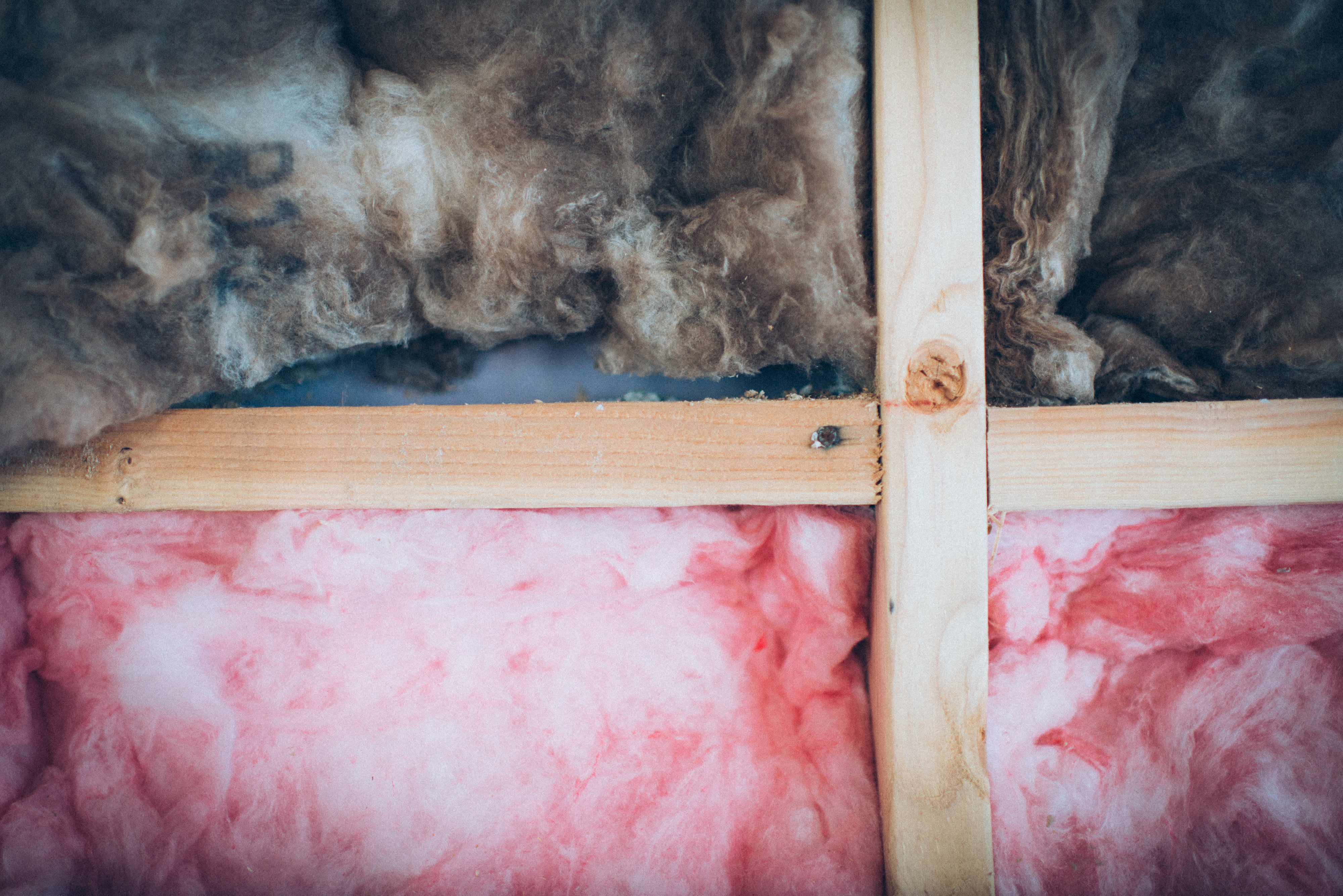
Damaged wood framing and insulation inside a house wall
Carpenter bees

Round Holes in Outdoor Wood

  • Clean half-inch round holes in fascia, decks and rails
  • Coarse sawdust piles right below
  • Large black bees hovering nearby in spring

Carpenter bees work mostly in exposed outdoor wood. The tunnel goes in about an inch, then turns and runs along the grain β€” so the damage inside is bigger than the hole suggests.

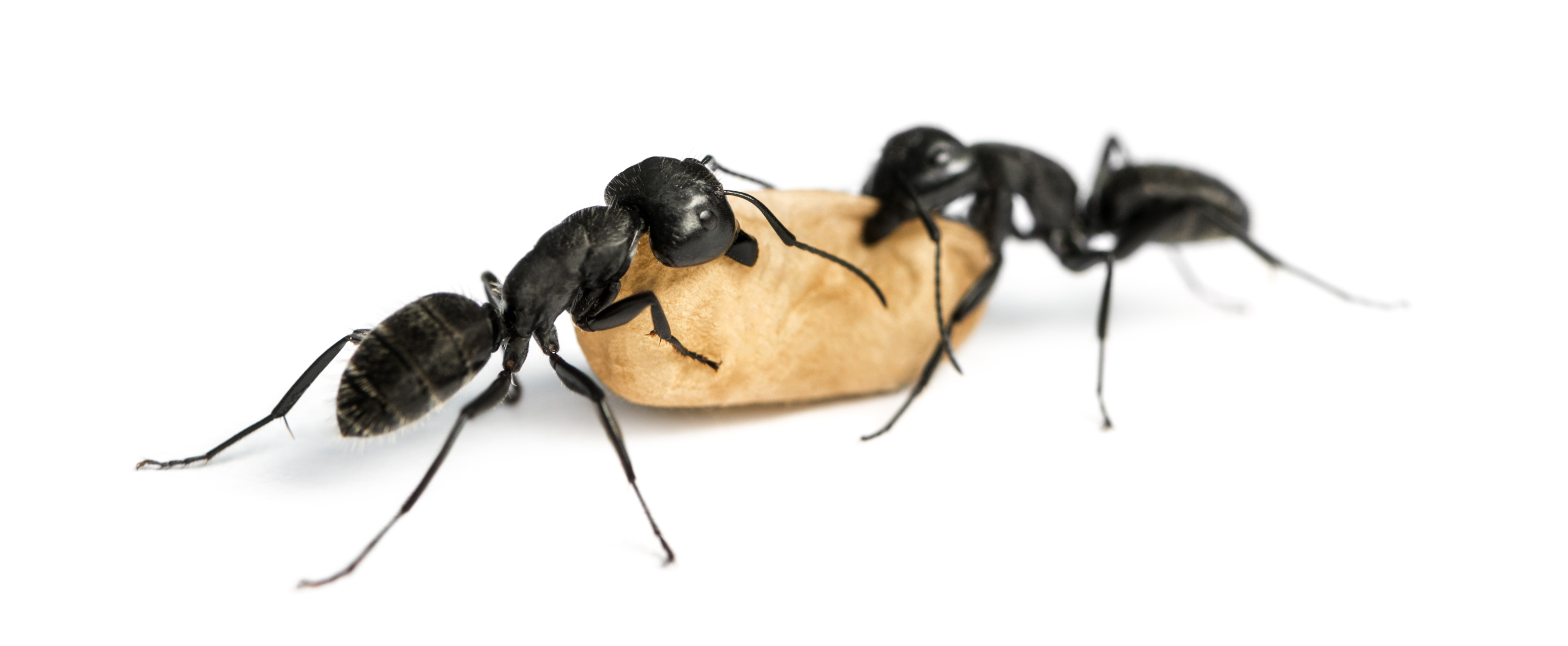
Two carpenter ants walking on a surface
Carpenter ants

Sawdust Inside the House

  • Large black ants indoors, often at night
  • Fine sawdust with insect parts near baseboards or windows
  • Usually tied to wet or rotting wood

Carpenter ants hollow out damp wood to nest. They often start where a leak or rot has softened framing, then spread into walls and attics.

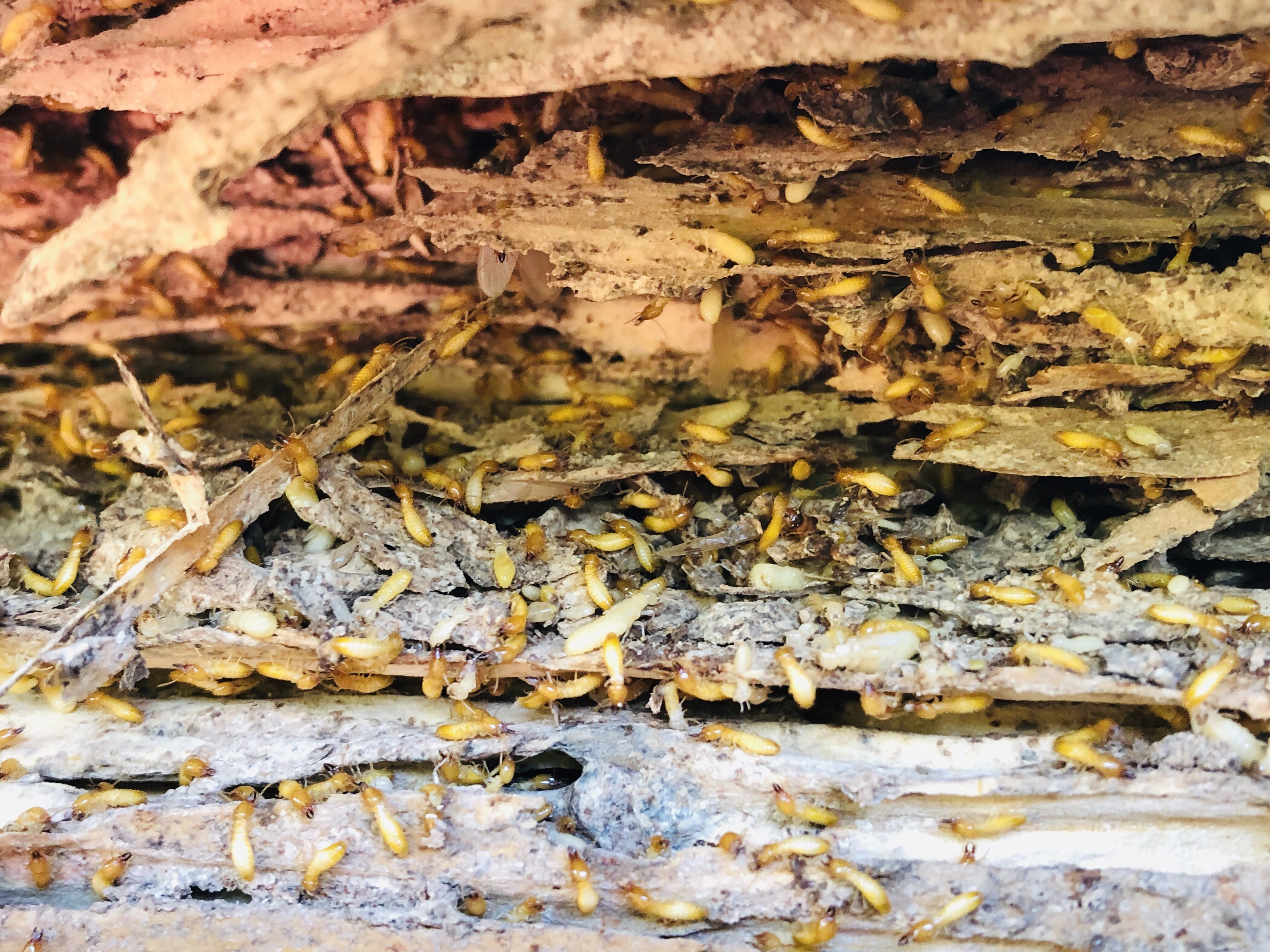
Subterranean termites working inside damaged wood
Termites

Hidden Damage & Mud Tubes

  • Mud tubes on the foundation or basement walls
  • Swarmers or piles of wings in spring
  • Wood that sounds hollow when tapped

Termites eat wood from the inside and come up from the soil, so they work at the foundation level and stay out of sight. They need a different inspection and treatment.

Why woodpeckers are tearing up your trim

If you see long, ragged gouges along a fascia board or deck rail in late summer or fall, check for carpenter bee holes nearby. Woodpeckers can hear and smell the larvae developing inside the tunnels, and they'll rip open the wood to get to them. The bird damage is often much worse than the bees' original holes β€” and it opens the wood up to water and rot.

Fixing the woodpecker problem means fixing the bee problem. Once the galleries are treated and sealed and there's nothing left inside to eat, the birds lose interest. Damaged boards may need to be patched or replaced, then primed and painted.

Don't ignore it for another season. Each year the same tunnels get reused and extended, new bees add new holes nearby, and more larvae draw more woodpeckers. A few holes on a fascia board can turn into a board that needs replacing.

How we treat carpenter bees

1

Inspect every board

We check the fascia, eaves, deck, railings, porch and outbuildings and mark every active hole β€” there are usually more than the homeowner has spotted.

2

Treat inside the galleries

We apply an insecticide dust directly into each tunnel, where it reaches the eggs, larvae and adult bees living in the wood.

3

Leave the holes open briefly

The holes stay open for a short time so bees coming and going pass through the treated tunnel instead of being trapped and chewing a new way out.

4

Seal & protect the wood

Once activity stops, the holes are sealed and we talk through painting, staining or repairing the damaged boards so new bees don't move in.

The best time for carpenter bee control in NJ

🌱

Spring (April–May)

The adults that spent the winter in old tunnels come out, mate, and females start drilling and laying eggs. This is the best time to treat β€” catch them before the next generation is sealed in the wood.

β˜€οΈ

Summer

Larvae are growing inside the galleries. Treatment still works, and it's a good time to find and mark every hole.

πŸ‚

Late summer & fall

New adults come out briefly, feed, then crawl back into the tunnels for winter. Woodpecker damage is most common now.

❄️

Winter

The bees are tucked inside the wood. It's a good time to plan repairs and painting so the wood is protected before spring.

How to keep carpenter bees from coming back

  • Paint is better than stain, and stain is better than bare wood. Carpenter bees much prefer bare or weathered wood. A solid coat of paint is the strongest deterrent.
  • Keep up with deck maintenance. Reseal or restain decks and rails on a regular schedule, and pay attention to the undersides and edges where bees like to start.
  • Seal old holes properly after treatment. Open, empty galleries are easy for next year's bees to reuse.
  • Consider other materials for replacement trim and railings β€” composite, PVC or aluminum fascia and capping give carpenter bees nothing to drill.
  • Check in early spring. A quick look at the eaves and deck in April catches the first holes before eggs are laid.

Store-bought traps can catch some bees, but they don't treat the larvae already in the wood. If you've had carpenter bees two years in a row, a professional treatment plus sealing usually breaks the cycle.

Get a Carpenter Bee Treatment Quote

Tell us where the holes are and roughly how many β€” a photo helps β€” and we'll get back to you quickly.

Why people call us about carpenter bees

  • Round holes in the fascia, eaves or deck
  • Sawdust piles and stains under the trim
  • Woodpeckers tearing at the boards
  • Bees back for another spring in the same wood
  • Getting the house ready to paint or sell
πŸ“ž Call 973-510-2585

Request Service

πŸ”’ Your info stays private Β· Hablamos espaΓ±ol.

What's bugging you? - Step 1 of 3

Carpenter Bee Control FAQ

Are carpenter bees harmful to my house?

Yes, over time. One season of holes is mostly cosmetic, but the tunnels get reused and extended every year, and woodpeckers tear the wood open to get the larvae, which lets in water and rot.

Do carpenter bees sting?

Rarely. Males, the ones that hover in your face, have no stinger, and females usually only sting if they're handled or trapped.

Should I plug carpenter bee holes right away?

No. Treat the holes first and leave them open for a few days so the bees contact the treatment; plugging an untreated hole traps bees inside to chew a new way out.

When is the best time to treat carpenter bees in New Jersey?

Spring, usually April and May, when females are drilling and laying eggs. Treating then stops the next generation before it's sealed into the wood.

Why are woodpeckers pecking holes in my fascia?

They're most likely hunting carpenter bee larvae inside the tunnels. Treat and seal the galleries and the woodpeckers lose interest.

Will painting my deck stop carpenter bees?

It helps a lot. Carpenter bees prefer bare or weathered wood, so paint, and to a lesser degree stain or sealer, makes your wood much less attractive.

What's the difference between a carpenter bee and a bumble bee?

A carpenter bee has a shiny, bare black abdomen and drills into wood. A bumble bee is fuzzy all over and nests in the ground.

Do carpenter bee traps work?

Traps catch some adult bees, but they don't reach the eggs and larvae already in the wood. They're better as an add-on than a fix.

Do you offer carpenter bee control in Bergen County?

Yes. We're based in Garfield and treat carpenter bees in Bergen, Passaic, Essex and Hudson counties.

Is carpenter bee damage the same as termite damage?

No. Carpenter bees drill clean round holes in outdoor wood; termites eat wood from the inside and come up from the soil. If you're not sure, we can inspect for both.

ΒΏTratan abejas carpinteras?

SΓ­. Hablamos espaΓ±ol. Mande una foto de los agujeros al 973-510-2585 y le decimos quΓ© hacer.

How much does carpenter bee treatment cost?

Carpenter bee coverage is included in Silver Bullet's Plus plan, starting at $75.99 a month, and in the Premium plan, starting at $105.99 a month. A one-time carpenter bee treatment is quoted on the call, because the price depends on how many holes there are and how high they are.
Carpenter bee control near you

Based in Garfield, we treat carpenter bees in these towns and across Bergen, Passaic, Essex and Hudson counties.

Updated October 2026 by the Silver Bullet Pest Control team, Garfield, NJ β€’ NJ License 90568B

Scroll to Top