Silver Bullet Pest Control logoSilver Bullet Pest Control
Wildlife & Rodent Exclusion · North Jersey

Animal Entry Point Sealing in New Jersey

Squirrels in the attic, mice in the walls, a raccoon on the roof or bats at the vents? Getting the animal out is only half the job. We find every gap it used, make sure nothing is left inside, and seal the house with materials animals can’t chew or pull apart.

Featured on Telemundo 47 • EPA Pesticide Safety Certified • 5-Star Google Rated • NJ License 90568B

Don’t seal a hole you think an animal is using until you know it’s empty. Text us a photo of the gap and we’ll tell you what we see.

  • ✓ Same-day appointments often available
  • ✓ Licensed & insured in NJ
  • ✓ Homes & businesses
  • ✓ English & Español

What is animal entry point sealing?

Animal entry point sealing (also called exclusion or animal proofing) means finding every gap a squirrel, raccoon, bat, bird, mouse or rat uses to get into a building and closing it with materials the animal can’t chew through or pull open, after making sure no animals are still inside. Silver Bullet Pest Control does this work across North Jersey from our base in Garfield (NJ License 90568B, licensed by the NJ Division of Fish and Wildlife). We inspect from the foundation to the roofline, remove or exclude the animals first, then seal the openings so the problem doesn’t come back. Call 973-510-2585 for a free quote. Hablamos español.

Why sealing the gaps matters more than trapping

Traps, bait and repellents deal with the animals that are inside today. They don’t do anything about the next squirrel, mouse or raccoon that finds the same opening. Animals leave scent trails, and a gap that worked once tends to get used again, often by the next generation born nearby. That is why a house can have mice every fall or squirrels every spring for years.

Sealing changes that. Once the openings are closed with the right materials, the building stops being an option. That is the difference between extermination, which removes the animals you have, and exclusion, which keeps new ones from getting in. Most lasting jobs need both: remove or exclude the animals first, then seal.

Across Bergen, Passaic, Essex and Hudson counties, many homes are older two-family houses, colonials and Cape Cods with aging rooflines, settled foundations and decades of pipe, cable and dryer-vent holes. Each repair, addition and new utility line can leave a gap. A careful inspection usually finds more openings than the homeowner expected, and the small ones matter as much as the big ones.

How small a gap can each animal use?

These are general sizes. Young animals fit through smaller gaps, and squirrels and rats can chew a small gap bigger.

AnimalGap it can useWhere we usually find it
House mouseAbout 1/4 inch, roughly the width of a pencilFoundation cracks, pipe and cable holes, garage door corners, door sweeps
Norway ratAbout 1/2 inchFoundation and slab gaps, sewer and drain lines, crawl spaces, sheds
BatAbout 3/8 inchRidge and gable vents, chimney flashing, soffit and fascia gaps
SquirrelAbout 1.5 inches, and they chew to enlargeRoof edges, soffits, roof returns, gable vents, under solar panels
RaccoonGaps they can tear open, often 4 inches or moreChimneys, roof vents, soffits, under decks and porches
Birds (pigeons, starlings, sparrows)Small openings in vents and eavesDryer and bath vents, gutters, eaves, signs and ledges

Not sure what’s using a gap? Rub marks, droppings, chew marks and nesting material tell us. Text a photo to 973-510-2585.

Where animals get into North Jersey homes

We check the whole building, but these are the three areas where most entry points turn up.

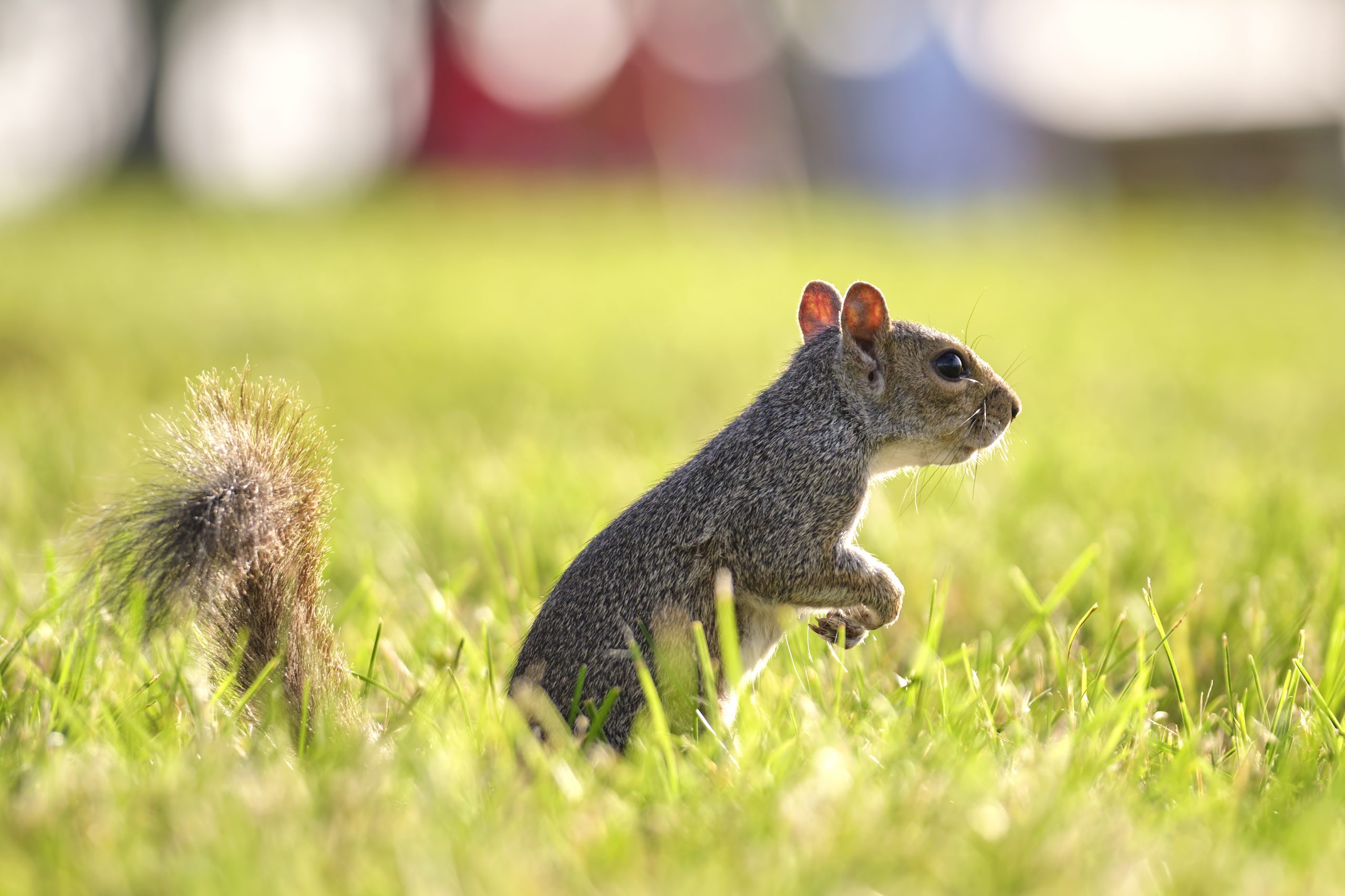
Gray squirrel (stock photo)
Roofline

Roof edges, vents and soffits

  • Chewed or rounded holes at the roof edge or soffit
  • Scratching in the attic at dawn and dusk
  • Torn vent screens or a loose gable vent

Squirrels, raccoons, bats and birds mostly come in high. We check roof returns, soffits, fascia, ridge and gable vents and the gaps where a roof meets a wall or chimney.

Cracks in a foundation wall
Foundation

Foundation, pipes and utility lines

  • Droppings along basement walls
  • Gaps where pipes, gas lines or cables enter
  • Cracks in the foundation or around basement windows

Mice and rats come in low. We look at every penetration through the foundation, basement windows, sill gaps, air conditioner lines and the bottom of doors.

Wildlife photo from our media library
Chimney, decks & solar

Chimneys, decks and solar panels

  • Noises or debris in the fireplace
  • Digging under a deck, porch or shed
  • Nesting or droppings under solar panels

Uncapped chimneys draw raccoons and birds, open decks and porches shelter skunks and groundhogs, and the space under solar panels is a favorite nesting spot for squirrels and pigeons.

What we seal with, and why it matters

Caulk and spray foam alone don’t stop animals that chew. We match the material to the animal and the spot.

MaterialWhere it’s usedWhy
Heavy-gauge galvanized meshVents, soffit gaps, under decks and porchesLets air through but stands up to chewing and pulling
Sheet metal and flashingRoof edges, roof returns, chewed fascia cornersCovers areas squirrels keep chewing
Copper or steel mesh packed into gapsPipe and cable holes, small foundation gapsMice and rats can’t chew through it
Sealants over meshSmall cracks and finished edgesWeather-tight finish over a chew-proof base
Chimney caps and vent coversChimneys, roof vents, dryer and bath ventsKeeps raccoons, birds and squirrels out while the vent still works
Door sweeps and garage door sealsDoors and garage doorsCloses the gaps mice use at floor level

The goal is a seal that lasts and looks neat on the house, not a patch the next animal pulls out.

How entry point sealing works, step by step

1

Inspect top to bottom

We go over the foundation, walls, roofline and attic and mark every opening, used or not.

2

Identify the animal

Droppings, tracks, rub marks and damage tell us what is getting in, so the plan fits that animal.

3

Get them out first

Animals inside are removed or excluded with one-way doors or devices so they can leave but not return.

4

Confirm it’s empty

We make sure nothing is still inside, including young, before the last openings are closed.

5

Seal every gap

Openings are closed with chew-proof materials suited to each spot.

6

Check and recommend

We check the work and point out anything else that invites animals, like branches over the roof.

Why you shouldn’t seal a hole too soon

It’s tempting to stuff a hole the moment you find it. If an animal is still inside, that can make things much worse:

  • Trapped animals cause damage. A squirrel or raccoon sealed in will chew or tear its way out, often through the ceiling, a wall or a new spot on the roof.
  • Babies can be left behind. In spring and early summer, squirrels and raccoons often have young in the attic. A mother sealed out will fight to get back in, and young sealed in die and cause odor.
  • Bats need special timing. Bats are protected in New Jersey and are excluded with one-way devices, not sealed in. Full bat exclusion is not done while flightless pups may be in the roost. NJ bat exclusion season.
  • Odor from dead animals. A mouse or rat that dies in a wall void can smell for weeks.

The safe order is always: confirm what’s inside, get it out, then seal.

What you can do yourself, and what to leave to us

✅

Good DIY steps

Install door sweeps, keep garbage and bird seed sealed, trim branches back from the roof, and keep firewood and clutter away from the foundation.

✅

Watch and note

Note where you hear noises and when, and photograph gaps and droppings. It makes the inspection faster.

⚠️

Call a pro for

Roofline and chimney work, anything on a ladder, active animals in the attic or walls, bats, and openings you can’t see from inside.

⚠️

Avoid

Spray foam by itself, steel wool that rusts outdoors, and sealing any hole before you know nothing is inside.

Entry point sealing through the year

🌱

Spring

Squirrels and raccoons are having young, so we confirm nothing is nesting before we seal. A good time to fix winter damage on the roofline.

☀️

Summer

Bat pups may be in roosts in early to mid summer, so bat exclusion waits. Birds nest in vents and under solar panels.

🍂

Fall

The busiest season: mice and rats move indoors as nights get cold, and squirrels look for a winter den. The best time to seal the foundation.

❄️

Winter

Rodents already inside are most active indoors. Roofline sealing can still be done on dry days.

What does entry point sealing cost?

Every house is different, so we don’t post a single price. We give a free quote and tell you the price before any work starts. What affects it:

  • How many openings need sealing and how big they are.
  • Where they are. Ground-level work is quicker than a steep or three-story roofline.
  • Which animal. Bats and raccoons need different devices and timing than mice.
  • Whether animals are inside now and need removal or exclusion first.
  • Repairs and cleanup, such as chewed fascia, torn vents or attic droppings.

Coverage depends on the service: our mice and rodent service includes 90 days of coverage with unlimited free service calls in that time, and bat exclusion comes with a 5-year warranty. See general pest control prices in NJ.

Get a free entry point sealing quote

Tell us what you’re hearing or seeing and where. A photo of the gap helps. We usually get back to you the same business day.

Call us for

  • Scratching in the attic or walls
  • Chewed holes at the roofline
  • Mice or rats every fall
  • Animals in the chimney
  • Nesting under solar panels
  • Digging under a deck or porch
📞 Call 973-510-2585

Request Service

🔒 Your info stays private · Hablamos español.

What's bugging you? - Step 1 of 3

Entry Point Sealing Questions

What is animal entry point sealing?

It means finding every gap animals use to get into a building and closing it with chew-proof materials, after making sure no animals are still inside. It’s also called exclusion or animal proofing.

Is exclusion better than extermination?

They do different jobs. Extermination removes the animals you have now; exclusion keeps new ones out. Most lasting results need both: remove first, then seal.

How small a hole can a mouse get through?

About 1/4 inch, roughly the width of a pencil. Rats need about 1/2 inch, bats about 3/8 inch and squirrels about 1.5 inches.

Can I just use spray foam or steel wool?

Not by itself. Mice and rats chew through foam, and plain steel wool rusts outdoors. We use mesh, metal and sealants matched to each spot.

Should I seal the hole if an animal is still inside?

No. A trapped animal will chew or tear a new way out, and young left inside die and cause odor. Confirm it’s empty or use a one-way door first.

Do you seal entry points for bats?

Yes, with one-way exclusion devices first, then sealing once the bats are out. Full bat exclusion is not done while flightless pups may be in the roost in early to mid summer.

When is the best time to seal my house?

Fall is the most important time for mice and rats. For squirrels and raccoons, any time once you know no young are inside. Bat exclusion is mainly late summer and fall.

Do you seal under solar panels?

Yes. We install mesh around solar panels to keep squirrels and pigeons from nesting underneath.

Is there a warranty?

It depends on the service. Bat exclusion comes with a 5-year warranty, and our mice and rodent service includes 90 days of coverage with unlimited free service calls.

How much does it cost to seal entry points?

It depends on how many openings there are, where they are, which animal, whether animals are inside now and any repairs. We give a free quote and the price before work starts.

¿Hablan español? ¿Sellan las entradas de animales?

Sí. Encontramos y sellamos los huecos por donde entran ardillas, mapaches, murciélagos, ratones y ratas. Llame o mande texto al 973-510-2585.

Serving Garfield & nearby towns

Based in Garfield, we seal homes and businesses in these towns and across Bergen, Passaic, Essex and Hudson counties.

Updated October 2026 by the Silver Bullet Pest Control team, Garfield, NJ • NJ License 90568B

Scroll to Top