
 Silver Bullet Pest Control
Spotted Lanter Fly New Jersey
The spotted lanternfly is an invasive insect from Asia that now shows up in yards, parks and parking lots all over New Jersey. It doesn't bite and it won't infest your house, but it sucks sap from trees and vines, coats decks and cars with sticky honeydew, and spreads by hitching rides on vehicles. This guide covers how to identify every life stage, what to do with egg masses, what actually works to reduce them, and when to get help.
4.9 stars on Google • NJ License 90568B • 15+ years • Based in Garfield • Hablamos español
Not sure if it's a lanternfly? Text a photo to 973-510-2585 and we'll tell you what it is.
- ✓ Same-day appointments often available
- ✓ Licensed & insured in NJ
- ✓ Homes & businesses
- ✓ English & Español
What should I do about spotted lanternflies in New Jersey?
If you find spotted lanternflies in New Jersey, the state's advice is to destroy them: squash adults and nymphs, scrape egg masses into a bag or jar of rubbing alcohol from fall through spring, and check your car before you drive so you don't carry them to new places. They don't bite people or pets and don't breed indoors, but they weaken grapevines and stress trees, and their sticky honeydew grows black mold on decks, patios and cars. For a heavy problem on your property, Silver Bullet Pest Control can identify what you have and talk through your options; call or text 973-510-2585.
What is the spotted lanternfly?
The spotted lanternfly is a planthopper — a sap-feeding insect related to leafhoppers and cicadas, not a true fly and not a moth. It's native to Asia and was first found in the United States in Pennsylvania in 2014. It was confirmed in New Jersey in 2018 and has since spread across much of the state, including Bergen, Passaic, Essex and Hudson counties.
It spreads mostly by hitchhiking. Adults lay egg masses on almost any flat surface — tree bark, stone, fences, trailers, pallets, cars and outdoor furniture — and those surfaces get moved. That's why the New Jersey Department of Agriculture has put a growing list of counties under quarantine, with rules for businesses that move goods and vehicles. Rules and the county list change, so check the NJ Department of Agriculture's spotted lanternfly page for the current quarantine and whether they want sightings reported where you live.
For homeowners, the biggest complaints are the sheer numbers in late summer, the sticky mess under trees, and damage to backyard grapevines and favorite trees.
How to identify a spotted lanternfly at every stage
It looks completely different depending on the time of year:
| Stage | What it looks like | Size | When you see it in NJ |
|---|---|---|---|
| Egg mass | Gray, mud-like smear that dries and cracks; rows of seed-like eggs when scraped | About 1 to 1.5 inches long | Fall through spring, laid from about September on |
| Early nymph | Black with bright white spots, jumps when touched | Pea-sized or smaller | Roughly May through July |
| Late nymph | Red with black stripes and white spots | About half an inch | Roughly July |
| Adult | Gray-tan front wings with black spots; bright red hind wings with black and white when it flies | About 1 inch long | Late July until a hard frost |
Adults often rest with wings closed and look dull gray, so the red only shows when they jump or fly. Groups lined up on tree trunks, fences and the sides of buildings in late summer are a classic sign.
Spotted lanternfly season in New Jersey, month by month
The spotted lanternfly has one generation per year. Knowing the calendar tells you what to do and when:
- Winter (December–March): only egg masses survive. Adults die off after hard frosts. This is the best time to find and scrape egg masses on trees, fences, stone walls, sheds, grills and outdoor furniture.
- Spring (late April–June): eggs hatch into tiny black-and-white nymphs that crawl up plants and trees to feed on tender growth.
- Summer (July–August): nymphs turn red, then become adults. Adults gather in large numbers on favorite host trees and vines.
- Fall (September–November): adults mate and lay eggs, and the numbers can be dramatic on trees, fences and the sunny sides of buildings. They don't move into the house for winter the way stink bugs do — they die outside.
Weather shifts these dates by a few weeks each year, but the pattern holds across North Jersey.
Is the spotted lanternfly harmful?
To people
No. Spotted lanternflies don't bite or sting and they don't carry diseases that affect people. They're a nuisance, not a health risk.
To pets
They aren't known to be poisonous. A dog or cat that eats a lot of them may get an upset stomach, so it's worth discouraging, but there's no need to panic.
To plants
They pierce stems and trunks and feed on sap. Grapevines can be badly weakened or killed. Many shade trees get stressed, especially when other problems are present.
To your property
They drip sticky honeydew that grows black sooty mold on decks, patios, cars and plants underneath, and it attracts wasps, bees and ants.
Their favorite host is the tree of heaven, an invasive tree common along highways, railroad edges and empty lots. They also feed on grapes, maples, black walnut, willow, birch and many other plants.
How to find and destroy spotted lanternfly egg masses
Look in the right places
From fall to spring, check tree trunks (especially the underside of branches), stone and brick walls, fences, sheds, grills, boats, trailers, firewood and the underside of outdoor furniture.
Get a container ready
Use a zip bag or a jar with rubbing alcohol or hand sanitizer inside. Eggs scraped onto the ground can still hatch.
Scrape them off
Use a plastic card or putty knife and scrape firmly downward so the eggs fall into the bag or jar. You'll hear and see small seed-like eggs pop off.
Seal and toss
Seal the bag (squash it for good measure) and put it in the trash, or leave eggs in the alcohol for a while before discarding.
Check your car and gear
Before a trip, look over your car, trailer, camping gear and anything stored outside, especially if you're heading out of a quarantine area.
Every egg mass you destroy is a few dozen fewer lanternflies next summer. High egg masses on tall trees are hard to reach — don't climb ladders against trees to get them.
How to reduce spotted lanternflies in your yard
You probably can't make your yard lanternfly-free if the whole neighborhood has them, but you can cut the numbers and protect the plants you care about:
- Squash and vacuum. Adults and nymphs are slow in the morning. A shop vacuum with soapy water in the canister works well on a tree trunk covered in them.
- Use circle traps, not open sticky bands. Circle traps funnel insects climbing the trunk into a bag. Open sticky tape wrapped around trees also catches birds, bats, squirrels and helpful insects — if you use bands, cover them with a wire or mesh guard.
- Deal with tree of heaven. It's the lanternfly's favorite host and an invasive tree. Cutting it down alone usually makes it sprout back from the roots, so ask a tree professional or licensed applicator about the right way to remove it.
- Protect grapevines and young trees. Check them often in summer and knock nymphs into a bucket of soapy water.
- Wash honeydew off decks and furniture with soap and water before black mold sets in.
For valuable trees with heavy pressure, licensed applicators sometimes use tree-specific treatments. Whether that makes sense depends on the tree, how many lanternflies you have, and what's around it — it's not something to do to every tree in the yard.
Traps, home remedies and sprays: what actually works?
| Method | Does it help? | Notes |
|---|---|---|
| Squashing | Yes | Free and effective for the ones you can reach |
| Scraping egg masses | Yes, very | Best value in fall, winter and spring |
| Circle traps on trunks | Yes | Catches climbing nymphs and adults without trapping birds |
| Open sticky bands | Somewhat, with risk | Catches birds and other wildlife unless guarded |
| Soapy water spray | Only on contact | Kills what it hits; does nothing to the next wave |
| Store-bought bug spray on trees | Limited | Short-lived; can harm bees and other helpful insects; follow the label |
| Vinegar, essential oils, homemade repellents | Not really | No good evidence they keep lanternflies away |
The honest answer: there's no one spray that solves lanternflies for a season. A mix of egg scraping, circle traps and dealing with host trees does the most.
Other invasive and seasonal pests NJ homeowners mix up with lanternflies
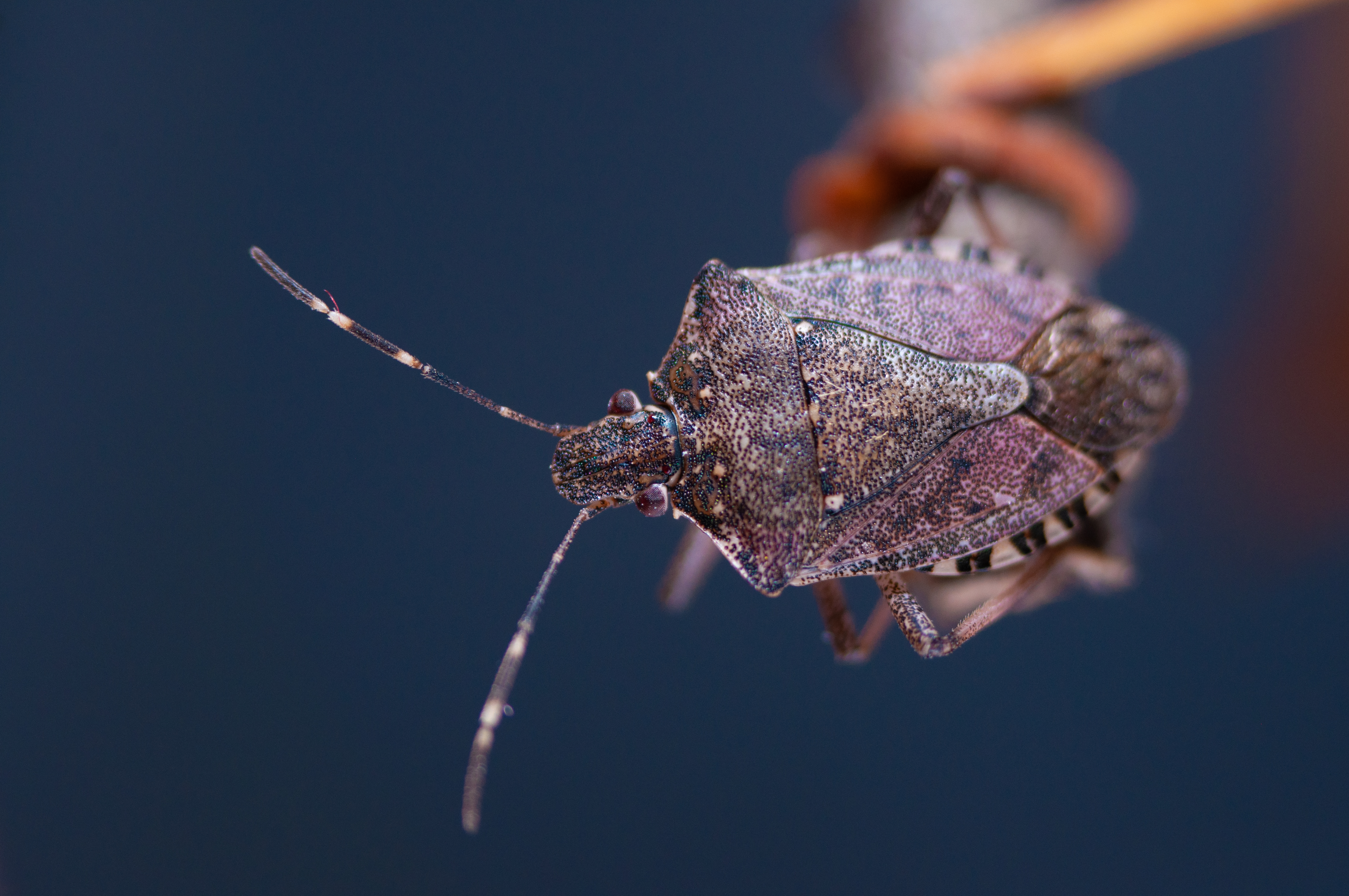
Brown marmorated stink bug
- Shield-shaped, mottled brown
- Gathers on sunny walls in fall
- Gets inside through gaps and vents
Another invasive insect from Asia. Unlike lanternflies, stink bugs move into wall voids and attics to spend the winter, then wander into rooms on warm days.
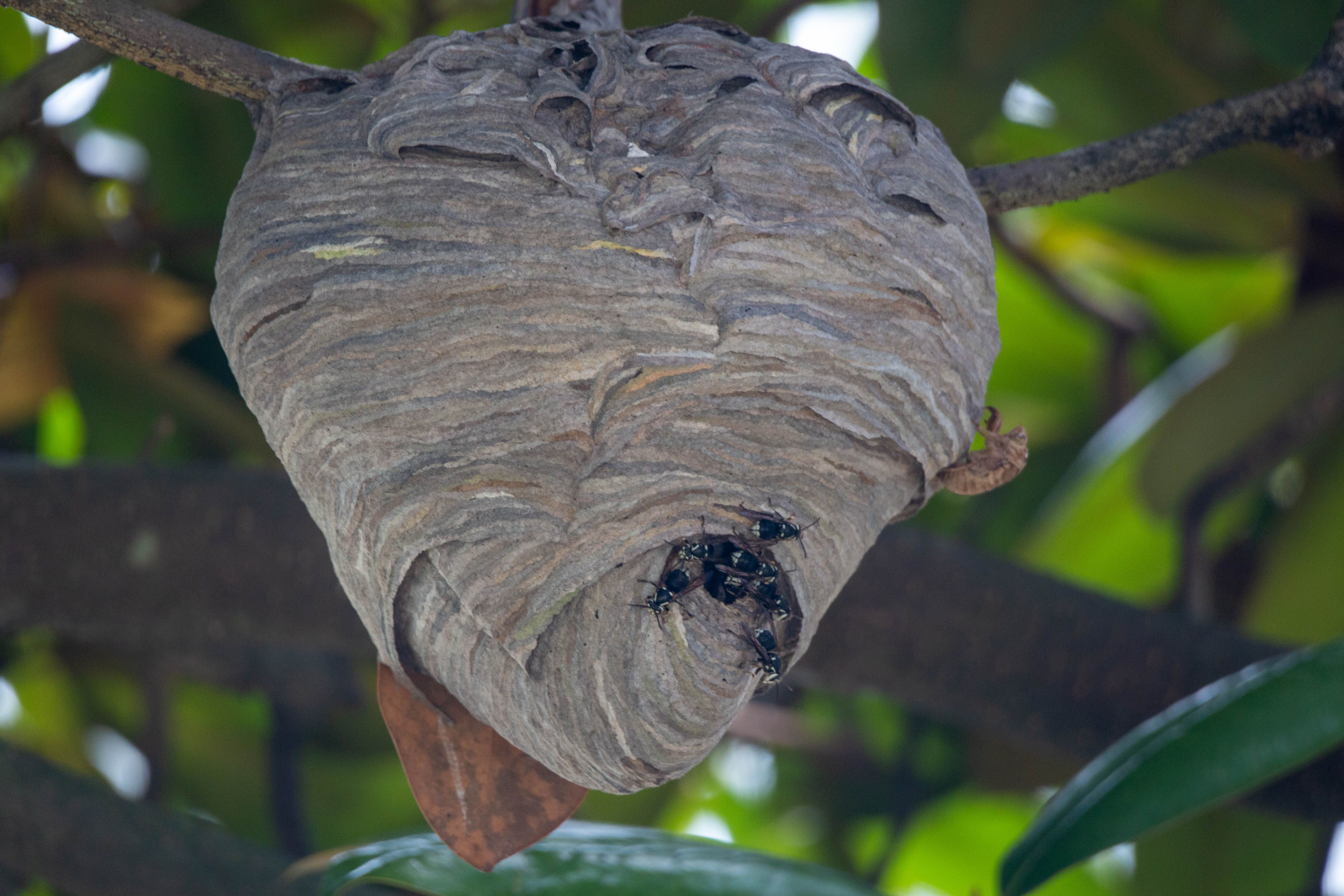
Wasps, hornets and yellow jackets
- More wasps than usual around trees
- Yellow jackets at sticky deck spots
- Nests in trees and under eaves
Lanternfly honeydew is sweet, so heavy lanternfly trees often pull in wasps, hornets and yellow jackets. That's when a nuisance becomes a stinging risk for kids and pets.

Asian tiger mosquito
- Black with white stripes
- Bites during the day
- Breeds in small containers of water
Yet another invader from Asia that's now common in North Jersey backyards. If you're outside scraping egg masses and getting bitten in daylight, this is probably the culprit.
When to call a professional about spotted lanternflies
For most homes, scraping egg masses, squashing what you can and using circle traps is enough. It makes sense to call a pro when:
- You have trees, a vineyard-style grape arbor or landscaping you really want to protect and the numbers are overwhelming.
- You're not sure whether what you're seeing is a lanternfly, a stink bug, a moth or something else.
- Wasps or yellow jackets are building up around honeydew on your deck or trees.
- You manage a business, school or apartment property where people are walking under sticky, swarmed trees.
Silver Bullet Pest Control is licensed in New Jersey (License 90568B), based in Garfield and serving Bergen, Passaic, Essex and Hudson counties. We can identify what you have from a photo, inspect the property, and explain honestly what will and won't help. Ask us whether a yard treatment makes sense for your trees and situation. For ongoing outdoor pests — wasps, mosquitoes, ticks and ants — our residential pest control plans come with a 100% satisfaction guarantee on regular service.
Call or text 973-510-2585 for a free quote. Same-day visits are often available.
Get Help With Spotted Lanternflies
Text a photo of the insect and tell us where you're seeing them. We'll identify it and explain your options.
Why people call us about lanternflies
- Trees and fences covered in lanternflies
- Sticky honeydew and black mold on the deck
- Wasps and yellow jackets drawn to the mess
- Not sure if it's a lanternfly or a stink bug
- Want honest advice before spending money on sprays
Request Service
🔒 Your info stays private · Hablamos español.
Spotted Lanternfly Questions
Are spotted lanternflies in New Jersey?
Yes. Spotted lanternflies were confirmed in New Jersey in 2018 and are now found across much of the state, including North Jersey. Check the NJ Department of Agriculture for the current quarantine counties.
Should I kill spotted lanternflies?
Yes — in New Jersey the official advice is to destroy them. Squash adults and nymphs and scrape egg masses into a bag or jar of rubbing alcohol.
Do spotted lanternflies bite?
No. Spotted lanternflies don't bite or sting people or pets. They feed only on plant sap.
Are spotted lanternflies dangerous to dogs?
They aren't known to be poisonous. A dog that eats a lot of them may vomit or have an upset stomach, so it's best to discourage it.
What time of year do spotted lanternflies appear?
Nymphs hatch from late April through June, adults appear in late July, and adults stay until hard frosts in the fall. Egg masses sit on surfaces through winter.
What do spotted lanternfly eggs look like?
Fresh egg masses look like a smear of gray mud or putty about an inch long. Older ones crack and show rows of small seed-like eggs.
Will spotted lanternflies get in my house?
They don't live or breed indoors. A few may ride in on clothing, bags or a car, but they don't overwinter in walls the way stink bugs do.
What kills spotted lanternflies best?
Squashing, vacuuming and destroying egg masses work best for homeowners. Contact sprays only kill what they hit, and treatments on valuable trees should be done by a licensed applicator.
Do spotted lanternflies kill trees?
They can kill grapevines and weaken many trees, especially young or already stressed ones. Healthy mature shade trees usually survive, but heavy feeding year after year adds stress.
Are sticky bands safe to use on trees?
Open sticky bands can trap birds, bats and small mammals. Circle traps are a safer choice, or cover sticky bands with a wire or mesh guard.
¿Qué hago si veo una mosca linterna moteada?
Aplástela y raspe las masas de huevos en una bolsa con alcohol. Si tiene muchas en su propiedad, mande una foto al 973-510-2585; hablamos español.
Our service area
Bergen County
973-510-2585- Allendale
- Bergenfield
- Bogota
- Carlstadt
- Cliffside Park
- Closter
- Cresskill
- Demarest
- Dumont
- East Rutherford
- Edgewater
- Elmwood Park
- Emerson
- Englewood
- Englewood Cliffs
- Fair Lawn
- Fairview
- Fort Lee
- Franklin Lakes
- Garfield
- Glen Rock
- Hackensack
- Harrington Park
- Hasbrouck Heights
- Haworth
- Hillsdale
- Ho-Ho-Kus
- Leonia
- Little Ferry
- Lodi
- Lyndhurst
- Mahwah
- Maywood
- Midland Park
- Montvale
- Moonachie
- New Milford
- North Arlington
- Northvale
- Norwood
- Oakland
- Old Tappan
- Oradell
- Palisades Park
- Paramus
- Park Ridge
- Ramsey
- Ridgefield
- Ridgefield Park
- Ridgewood
- River Edge
- River Vale
- Rochelle Park
- Rutherford
- Saddle Brook
- Saddle River
- South Hackensack
- Teaneck
- Tenafly
- Teterboro
- Upper Saddle River
- Waldwick
- Wallington
- Washington Township
- Westwood
- Woodcliff Lake
- Wood-Ridge
- Wyckoff
Passaic County
973-510-2585- Bloomingdale
- Clifton
- Haledon
- Hawthorne
- Little Falls
- North Haledon
- Passaic
- Paterson
- Pompton Lakes
- Prospect Park
- Ringwood
- Totowa
- Wanaque
- Wayne
- West Milford
- Woodland Park
Essex County
973-510-2585- Belleville
- Bloomfield
- Caldwell
- Cedar Grove
- East Orange
- Essex Fells
- Fairfield
- Glen Ridge
- Irvington
- Livingston
- Maplewood
- Millburn
- Montclair
- Newark
- North Caldwell
- Nutley
- Orange
- Roseland
- Short Hills
- South Orange
- Verona
- West Caldwell
- West Orange
Hudson County
973-510-2585Union County
973-510-2585- Berkeley Heights
- Clark
- Cranford
- Elizabeth
- Fanwood
- Garwood
- Hillside
- Kenilworth
- Linden
- Mountainside
- New Providence
- Plainfield
- Rahway
- Roselle
- Roselle Park
- Scotch Plains
- Springfield
- Summit
- Union
- Westfield
Morris County
973-510-2585- Boonton
- Butler
- Cedar Knolls
- Chatham
- Denville
- Dover
- East Hanover
- Florham Park
- Hanover
- Kinnelon
- Lincoln Park
- Madison
- Mendham
- Montville
- Morris Plains
- Morristown
- Mountain Lakes
- Parsippany
- Pequannock
- Randolph
- Riverdale
- Rockaway
- Roxbury
- Whippany
Updated November 2026 by the Silver Bullet Pest Control team, Garfield, NJ • NJ License 90568B